
Choosing where to stay in Bangkok can have a major effect on your trip. Thailand’s capital is enormous, traffic can be slow and its best attractions are spread across several very different neighbourhoods. A hotel that looks centrally located on a map may still be inconvenient if it is far from a BTS Skytrain station, MRT station or river pier.
This guide compares Bangkok’s best areas for first-time visitors, including Sukhumvit, Siam, Silom, Sathorn, the Riverside, the Old Town and Chinatown. It explains the advantages, disadvantages, transport connections and type of traveller each area suits.
Best Areas to Stay in Bangkok at a Glance
- Sukhumvit: Best overall for restaurants, nightlife and convenient BTS transport
- Siam: Best for shopping, families and a central location
- Silom: Best for dining, nightlife and access to both BTS and MRT
- Sathorn: Best for a quieter central stay
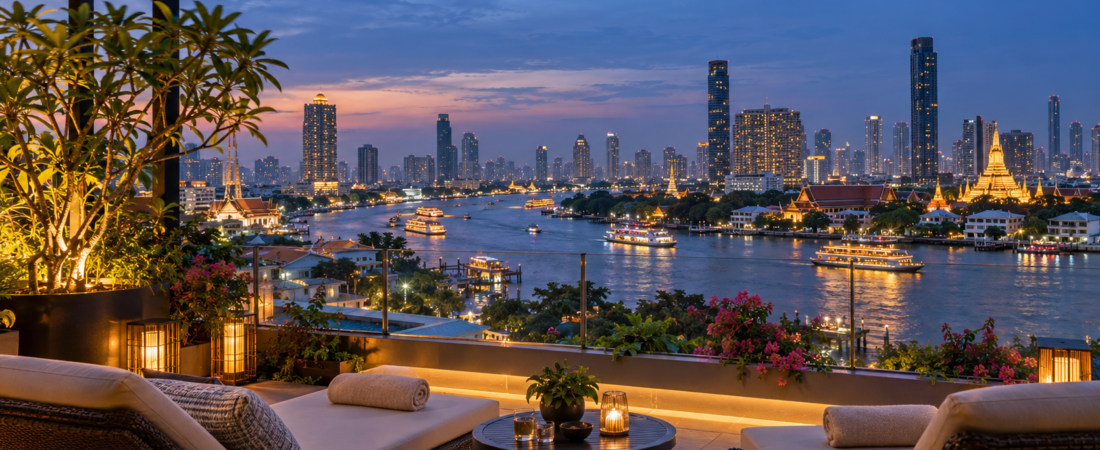
- Bangkok Riverside: Best for views, atmosphere and luxury hotels
- Old Town: Best for temples, history and traditional Bangkok
- Chinatown: Best for street food and local character
- Ari: Best for cafés and a more relaxed neighbourhood atmosphere
- Khao San Road: Best for backpackers and late-night social activity
- Pratunam: Best for budget shopping and wholesale markets
For most first-time visitors, Sukhumvit, Siam, Silom or Sathorn provides the easiest overall combination of accommodation, restaurants and public transport.
How to Choose the Right Bangkok Neighbourhood
Before booking a hotel, consider what you want to see and how you prefer to travel.
Prioritise Public Transport
Being within a short walk of a BTS or MRT station can save substantial time. Bangkok’s railway network is particularly useful for visiting Sukhumvit, Siam, Silom, Chinatown and Chatuchak.
Historic attractions such as the Grand Palace and Wat Pho are not directly beside the BTS network, so visitors staying in the modern centre will normally combine rail with a boat, taxi or walking.
Check the Actual Walking Distance
A hotel described as being “near the BTS” may still involve a lengthy walk in Bangkok’s heat. Check the exact location on a map and read recent guest reviews for comments about pavements, road crossings and access to the station.
A five-to-ten-minute walk is ideal for most travellers.
Consider Your Evening Plans
If you enjoy nightlife, choose Sukhumvit, Silom or the Khao San Road area. Travellers who prefer relaxed riverside evenings may be happier beside the Chao Phraya River.
Families and visitors who want shopping centres, cinemas and indoor dining may prefer Siam.
Think About Noise
Bangkok remains active late into the evening. Hotels near nightlife streets, markets, major roads or train lines can be noisy.
Check recent reviews for comments about street noise, soundproofing and nearby construction before confirming your reservation.
Do Not Change Hotels Unnecessarily
Bangkok’s neighbourhoods are different, but changing accommodation during a short three-to-five-day visit usually creates more inconvenience than value.
Choose one well-connected base and explore other areas during the day.
1. Sukhumvit: Best Overall for First-Time Visitors
Sukhumvit is one of Bangkok’s most convenient areas for visitors. The long district contains hotels, restaurants, cafés, shopping centres, nightlife and numerous BTS stations.
Because Sukhumvit covers a large area, the atmosphere changes significantly between individual neighbourhoods.
Asok
Asok is particularly convenient because BTS Asok connects with MRT Sukhumvit. This makes it easier to travel towards Siam, Silom, Chinatown, Chatuchak and other parts of Bangkok.
Terminal 21 shopping centre, restaurants, cafés and convenience stores are all close by.
Best for: First-time visitors, short stays and travellers prioritising transport
Advantages:
- Access to both BTS and MRT
- Large selection of hotels
- Numerous restaurants and shopping options
- Convenient for travelling across central Bangkok
Disadvantages:
- Busy roads and pavements
- Heavy traffic
- Active nightlife in nearby streets
- Less traditional atmosphere
Phrom Phong
Phrom Phong has luxury shopping centres, restaurants, cafés and access to Benchasiri Park. It generally feels more polished and residential than Asok.
Best for: Couples, shoppers and travellers wanting an upscale central base
Advantages:
- Direct BTS access
- High-quality shopping and dining
- Convenient park access
- Wide selection of modern hotels
Disadvantages:
- Accommodation can be expensive
- Traffic around Sukhumvit Road
- Less convenient for Old Town attractions
Thong Lo and Ekkamai
Thong Lo and Ekkamai are known for contemporary restaurants, cafés, bars and residential streets. They suit repeat visitors and travellers more interested in Bangkok’s modern lifestyle than traditional sightseeing.
Best for: Food lovers, nightlife and longer stays
Advantages:
- Excellent restaurant and café selection
- Modern neighbourhood atmosphere
- BTS access
- Popular with residents and longer-term visitors
Disadvantages:
- Farther from many major attractions
- Some venues require taxis from the BTS
- Dining and nightlife can be costly
- Less practical for a very short first visit
Who Should Stay in Sukhumvit?
Choose Sukhumvit if you want reliable public transport, a large selection of hotels and plenty of dining options close to your accommodation.
Avoid it if your priority is waking up beside historic temples or experiencing a quiet, traditional neighbourhood.
2. Siam: Best for Shopping and Central Convenience
Siam is Bangkok’s modern commercial centre. Several major shopping complexes, restaurants, cinemas and indoor attractions are concentrated around BTS Siam and BTS National Stadium.
BTS Siam is an important interchange between the Sukhumvit and Silom lines, making the district especially useful for rail journeys around the city.
Bangkok Art and Culture Centre is beside National Stadium station, while the Ratchaprasong shopping district and Erawan Shrine are within walking distance.
Best for: Families, first-time visitors, shoppers and short stays
Advantages of Staying in Siam
- Central BTS interchange
- Excellent shopping and dining
- Numerous indoor attractions
- Convenient during hot or rainy weather
- Easy access to Sukhumvit and Silom
- Suitable for families
Disadvantages of Staying in Siam
- Busy during shopping hours
- Less nightlife than Sukhumvit
- Limited traditional neighbourhood atmosphere
- Hotels near the main interchange can be expensive
- Streets become quieter after shopping centres close
Who Should Stay in Siam?
Siam is an excellent option if you want a central and straightforward base. It is especially suitable for families because food courts, restaurants, cinemas, supermarkets and air-conditioned spaces are readily available.
Travellers seeking historic architecture, small neighbourhood streets or lively late-night entertainment may prefer another area.
3. Silom: Best for Transport, Dining and Nightlife
Silom combines offices, hotels, restaurants, local food, markets and nightlife. It has access to both BTS and MRT services, with useful connections around Sala Daeng, Si Lom and nearby stations.
Lumphini Park lies at the eastern side of the district, while BTS Saphan Taksin provides access to Sathorn Pier and Chao Phraya River boats.
The atmosphere varies considerably. Some streets feel commercial during the day, while areas around Patpong become much livelier at night.
Best for: Couples, food lovers, nightlife and travellers wanting balanced transport
Advantages of Staying in Silom
- Access to BTS and MRT
- Convenient for Lumphini Park
- Good selection of restaurants
- Reasonable access to the river
- Mixture of local and international dining
- Active evening atmosphere
Disadvantages of Staying in Silom
- Busy during weekday commuting periods
- Nightlife streets may be noisy
- Some sections feel quiet on weekends
- The quality of pavements varies
Who Should Stay in Silom?
Choose Silom if you want a central neighbourhood with good transport and a combination of restaurants, parks and nightlife.
Check the hotel’s precise location. Staying directly beside an entertainment street creates a very different experience from staying closer to Lumphini Park or the river end of Silom Road.
4. Sathorn: Best for a Quieter Central Stay
Sathorn lies beside Silom but generally has a calmer, more business-oriented atmosphere. The district contains office towers, embassies, residential streets, restaurants and several high-quality hotels.
BTS and MRT access depends on the exact location. Properties close to BTS Saint Louis, BTS Surasak, BTS Chong Nonsi or MRT Lumphini are usually the most convenient.
Best for: Couples, business travellers and visitors wanting a quieter base
Advantages of Staying in Sathorn
- Central location
- More relaxed atmosphere than Sukhumvit
- Access to Silom’s dining and nightlife
- Convenient for parts of the riverside
- Good selection of modern hotels
- Suitable for business and leisure trips
Disadvantages of Staying in Sathorn
- Some hotels are far from rail stations
- Roads can experience heavy traffic
- Fewer major attractions within walking distance
- Certain streets become quiet at night
Who Should Stay in Sathorn?
Sathorn is a strong choice if you want to remain central without staying in Bangkok’s busiest tourist districts.
Confirm the walking distance to public transport before booking. Sathorn is a large area, and locations deeper inside residential streets may require frequent taxis.
5. Bangkok Riverside: Best for Views and Atmosphere
The Chao Phraya riverside offers one of Bangkok’s most memorable accommodation experiences. Hotels range from historic luxury properties to modern high-rise resorts and smaller local guesthouses.
River boats provide scenic access to Wat Arun, the Grand Palace area, Chinatown and Sathorn. Some hotels operate private shuttle boats connecting guests with a public pier or BTS Saphan Taksin.
The Riverside is not a single compact neighbourhood, so transport convenience varies significantly.
Best for: Couples, families, luxury travellers and special occasions
Advantages of Staying Beside the River
- Attractive river views
- Relaxed atmosphere
- Convenient boat access to historic attractions
- Memorable restaurants and hotel facilities
- Beautiful sunrise and evening scenery
- Suitable for a slower-paced stay
Disadvantages of Staying Beside the River
- Some properties are isolated from rail stations
- Boat services may finish earlier than nightlife
- Road journeys can be slow
- Riverside restaurants and hotels may charge premium prices
- Location descriptions can be misleading because the river covers a long distance
Choosing the Right Riverside Location
Look for accommodation near:
- Sathorn Pier and BTS Saphan Taksin
- ICONSIAM and its transport connections
- A reliable public pier
- A hotel with a regular shuttle-boat service
Check the shuttle timetable and confirm whether it is complimentary. A beautiful hotel without practical transport can make daily sightseeing unnecessarily difficult.
Who Should Stay on the Riverside?
Choose the Riverside if scenery and hotel atmosphere are important parts of your holiday. It works particularly well for couples, families and travellers planning to spend time enjoying their accommodation.
Avoid isolated riverside properties if you expect to visit Sukhumvit or central nightlife districts every evening.
6. Old Town: Best for Temples and History
Bangkok’s Old Town, commonly called Rattanakosin, contains the Grand Palace, Wat Pho, Wat Saket, historic streets and several museums and government buildings.
Staying here allows you to reach major temples early, before the largest crowds and strongest afternoon heat.
The neighbourhood has fewer direct rail connections than Sukhumvit, Siam or Silom. MRT Sanam Chai and Sam Yot serve parts of the wider historic area, but many journeys still require walking, boats, buses or taxis.
Best for: History lovers, photographers and travellers prioritising temples
Advantages of Staying in the Old Town
- Close to major historic attractions
- Traditional architecture and atmosphere
- Easier early-morning temple visits
- Access to local restaurants and markets
- Interesting streets for walking and photography
- Convenient for parts of the Chao Phraya River
Disadvantages of Staying in the Old Town
- Limited BTS access
- Fewer modern shopping centres
- Some streets become quiet in the evening
- Longer journeys to Sukhumvit and Siam
- Less convenient for frequent nightlife trips
Who Should Stay in the Old Town?
Choose the Old Town if the Grand Palace, temples and Bangkok’s history are your main priorities.
It is less suitable if you want easy access to modern shopping, rooftop venues or Sukhumvit nightlife every evening.
7. Chinatown: Best for Street Food and Local Character
Bangkok’s Chinatown centres on Yaowarat Road and the surrounding commercial lanes. It is one of the city’s most atmospheric areas, combining Chinese temples, gold shops, markets, traditional businesses and famous food streets.
MRT Wat Mangkon provides convenient access, making Chinatown easier to use as a base than it was before the station opened.
Nearby Talat Noi offers street art, historic shophouses, cafés and riverside lanes.
Best for: Food lovers, photographers and independent travellers
Advantages of Staying in Chinatown
- Outstanding street-food selection
- Distinctive evening atmosphere
- MRT access
- Close to Talat Noi
- Interesting markets and traditional businesses
- Reasonable access to the Old Town and river
Disadvantages of Staying in Chinatown
- Crowded pavements
- Considerable evening noise
- Heavy road traffic
- Fewer large hotels than Sukhumvit
- Some smaller properties have limited facilities
Who Should Stay in Chinatown?
Choose Chinatown if food, markets and neighbourhood atmosphere matter more than resort-style facilities.
Read recent accommodation reviews carefully for noise, room size and lift access, particularly when considering older or smaller buildings.
8. Ari: Best for Cafés and a Relaxed Local Atmosphere
Ari is a residential and dining neighbourhood north of central Bangkok. It is popular for independent cafés, restaurants, quiet side streets and a more relaxed atmosphere.
BTS Ari provides direct access towards Siam and Sukhumvit, although journeys to the Old Town or Riverside require additional connections.
Best for: Repeat visitors, café lovers and longer stays
Advantages of Staying in Ari
- Relaxed neighbourhood atmosphere
- Good cafés and restaurants
- Direct BTS access
- Less tourist-oriented than central districts
- Suitable for slower trips
Disadvantages of Staying in Ari
- Farther from major attractions
- Smaller accommodation selection
- Limited late-night entertainment
- Less convenient for a short first visit
Who Should Stay in Ari?
Ari works best for travellers who have visited Bangkok before or prefer neighbourhood life to major sightseeing.
For a first visit of only two or three nights, Siam, Sukhumvit or Silom will usually be more convenient.
9. Khao San Road: Best for Backpackers and Social Nightlife
Khao San Road is Bangkok’s best-known backpacker district. It has inexpensive accommodation, travel businesses, restaurants, bars and late-night entertainment.
The surrounding area includes quieter streets, temples and access to the Chao Phraya River. However, Khao San Road itself can be extremely noisy.
The district does not have direct BTS or MRT access, although boats, buses and taxis connect it with other areas.
Best for: Backpackers, solo travellers and nightlife
Advantages of Staying Near Khao San Road
- Large selection of budget accommodation
- Social atmosphere
- Restaurants and travel services
- Close to the Old Town
- Lively nightlife
- Convenient for some river services
Disadvantages of Staying Near Khao San Road
- Significant nighttime noise
- No direct rail station
- Crowded entertainment streets
- Less suitable for families
- Longer journeys to Sukhumvit and Siam
Who Should Stay Near Khao San Road?
Choose this area if nightlife and meeting other travellers are central to your trip.
For a quieter experience, consider accommodation on nearby streets rather than directly on Khao San Road.
10. Pratunam: Best for Budget Shopping
Pratunam is known for wholesale clothing markets, busy commercial streets and proximity to central shopping districts.
The area offers numerous affordable hotels and restaurants. However, direct access to the BTS is less convenient from some locations, and pavements can become crowded.
Best for: Budget shoppers and value-conscious travellers
Advantages of Staying in Pratunam
- Extensive budget shopping
- Affordable food options
- Wide hotel selection
- Close to Ratchaprasong and central malls
- Convenient for travellers who prioritise shopping
Disadvantages of Staying in Pratunam
- Crowded streets and pavements
- Traffic congestion
- Transport convenience varies by hotel
- Less relaxing than other neighbourhoods
- Limited traditional atmosphere
Who Should Stay in Pratunam?
Pratunam is a practical choice for travellers planning a shopping-focused visit. If sightseeing and straightforward public transport are more important, Siam may provide a better-balanced location.
Best Bangkok Area by Type of Traveller
Best for First-Time Visitors
Choose Sukhumvit near Asok, Siam, or Silom. All three areas provide convenient transport, accommodation and restaurants.
Best for Couples
Choose the Riverside, Sathorn or Phrom Phong for comfortable hotels and attractive evening options.
Best for Families
Choose Siam, Riverside or quieter parts of Sukhumvit. Confirm room size, swimming-pool access and the walking distance to transport.
Best for Budget Travellers
Choose Khao San Road, Pratunam, Chinatown or accommodation farther along the BTS and MRT networks.
A lower room price does not always represent better value if you need frequent taxis.
Best for Nightlife
Choose Sukhumvit, Silom or Khao San Road, depending on the type of nightlife you prefer.
Check recent reviews for noise before booking directly beside entertainment streets.
Best for Food
Choose Chinatown for street food, Sukhumvit for enormous variety or Silom for a combination of local and international dining.
Best for Temples and History
Choose the Old Town or a convenient part of the Riverside.
Best for Shopping
Choose Siam for major shopping centres or Pratunam for markets and wholesale clothing.
Best for a Local Neighbourhood Experience
Choose Ari, Talat Noi, Bang Rak or the quieter streets around Chinatown.
Areas First-Time Visitors Should Consider Carefully
No major visitor district is automatically a bad choice, but some locations require additional planning.
Hotels Far Down Sukhumvit Side Streets
A property may have a Sukhumvit address while still being far from the BTS. Confirm whether the hotel provides a shuttle and whether that service operates when you need it.
Isolated Riverside Properties
A river view does not guarantee convenient transport. Check the nearest pier, shuttle-boat schedule and road access.
Accommodation Directly Above Nightlife
Rooms beside nightlife streets can remain noisy until very late. Look for repeated comments about music and soundproofing in recent reviews.
Hotels Beside Major Roads
A short distance on a map may involve difficult road crossings or unpleasant walking conditions. Use street-level map views where available.
Questions to Ask Before Booking
Before confirming your Bangkok accommodation, check:
- How many minutes does it take to walk to the nearest station?
- Is the route comfortable and well lit?
- Does the hotel provide a shuttle?
- Are taxes and service charges included in the displayed total?
- Is breakfast included?
- Does the room have an exterior window?
- Are there recent complaints about noise or construction?
- Is there a lift?
- What are the check-in and luggage-storage arrangements?
- Can the hotel arrange a legitimate airport transfer?
- Are family rooms or connecting rooms genuinely available?
- Does the property require a security deposit?
Save screenshots of your reservation, room type and included services.
Getting Around From Your Bangkok Hotel
BTS Skytrain
The BTS is particularly helpful for Sukhumvit, Siam, Silom and Chatuchak. Staying near a station reduces reliance on road transport.
MRT
The MRT provides useful access to Chinatown, Silom, Sukhumvit, Chatuchak and locations near the Old Town.
River Boats
River services connect Sathorn with several historic and riverside districts. Check the route, service flag and operating schedule before boarding.
Taxis and Ride-Hailing
Taxis are helpful for places beyond the rail network, but traffic can significantly increase journey times. Use metered taxis or established ride-hailing applications.
Walking
Walking works well within individual neighbourhoods, but Bangkok is too large to explore entirely on foot. Plan outdoor walks during the cooler morning or evening periods.
How Long Should You Stay in Bangkok?
Three days provide enough time for the principal temples, Chinatown, river experiences, parks and modern districts.
Four or five days create a more relaxed trip and allow additional time for markets, museums, food experiences and neighbourhood walks.
Follow our complete 3 days in Bangkok itinerary to see how the main attractions can be grouped efficiently.
When Should You Book Bangkok Accommodation?
Bangkok receives visitors throughout the year, but demand is often strongest during the comparatively cooler November-to-February period and around important holidays.
Booking earlier provides more choice, particularly if you need:
- Family rooms
- Connecting rooms
- Accommodation beside a specific station
- Riverside views
- Accessible rooms
- Flexible cancellation
- A stay during a festival or major event
Weather, crowds and accommodation demand vary by season. Our guide to the best time to visit Bangkok can help you select suitable dates.
Final Recommendation
For most first-time visitors, Sukhumvit near Asok offers the best overall balance of transport, restaurants and accommodation. Siam is an excellent alternative for families and shoppers, while Silom or Sathorn provides a central but more balanced base.
Choose the Riverside for scenery and a memorable hotel experience, the Old Town for historic attractions, or Chinatown for food and local character.
Whichever neighbourhood you choose, staying within an easy walk of public transport is usually more valuable than selecting a hotel based only on its room rate or distance from the city centre.
Continue planning with our complete Bangkok travel guide, estimate your expenses using the Bangkok travel budget and discover more affordable experiences among the best free things to do in Bangkok.
Explore more places through our destinations page or browse our complete collection of itineraries.