
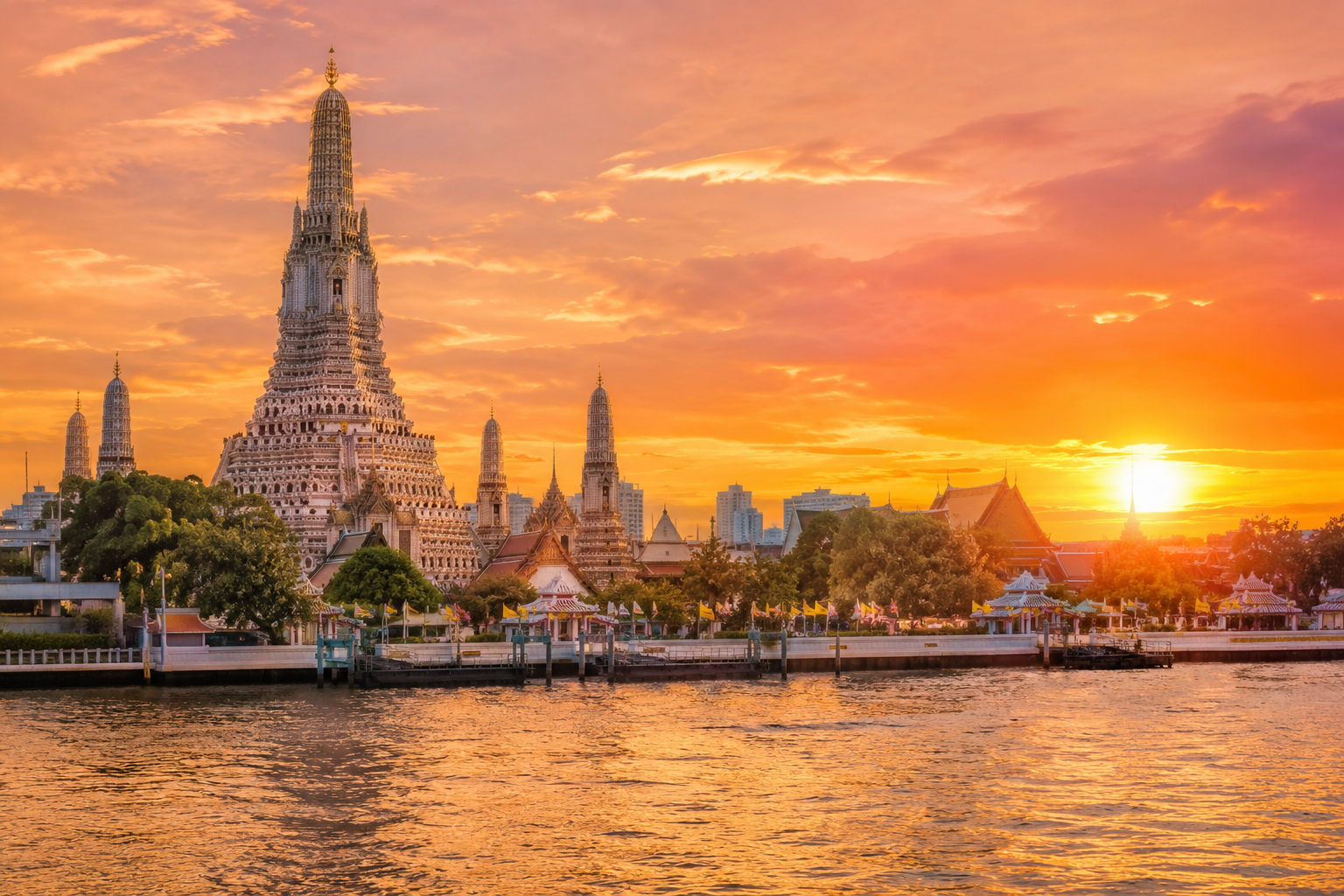
Bangkok is a city of magnificent temples, energetic street markets, contemporary shopping districts, peaceful parks and neighbourhoods shaped by centuries of history. Thailand’s capital can feel overwhelming at first, but thoughtful planning makes it surprisingly manageable.
This complete Bangkok travel guide explains the best attractions, where to stay, how to travel around the city, what to eat, expected costs and practical advice for first-time visitors.
Price note: All prices in this article are approximate and were checked at the time of publication. Prices may change.
Why Visit Bangkok?
Bangkok combines historic landmarks with the energy and convenience of a modern Asian capital. During the same day, you can explore a royal palace, cross the Chao Phraya River by ferry, eat freshly prepared noodles at a local restaurant and watch the city illuminate from a rooftop.
The city is particularly rewarding for travellers interested in:
- Ornate Buddhist temples and royal history
- Thai street food and traditional dishes
- Markets, shopping centres and independent shops
- Riverside scenery and public boat journeys
- Art galleries, museums and creative neighbourhoods
- Affordable accommodation and public transport
- Nightlife ranging from casual markets to sophisticated rooftop venues
Bangkok is also an important transport hub for travelling to northern Thailand, the islands and neighbouring Southeast Asian countries.
Top Tours & Experiences in Bangkok
Discover popular Bangkok tours and experiences. Check current availability, ratings and prices before you book.
Affiliate disclosure: If you book through these links, we may earn a commission from Viator. This does not increase the price you pay.
Top Tours & Experiences in Bangkok
Discover popular Bangkok tours and experiences. Check current availability, ratings and prices before you book.
Affiliate disclosure: If you book through these links, we may earn a commission from Viator. This does not increase the price you pay.
Essential Bangkok Information
Country: Thailand
Currency: Thai baht (THB)
Language: Thai, with English commonly used in major visitor areas
Recommended stay: 3 to 5 days for a first visit
Main airports: Suvarnabhumi Airport and Don Mueang International Airport
Best general sightseeing period: November to February
Local time: Indochina Time, UTC+7
Cash remains useful for markets, traditional restaurants, small shops and some transport services. Cards are widely accepted at hotels, shopping centres and larger restaurants.
Top Attractions in Bangkok
1. The Grand Palace and Wat Phra Kaew
The Grand Palace is Bangkok’s most important historic visitor attraction. Established in 1782, the complex served as the royal residence and administrative centre of the early Rattanakosin kingdom.
Inside the grounds, Wat Phra Kaew houses the Emerald Buddha, one of Thailand’s most revered religious images. Visitors can also see ceremonial halls, decorated roofs, guardian figures, murals and buildings covered in intricate details.
The official published opening hours are 8:30 a.m. to 4:30 p.m. daily, with ticket sales ending at 3:30 p.m. Admission for foreign visitors is approximately 500 baht.
Schedules can change for royal ceremonies, so check the Grand Palace’s official calendar shortly before visiting.
Wear clothing that covers your shoulders and knees. Avoid transparent, torn or extremely tight clothing. Arrive early because much of the complex is outdoors and becomes busy and hot later in the day.
2. Wat Pho
Wat Pho is within walking distance of the Grand Palace and is best known for its enormous reclining Buddha. The temple also contains decorated stupas, peaceful courtyards, historic inscriptions and an important school of traditional Thai medicine and massage.
The temple’s official visitor information lists opening hours of approximately 8:00 a.m. to 7:30 p.m. and foreign-adult admission of around 300 baht. Children under 120 centimetres are admitted free under the temple’s published policy.
Allow at least one hour to explore the complex without rushing. Traditional massage services cost extra and may become busy during popular visiting periods.
3. Wat Arun
Wat Arun, commonly called the Temple of Dawn, stands on the Thonburi side of the Chao Phraya River. Its central tower is covered with colourful ceramic and porcelain decoration that looks particularly striking in morning or late-afternoon light.
Published visitor information lists daily opening hours of approximately 8:00 a.m. to 6:00 p.m. and foreign-adult admission of around 200 baht.
A small cross-river ferry connects the Wat Pho and Wat Arun areas, making it practical to visit both temples on the same day. Steps around parts of the central tower can be steep, so wear secure footwear and use the handrails.
4. The Chao Phraya River
The Chao Phraya River is both a Bangkok landmark and a useful transport route. Public boats connect areas near the Grand Palace, Wat Arun, Chinatown, Sathorn and several riverside hotels and shopping complexes.
The Chao Phraya Express Boat’s published fare for its weekday orange-flag service is approximately 18 baht per journey. Routes, operating days and stopping patterns vary, so check the flag colour and destination before boarding.
For first-time visitors, the river provides a memorable view of temples, historic buildings, modern towers, local homes and working piers. Public boats are usually much less expensive than sightseeing cruises.
5. Chinatown and Yaowarat Road
Bangkok’s Chinatown is centred around Yaowarat Road and its surrounding lanes. During the day, visitors can explore traditional shops, markets, Chinese temples and long-established businesses. After sunset, the district becomes one of Bangkok’s most famous food areas.
Popular choices include seafood, noodles, dim sum, grilled skewers, Chinese desserts and mango sticky rice. Instead of trying to visit a long list of specific vendors, walk through the neighbourhood and choose busy places where food is being prepared freshly.
MRT Wat Mangkon is the most convenient rail station for much of Chinatown.
6. Chatuchak Weekend Market
Chatuchak is an enormous market selling clothing, crafts, art, homeware, accessories, plants, souvenirs and food. The full market generally operates on Saturdays and Sundays from approximately 9:00 a.m. to 6:00 p.m., although individual stalls may follow different schedules.
Admission is free, but it is easy to spend several hours exploring. Arrive in the morning for cooler conditions, carry small cash denominations and save the location of your entrance or nearby station.
BTS Mo Chit and MRT Chatuchak Park provide convenient access.
7. Bangkok Art and Culture Centre
Bangkok Art and Culture Centre, usually abbreviated to BACC, is a contemporary arts venue near MBK Center and the Siam shopping district. Its spiral interior contains galleries, exhibition spaces, small design shops and cafés.
General entry and many exhibitions are free, although individual events may charge admission. Because exhibitions change regularly, check the current programme before visiting.
BTS National Stadium is directly beside the centre, making BACC an excellent indoor stop during a hot or rainy afternoon.
8. Lumphini Park
Lumphini Park offers shaded paths, open lawns, a lake and recreational areas in central Bangkok. The Bangkok Metropolitan Administration lists general park hours of approximately 4:30 a.m. to 9:00 p.m.
Entry is free. Early morning and late afternoon are the most comfortable times for walking, watching exercise groups or relaxing beside the water.
Monitor lizards are frequently seen around the lake. Observe them from a respectful distance and never attempt to feed or touch them.
9. Benjakitti Park
Benjakitti Park combines a large lake, wetlands, gardens, elevated paths and skyline views. It is one of the best places to see how Bangkok is introducing more green space into its dense urban landscape.
The park is free to enter and is particularly attractive around sunrise or sunset. Its elevated Green Bridge creates a walking connection towards Lumphini Park, allowing active visitors to combine the two areas.
MRT Queen Sirikit National Convention Centre is a convenient starting point.
10. Pak Khlong Talat Flower Market
Pak Khlong Talat is Bangkok’s famous flower market, where vendors sell orchids, roses, garlands and colourful bundles of flowers.
Walking through the public market area is free. The market operates for long hours, but the atmosphere varies throughout the day. Evening is convenient for most travellers, while very early morning can reveal a busier wholesale operation.
MRT Sanam Chai is within walking distance.
11. Talat Noi
Talat Noi is a historic neighbourhood near Chinatown known for traditional shophouses, street art, old workshops, cafés and narrow lanes leading towards the river.
There is no admission fee to explore its public streets. The area is best experienced slowly on foot, but remember that it remains a residential and working neighbourhood. Avoid blocking doorways and ask permission before photographing people closely.
12. Bangkok’s Modern Shopping Districts
Siam, Ratchaprasong and Sukhumvit contain some of Bangkok’s largest shopping centres. These districts offer everything from luxury brands to affordable fashion, cinemas, supermarkets and extensive food courts.
Shopping centres are also useful during heavy rain or the hottest part of the afternoon. Entry is free, although dining, shopping and entertainment naturally cost extra.
Where to Stay in Bangkok
Bangkok is large, and choosing the right neighbourhood can save significant travel time. Prioritise access to a BTS, MRT or river station instead of choosing a hotel based only on distance from the city centre.
Sukhumvit
Sukhumvit is a practical option for first-time visitors who want transport connections, restaurants, shopping and nightlife. Areas around Asok provide access to both BTS and MRT services, while Phrom Phong and Thong Lo offer modern shopping, dining and cafés.
The neighbourhood is convenient but busy, and it does not provide the traditional atmosphere found in Bangkok’s historic districts.
Siam
Siam is best for shopping and central BTS access. It suits families and travellers who want large malls, indoor attractions and easy connections to Sukhumvit and Silom.
Hotel prices can be higher near the main interchange, and the district feels more commercial than residential.
Riverside
The Chao Phraya riverside suits travellers looking for views, atmospheric evenings and convenient boat access to historic attractions.
Before booking, confirm how far the hotel is from a pier or rail station. Some riverside properties provide complimentary shuttle boats, but schedules vary.
Silom and Sathorn
Silom and Sathorn combine restaurants, offices, nightlife and good access to BTS and MRT services. They offer a balanced base for travellers who want convenient transport without staying in the centre of Sukhumvit.
Lumphini Park and the Sathorn river pier are accessible from different parts of these districts.
Old Town
Bangkok’s Old Town, or Rattanakosin, places visitors close to the Grand Palace, Wat Pho and several historic temples.
This area is ideal for culture and architecture but has fewer direct rail connections than Sukhumvit, Siam or Silom. Boats, buses and taxis may be required for some journeys.
Chinatown
Chinatown is excellent for travellers who prioritise street food, local atmosphere and historic streets. MRT Wat Mangkon has made the area considerably easier to reach.
The neighbourhood becomes crowded and noisy in the evening, so check recent hotel reviews carefully if you need a quiet room.
Compare the advantages, transport connections and atmosphere of each neighbourhood in our detailed guide to where to stay in Bangkok.
Getting Around Bangkok
No single transport system covers every visitor attraction. The easiest approach is to combine rail services with boats, walking and occasional taxis.
BTS Skytrain
The BTS Skytrain is especially useful for Sukhumvit, Siam, Silom and the Chatuchak area. Official single-journey fares currently start at approximately 17 baht and reach about 47 baht within the core fare structure, although journeys involving extensions may cost more.
A BTS one-day pass costs approximately 150 baht and provides unlimited travel on eligible BTS services for the date of use. Calculate whether it offers value based on your planned journeys rather than buying it automatically.
MRT
The MRT is convenient for Chinatown, the Old Town’s southern side, Chatuchak, Sukhumvit and several central neighbourhoods.
Fares are distance-based. Use the official Bangkok MRT fare calculator for your exact stations because charges and network arrangements can change.
River Boats
River boats are useful for Wat Arun, the Grand Palace area and riverside neighbourhoods. Check the service flag, destination and operating schedule, as not every boat stops at every pier.
Use public boats for transport and sightseeing cruises for a dedicated experience; the prices and service styles are very different.
Taxis and Ride-Hailing
Metered taxis are widely available, but Bangkok’s road traffic can make apparently short journeys slow. Ask the driver to use the meter and ensure it has been activated after departure.
Ride-hailing applications provide an estimated fare before booking and are useful for locations away from rail stations. Tolls may be charged separately when using expressways.
Tuk-Tuks
Tuk-tuks can be enjoyable for a short experience, but fares are negotiated rather than metered. Agree on the total price and destination before entering.
Be cautious if a driver claims that a major attraction is unexpectedly closed and suggests taking you somewhere else. Verify opening information independently.
Walking
Walking works well within individual neighbourhoods such as the Old Town, Chinatown and Talat Noi, but it is not practical for travelling across the entire city. Pavements can be uneven or obstructed, and road crossings require attention.
Plan longer walks for the morning or evening and use pedestrian bridges where provided.
Travelling From Bangkok’s Airports
Suvarnabhumi Airport
Suvarnabhumi Airport handles a large share of Bangkok’s international flights. The Airport Rail Link connects the airport with central Bangkok, including an interchange with the MRT at Makkasan and the BTS at Phaya Thai.
A taxi can be more convenient for groups or travellers with substantial luggage. Use the official taxi system and retain your dispatch slip.
Don Mueang International Airport
Don Mueang serves many domestic and regional low-cost flights. The SRT Red Line connects Don Mueang with Krung Thep Aphiwat Central Terminal, from where passengers can continue by rail, MRT, taxi or another local service.
Always check which Bangkok airport your flight uses. Suvarnabhumi and Don Mueang are in different parts of the city, and transferring between them can take considerable time.
Best Time to Visit Bangkok
Bangkok remains warm throughout the year, but weather conditions influence how comfortable outdoor sightseeing feels.
November to February
These months generally provide lower humidity and comparatively comfortable temperatures. They are popular for temple visits, markets and walking tours, but hotel rates and visitor numbers can be higher.
March to May
This is usually Bangkok’s hottest period. Begin outdoor sightseeing early, schedule air-conditioned stops during the afternoon and drink water regularly.
Songkran, Thailand’s traditional New Year celebration, takes place in April. It is lively and memorable, but large-scale water celebrations can affect normal transport and sightseeing plans.
June to October
The wetter season brings higher humidity and frequent showers. Rain often arrives in intense periods rather than continuing all day, although flooding and traffic disruption can occur.
Accommodation may offer better value during parts of this period. Carry a compact umbrella and keep indoor alternatives available.
For a month-by-month comparison of conditions, crowds and seasonal advantages, read our guide to the best time to visit Bangkok.
What to Eat in Bangkok
Bangkok’s food scene ranges from market stalls and traditional shophouses to modern restaurants and internationally recognised fine dining.
Popular dishes to try include:
- Pad Thai: Stir-fried rice noodles with egg, vegetables and a choice of protein
- Pad kra pao: Meat or another protein stir-fried with holy basil and chilli
- Tom yum: Fragrant hot-and-sour soup
- Green curry: Coconut-based curry served with rice
- Som tam: Spicy green-papaya salad
- Boat noodles: Small bowls of strongly flavoured noodle soup
- Khao man gai: Chicken served with seasoned rice and dipping sauce
- Mango sticky rice: Sweet coconut rice served with ripe mango
Choose busy food businesses where ingredients are cooked freshly. Visitors with allergies should carry a translated allergy card because sauces and pastes may contain fish, shellfish, peanuts or other less-visible ingredients.
Drink bottled or properly filtered water and confirm the spice level when ordering if you are sensitive to chilli.
How Much Does Bangkok Cost?
Bangkok can accommodate budget, mid-range and luxury travellers. Your largest expense will normally be accommodation, followed by dining and paid attractions.
Public transport and local food can keep daily spending manageable. Rooftop venues, international restaurants, private tours and luxury riverside hotels can increase costs quickly.
The three major historic attractions—the Grand Palace, Wat Pho and Wat Arun—currently total approximately 1,000 baht in published foreign-adult admission fees before transport or optional services.
For sample daily budgets covering accommodation, food, attractions and transport, consult our complete Bangkok travel budget.
A Simple 3-Day Bangkok Plan
Day One: Old Town and Temples
Visit the Grand Palace early, continue to Wat Pho and cross the river to Wat Arun. Finish with an evening beside the river or at Pak Khlong Talat.
Day Two: Markets, Art and Chinatown
Visit Chatuchak if it is a weekend. On other days, explore Talat Noi and a local market. Spend the afternoon around BACC and Siam before visiting Chinatown for dinner.
Day 3: Parks and Modern Bangkok
Walk through Lumphini or Benjakitti Park in the morning. Explore Sukhumvit, Silom or another modern district during the afternoon, then finish with a rooftop view, riverside walk or night market.
Our complete 3-day Bangkok itinerary provides a more detailed route with suggested timing and transport advice.
Free Things to Do in Bangkok
Travellers can reduce their daily costs by combining paid temples with free parks, markets, neighbourhood walks and cultural spaces.
Good free experiences include:
- Walking through Lumphini Park
- Exploring Benjakitti Park
- Crossing the Green Bridge
- Visiting many exhibitions at BACC
- Exploring Talat Noi
- Walking around Chinatown
- Browsing Pak Khlong Talat
- Entering Chatuchak Weekend Market
- Visiting the Erawan Shrine
- Seeing the Giant Swing
- Walking beside Khlong Ong Ang
- Enjoying public riverside viewpoints
Food, shopping, donations, transport and special exhibitions remain optional paid expenses. Discover more possibilities in our guide to the best free things to do in Bangkok.
Practical Bangkok Travel Tips
Dress Respectfully
Cover your shoulders and knees at major temples and royal sites. Remove your shoes before entering designated temple buildings and avoid pointing your feet towards religious images.
Start Early
Morning visits offer cooler weather and smaller crowds at many outdoor attractions. This is particularly valuable at the Grand Palace, Wat Pho and Chatuchak Market.
Group Attractions by Area
Bangkok’s size and traffic make repeated journeys across the city inefficient. Combine the Grand Palace, Wat Pho and Wat Arun; visit Chinatown with Talat Noi; and explore Siam with BACC.
Keep Some Cash
Carry small baht notes for markets, small restaurants, boats and other cash-based services. Avoid carrying unnecessarily large amounts.
Check Official Schedules
Temples, palace buildings, markets and boat services may change their opening arrangements during ceremonies, holidays or maintenance. Confirm important details shortly before travelling.
Allow Time for Traffic
Road journeys can take substantially longer during peak periods or heavy rain. Use rail services when practical and leave generous time when travelling to an airport.
Protect Yourself From the Climate
Wear breathable clothing, apply sunscreen and drink water frequently. Carry a compact umbrella that can provide protection from both rain and strong sun.
Respect Local Customs
Treat religious sites, monks, images of the Buddha and the Thai monarchy with respect. Keep your voice low inside temples and follow instructions from local staff.
Frequently Asked Questions
How many days are enough for Bangkok?
3 days allow first-time visitors to see the main temples, experience the river, visit a market and explore at least one modern neighbourhood. Four or five days provide a more comfortable pace and additional time for museums, food experiences or day trips.
Is Bangkok suitable for first-time visitors?
Yes. Bangkok has extensive tourism services, varied accommodation and numerous transport options. The easiest strategy is to stay near a rail station and organise each sightseeing day around one part of the city.
Is Bangkok expensive?
Bangkok can be affordable when you use public transport, eat at local restaurants and balance paid landmarks with free attractions. Luxury hotels, rooftop venues and private experiences are also widely available for travellers with larger budgets.
Can tourists use public transport easily?
The BTS, MRT and river boats are reasonably straightforward once you understand their separate networks. Use official route maps and check the final service time if travelling late in the evening.
Is Bangkok safe for tourists?
Bangkok is generally manageable for visitors who take normal city precautions. Protect valuables in crowded areas, use established transport services and be cautious of unsolicited offers involving closed attractions, unusually cheap tours or compulsory shopping stops.
What should visitors wear?
Lightweight clothing is suitable for the climate, but carry clothing that covers your shoulders and knees for temples and the Grand Palace. Comfortable footwear is important because sightseeing often involves significant walking.
Final Thoughts
Bangkok rewards travellers who combine preparation with flexibility. Plan major attractions in advance, group nearby places together and use rail or river transport when it provides an alternative to road traffic.
Beyond its famous temples, leave time for local food, public parks, riverside journeys and neighbourhoods such as Chinatown and Talat Noi. Those contrasting experiences reveal why Bangkok remains one of Asia’s most memorable cities.
Book Your Bangkok Experiences
Ready to start planning? Compare popular Bangkok tours and activities, check current prices and availability, and book the experiences that suit your trip.
Affiliate disclosure: If you book through these links, we may earn a commission from Viator. This does not increase the price you pay.
Explore more places through our destinations page or browse our complete collection of itineraries.