
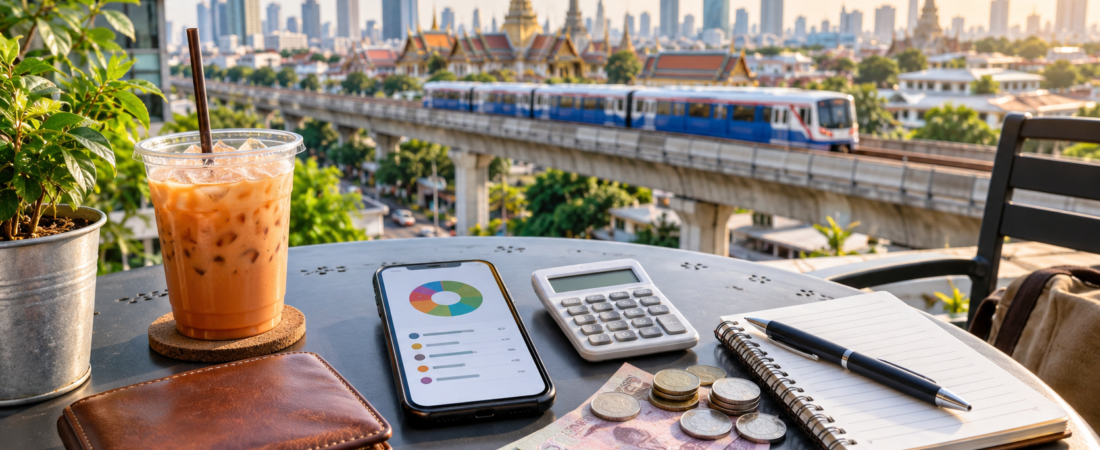
A realistic Bangkok travel budget depends on your accommodation, dining preferences, transport choices and the number of paid attractions you visit. Bangkok can be explored relatively affordably with local food and public transport, but luxury hotels, rooftop venues, private tours and frequent taxis can increase the cost quickly.
This guide provides practical daily and trip estimates for budget, mid-range and luxury travellers. All estimates are shown in Thai baht so you can compare them directly with local prices.
Price note: All prices in this article are approximate and were checked at the time of publication. Prices may change.
Bangkok Travel Costs at a Glance
Estimated daily costs per person, excluding international flights:
- Budget traveller: 1,200–2,500 baht per day
- Mid-range traveller: 3,000–6,500 baht per day
- Comfortable or luxury traveller: 8,000 baht or more per day
These figures assume two people share accommodation. Solo travellers normally spend more per person because they cannot divide the room cost.
Your first full sightseeing day may also be more expensive if it includes the Grand Palace, Wat Pho and Wat Arun, which currently total approximately 1,000 baht in foreign-adult admission charges.
Estimated Bangkok Budget by Travel Style
| Expense | Budget Traveller | Mid-Range Traveller | Luxury Traveller |
|---|---|---|---|
| Accommodation per person | 400–1,000 baht | 1,500–3,000 baht | 4,000+ baht |
| Food and drinks | 400–800 baht | 1,000–2,000 baht | 2,500+ baht |
| Local transport | 150–350 baht | 350–800 baht | 1,000+ baht |
| Attractions and activities | 200–800 baht | 500–1,500 baht | 2,000+ baht |
| Estimated daily total | 1,200–2,500 baht | 3,000–6,500 baht | 8,000+ baht |
These are planning estimates rather than fixed prices. Accommodation rates can change considerably according to season, neighbourhood, room type, events and how early you book.
How Much Does a Three-Day Bangkok Trip Cost?
Estimated cost per person for three full days, excluding international flights:
Budget Three-Day Trip
Approximately 3,600–7,500 baht per person
This budget generally allows:
- Hostel or simple budget accommodation
- Local restaurants and food courts
- BTS, MRT, buses and boats
- The main historic attractions
- Free parks, markets and neighbourhood walks
- Limited nightlife and shopping
Mid-Range Three-Day Trip
Approximately 9,000–19,500 baht per person
This budget generally allows:
- Comfortable hotel shared by two people
- Local and mid-range restaurants
- Regular BTS and MRT journeys
- Occasional taxis or ride-hailing
- Major attractions
- A massage or paid activity
- Moderate evening entertainment
Luxury Three-Day Trip
Approximately 24,000 baht or more per person
This can include:
- Luxury hotel or riverside resort
- Fine dining and rooftop venues
- Private airport transfers
- Guided tours
- Premium spa treatments
- Dinner cruises or observation decks
- Frequent taxis and ride-hailing
Shopping and international flights are not included because they vary too widely to form a useful general estimate.
Accommodation Costs in Bangkok
Accommodation is usually the largest part of a Bangkok travel budget. Prices depend on location, season, hotel category and room type.
Hostels and Basic Guesthouses
A dormitory bed or very simple private room may cost approximately:
- Dormitory bed: 300–700 baht per night
- Basic private room: 700–1,500 baht per night
Budget accommodation is available around Khao San Road, Chinatown, Pratunam and locations farther from the most central BTS stations.
Before booking, check:
- Whether the room has an exterior window
- Shared or private bathroom arrangements
- Air-conditioning hours
- Lift access
- Noise levels
- Distance from public transport
- Taxes and service charges
- Luggage-storage arrangements
The cheapest room is not always the best value if it requires frequent taxis.
Mid-Range Hotels
Comfortable three-star and four-star hotels commonly fall within a broad range of:
- Approximately 2,000–5,000 baht per room per night
Rates can be higher near important BTS interchanges, major shopping centres and the Chao Phraya River.
Mid-range hotels may include:
- Private bathroom
- Air conditioning
- Daily housekeeping
- Swimming pool
- Fitness room
- Breakfast
- Reception and luggage storage
Confirm whether breakfast and taxes are included in the displayed total.
Luxury Hotels
Luxury accommodation generally begins at approximately:
- 5,000 baht per room per night, with premium properties costing considerably more
Bangkok has renowned riverside hotels, luxury city towers and upscale resorts. Room category, river view, lounge access and breakfast can significantly affect the final price.
Hotels may also request a security deposit or temporary card authorisation at check-in.
Best Areas for Different Budgets
- Khao San Road: Hostels, guesthouses and nightlife
- Pratunam: Value hotels and budget shopping
- Chinatown: Boutique hotels and local atmosphere
- Sukhumvit: Wide range from budget to luxury
- Silom and Sathorn: Strong mid-range selection
- Siam: Convenient but often more expensive
- Riverside: Luxury hotels and scenic stays
- Ari: Smaller hotels and serviced accommodation
Our guide to where to stay in Bangkok compares the advantages and transport connections of each area.
Bangkok Food Budget
Bangkok is easy to enjoy at different food budgets. Local restaurants, markets and shopping-centre food courts provide affordable meals, while the city also has sophisticated restaurants and internationally recognised fine dining.
Street Food and Local Restaurants
Typical planning estimates include:
- Simple breakfast: 40–100 baht
- Noodle or rice dish: 60–150 baht
- Snack or dessert: 30–100 baht
- Fresh fruit: 30–80 baht
- Local casual meal: 100–250 baht
Actual prices vary according to neighbourhood and venue. Street food in major visitor areas can cost more than similar dishes in residential districts.
Busy stalls with frequent turnover are generally preferable. Choose food cooked freshly and drink bottled or properly filtered water.
Food Courts
Bangkok’s shopping-centre food courts can offer excellent value, often with air conditioning and clear menus.
A meal may cost approximately:
- 80–250 baht, depending on the shopping centre and dish
Some food courts use prepaid cards. Add credit at the cashier and return the card afterwards to collect any unused balance according to that venue’s system.
Mid-Range Restaurants
A meal at a comfortable casual or mid-range restaurant might cost:
- 300–800 baht per person
Drinks, imported ingredients, service charges and taxes can increase the final bill.
Menus sometimes display prices before service charge and value-added tax. Check the small print rather than assuming the listed amount is the final total.
Fine Dining and Rooftop Venues
Fine-dining restaurants, luxury hotel restaurants and rooftop venues can cost:
- 1,500–5,000 baht or more per person
Premium tasting menus, wine, cocktails and special-event packages may cost considerably more.
Some rooftop venues have:
- Dress codes
- Minimum spending requirements
- Age restrictions
- Reservation policies
- Different indoor and outdoor seating
- Weather-related arrangements
Review these conditions before booking.
Daily Food Budget
A reasonable daily food allowance is:
- Budget: 400–800 baht
- Mid-range: 1,000–2,000 baht
- Luxury: 2,500 baht or more
Travellers who do not drink alcohol can usually keep costs lower. Imported alcohol and rooftop cocktails are expensive compared with local meals.
Public Transport Costs
Bangkok’s BTS, MRT, buses and boats can keep transport costs manageable. Staying near a station reduces the need for taxis and helps avoid road traffic.
BTS Skytrain
Official BTS information currently lists standard single journeys starting at approximately:
- 17–47 baht within the core fare structure
Journeys involving extensions may cost more.
The BTS one-day pass currently costs approximately:
- 150 baht
The pass can be worthwhile if you make several eligible BTS journeys in one day. It does not automatically include every railway system in Bangkok, so do not assume it covers the MRT or Airport Rail Link.
For light sightseeing days, individual tickets may cost less than a pass.
MRT
MRT fares are distance-based. Use the official Bangkok MRT calculator to check the precise fare between your chosen stations.
Visitors commonly use the MRT for:
- Chinatown
- Sanam Chai
- Sukhumvit
- Silom
- Chatuchak
- Queen Sirikit National Convention Centre
BTS and MRT are separate systems. A transfer between them may require leaving one paid area and purchasing or using a separate ticket for the other network.
Chao Phraya Express Boat
The Chao Phraya Express Boat currently lists the weekday orange-flag service at approximately:
- 18 baht per journey
Other flags and services may have different fares, routes and operating days.
Check the destination and stopping pier before boarding. Tourist boats and sightseeing cruises follow different fare structures from ordinary public services.
Cross-River Ferries
Small local ferries connect opposite banks of the Chao Phraya River, including the Wat Pho and Wat Arun areas.
Fares are generally inexpensive but can change. Confirm the displayed price at the official pier before boarding.
Bangkok Buses
Public buses are among Bangkok’s least expensive transport options, but routes can be more difficult for first-time visitors to understand.
Fares vary according to:
- Bus type
- Air conditioning
- Route
- Distance
- Operator
Use a current journey-planning application and confirm the fare after boarding.
Typical Daily Public-Transport Budget
A practical allowance is:
- 150–350 baht per person per day
This should cover several BTS, MRT, bus or public-boat journeys for many sightseeing plans.
Travellers using taxis frequently should allocate more.
Taxi, Ride-Hailing and Tuk-Tuk Costs
Metered Taxis
Bangkok taxis operate using regulated meters. The starting meter rate for an ordinary taxi is generally around 35–40 baht, depending on the vehicle and current regulations.
The final amount depends on:
- Distance
- Time spent in slow traffic
- Airport surcharge
- Expressway tolls
- Legitimate baggage charges where applicable
Ask the driver to activate the meter. If a driver refuses, you can decline the journey and use another taxi or a ride-hailing service.
Ride-Hailing
Ride-hailing applications provide an estimated price before booking. Fares vary according to distance, traffic, vehicle category and demand.
Expressway tolls may be charged separately.
Ride-hailing is useful for:
- Attractions far from rail stations
- Late-evening journeys
- Travellers with luggage
- Groups dividing the fare
- Trips requiring a clear destination in the application
Tuk-Tuks
Tuk-tuk fares are negotiated rather than metered. The quoted price can vary considerably.
Agree on:
- The exact destination
- The total price
- Whether the fare covers everyone
- Whether there are any stops
Be cautious of very cheap journeys linked to compulsory shopping stops or claims that your intended attraction is closed.
Treat a tuk-tuk as an occasional experience instead of your primary transport method.
Airport Transfer Costs
Bangkok has two main airports: Suvarnabhumi Airport and Don Mueang International Airport. Check the airport code carefully when booking transport.
Suvarnabhumi Airport Taxi
The airport’s official public-taxi information states that passengers pay:
- The metered taxi fare
- An additional airport surcharge of approximately 50 baht
- Expressway tolls when used
- Any legitimate baggage charges under current regulations
Official public taxis operate from the designated airport taxi area. Retain the dispatch slip until the journey is complete.
A road transfer’s total price depends on the hotel location and traffic.
Suvarnabhumi Airport Rail Link
The Airport Rail Link connects Suvarnabhumi with central Bangkok, including interchange points at Makkasan and Phaya Thai.
It is generally an economical option for travellers whose hotel is close to a convenient onward BTS or MRT connection.
Check the latest official fare and service hours before travelling because transport arrangements may change.
Don Mueang Airport Bus
Official airport information currently lists routes including:
- A1 to Chatuchak and Mo Chit: Approximately 30 baht
- A2 to Victory Monument: Approximately 30 baht
- A3 to Pratunam, Ratchaprasong and Lumphini: Approximately 50 baht
- A4 to Democracy Monument, Khao San and Sanam Luang: Approximately 50 baht
Operating times and routes may change, so check the airport’s current transport page before relying on a particular service.
Don Mueang Taxi
The official taxi-meter service applies an additional airport charge of approximately 50 baht. Passengers also pay applicable expressway tolls.
SRT Red Line
The SRT Red Line serves Don Mueang and connects with Krung Thep Aphiwat Central Terminal.
Its usefulness depends on your accommodation and the connections required after reaching the city. Check the official route and fare for your exact journey.
Bangkok Attraction Costs
Bangkok combines paid landmarks with free parks, markets, shrines, galleries and neighbourhood walks.
Grand Palace and Wat Phra Kaew
- Admission for foreign visitors: Approximately 500 baht
- Published hours: 8:30 a.m.–4:30 p.m.
- Ticket sales end: Approximately 3:30 p.m.
The palace can close or restrict access for royal ceremonies. Check its official calendar before visiting.
Wat Pho
- Foreign-adult admission: Approximately 300 baht
- Published hours: Approximately 8:00 a.m.–7:30 p.m.
- Children below 120 centimetres: Free under the published policy
Traditional massage services cost extra.
Wat Arun
- Foreign-adult admission: Approximately 200 baht
- Published hours: Approximately 8:00 a.m.–6:00 p.m.
Transport across the river is paid separately.
Core Historic-Attraction Total
Visiting the Grand Palace, Wat Pho and Wat Arun costs approximately:
- 1,000 baht per foreign adult
This excludes transport, food, guides, massages and other optional activities.
Free Attractions and Experiences
Free places and experiences include:
- Lumphini Park
- Benjakitti Park
- Green Bridge
- Chatuchak Weekend Market
- Pak Khlong Talat
- Talat Noi’s public streets
- Chinatown neighbourhood walks
- Erawan Shrine
- Giant Swing public viewpoint
- Khlong Ong Ang
- Many BACC exhibitions
- Public riverside areas
Transport, food, shopping, donations and optional special exhibitions may still cost extra.
Find more ideas in our guide to the best free things to do in Bangkok.
Additional Bangkok Expenses
Thai Massage
Prices depend on treatment type, duration, location and establishment.
Planning estimates include:
- Traditional massage at a simple local establishment: 300–700 baht
- Massage at a polished spa: 800–2,000 baht
- Luxury hotel spa treatment: 2,500 baht or more
Confirm the treatment, duration and complete price before it begins.
Laundry
Local laundry services may charge by weight or by item. A simple wash-and-fold service can be inexpensive, while hotel laundry generally costs substantially more.
Check:
- Minimum weight
- Turnaround time
- Drying method
- Treatment of delicate clothing
- Price per kilogram or item
Mobile Data
Tourist SIM and eSIM prices depend on data allowance, speed, validity period and provider.
Compare official packages and make sure your phone is unlocked before purchasing a physical SIM.
Free Wi-Fi is common in hotels and shopping centres, but travellers should avoid accessing sensitive accounts over unsecured public networks.
Travel Insurance
Insurance costs depend on your residence, age, trip length, health history and required coverage.
A suitable policy should be considered for:
- Medical treatment
- Emergency evacuation
- Trip cancellation
- Delayed or lost baggage
- Activities planned during the trip
- Existing medical conditions when covered
Read the exclusions carefully rather than choosing a policy only by price.
Shopping and Souvenirs
Shopping varies too widely to include in a standard daily budget.
Set a separate allowance if you plan to buy:
- Clothing
- Handicrafts
- Artwork
- Jewellery
- Cosmetics
- Packaged food
- Electronics
- Luxury products
Keep receipts for valuable items and review your destination country’s customs rules.
Sample One-Day Bangkok Budgets
Budget Sightseeing Day
- Budget accommodation share: 700 baht
- Local meals and water: 500 baht
- Public transport: 200 baht
- Free attractions: 0 baht
- Snack or small purchase: 100 baht
- Estimated total: 1,500 baht
Historic-Attractions Day
- Mid-range accommodation share: 2,000 baht
- Meals and drinks: 1,000 baht
- Grand Palace, Wat Pho and Wat Arun: 1,000 baht
- Public transport and boats: 300 baht
- Other spending: 300 baht
- Estimated total: 4,600 baht
Comfortable Day With Evening Activity
- Comfortable hotel share: 2,500 baht
- Food and drinks: 1,500 baht
- Transport: 600 baht
- Attraction or massage: 1,000 baht
- Rooftop or evening activity: 1,500 baht
- Estimated total: 7,100 baht
These examples are intended for planning. Your actual spending may be lower or significantly higher.
How to Save Money in Bangkok
Stay Near Public Transport
A slightly more expensive hotel beside the BTS or MRT may reduce taxi spending and save time.
Use Local Restaurants and Food Courts
Bangkok’s affordable food is one of its greatest advantages. Mix local meals with occasional more expensive restaurants.
Combine Nearby Attractions
Visit the Grand Palace, Wat Pho and Wat Arun on the same day. Explore Talat Noi with Chinatown and BACC with Siam.
Our 3 days in Bangkok itinerary groups attractions geographically to reduce unnecessary travel.
Use Free Attractions
Parks, markets, neighbourhood walks and public cultural spaces can fill much of your schedule without entrance fees.
Check Whether a Day Pass Saves Money
Calculate your expected BTS journeys before buying a one-day pass. Individual fares may be cheaper if you make only a few trips.
Avoid Unnecessary Currency Conversion
When a card terminal offers to charge you in your home currency, compare the conversion carefully. Your bank’s rate may be better than dynamic currency conversion.
Withdraw Larger Amounts Less Frequently
Thai ATMs may charge foreign-card fees. Fewer, larger withdrawals can reduce repeated fees, but only withdraw an amount you can store securely.
Travel Outside the Peak Season
Accommodation can be better value during hotter or wetter months. Read our guide to the best time to visit Bangkokbefore choosing dates.
Confirm the Final Price
Ask whether taxes, service charges, tolls or other fees are included before agreeing to a hotel, tour, restaurant booking or transport service.
Paying for Things in Bangkok
Cash
Cash remains useful for:
- Street food
- Markets
- Small restaurants
- Boats
- Small purchases
- Some taxis
- Temple tickets and donations
Carry smaller notes because vendors may have difficulty changing large denominations.
Credit and Debit Cards
Cards are widely accepted at hotels, shopping centres and larger restaurants.
Your bank may apply:
- Foreign-transaction fees
- Currency-conversion margins
- Cash-withdrawal charges
- ATM fees
Inform your bank of your trip if required and carry a backup payment method.
Digital Payments
Thailand has extensive QR-payment use, but many local systems are connected to Thai bank accounts. International visitors should not assume every QR code can be paid using a foreign banking application.
Frequently Asked Questions
Is Bangkok expensive?
Bangkok can be affordable compared with many major international cities, especially when using public transport and eating at local restaurants.
Luxury accommodation, fine dining and private experiences can make it expensive.
How much money do I need each day?
A budget traveller may spend around 1,200–2,500 baht per day. A mid-range traveller should consider approximately 3,000–6,500 baht, while luxury spending can exceed 8,000 baht per day.
Is 5,000 baht per day enough?
For many mid-range visitors, 5,000 baht per person per day is a reasonable planning amount when accommodation is shared. It can cover a comfortable hotel share, meals, public transport and attractions.
Expensive nightlife or luxury activities may require more.
How much should I budget for three days?
Allow approximately:
- Budget: 3,600–7,500 baht
- Mid-range: 9,000–19,500 baht
- Luxury: 24,000 baht or more
These totals exclude international flights and major shopping.
Are Bangkok temples free?
Some temples are free or accept optional donations, but the major visitor attractions charge admission. The Grand Palace, Wat Pho and Wat Arun currently total approximately 1,000 baht for a foreign adult.
Should I carry cash?
Yes. Carry some Thai baht for markets, food stalls, boats and small businesses, while keeping larger amounts securely stored.
Are taxis expensive?
Metered taxis can be good value, particularly when shared, but traffic increases the metered cost and journey time. Airport surcharges and expressway tolls may be added where applicable.
Is the BTS day pass worth buying?
The 150-baht BTS day pass may offer value if you plan several eligible BTS journeys. It does not cover every Bangkok transport system.
How can I plan an affordable Bangkok trip?
Stay near public transport, eat local food, group nearby attractions and combine paid landmarks with free experiences.
For a complete overview of the city, start with our Bangkok travel guide.
Final Bangkok Budget Recommendation
For a comfortable first visit, a practical starting budget is approximately 3,500–5,000 baht per person per day, excluding international flights and major shopping. This should allow a shared mid-range hotel, local and casual restaurant meals, public transport, occasional taxis and important attractions.
Budget travellers can spend considerably less by choosing hostels, eating local food and prioritising free experiences. Travellers seeking luxury riverside accommodation, fine dining and private tours should budget substantially more.
Keep a financial buffer for medical needs, missed transport, weather-related changes and other unexpected expenses. A flexible budget makes Bangkok much easier to enjoy without monitoring every small purchase.
Explore more places through our destinations page or browse our complete collection of itineraries.