
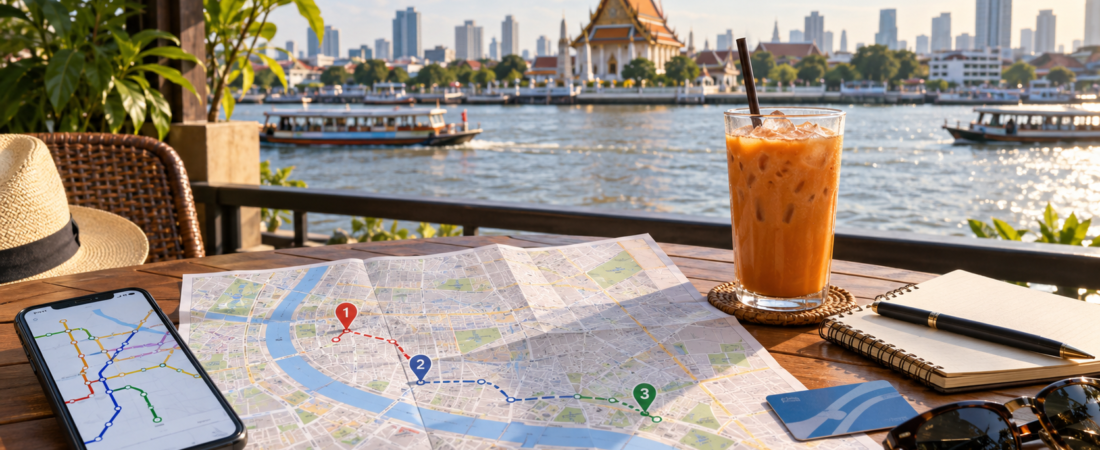
Bangkok brings together magnificent temples, royal history, energetic markets, riverside scenery, modern shopping districts and one of Asia’s most exciting food cultures. Although Thailand’s capital is enormous, careful planning makes it possible to experience its essential highlights without spending most of your visit travelling between distant neighbourhoods.
This complete 3 days in Bangkok itinerary groups nearby attractions together, balances outdoor sightseeing with indoor breaks and provides realistic guidance on admission fees, transport and timing.
Price note: All prices in this article are approximate and were checked at the time of publication. Prices may change.
Bangkok Itinerary at a Glance
Day 1: Historic Bangkok and the Chao Phraya River
- Grand Palace and Wat Phra Kaew
- Wat Pho
- Wat Arun
- Pak Khlong Talat Flower Market
- Riverside evening
Day 2: Chinatown, Talat Noi and Central Bangkok
- Talat Noi
- Chinatown and Wat Mangkon area
- Bangkok Art and Culture Centre
- Siam shopping district
- Yaowarat Road at night
Day 3: Parks, Markets and Modern Bangkok
- Lumphini Park or Benjakitti Park
- Chatuchak Weekend Market or a weekday alternative
- Sukhumvit or Silom
- Rooftop view, night market or evening river walk
Top Tours & Experiences in Bangkok
Discover popular Bangkok tours and experiences. Check current availability, ratings and prices before you book.
Affiliate disclosure: If you book through these links, we may earn a commission from Viator. This does not increase the price you pay.
Before Starting Your Three Days in Bangkok
Bangkok is easier to explore when you organise each day around one section of the city. Traffic can make short road journeys unexpectedly slow, so use the BTS Skytrain, MRT and river boats whenever they provide a practical route.
Start temple visits early to avoid the strongest heat and largest crowds. Carry drinking water, sun protection and a compact umbrella, particularly during the hotter and wetter months.
You should also keep some Thai baht in small denominations. Cards are widely accepted in hotels, shopping centres and larger restaurants, but markets, boats and small food businesses may require cash.
If you have not yet selected your accommodation, compare the transport connections and atmosphere of different neighbourhoods in our guide to where to stay in Bangkok.
Day 1: The Grand Palace, Bangkok’s Temples and the River
Your first day covers Bangkok’s most important historic attractions. The Grand Palace, Wat Pho and Wat Arun are close enough to visit together, preventing unnecessary journeys across the city.
8:00 a.m.: Travel to Bangkok’s Old Town
Eat breakfast before leaving your hotel and aim to reach the Grand Palace entrance shortly before it opens.
The historic district does not have the same direct BTS coverage as Siam or Sukhumvit. Depending on where you are staying, useful options include:
- Take the MRT to Sanam Chai and continue by taxi, bus or walking.
- Take the BTS to Saphan Taksin, walk to Sathorn Pier and use a river boat.
- Use a metered taxi or ride-hailing service directly from your hotel.
River services have different flags, routes and operating days. Check the stopping pier before boarding rather than assuming every boat follows the same route.
8:30 a.m.: Visit the Grand Palace and Wat Phra Kaew
Begin at the Grand Palace, Bangkok’s most significant historic landmark. The complex was established in 1782 and became the royal and administrative centre of the new capital.
Within the palace grounds, Wat Phra Kaew houses the Emerald Buddha, one of Thailand’s most revered religious images. Visitors can also see decorated ceremonial buildings, guardian figures, murals and distinctive Thai rooflines.
The Grand Palace’s officially published visitor information currently lists:
- Opening hours: 8:30 a.m.–4:30 p.m. daily
- Ticket sales: 8:30 a.m.–3:30 p.m.
- Foreign-visitor admission: Approximately 500 baht
Royal ceremonies can affect normal access, so check the official schedule before your visit.
Allow approximately two hours for the palace and temple. Arriving at opening time provides cooler conditions and a better chance of exploring before the largest tour groups arrive.
Grand Palace Dress Code
Wear clothing that covers your shoulders and knees. Avoid sleeveless tops, short skirts, short trousers, torn clothing and transparent material.
Do not accept unsolicited claims outside the palace that it is closed. Confirm information with official staff at the entrance.
10:45 a.m.: Walk to Wat Pho
Wat Pho is a short walk south of the Grand Palace. Take your time and stop for water if the weather is hot.
The temple is famous for its enormous reclining Buddha, but the wider complex deserves attention. Its courtyards contain colourful stupas, Buddha images, sculptures and historic inscriptions connected with traditional Thai knowledge.
The temple’s published visitor information currently lists:
- Opening hours: Approximately 8:00 a.m.–7:30 p.m.
- Foreign-adult admission: Approximately 300 baht
- Children below 120 centimetres: Free under the published policy
Allow at least one hour for the temple. Traditional Thai massage is available within the complex for an additional fee, but it is best treated as an optional activity rather than part of a tightly scheduled first morning.
12:15 p.m.: Have Lunch Near Wat Pho
Choose a restaurant near Tha Tien, Maharaj Road or Sanam Chai. Local options commonly include noodle dishes, rice meals, stir-fries and Thai curries.
A simple lunch provides a useful break from the heat. Avoid rushing directly from one temple to another, particularly if you are visiting between March and May.
1:30 p.m.: Cross the River to Wat Arun
Walk towards Tha Tien Pier and use the local cross-river ferry to reach the Wat Arun side of the Chao Phraya River. The crossing is short, but waiting times and pier arrangements can vary.
Wat Arun, or the Temple of Dawn, is recognised by its central tower decorated with ceramic and porcelain details. Despite its name, the temple is also beautiful in the afternoon, when light reveals the textures and colours of its decoration.
Published visitor information currently lists:
- Opening hours: Approximately 8:00 a.m.–6:00 p.m. daily
- Foreign-adult admission: Approximately 200 baht
Parts of the tower have steep steps. Wear secure footwear, use the handrails and do not attempt the climb if you are uncomfortable with heights or uneven steps.
Allow approximately one hour for the complex.
3:15 p.m.: Return Across the Chao Phraya River
Cross back towards the Tha Tien side. From here, choose between a flower-market visit, a relaxed café break or additional time beside the river.
Travellers who are tired can return to their hotel and rest before dinner. Bangkok’s heat can make a seemingly moderate sightseeing day more demanding than expected.
4:00 p.m.: Explore Pak Khlong Talat Flower Market
Pak Khlong Talat is Bangkok’s best-known flower market. Vendors sell orchids, roses, garlands and bundles of colourful flowers to temples, businesses and individual customers.
There is no admission fee to walk through the public market areas. Activity changes throughout the day, but late afternoon and evening are convenient for most visitors.
Respect working vendors, avoid blocking narrow passages and ask before taking close photographs of people.
5:30 p.m.: Enjoy a Riverside Evening
Finish the first day beside the Chao Phraya River. Several public areas, restaurants and shopping complexes offer views across the water.
Your options include:
- Have dinner at a casual riverside restaurant.
- Walk through a riverside public area.
- Take a paid evening cruise.
- Watch Wat Arun illuminate from the opposite bank.
- Return to Chinatown if you want a lively late-night meal.
Dinner cruises vary significantly in price and quality. Check what is included, the departure pier, seating arrangements and cancellation terms before booking.
Approximate Day 1 Admission Total
The three major paid attractions currently total approximately:
- Grand Palace: 500 baht
- Wat Pho: 300 baht
- Wat Arun: 200 baht
- Total: Approximately 1,000 baht per foreign adult
Transport, meals, massages, guided tours and cruises cost extra.
Day 2: Talat Noi, Chinatown, Art and Siam
Day two moves from Bangkok’s historic commercial neighbourhoods to its modern centre. It combines self-guided walking, food, cultural spaces and air-conditioned afternoon attractions.
9:00 a.m.: Begin in Talat Noi
Travel to Talat Noi, an old riverside neighbourhood near Chinatown. MRT Hua Lamphong is a useful starting point, followed by a walk or short taxi journey.
Talat Noi is known for:
- Traditional shophouses
- Old workshops and machinery
- Chinese shrines
- Street art and murals
- Independent cafés
- Small riverside corners
- Historic residential lanes
Exploring the neighbourhood’s public streets is free. Remember that people live and work here. Keep noise low, avoid blocking entrances and request permission before photographing residents closely.
Spend approximately 90 minutes walking through the neighbourhood.
10:45 a.m.: Continue Towards Chinatown
Walk or take a short ride towards Yaowarat and the lanes surrounding Wat Mangkon.
Chinatown feels different during the day and evening. Morning and afternoon are better for markets, traditional shops, religious sites and architecture. After dark, Yaowarat Road becomes a major street-food destination.
Places to explore include:
- Sampeng’s narrow commercial lanes
- Traditional medicine shops
- Gold businesses
- Chinese shrines and temples
- Old food establishments
- Yaowarat Road and its side streets
Walking around the public streets is free, but food, shopping and admission to any paid attraction cost extra.
12:30 p.m.: Eat Lunch in Chinatown
Choose a busy restaurant or food stall where dishes are prepared freshly. Chinatown offers noodles, dumplings, rice dishes, roasted meats, seafood and Chinese-Thai desserts.
If you have allergies, carry a translated allergy card. Fish sauce, shellfish, peanuts and other ingredients may appear in sauces or pastes even when they are not obvious.
Keep lunch moderate because you will have another opportunity to eat in Chinatown during the evening.
2:00 p.m.: Take the MRT to Bangkok Art and Culture Centre
Travel from MRT Wat Mangkon towards the Siam area, transferring to the BTS or walking from a suitable central station.
Bangkok Art and Culture Centre, commonly known as BACC, is next to BTS National Stadium. The centre contains a curved interior walkway, galleries, exhibition rooms, creative shops and cafés.
General access and many exhibitions are free, although certain performances or special events may require tickets. Check the current programme before travelling.
This is a useful afternoon attraction because it provides an air-conditioned break after the morning’s outdoor walking.
Allow approximately one to two hours, depending on the exhibitions.
3:45 p.m.: Explore Siam
Walk from BACC towards the Siam shopping district. The area contains several major shopping centres, restaurants, cinemas, cafés and indoor attractions.
Possible stops include:
- MBK Center
- Siam Discovery
- Siam Center
- Siam Paragon
- CentralWorld and the Ratchaprasong area
You do not need to visit every shopping centre. Choose one or two based on your interests and use the afternoon as a relaxed contrast to the temples and historic streets of day one.
Shopping-centre entry is free. Purchases, entertainment and certain indoor attractions cost extra.
5:00 p.m.: Optional Erawan Shrine Visit
The Erawan Shrine is located near the Ratchaprasong intersection and BTS Chit Lom. The small but busy Hindu shrine attracts worshippers throughout the day.
There is no standard admission fee, although flowers, offerings and donations are optional expenses.
Remain respectful, avoid interrupting worshippers and follow any instructions displayed around the shrine.
6:30 p.m.: Return to Chinatown for Dinner
Take the MRT to Wat Mangkon and return to Yaowarat Road after dark. Neon signs, restaurants and food stalls create a completely different atmosphere from the daytime.
Rather than ordering too much at one location, try several smaller dishes. Popular choices include:
- Grilled seafood
- Peppery noodle soup
- Dim sum
- Crispy oyster omelette
- Roasted chestnuts
- Chinese doughnuts
- Fresh fruit
- Mango sticky rice
Queues do not always guarantee exceptional food, but a steady flow of local customers usually indicates freshness.
Keep your belongings secure because pavements and food areas become crowded.
Optional Alternative: Bangkok Night Market
If you prefer shopping and entertainment to a second Chinatown visit, choose a currently operating night market. Bangkok’s markets sometimes relocate, close or change their schedules, so verify the latest information shortly before travelling.
Day 3: Parks, Chatuchak and Modern Bangkok
Your final day combines green spaces with markets and modern neighbourhoods. The morning plan should be adjusted according to the day of the week.
7:00 a.m.: Walk Through Lumphini Park
Begin early at Lumphini Park, one of central Bangkok’s most important public green spaces.
Bangkok’s official information lists general opening hours of approximately 4:30 a.m.–9:00 p.m. Admission is free.
During the morning, visitors may see:
- Joggers and walkers
- Exercise groups
- Tai chi sessions
- Birds around the lake
- Monitor lizards
- Shaded walking paths
Observe wildlife from a safe distance and never feed or approach the monitor lizards.
Spend approximately one hour in the park before breakfast.
8:30 a.m.: Breakfast and Travel North
Have breakfast near Silom or travel towards the Chatuchak area.
BTS Mo Chit and MRT Chatuchak Park are both convenient for Chatuchak Weekend Market and the surrounding parks.
10:00 a.m.: Visit Chatuchak Weekend Market
If day three falls on a Saturday or Sunday, spend the late morning at Chatuchak Weekend Market.
The full market generally operates on Saturdays and Sundays from approximately 9:00 a.m.–6:00 p.m., although individual stalls can follow different hours.
The market includes sections selling:
- Clothing and accessories
- Handicrafts
- Artwork and prints
- Homeware
- Plants and garden products
- Souvenirs
- Antiques and collectables
- Food and drinks
There is no entrance fee. Wear comfortable shoes, keep water with you and save the location of the gate or station you used.
The market is extremely large, so do not attempt to see every section. Choose the areas that interest you and allow approximately two to three hours.
Weekday Alternative
If day three is not a weekend, replace Chatuchak with one of these options:
- Explore Benjakitti Park and its wetland walkways.
- Visit Bangkok Art and Culture Centre if you skipped it on day two.
- Spend additional time in Talat Noi and Bang Rak.
- Visit a museum that matches your interests.
- Explore a local neighbourhood around Ari or Thong Lo.
- Take a longer public boat journey along the Chao Phraya River.
Confirm museum opening days and ticket prices before visiting.
1:00 p.m.: Have Lunch Near Chatuchak or Ari
Chatuchak contains numerous food stalls and casual restaurants. Alternatively, travel to Ari for cafés and a more relaxed neighbourhood atmosphere.
Choose an indoor or shaded location if the afternoon is particularly hot.
2:30 p.m.: Explore Benjakitti Park
Travel to MRT Queen Sirikit National Convention Centre for Benjakitti Park.
The park includes:
- A large lake
- Wetland areas
- Elevated walkways
- Cycling and walking routes
- Gardens
- City-skyline views
Entry is free. The exposed areas can feel hot during the afternoon, so take breaks and carry water.
Active travellers can follow the elevated Green Bridge towards Lumphini Park. If you already explored Lumphini that morning, you can walk part of the bridge before returning.
4:30 p.m.: Explore Sukhumvit or Silom
Use your final afternoon to experience one of Bangkok’s modern districts.
Choose Sukhumvit for:
- Shopping centres
- Restaurants and cafés
- Easy BTS access
- International dining
- Busy nightlife
Choose Silom for:
- A mixture of business and local streets
- Access to both BTS and MRT
- Restaurants and evening activity
- Proximity to the river and Lumphini Park
Avoid travelling long distances simply to complete a checklist. Choose whichever area is more convenient for your hotel or final evening plans.
6:30 p.m.: Choose Your Final Bangkok Evening
Finish your trip with an experience that suits your travel style.
Rooftop View
Bangkok has rooftop restaurants, bars and observation decks with panoramic skyline views. Prices, dress codes, minimum spending requirements and age restrictions vary.
Make a reservation when required and avoid arriving in beachwear, sportswear or flip-flops unless the venue explicitly permits them.
Riverside Walk
Return to the Chao Phraya River for an unhurried evening walk. This is a good free alternative to an expensive rooftop venue, although transport and food still cost extra.
Thai Massage
Book a traditional Thai massage through a reputable establishment. Confirm the treatment, duration and total price before it begins.
Night Market
Browse a currently operating night market for food, clothing and casual entertainment. Verify the opening day because market schedules can change.
Final Thai Dinner
Choose a traditional restaurant and order dishes you missed earlier in the trip. Sharing several dishes makes it easier to experience different flavours.
Getting Around During This Itinerary
BTS Skytrain
The BTS is useful for Siam, Sukhumvit, Silom, National Stadium and Chatuchak.
Official single-journey fares currently start at approximately 17 baht and reach around 47 baht within the core fare structure. Journeys involving extensions may cost more.
The BTS one-day pass currently costs approximately 150 baht. It provides unlimited eligible BTS travel for the date of use, but it may not save money unless you plan several BTS journeys.
MRT
The MRT connects Chinatown, Sanam Chai, Sukhumvit, Silom, Chatuchak and Queen Sirikit National Convention Centre.
Fares are calculated by distance. Use the official Bangkok MRT fare calculator for your exact route.
Chao Phraya Boats
The Chao Phraya Express Boat’s published weekday orange-flag fare is approximately 18 baht per journey.
Service patterns vary by flag and operating day. Always confirm that the boat stops at your intended pier.
Taxis and Ride-Hailing
Taxis are useful when rail or boat services do not provide a direct connection. Ask metered-taxi drivers to activate the meter.
Ride-hailing applications display an estimated fare before booking. Expressway tolls may be charged separately.
Tuk-Tuks
Agree on the total fare and destination before entering a tuk-tuk. Treat tuk-tuks as an occasional experience instead of your primary transport method.
Estimated Attraction Budget
For this itinerary, the principal fixed admission charges are concentrated on day one:
- Grand Palace: Approximately 500 baht
- Wat Pho: Approximately 300 baht
- Wat Arun: Approximately 200 baht
- BACC general admission: Usually free
- Lumphini Park: Free
- Benjakitti Park: Free
- Chatuchak Weekend Market: Free
- Talat Noi and Chinatown streets: Free
- Core attraction total: Approximately 1,000 baht per foreign adult
Meals, public transport, accommodation, massages, cruises, rooftop venues and shopping are additional expenses.
For detailed spending estimates across different travel styles, read our Bangkok travel budget.
Where to Stay for This Bangkok Itinerary
The most convenient bases for this three-day route include:
- Sukhumvit: Best for restaurants, nightlife and BTS access
- Siam: Best for central transport and shopping
- Silom or Sathorn: Best for balanced access to rail, parks and the river
- Riverside: Best for scenery and boat transport
- Old Town: Best for early access to temples
- Chinatown: Best for food and neighbourhood atmosphere
For most first-time visitors, staying within a short walk of a BTS or MRT station is more useful than simply choosing the geographically central hotel.
Best Time to Follow This Itinerary
November to February generally provides Bangkok’s most comfortable sightseeing conditions, although this is also a popular travel period.
March to May can be intensely hot. Move temple visits earlier and schedule more indoor afternoon stops.
During the wetter season, carry an umbrella and allow extra time for transport. Short, heavy downpours do not necessarily ruin a sightseeing day, but road traffic can become slower.
See our detailed guide to the best time to visit Bangkok before choosing your dates.
Useful Tips for Three Days in Bangkok
- Start major outdoor attractions early.
- Group nearby attractions together.
- Keep small baht notes for boats, markets and local restaurants.
- Check official attraction schedules before leaving your hotel.
- Wear clothing covering your shoulders and knees at temples.
- Remove your shoes when signs or local practice require it.
- Carry water, sunscreen and a compact umbrella.
- Allow extra time for airport journeys.
- Protect valuables in busy markets and stations.
- Avoid unsolicited offers involving supposedly closed attractions.
- Download offline maps in case your mobile connection becomes unreliable.
- Leave some flexibility for weather, traffic and discoveries along the way.
Can You See Bangkok in Three Days?
Three days are enough to experience Bangkok’s principal temples, Chinatown, the Chao Phraya River, a major market, central parks and at least one modern district.
You will not see every attraction, but trying to cover too much can make the trip exhausting. This itinerary prioritises a balanced first visit rather than an unrealistic race across the city.
Travellers with four or five days can add museums, food tours, longer neighbourhood walks or a day trip outside Bangkok.
For broader advice about food, transport and first-time planning, consult our complete Bangkok travel guide. Budget-conscious visitors can also add activities from our guide to the best free things to do in Bangkok.
Final Thoughts
This three-day route introduces Bangkok through its royal history, Buddhist temples, traditional neighbourhoods, street food, public parks and modern city life.
Keep the overall structure but adjust individual stops according to the weather, your travel dates and your preferred pace. Starting early, grouping attractions geographically and using Bangkok’s rail and river services will help you spend more time experiencing the city and less time sitting in traffic.
Book Your Bangkok Experiences
Ready to start planning? Compare popular Bangkok tours and activities, check current prices and availability, and book the experiences that suit your trip.
Affiliate disclosure: If you book through these links, we may earn a commission from Viator. This does not increase the price you pay.
Explore more places through our destinations page or browse our complete collection of itineraries.