
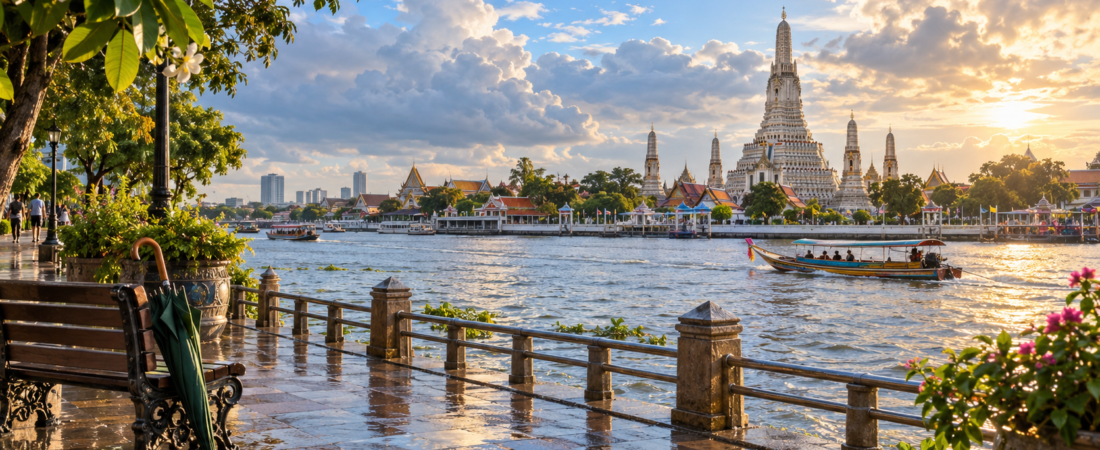
The best time to visit Bangkok depends on whether you prioritise comfortable sightseeing weather, lower accommodation prices, fewer visitors or major Thai festivals. Bangkok is a year-round destination, but the experience changes considerably between the cooler, hot and rainy periods.
For most first-time visitors, November to February offers the most comfortable conditions for temples, markets and neighbourhood walks. Travellers willing to accept greater heat or occasional heavy rain can often find better accommodation value during other months.
Best Time to Visit Bangkok at a Glance
- Best overall weather: November to February
- Best for outdoor sightseeing: December and January
- Best for fewer visitors: May, June and September
- Best chance of lower hotel rates: May to October
- Best for Songkran: April
- Best for shopping and indoor attractions: Any month
- Hottest period: March to May
- Wettest general period: Approximately May to October
- Best balance of weather and crowds: November or February
Bangkok remains warm throughout the year. Even during the cooler season, daytime temperatures can feel hot, particularly in direct sunlight.
Understanding Bangkok’s Climate
Bangkok has a tropical climate influenced by seasonal monsoon patterns. Instead of four distinct seasons, the year is generally divided into three broad periods:
Cooler and Drier Period
Approximately November to February
This is Bangkok’s most comfortable sightseeing season. Humidity is often lower, rainfall is less frequent and mornings or evenings can feel noticeably more pleasant.
“Cool” is relative in Bangkok. Lightweight clothing remains appropriate, and midday outdoor sightseeing can still feel hot.
Hot Period
Approximately March to May
Temperatures and humidity increase, with April usually among the hottest times of the year. Outdoor attractions become more tiring, especially around midday.
This period also includes Songkran, Thailand’s famous traditional New Year celebration.
Rainy Period
Approximately May to October
The southwest monsoon brings frequent showers, high humidity and occasional thunderstorms. Rain can be intense, but it does not necessarily continue throughout the entire day.
Some visitors find the rainy season rewarding because the city can be less crowded and accommodation may offer better value.
November to February: Best Overall Time to Visit Bangkok
November to February is usually the easiest period for a first Bangkok trip. Lower humidity and reduced rainfall make temple visits, markets, river journeys and outdoor walking more comfortable.
It is also the city’s most popular visitor season, so expect greater demand for flights, accommodation and organised activities.
Advantages
- Comparatively comfortable temperatures
- Lower humidity than much of the year
- Less frequent rain
- Better conditions for outdoor attractions
- Pleasant evenings
- Suitable for walking tours and river journeys
Disadvantages
- Higher accommodation demand
- More visitors at major attractions
- Busier international flights
- Popular hotels can sell out
- Peak-season room rates
- Crowded conditions around Christmas and New Year
Who Should Visit During This Period?
November to February is ideal for:
- First-time visitors
- Families
- Older travellers
- Travellers sensitive to extreme heat
- Visitors planning extensive outdoor sightseeing
- People combining Bangkok with northern Thailand
Book early if your trip includes Christmas, New Year or a major public holiday.
November: A Good Seasonal Transition
November often marks the transition towards Bangkok’s drier and more comfortable period. Rainfall generally becomes less frequent, although occasional showers remain possible.
The month can provide a good balance between improving weather and peak-season demand, particularly outside major events.
Loi Krathong usually takes place around November, although its date changes because it follows the lunar calendar. Celebrations can include decorated floats, cultural performances and riverside activities.
Check the current year’s official arrangements rather than relying on previous festival dates or locations.
November is best for: Improving weather, cultural events and travellers seeking a balance between conditions and crowds.
December: Excellent Weather and High Demand
December is one of Bangkok’s most popular travel months. Conditions are generally well suited to walking around the Grand Palace, Wat Pho, Chinatown, Chatuchak and riverside neighbourhoods.
Evenings can feel more comfortable than during other parts of the year, making rooftop venues and outdoor dining particularly attractive.
Demand increases around Christmas and New Year. Hotels in Sukhumvit, Siam, Silom and along the river may charge higher rates or apply special booking conditions.
December is best for: Comfortable sightseeing, festive atmosphere and outdoor activities.
Consider carefully if: You want the lowest accommodation prices or dislike crowded attractions.
January: One of the Most Comfortable Months
January generally offers some of Bangkok’s most manageable weather. Rain is usually limited, humidity is comparatively lower and morning sightseeing can be pleasant.
The comfortable conditions also make January a popular month for international visitors. The Grand Palace and famous temples can become crowded, so arrive at opening time.
Air quality can occasionally become a concern during the drier part of the year. Check current readings if you have asthma or another respiratory condition.
January is best for: First-time sightseeing, outdoor attractions and comfortable evenings.
February: Good Weather With Increasing Heat
February often remains dry, but temperatures gradually begin rising as Bangkok approaches the hot season.
Early February can provide an attractive compromise between comfortable weather and slightly reduced peak-season pressure. Conditions later in the month may feel noticeably warmer.
Chinese New Year sometimes falls in January and sometimes in February. Bangkok’s Chinatown becomes particularly active, with decorations and celebrations depending on the year’s official programme.
February is best for: Generally good weather, Chinatown atmosphere and slightly fewer visitors than the year-end peak.
March to May: Bangkok’s Hot Season
March, April and May can be extremely hot and humid. Visitors can still enjoy Bangkok, but daily schedules should be adapted to the climate.
Start outdoor sightseeing shortly after attractions open, take an air-conditioned break during the hottest part of the afternoon and resume walking later in the day.
March: Hot but Often Relatively Dry
March brings increasing temperatures, although heavy monsoon rainfall has generally not yet become established.
Outdoor attractions such as the Grand Palace and Chatuchak Market can feel demanding after late morning. Plan temples early and use museums, shopping centres, cafés or a hotel break during the afternoon.
Accommodation demand may be lower than during December or January, except around events and holidays.
March is best for: Travellers comfortable with heat who want to avoid the main peak season.
April: Hottest Weather and Songkran
April is normally among Bangkok’s hottest months, but it also hosts one of Thailand’s most memorable celebrations.
Songkran marks the traditional Thai New Year. The official holiday is associated with family traditions, temple visits and paying respect to elders, while public celebrations are famous for large-scale water activities.
In Bangkok, major public water celebrations commonly take place around areas such as Silom and Khao San Road, although official event locations and schedules can vary.
What to Expect During Songkran
- Large crowds in celebration areas
- Extensive water throwing
- Changes to normal traffic patterns
- Busy domestic transport
- Some businesses operating reduced hours
- Waterproof covers being useful for phones and documents
- Accommodation demand rising near major event areas
Do not assume cameras, passports or non-water-resistant phones will remain dry. Keep valuables in securely closed waterproof protection.
Public celebrations should remain respectful. Avoid throwing water at monks, babies, older people, people carrying electronic equipment or anyone clearly not participating.
April is best for: Festival travellers and visitors comfortable with intense heat.
April is less suitable for: Travellers seeking quiet streets, predictable transport or comfortable midday sightseeing.
May: Heat, Humidity and the Beginning of More Rain
May remains hot, but rainfall generally becomes more frequent as the seasonal pattern changes.
This can be a useful value period. Visitor numbers may be lower than during winter, and hotels sometimes offer more competitive rates.
Rain showers can provide temporary relief from the heat, although humidity remains high and road traffic may slow significantly during storms.
May is best for: Lower-season value, indoor attractions and flexible travellers.
June to October: Bangkok’s Rainy Season
Bangkok’s rainy season should not automatically be avoided. Rain is frequent, but many days still include long dry periods.
A typical day may begin with sunshine before clouds and rain develop later. However, rainfall is unpredictable, and some storms can be prolonged or intense.
The principal challenges are high humidity, wet pavements, slower traffic and occasional localised flooding.
June: A Manageable Rainy-Season Month
June often combines hot weather with regular showers. Rainfall is more established than in March or April, but the wettest part of the season may still be ahead.
Visitor numbers are generally lower than during the cooler months, and accommodation can offer better value.
Plan one or two flexible indoor attractions for each day rather than abandoning outdoor sightseeing entirely.
June is best for: Lower crowds, possible hotel savings and travellers comfortable with occasional rain.
July: Humid With Regular Showers
July is warm, humid and frequently wet. Rain may affect outdoor plans, but temples, markets and river areas can still be visited with flexibility.
Public transport is particularly useful when road traffic becomes slow. Keep lightweight rain protection available and avoid footwear that becomes uncomfortable when wet.
International travel demand may increase during school holidays in some countries, so prices are not necessarily low everywhere.
July is best for: Flexible itineraries and combining outdoor attractions with museums and shopping.
August: Wet but Still Visitable
August generally continues the rainy-season pattern. Heavy showers may arrive suddenly, and humidity remains high.
Bangkok has enough indoor attractions to make August manageable. Shopping centres, BACC, museums, restaurants and spas provide alternatives during storms.
Check weather radar and short-term forecasts each morning, but avoid planning the entire day around a forecast showing rain. Tropical showers can be highly localised.
August is best for: Indoor attractions, food-focused trips and flexible sightseeing.
September: Frequently One of the Wettest Months
September often experiences substantial rainfall. Visitors should be prepared for intense showers, wet streets and potential disruption to road travel.
The advantage is generally lower visitor demand. Major attractions may feel less crowded outside weekends and public holidays.
Avoid scheduling a tightly timed series of road journeys. Rail transport is often more predictable, although station exits and surrounding pavements can still become wet.
September is best for: Lower crowds and travellers who prioritise value over dependable weather.
September is less suitable for: Travellers who want outdoor photography, long walking days or a rigid schedule.
October: Transition Towards Drier Conditions
October remains wet, particularly during its earlier portion, but conditions can gradually improve as Bangkok approaches November.
The month can provide an appealing compromise for flexible travellers. Accommodation demand is often lower than during the winter peak, while rainfall may begin easing later in the month.
Seasonal transitions are not exact, so a late-October visit is not guaranteed to be dry.
October is best for: Travellers seeking an off-peak compromise before the main high season.
Bangkok Weather by Month
| Month | General Conditions | Crowds | Typical Value | Best For |
|---|---|---|---|---|
| January | Comparatively dry and comfortable | High | Lower | Outdoor sightseeing |
| February | Dry with increasing heat | Medium–high | Moderate | Temples and festivals |
| March | Hot and often relatively dry | Medium | Moderate | Indoor-outdoor itineraries |
| April | Very hot; Songkran period | High around events | Variable | Songkran celebrations |
| May | Hot with increasing rain | Lower | Good | Flexible budget trips |
| June | Humid with regular showers | Lower | Good | Fewer crowds |
| July | Wet and humid | Medium | Good | Mixed indoor activities |
| August | Frequent showers | Medium | Good | Food and shopping |
| September | Often very wet | Low | Very good | Lowest crowds |
| October | Wet but gradually transitioning | Low–medium | Good | Off-peak travel |
| November | Drier and more comfortable | Rising | Moderate | Balanced conditions |
| December | Pleasant and comparatively dry | High | Lower | Best overall weather |
These descriptions represent broad seasonal patterns rather than guarantees. Check the Thai Meteorological Department’s current Bangkok forecast shortly before and during your trip.
Best Time for Bangkok’s Main Attractions
Grand Palace and Wat Pho
Visit between November and February for comparatively comfortable conditions, but arrive at opening time to avoid the largest crowds.
During hot months, early arrival becomes even more important because much of the sightseeing is outdoors.
Wat Arun and the Chao Phraya River
Clearer, drier weather generally provides better river views and photographs. Rainy-season journeys remain possible, but boat operations can be affected by severe weather.
Late-afternoon light can be beautiful, although the temple must be visited within its official opening hours.
Chatuchak Weekend Market
Cooler-season mornings offer the most comfortable experience. The market can become extremely hot and crowded by the afternoon.
During the rainy season, carry light rain protection and remember that not every stall is fully protected from the weather.
Chinatown
Chinatown can be explored throughout the year. Evening visits avoid the strongest daytime heat, although rain can affect outdoor food stalls and seating.
Chinese New Year creates an especially lively atmosphere, but also brings significant crowds.
Lumphini and Benjakitti Parks
November to February provides the best general walking conditions. In hotter months, visit shortly after sunrise or before sunset.
Avoid exposed areas during thunderstorms.
Rooftop Venues
The cooler, drier season generally provides the best chance of clear views and comfortable outdoor seating.
During the rainy season, confirm whether the venue has an indoor alternative and understand its weather-related cancellation arrangements.
Best Time to Visit Bangkok for Lower Prices
Bangkok accommodation prices vary according to hotel category, neighbourhood, events, holidays and booking demand.
The greatest chance of lower hotel rates generally occurs during the rainy period from approximately May to October. May, June and September can offer particularly good value for travellers with flexible plans.
However, lower prices are not guaranteed. Large conferences, concerts, public holidays and regional travel periods can raise demand at any time.
To improve your chances of finding value:
- Compare several date combinations.
- Avoid major public holidays where possible.
- Check both refundable and non-refundable rates.
- Confirm whether taxes and service charges are included.
- Compare hotels near different BTS or MRT stations.
- Book early for family rooms and connecting rooms.
- Recheck flexible reservations if prices later fall.
Our detailed Bangkok travel budget explains how accommodation, transport, food and attractions affect the total cost of a trip.
Best Time to Visit Bangkok for Fewer Crowds
May, June, September and parts of October generally attract fewer leisure visitors than the cooler high season.
Even during busy months, you can reduce crowding by:
- Visiting the Grand Palace at opening time.
- Exploring temples on weekday mornings.
- Arriving at Chatuchak early.
- Eating before or after standard meal times.
- Avoiding major attractions on Thai public holidays.
- Visiting neighbourhoods beyond the principal tourist circuit.
- Reserving timed attractions in advance.
Bangkok itself is a major capital city, so busy streets, trains and shopping districts are normal throughout the year.
Best Time for Bangkok Festivals
Songkran
Songkran is celebrated in April and marks Thailand’s traditional New Year. It combines cultural traditions with large public water celebrations.
Official Bangkok locations, schedules and traffic arrangements should be checked for the relevant year.
Chinese New Year
Chinese New Year falls in January or February, depending on the lunar calendar. Chinatown becomes especially colourful and crowded.
Not every activity occurs on the same date, so consult the current official programme.
Loi Krathong
Loi Krathong normally occurs in November, although the exact date changes annually. Events may be held beside the Chao Phraya River and at other locations around Bangkok.
Participate responsibly and use environmentally appropriate materials where official activities permit floating krathongs.
Royal and Religious Events
Royal ceremonies and Buddhist holidays can affect access to temples, palace buildings and roads. Some events offer memorable cultural experiences, while others may require attractions to close or adjust their hours.
Check official announcements before finalising an important sightseeing day.
When to Avoid Bangkok
There is no single month when everyone should avoid Bangkok, but certain conditions may not suit particular travellers.
Avoid March to May If You Dislike Extreme Heat
Outdoor sightseeing can become exhausting, particularly at midday. Choose the cooler period if heat significantly affects your comfort or health.
Avoid September If Rain Would Ruin Your Plans
September often has substantial rainfall. Travellers prioritising outdoor photography, river activities and long walking days may prefer another period.
Avoid Songkran If You Want Predictable, Dry Sightseeing
Songkran is memorable but disruptive. Choose dates outside the main celebration period if you do not want crowds, water throwing or altered transport patterns.
Avoid Late December If You Need the Lowest Prices
Christmas and New Year bring strong demand for flights, hotels and special events.
What to Pack by Season
November to February
- Lightweight, breathable clothing
- Comfortable walking shoes
- Sunscreen and sunglasses
- Modest temple clothing
- A light layer for air-conditioned interiors
- Compact umbrella for occasional showers
March to May
- Loose, breathable clothing
- High-protection sunscreen
- Hat or umbrella for shade
- Reusable water bottle
- Cooling towel
- Modest lightweight clothing for temples
- Waterproof phone protection during Songkran
June to October
- Compact umbrella
- Lightweight rain jacket
- Quick-drying clothing
- Shoes that remain comfortable when wet
- Waterproof pouch for electronics
- Spare socks
- Modest clothing for temple visits
Avoid relying entirely on disposable plastic rain covers. A reusable compact umbrella or lightweight rain jacket is more practical for repeated showers.
Planning Sightseeing Around Bangkok’s Weather
Start Early
Temples, markets and parks are more comfortable during the morning. Early visits also reduce exposure to crowds.
Schedule Indoor Afternoon Stops
Use museums, shopping centres, cafés, restaurants and spas during the hottest or wettest hours.
Group Attractions Geographically
Combine the Grand Palace, Wat Pho and Wat Arun on one day. Explore Talat Noi with Chinatown, and visit BACC with Siam.
Our 3 days in Bangkok itinerary organises the city’s major attractions into practical geographical groups.
Keep the Schedule Flexible
Do not purchase non-refundable tickets for every hour of a rainy-season trip. Leave room to move outdoor activities between days.
Use Rail Transport During Heavy Traffic
The BTS and MRT can be more predictable than road journeys during peak periods and rainstorms.
Check Current Conditions
Use the Thai Meteorological Department’s official forecast and weather radar rather than relying only on a long-range forecast made before travelling.
Choosing the Right Bangkok Area for Each Season
Cooler Season
Sukhumvit, Siam, Silom, Chinatown, the Riverside and the Old Town are all practical because walking conditions are comparatively comfortable.
Hot Season
Staying near BTS or MRT transport reduces long outdoor walks. Siam and Sukhumvit provide easy access to air-conditioned shopping centres and restaurants.
Rainy Season
Choose accommodation with covered or very short access to rail transport. Avoid hotels that require a lengthy walk through flood-prone or poorly surfaced streets.
Compare Bangkok’s neighbourhoods in our guide to where to stay in Bangkok.
Is Bangkok Worth Visiting During the Rainy Season?
Yes, provided you remain flexible. Rainy-season advantages can include fewer visitors, greener parks and more attractive accommodation rates.
Bangkok also has enough indoor experiences to fill wet periods, including:
- Bangkok Art and Culture Centre
- Museums
- Shopping centres
- Food courts
- Traditional massage
- Cooking classes
- Cafés and restaurants
- Covered markets
- Hotel facilities
Heavy rain can still cause transport disruption and localised flooding. Allow extra time and avoid walking through water when you cannot see the surface beneath it.
Frequently Asked Questions
What is the single best month to visit Bangkok?
January is one of the strongest choices for generally dry conditions and comparatively comfortable temperatures. However, it is also part of the popular travel season.
November and February may offer a better balance for some visitors.
What is Bangkok’s cheapest travel season?
The rainy period from approximately May to October usually provides the best chance of lower hotel rates. Actual prices still depend on events, holidays and demand.
What is Bangkok’s hottest month?
April is generally among the hottest months. High humidity can make conditions feel even warmer.
Does it rain all day during Bangkok’s rainy season?
Not necessarily. Rain often falls in heavy showers with dry periods between them, but prolonged rainfall is possible.
Is December a good time to visit Bangkok?
Yes. December generally offers comfortable sightseeing weather, but accommodation and flights may be more expensive around Christmas and New Year.
Is Bangkok crowded in January?
January is popular with international visitors. Visit famous attractions early and reserve important accommodation or activities in advance.
Is April a good time to visit?
April is excellent for travellers who want to experience Songkran and can tolerate intense heat. It is less suitable for visitors seeking quiet, predictable sightseeing.
How many days should I spend in Bangkok?
Three days cover the principal highlights, while four or five days allow a more relaxed pace.
For complete first-time planning, read our Bangkok travel guide. Visitors travelling during a hotter or wetter month can also add indoor and budget-friendly ideas from our guide to the best free things to do in Bangkok.
Final Verdict
For most first-time visitors, November to February is the best time to visit Bangkok because rainfall is generally lower and outdoor sightseeing feels more comfortable. December and January provide particularly favourable conditions but also bring greater demand and higher seasonal prices.
May, June and September can offer fewer tourists and better accommodation value if you are comfortable with humidity and rain. April is the right choice for Songkran, provided you are prepared for heat, crowds and changes to normal travel routines.
Bangkok remains rewarding throughout the year. Choose dates based on your tolerance for heat and rain, then organise each day around early outdoor sightseeing, convenient public transport and flexible indoor alternatives.
Explore more places through our destinations page or browse our complete collection of itineraries.