
Planning a Venice travel budget can be tricky because accommodation, transport and sightseeing costs vary considerably depending on the season and how you choose to experience the city. Venice is not usually considered a cheap European destination, but you can control your spending by choosing accommodation carefully, walking whenever possible and balancing paid attractions with free experiences.
As a practical starting point, budget travellers might aim for roughly €70–€120 per person per day excluding flights, while a more comfortable mid-range trip can easily reach €150–€250 or more per person per day. Travellers choosing upscale hotels, fine dining, private transfers and several paid experiences can spend considerably more.
These are planning estimates rather than fixed prices.
If you’re organising your first trip, read our Venice travel guide first. You can then use our 3 days in Venice itinerary to decide which attractions and transport journeys you actually need to budget for.
Price note: All prices in this article are approximate and were checked at the time of publication. Prices may change.
How Much Does a Trip to Venice Cost?
Your total Venice budget will depend heavily on accommodation.
A traveller staying in a hostel or inexpensive room, eating simple meals and mainly walking can experience Venice without an enormous daily budget.
At the other end of the scale, a centrally located hotel, restaurant meals, museum tickets, frequent vaporetto journeys and a gondola ride can increase costs quickly.
For a 3-day visit, a useful starting framework per person, excluding flights, is:
- Budget trip: approximately €210–€360
- Mid-range trip: approximately €450–€750
- Higher-end trip: €900 or considerably more
Accommodation assumptions make a major difference, especially for solo travellers who cannot split a hotel room.
Rather than treating these figures as exact targets, use them to identify which parts of your trip matter most to you.
Accommodation Costs in Venice
Accommodation will probably be the largest part of your Venice travel budget.
Prices fluctuate significantly according to season, neighbourhood, room quality and how far in advance you book.
A hostel bed or basic accommodation may sometimes be available from roughly €35–€70 per night, while simple private rooms can start around €80–€150 depending on demand.
A comfortable mid-range hotel in Venice’s historic centre can easily cost around €150–€300 per night, with popular periods pushing prices substantially higher.
Luxury properties can cost several hundred euros per night and sometimes much more.
If you haven’t chosen your base yet, our guide to where to stay in Venice compares San Marco, Cannaregio, Dorsoduro, San Polo, Santa Croce, Castello and Mestre.
Is It Cheaper to Stay in Mestre?
Often, yes.
Mestre is on the mainland and generally offers more affordable accommodation than Venice’s historic centre.
It is connected to Venice by frequent public transport, making it a practical option for travellers prioritising price.
However, compare the saving carefully.
Staying in historic Venice allows you to walk out of your accommodation early in the morning and remain in the city after many day visitors leave.
That experience can be worth paying more for, particularly on a short trip.
If staying in Mestre saves you a substantial amount, it can be an excellent budget strategy. If the difference is relatively small, staying within Venice may provide better overall value.
Don’t Forget the Venice Tourist Tax
Overnight visitors should include Venice’s tourist tax in their accommodation budget.
The City of Venice states that the full tourist-tax rate generally ranges from approximately €1 to €5 per person per night depending on factors including accommodation type, classification, location and season.
It applies to the first five consecutive nights.
Children under 10 are exempt, while children aged 10 to 16 receive a 50% reduction.
Your accommodation normally collects the tax.
Because the exact amount depends on where you stay, check the applicable rate when booking rather than assuming one universal amount.
Venice Public Transport Costs
Walking is the cheapest and often the most enjoyable way to explore Venice.
You can reach many major attractions without using public transport at all.
However, Venice’s vaporetti — public waterbuses — are extremely useful for longer journeys and trips to islands such as Murano and Burano.
A standard ACTV 75-minute waterbus ticket currently costs approximately €9.50.
Current visitor transport passes are approximately:
- 24 hours: €25
- 48 hours: €35
- 72 hours: €45
- 7 days: €65
If you only expect to take one or two waterbus journeys, individual tickets may make more sense.
If you’re following our 3-day itinerary and visiting the lagoon islands, a multi-day pass can offer better value.
Remember that standard visitor passes do not automatically cover every airport service, so check the conditions for your particular airport route.
How Much Does a Gondola Ride Cost?
A gondola ride is one of Venice’s most famous experiences, but it is not essential for enjoying the city.
Official municipal rates currently list a standard daytime gondola ride at €90 for approximately 30 minutes.
From 7 p.m., the official rate is €110 for approximately 35 minutes.
A gondola can carry up to five passengers, so travellers visiting together can divide the cost.
If €90 doesn’t fit your budget, don’t feel that you’re missing Venice.
Walking beside the canals and travelling by vaporetto still provide wonderful views from the water.
Food Costs in Venice
Food spending can vary enormously.
A simple breakfast consisting of coffee and a pastry may cost only a few euros if you stand at the counter rather than choosing a table in a heavily touristed square.
For lunch, pizza, sandwiches and cicchetti can help keep costs manageable.
A casual meal might cost around €12–€25 per person, while a sit-down dinner with multiple courses and drinks can easily reach €30–€60 or more.
Restaurants in prime locations around major landmarks can be significantly more expensive.
Always check menus and displayed prices before ordering.
Venice also has a long bacaro tradition. Visiting a local bacaro for cicchetti can be both an enjoyable cultural experience and a way to avoid an expensive formal lunch.
Rialto Market and Everyday Food Shopping
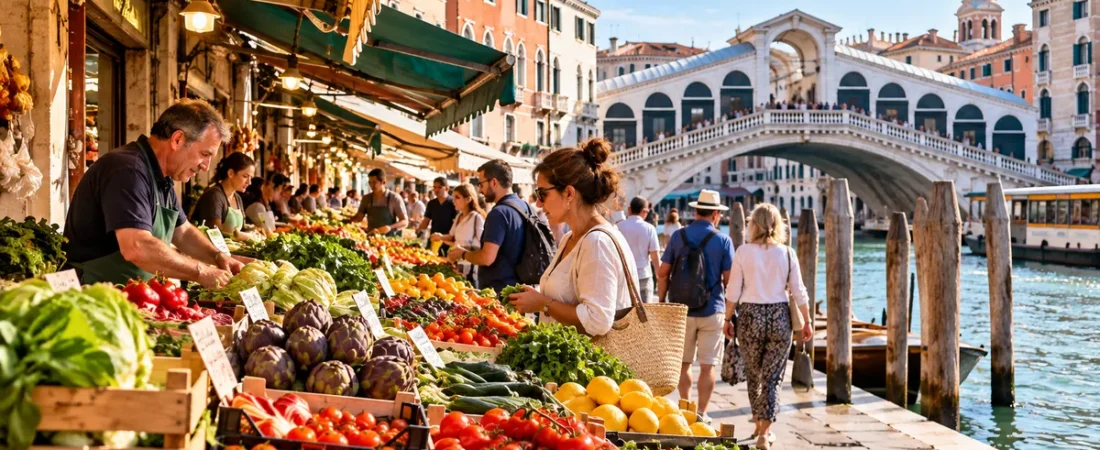
Rialto is famous for more than its bridge.
The market area reflects Venice’s long commercial history and remains an interesting place to see fresh produce and local ingredients.
Markets, bakeries and supermarkets can also help budget travellers reduce food costs.
Buying fruit, snacks, water or simple picnic ingredients can substantially lower daily spending compared with eating every meal in a restaurant.
Just remember to respect local rules regarding where eating and sitting are permitted.
Sightseeing Costs
Many of Venice’s greatest pleasures cost nothing.
Walking across the Rialto Bridge, exploring Cannaregio, wandering through Castello, admiring canals and visiting public squares can fill hours without an admission charge.
For paid attractions, decide which experiences genuinely interest you.
Doge’s Palace is one of the major paid sights, while Venice also contains numerous museums, churches and art collections with separate admission charges.
Trying to visit everything can quickly increase both your spending and sightseeing fatigue.
Choose a handful of priority attractions and leave plenty of time simply to explore the city.
Budget for Murano and Burano
Murano and Burano can be relatively inexpensive additions to your itinerary if you already have an ACTV transport pass.
Much of the enjoyment comes from walking around the islands.
Murano offers canals and its glassmaking heritage, while Burano is famous for brightly coloured houses and lacemaking traditions.
Museums, organised demonstrations, shopping and meals are optional additional expenses.
If you plan to visit both islands, a transport pass can be particularly useful because individual waterbus fares accumulate quickly.
When Is Venice Cheaper?
Accommodation prices vary throughout the year.
Periods outside major holidays and major events can provide better value, while high-demand spring dates, summer travel periods and Carnival can be expensive.
Winter can sometimes provide attractive accommodation prices, although Carnival changes the picture dramatically.
Our best time to visit Venice guide explains the seasonal differences in weather, crowds and atmosphere.
If your travel dates are flexible, compare several weeks rather than choosing your dates first and searching for accommodation afterwards.
A small change in travel dates can sometimes produce a significant hotel saving.
How to Save Money in Venice
The simplest strategy is to walk.
Venice’s historic centre is remarkably walkable, and wandering through its streets is one of the main reasons to visit.
Choose accommodation based on total value rather than the cheapest advertised room. A slightly more expensive room in a convenient location may reduce transport costs and save considerable time.
Use waterbus passes strategically rather than automatically buying one.
Eat away from the most famous squares and waterfront locations.
Mix restaurant meals with cicchetti, bakeries and simple lunches.
Carry a reusable water bottle and use Venice’s public drinking fountains where appropriate.
Prioritise a few paid attractions instead of trying to enter every museum.
And book accommodation early when travelling during popular periods.
Sample Budget for 3 Days in Venice
For a budget-conscious traveller sharing accommodation, a 3-day trip might look approximately like this:
Accommodation: €120–€210 per person
Food and drinks: €75–€120
Local transport: €25–€45
Paid attractions: €30–€60
Miscellaneous spending: €20–€40
That produces a rough total of €270–€475 per person before flights and airport transfers.
A traveller using hostel accommodation and focusing heavily on free sightseeing could spend less.
A mid-range traveller choosing a comfortable central hotel, restaurant dinners and several attractions could easily spend €500–€800 or more over 3 days.
Adding a gondola ride, shopping or premium experiences raises the total further.
Is Venice Expensive?
Venice can certainly be expensive, particularly when it comes to accommodation and some tourist experiences.
But visiting Venice does not require a luxury budget.
The city itself is the main attraction.
You can cross centuries-old bridges, explore atmospheric neighbourhoods, watch boats on the Grand Canal and wander beside quiet waterways without buying a ticket.
Spend money on the experiences that matter most to you and take advantage of everything Venice offers for free.
With thoughtful planning, your Venice travel budget can remain manageable while still giving you a memorable experience of one of Europe’s most distinctive cities.
Explore more places through our destinations page or browse our complete collection of itineraries.