
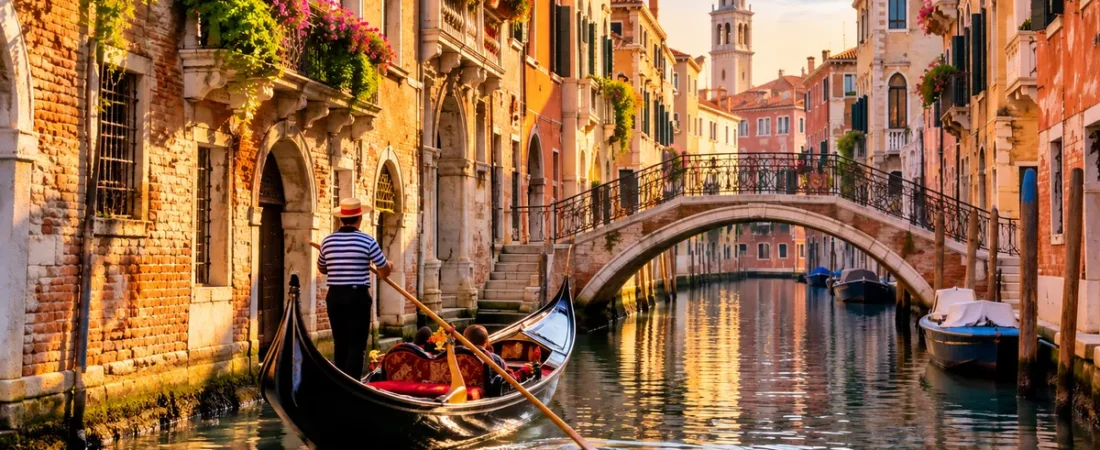
Venice is one of those rare cities that feels completely different from anywhere else in Europe. Built across a lagoon and connected by canals, bridges and narrow pedestrian lanes, the city turns even an ordinary walk into part of the experience. This Venice travel guide covers the essential attractions, neighbourhoods, food, transport and practical tips you need to plan a memorable first visit.
While landmarks such as St. Mark’s Basilica and the Rialto Bridge deserve their reputation, Venice becomes even more rewarding when you leave the busiest routes behind. Quiet canals, small squares, neighbourhood cafés and lagoon islands reveal a more relaxed side of the city.
Price note: All prices in this article are approximate and were checked at the time of publication. Prices may change.
Why Visit Venice?
Venice’s extraordinary setting is its biggest attraction. Instead of ordinary city streets filled with cars, much of the historic centre consists of pedestrian lanes connected by bridges, while boats provide public transport along the canals.
The city also contains centuries of art and architecture shaped by the former Venetian Republic. Grand palaces line the waterways, elaborate churches appear around unexpected corners and neighbourhoods each have their own character.
A first trip can combine famous sights with simple experiences: riding a vaporetto along the Grand Canal, eating cicchetti in a traditional bacaro, watching boats from a quiet bridge or spending an afternoon exploring the lagoon islands.
Best Things to Do in Venice
Explore St. Mark’s Square
Piazza San Marco is the ceremonial heart of Venice and one of the best places to begin exploring.
The square brings several major attractions together, including St. Mark’s Basilica, Doge’s Palace and St. Mark’s Campanile. Its arcaded buildings and open space also make it one of Venice’s most impressive architectural settings.
It becomes extremely busy during peak sightseeing hours, so arriving early in the morning can make a considerable difference.
Visit St. Mark’s Basilica
St. Mark’s Basilica is immediately recognisable for its domes, mosaics and elaborate façade.
The interior reflects Venice’s historic connections with the eastern Mediterranean and Byzantine world. Because it remains an active place of worship, visitors should dress appropriately and follow current entry rules.
Demand can be high, particularly during spring and summer, so check current visiting arrangements before your trip.
Discover Doge’s Palace
Next to the basilica stands Doge’s Palace, once the political centre of the Venetian Republic.
The visitor route passes through ornate institutional rooms and historic chambers before reaching the prison areas connected by the Bridge of Sighs.
The standard St. Mark’s Square Museums ticket is currently around €35 and also covers several nearby museums. Travellers planning well ahead may find a lower advance online rate.
Allow at least a couple of hours if you want to explore without rushing.
Cross the Rialto Bridge
The Rialto Bridge is one of the most famous viewpoints over the Grand Canal.
The surrounding streets are busy with shops and restaurants, but exploring beyond the bridge leads toward the traditional Rialto market area and numerous smaller lanes.
Early morning is particularly attractive because the neighbourhood is quieter and local activity begins before the largest sightseeing crowds arrive.
Ride Along the Grand Canal
The Grand Canal curves through Venice past historic palaces, churches and waterfront buildings.
One of the easiest ways to experience it is aboard a public vaporetto. A standard 75-minute ACTV waterbus ticket currently costs approximately €9.50.
Rather than treating the vaporetto only as transport, consider taking a longer ride along the canal and enjoying the architecture from the water.
Evening is particularly atmospheric when lights begin reflecting across the canal.
Take a Gondola Ride
Gondolas are one of the enduring symbols of Venice.
A ride is certainly not essential, especially for travellers watching their budget, but it offers a different perspective on the city’s smaller waterways.
If you decide to take one, discuss the route and current official fare with the gondolier before departing.
For a less expensive experience on the water, use the public vaporetto network instead.
Explore Venice Beyond the Main Landmarks
Wander Through Cannaregio
Cannaregio is one of the best neighbourhoods for travellers who want to experience a more residential side of Venice.
Its canals, small restaurants and local streets provide a contrast to the crowds around San Marco. The district also contains the historic Jewish Ghetto.
Cannaregio becomes particularly pleasant toward evening, making it worth returning after a day of sightseeing.
Spend Time in Dorsoduro
Dorsoduro combines cultural attractions with attractive streets and waterfront walks.
Important museums include the Gallerie dell’Accademia and Peggy Guggenheim Collection, while the Zattere promenade provides open views across the water.
The neighbourhood is ideal for an unhurried afternoon of walking, stopping at cafés and exploring smaller canals.
Discover Castello
Castello stretches east from the busiest central areas and provides another opportunity to see everyday Venice.
Parts closest to San Marco remain lively, but continue farther east and the atmosphere gradually becomes more residential.
The district also includes the extensive Giardini area associated with the Venice Biennale.
Visit Venice’s Lagoon Islands
Venice is only one part of a much larger lagoon environment.
Murano
Murano is internationally associated with Venetian glassmaking. Visitors can explore the island’s canals, browse glass shops and learn more about its long craft tradition.
Burano
Burano is famous for rows of brightly coloured houses.
It is farther from central Venice than Murano, so allow sufficient time rather than trying to squeeze both islands into a rushed morning.
Torcello
Nearby Torcello offers a very different atmosphere. The island is much quieter and provides an interesting glimpse into the early history of settlement in the Venetian Lagoon.
If your Venice trip lasts 3 or 4 days, dedicating part of one day to the islands can provide welcome variety.
Where to Stay in Venice
Choosing the right neighbourhood can significantly affect your experience.
San Marco provides maximum convenience for major landmarks but is among the busiest and often more expensive areas.
Cannaregio works well for travellers who want restaurants, residential streets and convenient access to Venezia Santa Lucia railway station.
Dorsoduro is an attractive choice for museums, canals and a somewhat calmer atmosphere.
San Polo places you close to the Rialto Bridge and within walking distance of much of central Venice.
Santa Croce can be practical for travellers arriving through Piazzale Roma.
Once our dedicated Venice accommodation guide is published, we’ll compare these neighbourhoods and accommodation options in greater detail.
Getting Around Venice
Walking should be your main form of transport within central Venice.
Distances on a map can be deceptive because canals interrupt direct routes and bridges determine where you can cross. Allow extra time and accept that taking the occasional wrong turn is part of exploring Venice.
For longer distances, ACTV operates the vaporetto network.
A standard 75-minute ticket currently costs approximately €9.50. Tourist passes currently start at around €25 for one day, €35 for two days and €45 for 3 days.
A pass can make sense if you expect to use water buses repeatedly or plan to visit lagoon islands.
Remember to validate your transport ticket correctly before travelling.
Getting to Venice
Venezia Santa Lucia railway station is one of the easiest arrival points because trains terminate directly beside the Grand Canal.
If you arrive by car or road transport, normal vehicles cannot continue through the historic centre. Road traffic reaches areas such as Piazzale Roma or Tronchetto, after which you continue on foot or by boat.
From Venice Marco Polo Airport, travellers can reach the city using road-based airport buses or water connections.
If your hotel is deep inside the historic centre, check the nearest vaporetto stop before travelling. Pulling a large suitcase across multiple bridges is much less enjoyable than it sounds.
What to Eat in Venice
Venetian food reflects both the lagoon and the city’s historic trading connections.
One of the easiest local traditions to experience is cicchetti — small snacks served in traditional bars known as bacari. Ordering several different cicchetti can make an enjoyable informal meal.
Look for local specialities such as sarde in saor, made with sardines, onions and a sweet-and-sour preparation, and baccalà mantecato, a creamy preparation of salted cod commonly served on bread or polenta.
Seafood and risotto also appear frequently on Venetian menus.
Restaurants immediately beside the biggest attractions tend to cater heavily to visitors. Exploring Cannaregio, Castello or Dorsoduro can provide a wider selection of neighbourhood places.
Best Time to Visit Venice
Spring and autumn are attractive periods for sightseeing because temperatures are generally more comfortable for long days of walking.
April through June brings pleasant conditions but increasingly large crowds as summer approaches.
September and October can also be excellent, particularly for travellers interested in walking and outdoor dining.
July and August are typically hotter and extremely busy.
Winter is cooler and quieter outside major events. Venice can feel especially atmospheric during misty winter mornings, although shorter days and wet weather should be considered.
Our dedicated Best Time to Visit Venice guide will compare the seasons in greater detail once published.
How Many Days Do You Need in Venice?
3 days is a good starting point for a first visit.
On your first day, concentrate on St. Mark’s Square, Doge’s Palace and the Grand Canal.
The second day can include Rialto, Cannaregio, Dorsoduro and quieter neighbourhood exploration.
Use the third day for Murano, Burano or additional sights you missed earlier.
A one-day visit can cover some famous landmarks, but staying for several nights gives you the chance to experience Venice early in the morning and after many day visitors have departed.
Venice Access Fee: What Visitors Should Know
Venice experimented with an Access Fee for day visitors on selected dates during 2026.
That 2026 trial has now ended. From July 27, 2026, the Access Fee no longer applies, so visitors can currently enter Venice without paying the fee or requesting an exemption.
However, this does not mean the system has been permanently abolished. The Municipality of Venice has stated that any application in subsequent years will require further decisions.
If you are planning a future trip, check the official Venice Access Fee information shortly before travelling rather than relying on older articles describing the 2026 system.
Practical Venice Travel Tips
Wear comfortable footwear. You will walk considerably more than you might expect, often over bridges and uneven surfaces.
Travel with manageable luggage, especially if your accommodation is far from a vaporetto stop.
Start major sightseeing early. St. Mark’s Square and Rialto feel very different before peak daytime crowds arrive.
Keep some time unplanned. Venice is particularly rewarding when you wander away from a fixed sightseeing route and discover small canals and squares on your own.
Finally, consider staying overnight rather than visiting only as a day trip. Early mornings and evenings provide an opportunity to experience the historic centre at a slower pace.
Is Venice Worth Visiting?
Venice can be crowded and requires more planning than some European cities, but its setting, history and architecture remain extraordinary.
The key is not to experience it only as a checklist of famous landmarks. Combine St. Mark’s Basilica, Doge’s Palace and Rialto with quieter neighbourhoods, lagoon views, local food and time spent simply walking.
Do that, and Venice becomes much more than a collection of postcard sights.
Explore more places through our destinations page or browse our complete collection of itineraries.