
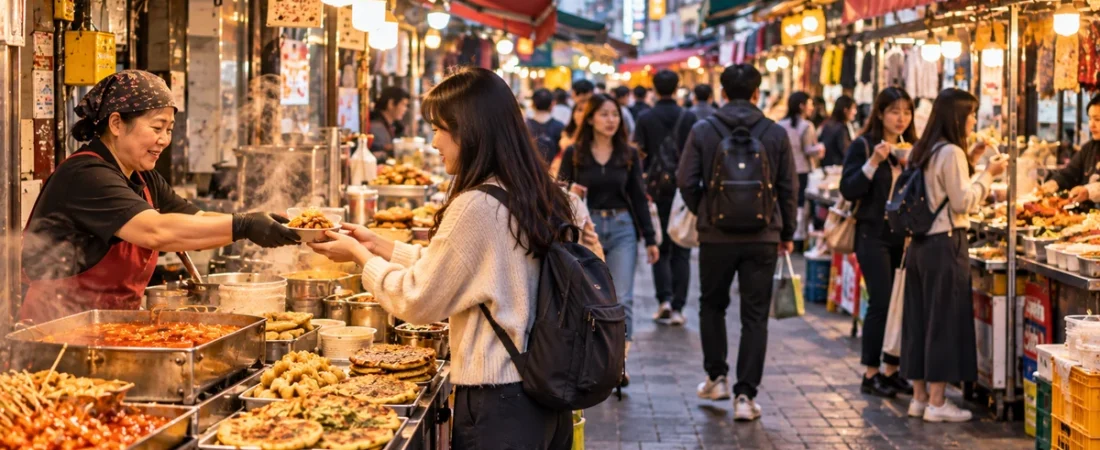
Planning your Seoul travel budget is easier than you might expect. South Korea’s capital offers accommodation for almost every price range, an efficient and relatively affordable public-transport network, inexpensive local meals and plenty of attractions that cost little or nothing.
A budget traveller staying in a hostel or simple guesthouse and eating mostly local food can explore Seoul without spending heavily. Mid-range travellers can enjoy comfortable hotels, restaurants and several paid attractions while keeping daily costs reasonable. Luxury hotels, fine dining, shopping and nightlife can increase the total considerably.
This guide breaks down realistic costs for accommodation, food, transport, attractions and sightseeing so you can estimate how much money to budget for Seoul.
For an introduction to the city’s attractions and transport, start with our Seoul travel guide. If you are still choosing a neighbourhood, our guide to where to stay in Seoul compares the main areas.
Price note: All prices in this article are approximate and were checked at the time of publication. Prices may change.
Seoul Travel Budget at a Glance
Excluding international flights and major shopping, a reasonable daily budget per person is approximately:
- Budget traveller: ₩60,000–₩100,000 per day
- Mid-range traveller: ₩130,000–₩250,000 per day
- Comfortable/upscale traveller: ₩300,000+ per day
These figures are planning estimates rather than fixed prices.
Accommodation creates the largest variation. Two people sharing a hotel room can often spend less per person than a solo traveller booking the same standard of accommodation.
Your spending will also depend heavily on shopping, nightlife, cafés and paid attractions.
Accommodation Costs in Seoul
Seoul has everything from dormitory beds and small guesthouses to international luxury hotels.
As a general planning range, expect approximately:
- Hostel dormitory: ₩25,000–₩50,000 per person
- Simple guesthouse or budget room: ₩50,000–₩100,000
- Mid-range hotel: ₩100,000–₩220,000 per room
- Upscale hotel: ₩220,000–₩400,000+
- Luxury hotel: ₩400,000+ per room
These are broad estimates. Prices vary significantly according to neighbourhood, room size, season, weekends, holidays and how early you book.
Spring cherry-blossom periods and popular autumn travel dates can increase demand.
Which Areas Offer the Best Value?
Hongdae has numerous hostels, guesthouses and smaller hotels, making it useful for budget-conscious travellers.
Jongno can provide good value while keeping you close to Seoul’s historic attractions.
Myeongdong is extremely convenient but central hotels may cost more during busy periods.
Gangnam has everything from business hotels to luxury properties, although staying there is less convenient if most of your sightseeing is around Seoul’s palaces.
Read our complete guide to where to stay in Seoul before choosing a hotel solely on price.
A cheap room far from a subway station can cost you considerable time every day.
Food Costs in Seoul
Food is one of the easiest areas in which to control your Seoul budget.
Convenience stores, traditional markets and neighbourhood restaurants provide affordable choices, while Korean barbecue, fashionable cafés and upscale restaurants can quickly increase spending.
As a rough guide:
- Convenience-store breakfast or snack: ₩3,000–₩7,000
- Simple local meal: ₩7,000–₩12,000
- Market meal or several snacks: ₩8,000–₩15,000
- Casual restaurant meal: ₩10,000–₩20,000
- Korean barbecue: around ₩20,000–₩40,000+ per person
- Café drink: roughly ₩4,000–₩7,000
- Upscale dining: ₩50,000+ per person
Portion sizes and minimum ordering requirements vary between restaurants, particularly at Korean barbecue establishments.
How Much Should You Budget for Food?
A careful traveller can eat reasonably well for around ₩25,000–₩40,000 per day by combining local restaurants, markets and inexpensive breakfasts.
A mid-range food budget of roughly ₩50,000–₩80,000 per day provides much more freedom for cafés, barbecue and varied restaurants.
Food enthusiasts can easily spend substantially more.
Markets such as Gwangjang are useful for sampling several Korean foods, although famous stalls are not automatically the cheapest places in the city.
Neighbourhood restaurants away from the most tourist-oriented streets often provide excellent value.
Seoul Public Transport Costs
Public transport is one of Seoul’s strongest advantages for budget travellers.
The current adult subway base fare is approximately ₩1,550 when using a transit card. A single-journey ticket starts at approximately ₩1,650.
Additional distance charges apply to longer journeys.
For a typical sightseeing day using several subway journeys, allowing roughly ₩5,000–₩10,000 for public transport is reasonable.
Tmoney Card
A Tmoney transport card is convenient for visitors making repeated subway and bus journeys.
Load the card with credit and tap when entering and leaving the transport system.
Eligible transfers between buses and subway services can benefit from Seoul’s integrated fare system when the card is used correctly.
Climate Card
Visitors planning heavy public-transport use should also investigate Seoul’s Climate Card.
Current short-term options include passes designed for visitors staying several days. The standard short-term prices start at approximately:
- 1 day: ₩5,000
- 2 days: ₩8,000
- 3 days: ₩10,000
- 5 days: ₩15,000
- 7 days: ₩20,000
Coverage rules apply, and not every railway or airport service is included.
Compare the pass with the number of journeys you realistically expect to make rather than buying one automatically.
Airport Transport Costs
Incheon International Airport is outside central Seoul, so include airport transport in your overall budget.
AREX rail services connect the airport with Seoul, while airport limousine buses and taxis provide alternatives.
The All-Stop Train is generally the economical rail choice and also serves Hongik University, making it particularly convenient for travellers staying around Hongdae.
The Express Train provides a faster dedicated service to Seoul Station.
Airport buses can be worthwhile if a route stops close to your hotel, particularly when travelling with heavy luggage.
Taxis are considerably more expensive than public transport but can make sense for groups splitting the fare or travellers arriving with substantial luggage.
Check the current fare for your chosen airport service shortly before travelling because transport prices can change.
Seoul Attraction Costs
You do not need a large sightseeing budget to experience Seoul.
Many neighbourhoods, markets, parks and riverside areas are free to explore.
Even Seoul’s royal palaces are inexpensive compared with major attractions in many international cities.
Gyeongbokgung Palace
General adult admission to Gyeongbokgung is approximately ₩3,000.
The palace is one of Seoul’s most important attractions and represents excellent value for a first visit.
Other Royal Palaces
Current standard adult admission is approximately:
- Changdeokgung palace buildings: ₩3,000
- Changgyeonggung: ₩1,000
- Deoksugung: ₩1,000
Changdeokgung’s Huwon or Secret Garden requires additional admission arrangements.
Travellers planning several palace visits can investigate the available integrated palace admission ticket.
N Seoul Tower
Walking around Namsan and enjoying parts of the surrounding scenery costs nothing.
The N Seoul Tower observatory is optional and currently costs approximately ₩29,000 for an adult.
Budget travellers can simply enjoy Namsan and the public viewpoints without purchasing an observatory ticket.
Free Seoul Experiences
Some of the city’s most enjoyable experiences cost nothing.
You can walk along Cheonggyecheon Stream, explore Hangang parks, browse Insadong, wander through Hongdae, visit Starfield Library and walk around many traditional neighbourhoods without paying admission.
Markets such as Gwangjang and Namdaemun are also free to enter—you only pay for whatever you eat or buy.
Example Budget for 3 Days in Seoul
A 3-day trip provides a useful example of how costs can add up.
Our 3 days in Seoul itinerary covers historic Seoul, Namsan, Myeongdong, Gangnam, the Han River and Hongdae.
Budget Traveller
A 3-day budget might look roughly like:
Accommodation: ₩90,000–₩150,000
Food: ₩75,000–₩120,000
Local transport: ₩15,000–₩30,000
Attractions: ₩10,000–₩40,000
Extras: ₩20,000–₩40,000
Approximate total: ₩210,000–₩380,000, excluding flights and airport transport.
Mid-Range Traveller
A mid-range traveller sharing a hotel room might spend approximately:
Accommodation share: ₩180,000–₩330,000
Food: ₩150,000–₩240,000
Transport: ₩20,000–₩40,000
Attractions: ₩40,000–₩100,000
Cafés and extras: ₩50,000–₩100,000
Approximate total: ₩440,000–₩810,000 per person, excluding international flights and major shopping.
These examples are estimates rather than fixed packages. Hotel choice alone can move the total significantly.
How to Save Money in Seoul
Use the Subway
Taxis are convenient but unnecessary for most sightseeing.
Seoul’s subway reaches the majority of neighbourhoods a first-time visitor is likely to explore.
Eat Where Locals Eat
Small neighbourhood restaurants can provide excellent meals for much less than upscale restaurants in major shopping districts.
Make Lunch Your Main Meal
Enjoy a substantial local lunch, then keep dinner simple with market food, noodles or another casual meal.
Mix Paid and Free Attractions
A good Seoul itinerary does not need an admission ticket every few hours.
Combine a paid palace visit with free neighbourhood walks, parks, markets and riverside areas.
Skip Unnecessary Viewpoint Tickets
If your budget is tight, enjoy Namsan without paying for the N Seoul Tower observatory.
Seoul has numerous places where the city itself is the attraction.
Choose Accommodation Near the Subway
Saving a small amount on a distant hotel may not be worthwhile if it adds long journeys every morning and evening.
Travel Outside Peak Seasonal Dates
Accommodation prices can rise during particularly popular periods.
Our guide to the best time to visit Seoul explains the differences between spring, summer, autumn and winter.
Cash or Card in Seoul?
Cards are widely accepted across Seoul, particularly in hotels, shopping centres, restaurants and larger stores.
However, carrying some Korean won is still useful for traditional markets, small purchases and situations where foreign cards are not accepted.
Seoul has also made transport easier for international visitors. International credit and debit cards can now be used at supported machines for short-term Climate Cards and single-journey transit tickets.
Avoid carrying unnecessarily large amounts of cash.
Is Seoul Expensive Compared With Other Major Cities?
Seoul can become expensive if your trip revolves around premium hotels, fashionable cafés, shopping and nightlife.
However, the essentials can remain surprisingly manageable.
Public transport is relatively affordable, palace admission is inexpensive, local meals can offer good value and many worthwhile attractions cost nothing.
That combination makes Seoul particularly flexible.
A backpacker and a luxury traveller can follow essentially the same sightseeing route while spending dramatically different amounts.
Frequently Asked Questions
How much money do I need per day in Seoul?
A budget traveller can plan around ₩60,000–₩100,000 per day, while a mid-range traveller might spend roughly ₩130,000–₩250,000. Accommodation, shopping and nightlife can change these figures substantially.
Is food expensive in Seoul?
It does not have to be. Simple local meals can often be found for roughly ₩7,000–₩12,000, while barbecue, fashionable cafés and upscale restaurants cost considerably more.
Is public transport expensive?
No. The adult subway base fare is approximately ₩1,550 with a transit card, making the subway an economical way to explore the city.
Are Seoul attractions expensive?
Many are inexpensive or free. Gyeongbokgung costs approximately ₩3,000 for standard adult admission, while neighbourhoods, markets, parks and the Han River can be explored without admission fees.
Can I visit Seoul on a budget?
Yes. Staying in a hostel or inexpensive guesthouse, eating at local restaurants, using public transport and prioritising free attractions can keep daily costs relatively low.
Final Thoughts
Your Seoul travel budget depends far more on accommodation, food choices and shopping than on basic sightseeing.
Budget travellers can keep costs under control by using the subway, eating at local restaurants and balancing inexpensive palace visits with free neighbourhoods, markets and parks.
Mid-range travellers can enjoy comfortable hotels, Korean barbecue, cafés and several paid attractions without turning Seoul into an exceptionally expensive destination.
Set your accommodation budget first, estimate your daily food spending, add transport and attraction costs, then leave a separate allowance for shopping and unexpected discoveries. That approach gives you a realistic Seoul budget without restricting the experiences that make the city worth visiting.
Explore more places through our destinations page or browse our complete collection of itineraries.