
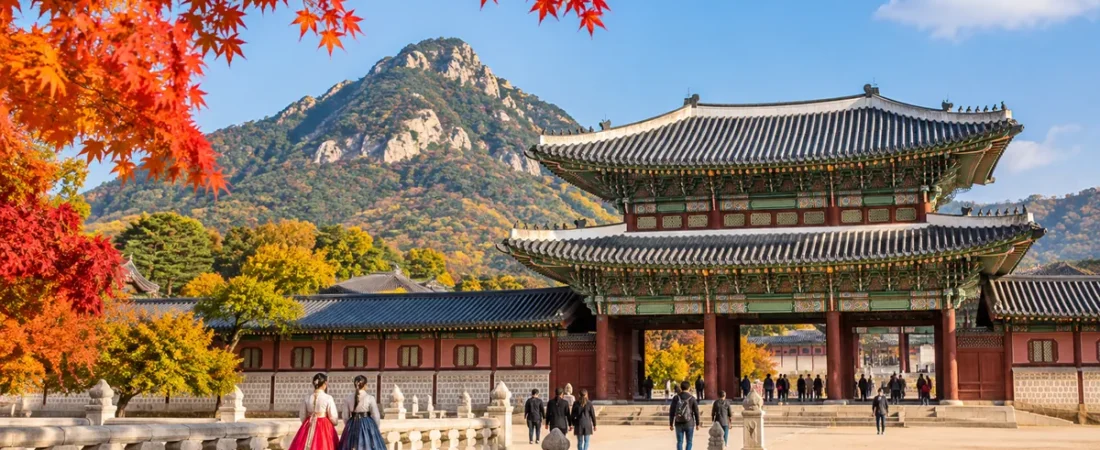
Seoul brings centuries-old royal palaces, traditional neighbourhoods, mountain scenery, enormous shopping districts and cutting-edge Korean culture together in one energetic capital. This Seoul travel guide covers the essential attractions, neighbourhoods, transport, food and practical information you need to plan a first trip to South Korea’s capital.
One of Seoul’s greatest advantages is variety. You can walk through a Joseon-era palace in the morning, eat lunch at a traditional market, browse independent shops in the afternoon and finish the day surrounded by neon-lit streets or overlooking the city from a mountain.
Price note: All prices in this article are approximate and were checked at the time of publication. Prices may change.
Why Visit Seoul?
Seoul is a huge city, but its excellent subway network makes its principal visitor districts surprisingly manageable.
History is one of its biggest attractions. Five major royal palaces survive in the city, while traditional hanok architecture can still be seen around neighbourhoods such as Bukchon. At the same time, districts including Gangnam, Hongdae and Myeongdong showcase modern Seoul through fashion, technology, cafés, music and nightlife.
Food is another reason to visit. From inexpensive market stalls and barbecue restaurants to contemporary Korean dining, eating is an important part of experiencing the city.
Travellers planning a wider Asian trip can also compare Seoul with our Hong Kong travel guide and Singapore travel guide.
Top Tours & Experiences in Seoul
Discover popular Seoul tours and experiences. Check current availability, ratings and prices before you book.
Affiliate disclosure: If you book through these links, we may earn a commission from Viator. This does not increase the price you pay.
Top Attractions in Seoul
Gyeongbokgung Palace
Gyeongbokgung is the largest of Seoul’s Five Grand Palaces and one of the best places to begin understanding the city’s history. Originally constructed in 1395, it served as the principal royal palace during much of the Joseon Dynasty.
The complex contains imposing gates, throne halls, courtyards, pavilions and mountain views that make it worth allowing at least two hours.
General adult admission is approximately ₩3,000. Opening hours vary by season and occasional special closures can occur, so confirm the current schedule before visiting.
Visitors wearing qualifying traditional hanbok can generally receive free admission under the palace’s hanbok admission policy. If renting hanbok nearby, allow extra time for choosing clothing and returning it.
Bukchon Hanok Village
Bukchon is known for traditional Korean houses called hanok, narrow lanes and elevated views across tiled rooftops.
It remains a residential neighbourhood rather than an open-air museum. Keep noise low, respect signs restricting access and avoid blocking entrances while taking photographs. Visitor controls can apply to parts of the area, so follow local notices.
Combine Bukchon with nearby Gyeongbokgung, Changdeokgung or Insadong rather than making a separate journey across the city.
Changdeokgung Palace
Changdeokgung is particularly admired for the way its architecture follows the surrounding landscape. The palace complex is a UNESCO World Heritage Site and provides a different experience from the more formal layout of Gyeongbokgung.
Its landscaped rear garden, commonly called the Secret Garden or Huwon, has controlled access and separate arrangements. If this is a priority, check current tour times and reservation requirements before your visit.
Insadong
Insadong is an easy district to combine with Seoul’s palaces. Its main street and surrounding lanes contain tea houses, craft shops, galleries, souvenir stores and restaurants.
Walk beyond the busiest commercial strip to find smaller alleys and traditional-style buildings. Insadong is particularly convenient for visitors who want Korean gifts without travelling to a large shopping centre.
N Seoul Tower and Namsan
N Seoul Tower stands on Namsan Mountain and is one of the city’s best-known viewpoints.
You do not have to enter the paid observatory to enjoy the outing. Namsan itself provides walking paths and city views, while the tower complex has public viewing areas.
For a more active experience, walk up through Namsan Park. Otherwise, use public transport and the available connections towards the summit area.
Myeongdong
Myeongdong is one of Seoul’s most convenient areas for shopping, cosmetics, restaurants and evening street atmosphere.
It is particularly lively after afternoon shopping hours. Although it is heavily visited, its central location makes it useful for first-time travellers and easy to combine with Namsan, Namdaemun Market and central Seoul.
Gwangjang Market
Gwangjang Market is a good introduction to Seoul’s traditional market culture and popular Korean foods.
Common choices include bindaetteok (mung-bean pancakes), mayak gimbap, noodles and various snacks. Explore before choosing a stall rather than automatically stopping at the busiest entrance.
Carry some cash even though electronic payments are increasingly common.
Cheonggyecheon Stream
Cheonggyecheon is an urban stream and pedestrian corridor running through central Seoul.
The waterside path offers a calmer alternative to the surrounding roads and commercial districts. It is particularly pleasant in the evening and costs nothing to explore.
Its central location makes it easy to incorporate into a walk between Gwanghwamun, Jongno and Dongdaemun.
Hongdae
Hongdae is associated with youth culture, independent shops, cafés, entertainment and nightlife.
The neighbourhood around Hongik University becomes especially lively during evenings and weekends. Visitors who prefer a quieter experience can explore during the daytime before the nightlife crowds arrive.
Hongdae is also convenient for airport access because the AREX All-Stop Train serves Hongik University Station.
Gangnam
South of the Han River, Gangnam presents another side of Seoul. Wide avenues, shopping centres, offices, restaurants and entertainment venues dominate the district.
Popular stops include the COEX complex and the striking Starfield Library. Gangnam is worth visiting, but first-time travellers should avoid treating it as their base for every attraction because many historic sights lie north of the river.
Where to Stay in Seoul
Myeongdong
Myeongdong is one of the most convenient choices for a first visit. It offers excellent transport, abundant restaurants and easy access to central attractions.
Choose it if sightseeing convenience is more important than experiencing a quiet residential neighbourhood.
Hongdae
Hongdae works particularly well for younger travellers, nightlife, cafés and visitors who value straightforward AREX access.
The atmosphere is energetic, especially on weekends, so light sleepers should check the exact location of their accommodation.
Insadong and Jongno
Stay around Insadong or Jongno if palaces, traditional neighbourhoods and historic Seoul are your priorities.
These areas put several major attractions within walking distance and offer a more traditional atmosphere than Gangnam.
Gangnam
Gangnam suits travellers interested in shopping, modern Seoul, business districts and nightlife south of the Han River.
It can be less convenient for palace-focused sightseeing, so consider what you plan to visit most often before booking.
Getting Around Seoul
Subway
The subway is usually the easiest way for visitors to move around Seoul.
The adult base fare is currently approximately ₩1,550 when using a transit card, with additional charges applying to longer journeys. Single-use tickets cost slightly more.
Station signage is generally easy to follow, and many major stations provide information in English.
Tmoney and Transfers
A Tmoney transport card is useful for subway and bus journeys. Cards can generally be purchased at convenience stores and transport locations and loaded with credit.
When transferring between eligible buses and subway services, remember to tap your card correctly. Seoul’s integrated fare system allows eligible transfers, but rules concerning timing and tapping apply.
Climate Card Short-Term Passes
Visitors staying several days can also investigate Seoul’s short-term Climate Card options. Short-term passes of 1, 2, 3, 5 and 7 days remain available for eligible services.
Check the current coverage carefully because not every railway line or transport service is included.
Getting from Incheon Airport to Seoul
AREX is one of the easiest choices from Incheon International Airport.
The Express Train operates nonstop to Seoul Station and takes approximately 43 minutes from Terminal 1 and 51 minutes from Terminal 2.
The AREX All-Stop Train is slower but serves useful stations including Hongik University. Approximate travel time to Seoul Station is 59 minutes from Terminal 1 and 66 minutes from Terminal 2.
Airport limousine buses are another useful option, particularly when they stop close to your hotel and you have substantial luggage.
Taxis provide door-to-door convenience but cost considerably more than rail.
Best Time to Visit Seoul
Spring and autumn are generally the most comfortable seasons for extensive sightseeing.
Spring
April and May can provide mild temperatures, spring flowers and comfortable walking conditions. Cherry-blossom timing varies each year and depends on weather conditions.
Summer
June through August becomes hot and humid, with substantial rainfall possible during the summer monsoon period. Carry water, sun protection and a compact umbrella.
Autumn
September through November is an excellent period for walking, palace visits and mountain scenery. Autumn foliage usually becomes a major attraction as temperatures cool.
Winter
December through February is cold, with freezing temperatures and occasional snow. Winter can still be rewarding for travellers who prepare with warm layers, particularly because the city has extensive indoor shopping, dining and cultural attractions.
Food to Try in Seoul
Seoul rewards travellers who explore beyond familiar Korean barbecue.
Try:
- Korean barbecue such as samgyeopsal
- Bibimbap
- Tteokbokki
- Mandu dumplings
- Korean fried chicken
- Gimbap
- Bindaetteok
- Japchae
- Samgyetang
- Hotteok
- Traditional Korean soups and stews
Markets are excellent for sampling several dishes, while neighbourhood restaurants often provide better value than highly tourist-oriented locations.
Korean meals commonly include several small side dishes called banchan.
How Many Days Do You Need in Seoul?
3 days is enough for the principal highlights, but four or five days provides a more comfortable first visit.
With 3 days, concentrate on the royal palace area, Bukchon and Insadong; central markets and Namsan; then choose between Hongdae, Gangnam or another neighbourhood.
With additional days, consider museums, hiking, more traditional neighbourhoods or a day trip outside central Seoul.
You can also browse our complete itinerary collection while planning other city breaks.
Practical Seoul Travel Tips
Use the subway for most longer journeys and walk within individual neighbourhoods rather than repeatedly crossing the city.
Download a reliable Korean navigation application because local mapping and address systems can work differently from what some international visitors expect.
Carry a small amount of Korean won. Cards are widespread, but cash remains useful for topping up some transport cards, traditional markets and small purchases.
Respect quiet residential areas, particularly around Bukchon. Do not enter private courtyards or photograph residents without permission.
Learn a few simple Korean phrases, although major hotels, transport hubs and tourist attractions commonly provide English information.
Check opening days before planning palace or museum visits. Several attractions have weekly closure days, and arrangements can change for public holidays or special events.
Is Seoul Expensive?
Seoul can accommodate a wide range of budgets.
Accommodation in central districts and fashionable neighbourhoods can be expensive, but public transport is reasonably priced and local restaurants provide plenty of affordable meals.
Many rewarding experiences—including Cheonggyecheon, neighbourhood walks, parks, markets and some viewpoints—can be enjoyed without an admission charge.
Your biggest variables are likely to be accommodation, shopping, nightlife and the number of paid attractions you choose.
Frequently Asked Questions
Is Seoul good for first-time visitors?
Yes. The extensive subway system, clear transport signage and concentration of major attractions around several well-connected districts make Seoul manageable once you understand the basic geography.
Is 3 days enough for Seoul?
3 days covers the principal historic attractions and several modern neighbourhoods. Four or five days is better if you want a slower pace, museums, hiking or day trips.
Which area is best for a first stay?
Myeongdong is an excellent all-round choice because of its central location and transport connections. Insadong and Jongno are particularly good for history, while Hongdae suits nightlife and airport access.
Do I need a car in Seoul?
No. Most visitors are better served by the subway, buses and walking. Driving adds parking and navigation complications that are unnecessary for typical city sightseeing.
Is Seoul walkable?
Individual neighbourhoods are very walkable, but Seoul as a whole is enormous. Use the subway between districts, then explore each area on foot.
Final Thoughts
Seoul succeeds as a destination because historic and contemporary experiences sit remarkably close together. A first trip can combine royal palaces, hanok neighbourhoods, traditional markets, mountain views, Korean food, modern shopping districts and energetic nightlife without leaving the city.
Avoid trying to see everything. Group attractions geographically, use Seoul’s efficient public transport and leave time for neighbourhood exploration rather than rushing between landmarks.
For more ideas beyond South Korea, browse our Hong Kong travel guide or Singapore travel guide.
Top Tours & Experiences in Seoul
Discover popular Seoul tours and experiences. Check current availability, ratings and prices before you book.
Affiliate disclosure: If you book through these links, we may earn a commission from Viator. This does not increase the price you pay.
Explore more places through our destinations page or browse our complete collection of itineraries.