
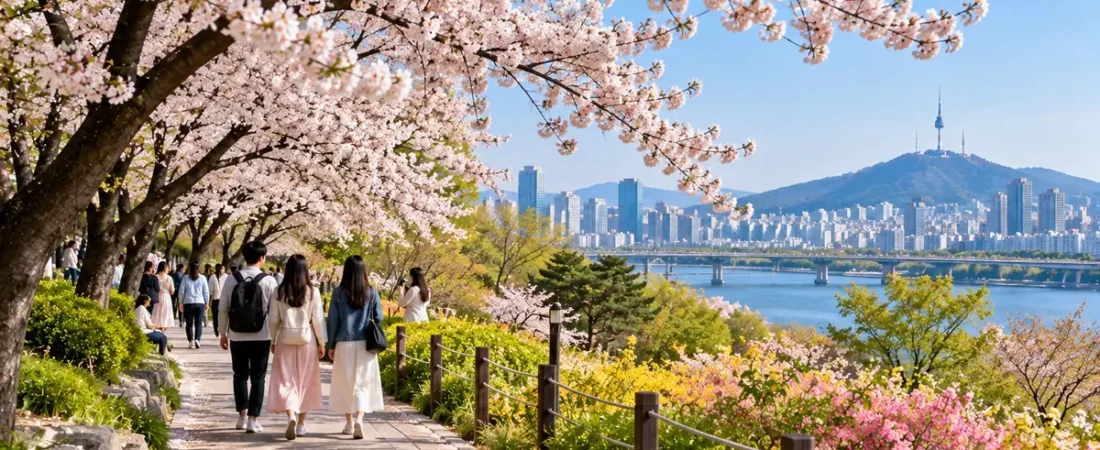
The best time to visit Seoul for most travellers is spring from April to May or autumn from September to October. These periods generally offer comfortable temperatures for walking, sightseeing and spending time outdoors, while spring flowers and autumn foliage make the city particularly attractive.
However, Seoul is a genuine four-season destination. Summer brings long days, green parks and riverside activities but also heat, humidity and rain. Winter can be bitterly cold, yet it offers a very different atmosphere, seasonal food and the possibility of snow.
This guide explains Seoul’s weather throughout the year so you can choose the right time for your interests, budget and travel style.
If this will be your first visit, start with our Seoul travel guide for attractions, transport and practical planning. You can then use our 3 days in Seoul itinerary to organise your sightseeing.
Seoul Weather and Seasons at a Glance
Seoul experiences four clearly defined seasons.
Spring runs roughly from March through May, summer from June through August, autumn from September through November and winter from December through February.
The difference between seasons is substantial. Winter nights can fall below freezing, while summer afternoons can approach or exceed 30°C.
That means what you pack—and even how you structure each sightseeing day—depends heavily on when you visit.
For travellers planning to explore palaces, traditional neighbourhoods, markets and outdoor attractions on foot, spring and autumn generally provide the easiest conditions.
Spring in Seoul: March to May
Spring is one of the most popular times to experience Seoul.
Temperatures gradually become warmer, parks turn green and seasonal flowers appear throughout the city.
Seoul in March
March marks the transition from winter.
Average conditions remain cool, particularly during mornings and evenings. Korea Tourism Organization climate data indicates average Seoul highs of around 11°C and lows around 2°C.
Bring layers rather than assuming spring means warm weather.
March can be a good choice for travellers who prefer cooler sightseeing conditions and want to arrive before the main spring-flower period.
Seoul in April
April is one of the most attractive months for a first trip.
Days become considerably milder and cherry blossoms usually become one of the major seasonal attractions.
Popular blossom locations include areas around Yeouido, Seokchon Lake and numerous parks and walking routes across Seoul.
Exact flowering dates change every year depending on weather conditions, so never book a trip based on a guaranteed blossom date months in advance.
If seeing cherry blossoms is essential, monitor the seasonal forecast closer to your departure.
Seoul in May
May is warmer, greener and excellent for long sightseeing days.
Average daytime highs are around the low 20s Celsius, making conditions generally comfortable for palace visits, neighbourhood walks and riverside activities.
Flowers remain visible in parks even after the cherry-blossom period has finished.
May is an especially good option if pleasant weather matters more than seeing cherry blossoms.
Advantages of Visiting in Spring
Spring provides:
- Comfortable sightseeing temperatures
- Cherry blossoms and other flowers
- Green parks and gardens
- Good conditions for walking
- Pleasant evenings later in the season
One disadvantage is that popular blossom locations can become extremely crowded during peak flowering periods.
Spring can also experience yellow dust and fine-particle episodes, so checking daily air-quality information is sensible.
Summer in Seoul: June to August
Summer provides a completely different Seoul experience.
The city becomes intensely green, the Han River parks become popular gathering places and evenings can be lively.
However, summer is hot and humid.
Seoul in June
June begins warm and becomes increasingly humid as the month progresses.
Daytime highs can reach the upper 20s Celsius.
The rainy season usually begins around the middle or latter part of June, although its timing and intensity vary each year.
Early June can therefore provide relatively good summer sightseeing conditions before the highest heat of July and August.
Seoul in July
July is one of Seoul’s wettest months.
Heat, humidity and rainfall can make long outdoor sightseeing days tiring.
Plan indoor attractions between outdoor stops and carry a compact umbrella.
Lightweight clothing, comfortable breathable footwear and regular hydration are important.
Seoul in August
August remains very hot and humid.
Average daytime highs are around 30°C according to Korea Tourism Organization climate data.
Outdoor sightseeing is more comfortable early in the morning or later in the evening.
Use the hottest part of the afternoon for museums, shopping centres, cafés and other air-conditioned attractions.
Is Summer a Bad Time to Visit Seoul?
Not necessarily.
Summer works well for travellers who tolerate heat and prefer a lively outdoor atmosphere after sunset.
Hangang parks become particularly appealing in summer, and warm evenings are ideal for riverside walks.
If your priority is spending entire days walking between palaces and neighbourhoods, however, spring or autumn will usually be more comfortable.
Autumn in Seoul: September to November
Autumn rivals spring as the best season for visiting Seoul.
Humidity gradually drops, temperatures become comfortable and foliage transforms parks, mountains and palace grounds.
Seoul in September
September begins relatively warm.
Early in the month can still feel like summer, with average highs around the mid-20s Celsius.
Conditions usually become increasingly pleasant as the month progresses.
September is a good transitional period for travellers who enjoy warmer weather but want to avoid the peak summer heat.
Seoul in October
October is arguably one of the strongest months for a first visit.
Average daytime highs are around 20°C, while evenings become cooler.
Walking conditions are excellent, and the city begins transitioning into autumn colours.
Palaces, parks and mountain areas are especially attractive during this period.
October’s comfortable weather also makes it easier to follow our 3 days in Seoul itinerary without needing frequent breaks from extreme heat or cold.
Seoul in November
November becomes noticeably colder.
Average daytime highs drop towards the low teens Celsius, with nights becoming chilly.
Autumn foliage can remain beautiful during parts of the month, although timing varies from year to year and by location.
Pack warmer layers, particularly for mornings and evenings.
Advantages of Visiting in Autumn
Autumn offers:
- Comfortable walking weather
- Lower humidity than summer
- Colourful foliage
- Excellent conditions for hiking
- Pleasant palace and park visits
- Clearer, cooler days
The main drawback is popularity. Good weather means accommodation in convenient districts can be in demand.
Our guide to where to stay in Seoul can help you compare Myeongdong, Hongdae, Jongno, Gangnam and other neighbourhoods before booking.
Winter in Seoul: December to February
Seoul winters are genuinely cold.
Travellers should prepare for freezing temperatures rather than treating winter as simply a cooler version of autumn.
Seoul in December
December brings short days and increasingly cold conditions.
Average daytime highs are only a few degrees above freezing, while nights regularly fall below 0°C.
Christmas decorations and illuminated shopping districts can create an enjoyable evening atmosphere despite the cold.
Seoul in January
January is typically one of Seoul’s coldest months.
Average lows can fall to around -5°C, and colder spells can push temperatures substantially lower.
Snow is possible but should not be considered guaranteed for any particular trip.
A warm insulated coat, gloves, scarf and appropriate footwear are essential.
Seoul in February
February remains cold but gradually begins moving towards spring.
Daytime temperatures start rising, although freezing nights are still common.
Late February can suit travellers who do not mind winter conditions but want to visit before spring demand increases.
Why Visit Seoul in Winter?
Winter has several advantages.
Outdoor attractions can feel less crowded than during the most popular spring and autumn periods, and cold weather is perfect for Korean soups, stews and street food.
Snow, when it occurs, can also transform palaces and traditional architecture.
The trade-off is obvious: spending hours outdoors requires proper winter clothing.
Best Time to Visit Seoul for Cherry Blossoms
Cherry blossoms are one of the biggest reasons travellers choose spring.
In Seoul, blossoms generally appear around late March or early April, but exact dates vary significantly according to each year’s temperatures.
The main flowering period can also be brief.
Popular viewing locations include Yeouido, Seokchon Lake and parks throughout the city.
Seoul’s official seasonal events calendar adjusts festival timing according to blooming conditions, which is a useful reminder that nature does not follow a fixed annual schedule.
If cherry blossoms are your priority, keep your itinerary flexible and check current blossom reports shortly before travelling.
Best Time for Autumn Colours
Autumn foliage generally develops from October into November.
The exact timing depends on temperatures and elevation.
Seoul’s royal palace grounds, Seoul Forest and mountain areas can all provide excellent autumn scenery.
October provides the best balance for many visitors because temperatures remain relatively mild while autumn colours begin appearing.
Later autumn can produce stronger colours but also colder weather.
Best Time for Sightseeing
For sightseeing on foot, choose April, May, late September or October.
These periods generally avoid both Seoul’s coldest winter conditions and the intense humidity of midsummer.
This is particularly valuable if your plans include Gyeongbokgung, Bukchon, Insadong, Namsan and long neighbourhood walks.
Spring and autumn are also excellent for exploring the city beyond its most famous attractions.
Best Time for Hiking
Spring and autumn are the most comfortable hiking seasons.
Seoul is surrounded by mountains and has numerous urban hiking routes.
Autumn is especially popular because of colourful foliage and cooler temperatures.
Summer hiking can become uncomfortable because of heat and humidity, while winter trails may require appropriate cold-weather equipment and additional caution.
Best Time for the Han River
Late spring, early summer and early autumn are particularly pleasant for spending time beside the Han River.
Warm evenings make riverside walks, cycling and picnics enjoyable.
During midsummer, visit early or later in the day rather than during the hottest afternoon hours.
Our Seoul travel guide includes additional ideas for combining the Han River with other parts of the city.
When Is Seoul Most Crowded?
Visitor numbers fluctuate throughout the year, but weather, festivals, school holidays and Korean public holidays can all affect crowds.
Cherry-blossom weekends can make famous spring locations extremely busy.
Autumn weekends are also popular for parks and hiking.
Major Korean holidays deserve particular attention.
Seollal, the Korean Lunar New Year, occurs in winter, while Chuseok falls in autumn. Some businesses and attractions can operate differently around major holidays, while transport demand can increase significantly as residents travel around the country.
Always check holiday dates for your specific year because both celebrations follow the lunar calendar and therefore move annually.
When Is Seoul Cheapest?
There is no single guaranteed cheapest month because hotel and flight prices depend on demand, events, booking dates and your departure city.
However, periods with less comfortable weather can sometimes provide better accommodation availability than peak spring and autumn weekends.
January and February outside major holiday periods may appeal to budget-conscious travellers who are prepared for cold weather.
Summer can also produce opportunities, but prices vary considerably.
Rather than choosing dates solely by season, compare accommodation for several possible weeks.
Staying slightly outside the busiest visitor districts while remaining near a subway station can also reduce accommodation costs.
What to Pack by Season
Spring
Bring layers, a light jacket, comfortable walking shoes and something warmer for evenings.
A mask can also be useful during periods of yellow dust or poor air quality.
Summer
Pack lightweight breathable clothing, sun protection, a compact umbrella and comfortable footwear that can cope with wet conditions.
Autumn
Bring comfortable walking clothes and layers. A light jacket is useful in September, while October and November increasingly require warmer clothing.
Winter
Bring a properly insulated coat, gloves, scarf, warm socks and suitable footwear.
Layering is important because indoor spaces and public transport can be much warmer than outside.
Best Time to Visit Seoul by Travel Style
For a first visit, choose April, May, late September or October.
For cherry blossoms, target late March to early April but check the current year’s forecast.
For autumn foliage, consider October through early November.
For hiking, spring and autumn provide the most comfortable conditions.
For summer nightlife and riverside evenings, June through August can be enjoyable if you tolerate humidity.
For winter atmosphere and possible snow, choose December through February and pack appropriately.
Frequently Asked Questions
What is the best month to visit Seoul?
April, May and October are among the strongest choices for most travellers because temperatures are generally comfortable for sightseeing. April also brings spring blossoms, while October offers autumn scenery.
When are cherry blossoms in Seoul?
Cherry blossoms generally appear around late March or early April, but the exact timing changes each year according to weather conditions.
Is Seoul too hot in summer?
July and August can be hot and very humid, with daytime temperatures approaching 30°C and periods of heavy rainfall. Sightseeing is still possible, but schedule outdoor activities for mornings and evenings when practical.
Does Seoul get snow?
Yes, Seoul can receive snow during winter. However, snowfall varies from year to year, so travellers should not assume that a particular winter visit will coincide with snow.
Is October a good time to visit Seoul?
Yes. October combines comfortable temperatures with increasingly colourful autumn scenery, making it one of the most appealing months for sightseeing and outdoor activities.
Final Thoughts
For most first-time travellers, the best time to visit Seoul is April to May or late September to October.
Spring offers flowers, fresh greenery and comfortable sightseeing weather. Autumn brings cooler air, colourful foliage and excellent conditions for walking and hiking.
Summer remains worthwhile if you enjoy warm evenings and riverside activities, while winter rewards properly prepared travellers with a quieter and dramatically different version of the city.
Rather than searching for one universally perfect month, choose the season that matches the experiences you value most. Seoul changes dramatically throughout the year, and each season reveals a different side of South Korea’s capital.
Explore more places through our destinations page or browse our complete collection of itineraries.