
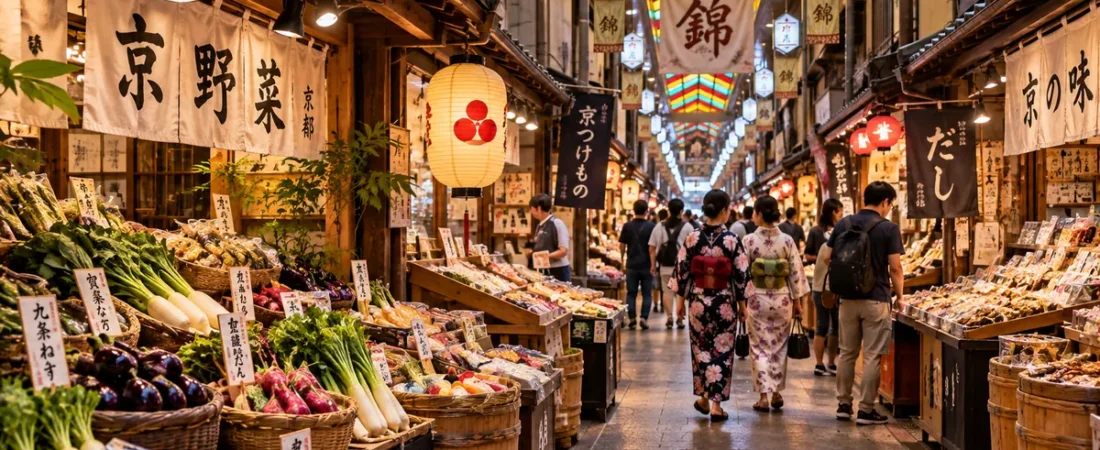
Planning your Kyoto travel budget is easier once you separate the main expenses: accommodation, food, local transport, attractions and sightseeing. Kyoto can work for budget travellers, comfortable mid-range visitors and travellers looking for a premium experience, but costs can change considerably depending on the season and where you stay.
A reasonable daily budget, excluding flights and long-distance travel to Kyoto, could be around ¥8,000–¥14,000 per person for a careful budget traveller, approximately ¥15,000–¥30,000 for a comfortable mid-range trip, and considerably more for luxury accommodation, fine dining and private experiences.
These figures are planning estimates rather than fixed prices. Accommodation in particular can fluctuate significantly during cherry-blossom season, autumn foliage and major holidays.
For general trip planning, start with our Kyoto Travel Guide.
Price note: All prices in this article are approximate and were checked at the time of publication. Prices may change.
Kyoto Travel Budget at a Glance
Your daily expenses will depend heavily on your travel style.
Budget Traveller
Approximately ¥8,000–¥14,000 per person per day when sharing some costs or choosing inexpensive accommodation.
This might include:
- Hostel or simple guesthouse
- Convenience-store breakfast
- Affordable ramen, udon or set meals
- Public transport
- Mostly free or inexpensive attractions
- Limited shopping and nightlife
Mid-Range Traveller
Approximately ¥15,000–¥30,000 per person per day.
This might include:
- Comfortable hotel
- Restaurant meals
- Trains, subway and buses
- Several paid temples or attractions
- Cafés and snacks
- Occasional taxis or additional activities
Higher-End Traveller
Expect ¥35,000+ per person per day, with the upper limit depending largely on accommodation and dining.
Premium ryokan, luxury hotels, kaiseki meals, private tours and taxis can increase the total substantially.
Accommodation Costs in Kyoto
Accommodation is usually the largest component of a Kyoto travel budget.
Prices vary dramatically according to location, property type, room size, season and how far ahead you book.
Hostels and Guesthouses
Budget beds can sometimes be found from approximately ¥3,000–¥6,000 per person per night, although prices rise during high-demand periods.
Hostels are particularly useful for solo travellers because a private hotel room can cost substantially more than a dormitory bed.
Budget and Business Hotels
Simple private rooms may start around ¥7,000–¥12,000 per room per night outside high-demand dates.
Properties around Kyoto Station and less tourist-heavy central neighbourhoods can sometimes provide good value.
Mid-Range Hotels
A useful planning range is approximately ¥12,000–¥30,000 per room per night, but popular dates can push prices much higher.
Location matters. A slightly more expensive hotel beside a useful station may save both time and transport costs.
Ryokan and Luxury Hotels
Traditional ryokan and premium hotels vary enormously.
High-end properties can cost tens of thousands of yen per person per night, especially when meals are included.
Rather than booking a ryokan for an entire trip, budget-conscious travellers could consider one traditional night followed by a conventional hotel.
For a detailed neighbourhood comparison, see our guide to where to stay in Kyoto.
Kyoto Accommodation Tax
Kyoto City charges an accommodation tax per person, per night.
The revised rates effective from March 1, 2026 are:
- Accommodation below ¥6,000: ¥200
- ¥6,000 to under ¥20,000: ¥400
- ¥20,000 to under ¥50,000: ¥1,000
- ¥50,000 to under ¥100,000: ¥4,000
- ¥100,000 or more: ¥10,000
The accommodation amount used for determining the tax excludes items such as meals and consumption tax under Kyoto City’s rules.
Check whether the accommodation tax is included when comparing booking totals or whether your property will collect it separately.
For two people staying several nights, this is worth including in the budget rather than treating it as an unexpected expense.
Food Costs in Kyoto
Eating well in Kyoto does not necessarily require a large budget.
The city has everything from convenience stores and noodle counters to sophisticated kaiseki restaurants.
Breakfast
A simple convenience-store or bakery breakfast might cost approximately ¥500–¥1,000.
Hotels sometimes include breakfast, so compare the total room package before assuming that eating elsewhere will be cheaper.
Budget Lunch
Ramen, udon, soba, curry and simple rice dishes can often be found for approximately ¥800–¥1,500.
Lunch sets can offer particularly good value.
Mid-Range Meal
Allow approximately ¥1,500–¥3,500 per person for a more substantial casual restaurant meal.
Prices depend on the cuisine and neighbourhood.
Dinner
A casual dinner might cost around ¥1,500–¥3,000, while a more elaborate restaurant experience can quickly rise above ¥5,000 per person.
Traditional kaiseki dining can cost considerably more.
Snacks and Drinks
Matcha sweets, coffee, street snacks and desserts are easy to add throughout the day.
Setting aside ¥1,000–¥2,000 daily for drinks and snacks gives most travellers reasonable flexibility.
Kyoto Transport Costs
Kyoto has an extensive combination of trains, subway lines and buses.
The standard Kyoto City Bus flat-zone fare is ¥230 for adults, while individual subway fares depend on distance.
Subway 1-Day Pass
The Kyoto City Subway 1-Day Pass currently costs:
- Adults: ¥800
- Children: ¥400
It provides unlimited travel on Kyoto City Subway lines for the day.
Subway & Bus 1-Day Pass
Kyoto also offers a Subway & Bus 1-Day Pass covering eligible services.
Before buying any pass, compare its price with the journeys you actually expect to make.
A pass does not automatically save money.
IC Cards
IC cards are convenient for individual journeys because you can tap in and out without buying separate tickets each time.
They are particularly useful when your itinerary combines different railway, subway and bus operators.
How Much Should You Budget for Transport?
For typical sightseeing days, allowing around ¥600–¥1,200 per person per day for local public transport is a useful planning estimate.
Your actual spending depends on where you stay and how efficiently you group attractions.
Our 3 Days in Kyoto Itinerary is organised geographically to reduce unnecessary journeys across the city.
Kyoto Attraction Costs
One advantage of Kyoto is that many important experiences are either free or relatively inexpensive.
Fushimi Inari Taisha
Visiting the shrine grounds and famous torii-gate routes is free.
Yasaka Shrine
The main shrine grounds can be visited free of charge.
Arashiyama Bamboo Grove
Walking through the public bamboo path is free.
Nearby temples and attractions may charge admission.
Kinkaku-ji
General admission is currently ¥500 for adults.
Nijo Castle
Standard castle admission is currently ¥800 for adults.
Admission including Ninomaru Palace is ¥1,300 for adults.
Temple Budget
If you visit several paid temples and historical sites in one day, allowing approximately ¥1,500–¥3,000 for admission is a sensible planning figure.
You can reduce this substantially by combining paid attractions with free shrines, parks, historic streets and neighbourhood walks.
Example Budget for 3 Days in Kyoto
Here is a simple planning example for one budget-conscious traveller.
Accommodation
3 nights in budget accommodation:
Approximately ¥15,000–¥24,000
Food
Approximately ¥3,000–¥4,500 per day:
¥9,000–¥13,500
Local Transport
Approximately ¥800 per day:
¥2,400
Attractions
Allow approximately:
¥3,000–¥5,000
Accommodation Tax
This depends on the nightly accommodation charge. For example, a stay costing under ¥6,000 per person per night currently attracts ¥200 per person per night in accommodation tax.
Approximate 3-Day Total
A careful budget traveller could therefore plan roughly ¥30,000–¥45,000, excluding flights, intercity travel and major shopping.
This is only a planning range. Your actual accommodation choice will have the greatest effect on the total.
Example Mid-Range Kyoto Budget
A traveller choosing a comfortable hotel and eating most meals at restaurants should budget more.
A possible daily breakdown could look like:
- Accommodation share: ¥8,000–¥15,000
- Food: ¥4,000–¥7,000
- Transport: ¥800–¥1,200
- Attractions: ¥1,000–¥2,500
- Snacks and miscellaneous expenses: ¥1,000–¥3,000
That creates a rough total of around ¥15,000–¥30,000 per person per day.
Couples sharing a hotel room may have lower per-person accommodation costs than solo travellers booking equivalent private rooms.
When Is Kyoto Most Expensive?
Accommodation demand can rise substantially during Kyoto’s most popular travel periods.
These include:
- Cherry-blossom season
- Autumn foliage
- Gion Matsuri
- Japanese national holiday periods
- Popular weekends
The exact dates of peak cherry blossoms and autumn colours change from year to year.
If you have flexible travel dates, our guide to the best time to visit Kyoto explains the seasonal trade-offs between weather, crowds and scenery.
How to Save Money in Kyoto
Stay Near Useful Public Transport
A cheap hotel far from the places you want to visit is not always the best value.
Staying near a railway or subway station can reduce both travel time and the temptation to use taxis.
Group Attractions by Area
Visit several nearby attractions on the same day.
For example, explore Kiyomizu-dera, Higashiyama and Gion together rather than travelling across the city between each stop.
Mix Free and Paid Attractions
Kyoto has numerous free experiences.
Fushimi Inari, Yasaka Shrine, parts of Arashiyama, parks, historic neighbourhoods and riverside walks can all be enjoyed without admission charges.
This makes it easy to balance a few paid temples with free sightseeing.
Eat Like a Local Traveller
Not every meal needs to be a destination restaurant.
Japanese convenience stores, bakeries, noodle shops and casual restaurants can provide inexpensive meals between sightseeing stops.
Spend more on one or two meals that matter to you rather than making every meal expensive.
Use Public Transport Instead of Taxis
Kyoto’s public transport network reaches most major sightseeing districts.
Taxis can be useful in specific circumstances, but relying on them throughout the trip can quickly increase your budget.
Carry a Refillable Water Bottle
Kyoto involves substantial walking, particularly in warmer months.
Refilling water where appropriate rather than repeatedly buying drinks is a small saving that accumulates over a longer trip.
Book Accommodation Early
This is particularly important during spring and autumn.
Waiting until the last minute can leave you with fewer affordable choices in convenient areas.
Cash or Card in Kyoto?
Card and contactless payments are widely available at hotels, convenience stores, department stores and many restaurants.
However, carrying some Japanese yen remains sensible.
Smaller temples, food stalls, traditional businesses and certain ticket machines may be easier to use with cash.
Avoid carrying excessive amounts, but do not assume every small purchase can be made by card.
Is Kyoto Expensive Compared with Other Japanese Cities?
Kyoto can become expensive during peak accommodation periods, but sightseeing itself does not have to be costly.
Many important attractions cost only a few hundred yen, while several famous experiences are completely free.
The biggest variable is accommodation.
A traveller who books early, uses public transport and mixes inexpensive restaurants with free attractions can explore Kyoto without a luxury-level budget.
Conversely, Kyoto also offers exceptional ryokan, restaurants and private experiences for travellers who want to spend considerably more.
How Much Money Do You Need for Kyoto?
For planning purposes, excluding flights and long-distance rail:
Budget traveller: approximately ¥8,000–¥14,000 per person per day
Mid-range traveller: approximately ¥15,000–¥30,000 per person per day
Higher-end traveller: approximately ¥35,000+ per person per day
Treat these figures as flexible estimates rather than targets.
Your accommodation style, season and dining preferences can move the total considerably in either direction.
Final Thoughts
A realistic Kyoto travel budget does not need to be complicated.
Accommodation will usually be your largest expense, followed by food. Public transport and individual attraction fees are comparatively manageable, especially if you organise sightseeing geographically and include Kyoto’s many free experiences.
Budget travellers can save by staying in simple accommodation, eating at casual restaurants and prioritising free shrines and neighbourhoods. Mid-range travellers can enjoy comfortable hotels, restaurant meals and several paid attractions without requiring an extravagant daily budget.
Remember to account for Kyoto’s accommodation tax and allow extra money during peak travel periods when hotel prices may be substantially higher.
With a little advance planning, Kyoto can offer an extraordinary trip across a surprisingly wide range of budgets.
Explore more places through our destinations page or browse our complete collection of itineraries.