
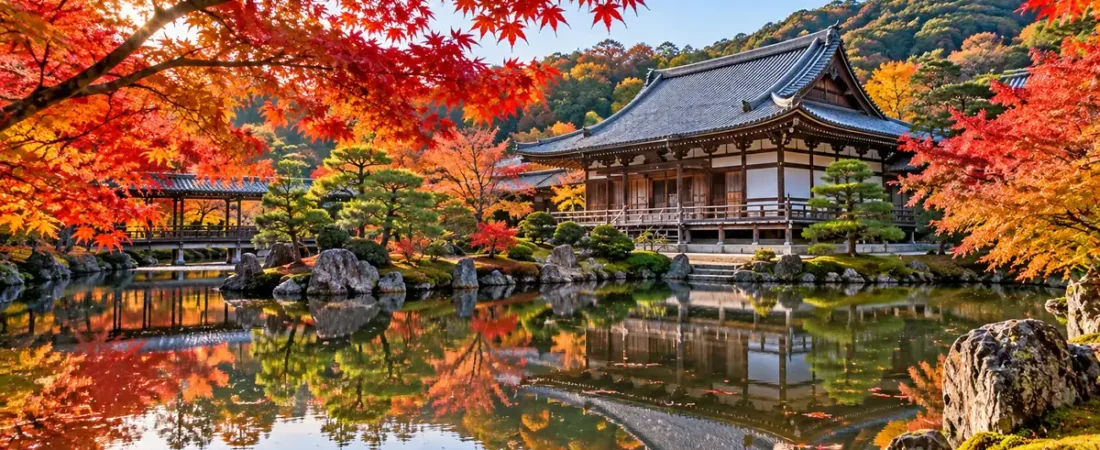
The best time to visit Kyoto depends on whether you value comfortable weather, cherry blossoms, autumn colours, smaller crowds or lower accommodation demand. For many first-time visitors, spring and autumn offer the most comfortable sightseeing conditions, but they are also among Kyoto’s busiest periods.
Late March to early April attracts visitors hoping to see cherry blossoms, while November is famous for spectacular autumn foliage. May can provide an excellent balance of pleasant weather and green landscapes after the main cherry-blossom rush, while winter offers a quieter side of Kyoto. Summer brings major cultural events, including Gion Matsuri, but conditions can be very hot and humid.
This guide explains Kyoto month by month and season by season so you can choose the right time for your trip.
If this will be your first visit, start with our Kyoto Travel Guide for attractions, transport and practical planning advice.
Best Time to Visit Kyoto at a Glance
For most travellers, the seasons break down like this:
- Best for comfortable weather: April, May, October and November
- Best for cherry blossoms: Usually late March to early April
- Best for autumn colours: Usually November, with timing varying by location and year
- Best for smaller crowds: Parts of January, February, June and winter outside major holidays
- Best for festivals: July
- Best for lush greenery: May and June
- Best for a quieter cultural trip: Winter
- Most challenging weather: July and August because of heat and humidity
There is no universally perfect month. Kyoto changes dramatically with the seasons, and each period offers a different experience.
Spring in Kyoto: March to May
Spring is one of Kyoto’s most celebrated seasons.
Temperatures gradually become milder from March, flowers begin appearing across temple gardens and the city becomes particularly busy around cherry-blossom season.
Kyoto in March
March marks the transition from winter to spring.
Early March can still feel chilly, particularly in the morning and evening, so layers remain important.
Plum blossoms and other early spring flowers provide colour before the main cherry-blossom period.
As the month progresses, visitor numbers generally increase as travellers arrive in anticipation of sakura.
March can be a good choice if you want spring atmosphere without deliberately targeting the busiest days around peak blossoms.
Kyoto in April
April is one of Kyoto’s most famous months.
Cherry blossoms usually reach their most anticipated period around early April in Kyoto City, although exact timing changes every year.
Popular locations can become exceptionally busy during peak bloom. Accommodation demand rises, and famous sightseeing areas can be crowded from morning onwards.
If cherry blossoms are the main reason for your visit, April can be extraordinary. However, you should book accommodation well in advance and accept that you will be sharing the experience with many other visitors.
Starting sightseeing early becomes particularly valuable.
Kyoto in May
May is one of the strongest alternatives to peak cherry-blossom season.
The landscape becomes intensely green, temperatures are generally comfortable and walking around temple districts is pleasant.
After Japan’s Golden Week holiday period, some visitors may find the city easier to explore than during early April.
May works especially well for travellers who care more about comfortable sightseeing than seeing cherry blossoms.
It is also an excellent month for walking around Arashiyama, Higashiyama and Kyoto’s garden-filled temple districts.
Summer in Kyoto: June to August
Kyoto’s summer is beautiful but physically demanding.
The city’s basin geography contributes to hot and humid conditions, and temperatures can exceed 35°C during midsummer. Official Kyoto tourism guidance specifically warns visitors to take heat precautions.
Summer should not automatically be avoided, however. Green landscapes, hydrangeas, festivals and evening activities create experiences unavailable during other seasons.
Kyoto in June
June brings the rainy season, known as tsuyu.
Kyoto’s rainy period typically begins around early June and extends towards mid-July, although conditions vary each year.
Rain does not necessarily continue all day, every day. You may experience cloudy periods, intermittent showers or heavier rain.
The advantage is wonderfully lush vegetation. Temple gardens become deep green, hydrangeas appear and wet stone streets can create atmospheric scenes.
June can also be appealing to travellers who prefer visiting outside the famous spring and autumn peaks.
Pack a lightweight umbrella or rain jacket and shoes that handle wet surfaces well.
Kyoto in July
July is one of Kyoto’s most culturally significant months because of Gion Matsuri.
The festival takes place throughout July, with some of its most famous events concentrated around the middle and latter parts of the month.
In 2026, the Early Festival Yoiyama period ran July 14–16 and the Latter Festival Yoiyama period July 21–23, while major Yamahoko processions traditionally take place on July 17 and July 24.
Festival dates and arrangements should always be checked for the year you plan to travel.
The drawback is the weather.
July is hot and humid, and outdoor sightseeing around midday can become exhausting.
If visiting in July, start temples early, take breaks during the hottest hours and carry water.
Kyoto in August
August continues the hot and humid conditions.
Daytime sightseeing requires careful planning, particularly for attractions involving long outdoor walks.
Visit places such as Fushimi Inari early in the morning rather than attempting strenuous routes during the hottest part of the afternoon.
August also brings important summer traditions and events, giving visitors an opportunity to experience Kyoto beyond its better-known spring and autumn scenery.
For heat-sensitive travellers, however, August is not the easiest month for a first visit.
Autumn in Kyoto: September to November
Autumn competes with spring as Kyoto’s most celebrated season.
Conditions gradually become more comfortable, and later in the season temples and gardens are transformed by red, orange and yellow foliage.
Kyoto in September
September can still feel very much like summer, particularly early in the month.
Kyoto’s official seasonal guidance notes that hot conditions can continue well into September.
Later in the month, conditions generally begin to improve.
September works well if your dates are fixed, but visitors expecting crisp autumn temperatures and red maple leaves may be disappointed if they arrive too early.
Kyoto in October
October is one of the most pleasant months for general sightseeing.
Temperatures are typically more comfortable than summer, making long days of walking much easier.
Do not assume that central Kyoto will already have peak autumn colours, though. The most famous foliage display generally develops later.
October is therefore particularly good for visitors who want autumn weather but do not need to see peak maple colours.
Kyoto in November
November is one of Kyoto’s most spectacular—and busiest—months.
As temperatures cool, maple trees around temples and gardens turn brilliant shades of red, orange and yellow.
Kyoto’s tourist information service notes that autumn leaves generally begin changing from around the end of October and often reach their peak around mid-November, though timing varies each year and by elevation.
Mountain areas such as Takao can change earlier.
Some temples also hold seasonal evening illuminations, creating opportunities to see foliage after dark.
The trade-off is crowding. Mid-November through early December is identified by Kyoto tourism authorities as one of the city’s busiest visitor periods.
Book accommodation early if autumn foliage is a major priority.
Winter in Kyoto: December to February
Winter reveals a quieter and often overlooked side of Kyoto.
The city becomes cold, but significant snowfall in central Kyoto is relatively uncommon.
When snow does fall, temples and historic neighbourhoods can look extraordinary.
Kyoto in December
Early December may still offer the final stages of autumn foliage at some locations.
As the month progresses, conditions become colder and the city shifts towards winter.
December can be an appealing compromise if you want fewer visitors than peak November while still enjoying Kyoto’s atmospheric streets and temples.
Be aware that the New Year period affects opening arrangements and transport patterns, so check individual attractions if travelling around late December and early January.
Kyoto in January
January is cold but can be rewarding for travellers who prioritise quieter sightseeing.
Temple gardens feel very different without spring or autumn foliage, and mornings can be particularly peaceful.
Warm clothing is essential, especially when spending long periods outside or visiting temples where interiors may not be heavily heated.
New Year itself is an important domestic travel and shrine-visiting period, so quieter winter conditions should not be assumed around the holiday.
Kyoto in February
February remains cold but provides another opportunity to experience Kyoto outside its busiest seasons.
Later in the month, plum blossoms begin adding colour to selected gardens and shrine grounds, signalling the approach of spring.
February can work particularly well for budget-conscious visitors who are comfortable with cold weather and want to focus on temples, food and culture rather than famous seasonal scenery.
Best Time for Cherry Blossoms in Kyoto
If cherry blossoms are your priority, plan around late March to early April, but remain flexible.
Kyoto’s official tourist information notes that Kyoto City’s cherry blossoms typically reach their best viewing period around early April, but annual weather conditions can shift the timing.
Different varieties also bloom at different times.
That means there is no single guaranteed date.
Check Kyoto’s current cherry-blossom calendar shortly before travelling rather than relying entirely on historical averages.
The most famous cherry-blossom period also attracts some of the year’s largest visitor numbers.
If you dislike heavy crowds, visiting outside peak sakura season may provide a more relaxed overall trip.
Best Time for Autumn Leaves in Kyoto
Autumn foliage usually becomes a major attraction during November.
Kyoto’s official visitor information indicates that leaves often begin colouring near the end of October, reach peak colour around the middle of November and move past peak towards the end of November.
Timing differs between locations.
Higher or cooler areas such as Takao, Ohara and Mount Hiei may change earlier than central Kyoto.
As with cherry blossoms, weather can shift the schedule from year to year.
For the best chance of seeing strong autumn colours, monitor Kyoto’s current foliage reports shortly before your visit.
When Is Kyoto Most Crowded?
Kyoto’s official tourist information identifies two especially busy seasonal periods:
Late March to early April for cherry blossoms, and mid-November to early December for autumn leaves.
Mid-July can also become particularly busy because of Gion Matsuri.
This does not mean you should avoid these periods. They are popular for good reason.
Instead, adjust your sightseeing strategy.
Visit famous places early in the morning, explore less-visited neighbourhoods during the busiest hours and avoid trying to cross the city repeatedly.
Our 3 Days in Kyoto Itinerary groups attractions geographically to reduce unnecessary travel.
Best Time to Visit Kyoto for Fewer Crowds
For lower visitor pressure, consider winter outside New Year, parts of June or other periods between major seasonal peaks.
There is a trade-off.
Winter is colder, while June can be rainy and humid.
However, quieter conditions can transform the experience of temple gardens and traditional streets.
If your main goal is culture rather than cherry blossoms or autumn leaves, travelling outside peak seasons can be extremely rewarding.
Best Time to Visit Kyoto for Good Weather
Spring and autumn generally provide Kyoto’s most comfortable conditions for walking and sightseeing.
April and May offer mild spring weather, while October and November bring increasingly comfortable autumn temperatures.
The catch is demand.
The periods with the most celebrated scenery often coincide with heavier crowds.
For travellers seeking a compromise, May and October deserve particular consideration.
Neither guarantees the iconic peak cherry blossoms or peak red maples, but both can provide pleasant conditions for spending full days outdoors.
Best Time to Visit Kyoto on a Budget
Accommodation prices vary substantially according to property, booking date and demand, so there is no reliable fixed amount that applies to every visitor.
However, the busiest cherry-blossom and autumn-foliage periods create strong demand for well-located accommodation.
Travellers with flexible dates should compare prices outside these peak periods.
Winter outside the New Year holidays and the rainy season can sometimes provide more accommodation choice than the most popular spring and autumn weeks.
Remember that Kyoto City also charges an accommodation tax.
For neighbourhood comparisons and accommodation-planning advice, see our guide to where to stay in Kyoto.
What to Pack for Kyoto by Season
Spring
Bring layers, comfortable walking shoes and a light jacket.
Morning and evening temperatures can feel considerably cooler than midday, particularly in March.
Summer
Pack lightweight breathable clothing, sun protection and a reusable water bottle.
An umbrella can be useful for both rain and intense sunshine.
Heat precautions are important during July and August.
Autumn
Early autumn can remain warm, while November becomes much cooler.
Pack layers that can be adjusted throughout the day.
Winter
Bring a warm coat, layers, gloves and appropriate footwear.
Remember that sightseeing often involves standing or walking outdoors for extended periods.
Which Month Should You Choose?
Choose April if experiencing Kyoto’s cherry blossoms is one of your major travel goals and you are comfortable with heavy demand.
Choose May for comfortable weather, lush greenery and excellent walking conditions.
Choose June for hydrangeas and green temple gardens if you do not mind rain.
Choose July for Gion Matsuri and summer culture, provided you can handle heat and humidity.
Choose October for pleasant autumn sightseeing before the main foliage peak.
Choose November if brilliant autumn colours are your highest priority.
Choose January or February if you value quieter sightseeing and do not mind cold weather.
There is no wrong season to visit Kyoto; the experience simply changes considerably throughout the year.
Final Thoughts
For many travellers, the best time to visit Kyoto is spring or autumn because of the combination of comfortable weather and extraordinary seasonal scenery. But these seasons also bring Kyoto’s largest visitor numbers.
If you want cherry blossoms, aim for the late-March-to-early-April period while monitoring current bloom reports. If autumn colours are your priority, November provides the strongest opportunity. For a balance of comfortable weather and less emphasis on peak seasonal scenery, May and October are excellent alternatives.
Winter suits travellers seeking a quieter cultural experience, while summer rewards those interested in festivals and vibrant green landscapes despite the heat and humidity.
Whatever month you choose, Kyoto’s temples, gardens, food and historic neighbourhoods make the city worth experiencing in more than one season.
Explore more places through our destinations page or browse our complete collection of itineraries.