
Planning 3 days in Kyoto gives you enough time to experience many of the city’s essential sights without turning the trip into a race between temples. This itinerary combines the historic streets of Higashiyama and Gion, the famous torii gates of Fushimi Inari, Arashiyama’s bamboo and riverside scenery, and landmarks such as Kinkaku-ji and Nijo Castle.
Kyoto’s attractions are spread across several districts, so the key to a successful 3-day visit is grouping nearby places together. This itinerary is designed to reduce unnecessary travel while leaving time to walk, eat and enjoy the atmosphere that makes Kyoto special.
Before your trip, read our Kyoto Travel Guide for an overview of attractions, transport, food and practical advice. If you have not booked accommodation yet, our guide to where to stay in Kyoto compares the most convenient neighbourhoods.
Price note: All prices in this article are approximate and were checked at the time of publication. Prices may change.
Top Tours & Experiences in Kyoto
Discover popular Kyoto tours and experiences. Check current availability, ratings and prices before you book.
Affiliate disclosure: If you book through these links, we may earn a commission from Viator. This does not increase the price you pay.
3 Days in Kyoto at a Glance
This itinerary divides Kyoto geographically:
Day 1: Kiyomizu-dera, Higashiyama, Yasaka Shrine and Gion
Day 2: Arashiyama, Kinkaku-ji and northern Kyoto
Day 3: Fushimi Inari, Nishiki Market and Nijo Castle
Starting early is particularly valuable in Kyoto. Several famous attractions become much busier by late morning, while early hours often provide a completely different experience.
Day 1: Kiyomizu-dera, Higashiyama and Gion
Your first day focuses on eastern Kyoto, where some of the city’s most atmospheric streets and important temples are concentrated within a walkable area.
Morning: Start Early at Kiyomizu-dera
Begin at Kiyomizu-dera, one of Kyoto’s most celebrated temples.
The temple opens at 6:00 a.m., making it an excellent first stop for early risers. Arriving early also lets you explore the surrounding historic streets before the busiest period of the day.
Kiyomizu-dera is famous for its enormous wooden stage extending from the hillside. From the terrace, you can look across the surrounding forest towards Kyoto.
Allow around 60–90 minutes for the temple complex.
After leaving, walk down through the Higashiyama district rather than immediately taking transport elsewhere.
Walk Through Sannenzaka and Ninenzaka
The historic lanes of Sannenzaka and Ninenzaka are among Kyoto’s most photogenic areas.
Traditional-style buildings contain cafés, restaurants, craft shops and souvenir stores. The streets can become extremely busy, which is another reason to begin the day early.
Take your time rather than treating the area simply as a route between attractions.
Continue towards the Yasaka Pagoda area, where traditional streets create some of eastern Kyoto’s most recognisable views.
Remember that people live and work throughout these neighbourhoods. Respect signs restricting photography or access and never enter private lanes or properties.
Late Morning: Kodai-ji and Maruyama Park
Continue north towards Kodai-ji and Maruyama Park.
If you enjoy temple gardens, Kodai-ji can be a worthwhile additional paid stop. Otherwise, continue through the area towards Maruyama Park.
The park provides a useful break between Higashiyama’s historic streets and Yasaka Shrine.
During cherry-blossom season it becomes particularly lively, but it is pleasant throughout much of the year.
Visit Yasaka Shrine
At the western edge of Maruyama Park stands Yasaka Shrine, one of Kyoto’s best-known Shinto shrines.
The grounds are free to enter, making this an easy addition to your walking route.
Yasaka Shrine is closely associated with the Gion district and the famous Gion Matsuri held during July.
From here, continue into Gion.
Afternoon: Explore Gion
Spend the afternoon walking through Gion, Kyoto’s famous traditional entertainment district.
Explore the wider area rather than concentrating only on one street. Hanamikoji and the Shirakawa area provide very different atmospheres.
Gion is still a working neighbourhood. Geiko and maiko are not tourist performers on the street, and visitors should never obstruct, follow or photograph people against local rules.
Private roads and alleys should also be respected.
Evening: Pontocho and the Kamo River
Finish Day 1 around the Kamo River and Pontocho.
Pontocho is a narrow restaurant-lined alley running close to the river. Dining choices range from casual establishments to more elaborate traditional meals.
If you prefer something less formal, the wider Kawaramachi area has an enormous selection of restaurants.
After dinner, walk beside the Kamo River before returning to your accommodation.
Day 2: Arashiyama and Kinkaku-ji
Day 2 moves to western and northern Kyoto.
This is another day when an early start is worthwhile, particularly at Arashiyama.
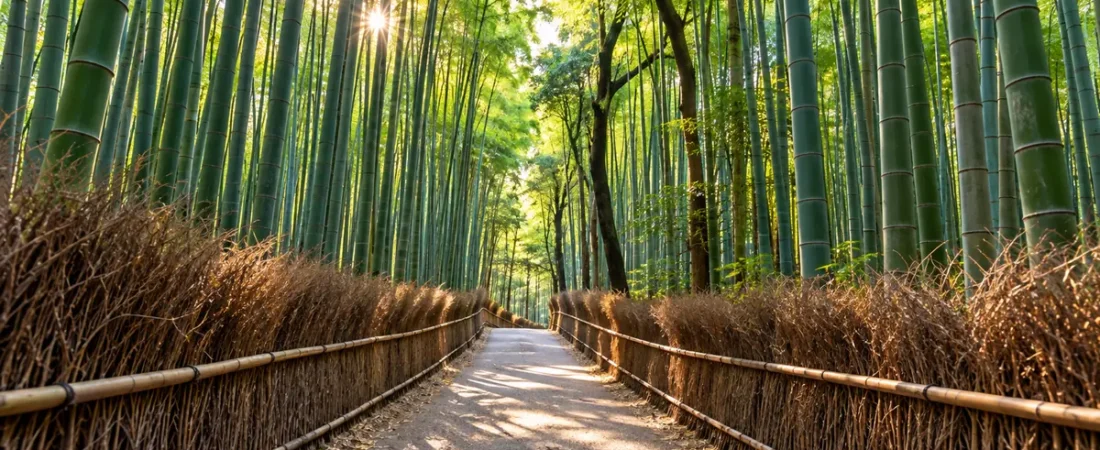
Early Morning: Arashiyama Bamboo Grove
Travel to Arashiyama early in the morning.
The bamboo grove itself does not require an admission ticket and is one of Kyoto’s most recognisable landscapes.
However, it is also one of the city’s busiest attractions. Visiting earlier generally provides a calmer experience than arriving around the middle of the day.
The bamboo path is not particularly long, so do not make the mistake of leaving Arashiyama immediately afterwards.
The surrounding district deserves much more time.
Morning: Tenryu-ji and Arashiyama
Visit Tenryu-ji, one of Arashiyama’s major Zen temples.
Its historic garden uses the surrounding mountains as part of the landscape and provides a striking contrast with the nearby bamboo grove.
Afterwards, continue towards Togetsukyo Bridge.
The bridge crosses the Katsura River against a backdrop of forested mountains. Walk along the riverside for a while before lunch.
If you prefer quieter surroundings, explore farther into the Sagano area, where smaller temples and residential streets receive fewer visitors than central Arashiyama.
Lunch in Arashiyama
Have lunch before leaving the district.
Arashiyama has restaurants serving soba, udon, tofu cuisine, Japanese set meals and sweets.
Queues can develop at popular restaurants around midday. Eating slightly earlier or later than the standard lunch rush can save time.
Afternoon: Kinkaku-ji
Travel north-east to Kinkaku-ji, the Golden Pavilion.
The pavilion’s upper floors are covered in gold leaf and overlook a pond that forms one of Kyoto’s most famous scenes.
Adult admission is currently ¥500.
The sightseeing route is fairly compact, so approximately one hour is sufficient for most visitors.
Kinkaku-ji is open from 9:00 a.m. to 5:00 p.m., so do not leave Arashiyama too late if you want to include it.
Optional: Ryoan-ji
If you have sufficient time and energy, continue to Ryoan-ji, famous for its Zen rock garden.
This is particularly convenient because Ryoan-ji and Kinkaku-ji are both in northwestern Kyoto.
Alternatively, skip another temple and return downtown earlier. 3 days in Kyoto involves a lot of walking, and leaving some unscheduled time often makes the trip more enjoyable.
Evening: Downtown Kyoto
Return to central Kyoto for dinner.
Explore the area around Shijo-Kawaramachi, where you will find department stores, small restaurants, izakaya, cafés and easy access to the Kamo River.
If you are staying nearby, this is also a good evening to explore some of the streets around your hotel without a fixed sightseeing plan.
Day 3: Fushimi Inari, Nishiki Market and Nijo Castle
Your final day combines southern and central Kyoto.
Start at one of Japan’s most recognisable shrines before returning towards the city centre.
Early Morning: Fushimi Inari Taisha
Begin Day 3 at Fushimi Inari Taisha.
The shrine is famous for thousands of vermilion torii gates climbing the slopes of Mount Inari.
Access to the main shrine grounds and mountain route is free.
Many visitors walk through the lower torii corridors and then turn around. If you enjoy hiking and have enough time, continue farther up the mountain.
Completing the longer route requires substantially more time, so decide based on your energy level and the rest of your day’s plans.
Fushimi Inari is conveniently reached by train, with JR Inari Station immediately beside the shrine area.
Mid-Morning: Return to Central Kyoto
After Fushimi Inari, return towards central Kyoto.
If you started early, you should have plenty of time for the remainder of the itinerary.
Head towards Nishiki Market.
Late Morning: Nishiki Market
Nishiki Market is a covered shopping street known for food shops, specialist ingredients, snacks and Kyoto products.
Browse slowly and try a few foods that interest you.
Follow individual vendors’ instructions about where food can be consumed. Avoid walking through crowded areas while eating when shops request customers to eat at designated spots.
The surrounding downtown streets also contain numerous cafés and restaurants if you prefer a sit-down lunch.
Early Afternoon: Nijo Castle
Continue to Nijo Castle, an important reminder that Kyoto’s history extends beyond temples and shrines.
The castle was constructed under the Tokugawa shogunate and includes gardens, fortified gates and palace architecture.
Standard castle admission is currently ¥800 for adults. Admission including Ninomaru Palace is ¥1,300 for adults.
The castle admits visitors from 8:45 a.m. until 4:00 p.m. and closes at 5:00 p.m. Ninomaru Palace has specific closure dates, so check arrangements when planning your visit.
Allow roughly 90 minutes to two hours if visiting the palace and gardens.
Late Afternoon: Kyoto Imperial Palace or Downtown
After Nijo Castle, choose your final stop based on your energy and interests.
One option is Kyoto Imperial Palace and Kyoto Gyoen National Garden.
The extensive grounds provide a much more spacious environment than many of Kyoto’s temple districts.
Alternatively, return downtown for shopping, cafés or another walk beside the Kamo River.
There is no need to squeeze another major attraction into your final afternoon simply to increase the number of places visited.
Evening: Final Kyoto Dinner
Use your last evening for a memorable meal.
Kyoto is particularly associated with seasonal kaiseki cuisine, tofu dishes, matcha sweets and traditional Japanese confectionery.
You do not need to choose an expensive restaurant to eat well. Downtown Kyoto, Kyoto Station and the streets surrounding Kawaramachi contain options for a wide range of budgets.
How to Get Around During This Kyoto Itinerary
Do not rely exclusively on buses.
Kyoto’s official tourism guidance encourages visitors to use trains and subway services where practical because buses serving famous sightseeing areas can become crowded.
For this itinerary:
Day 1: Use public transport to reach the Kiyomizu-dera/Higashiyama area, then explore largely on foot.
Day 2: Use rail for Arashiyama, followed by appropriate public transport towards Kinkaku-ji.
Day 3: Take the JR Nara Line to Inari for Fushimi Inari, then use rail/subway connections when returning towards central Kyoto.
An IC transport card can make individual journeys more convenient because you do not need to purchase a separate ticket each time.
Kyoto also offers sightseeing transport passes, but a pass is not automatically cheaper. Compare its price with the journeys planned for that particular day.
Where to Stay for This 3-Day Kyoto Itinerary
For this itinerary, Downtown Kyoto or Kyoto Station are particularly practical bases.
Downtown provides convenient evening restaurants and access towards Gion, while Kyoto Station makes rail journeys to Fushimi Inari and Arashiyama straightforward.
Gion and Higashiyama are excellent alternatives if historic atmosphere is your priority.
For a full neighbourhood comparison, see our guide to where to stay in Kyoto.
Tips for Making the Most of 3 Days in Kyoto
Start Early
Early mornings are extremely valuable at Kyoto’s most famous attractions.
Kiyomizu-dera opens at 6:00 a.m., while Fushimi Inari can also be visited early, allowing you to experience these areas before the main daytime crowds.
Group Attractions by Area
Avoid travelling back and forth across Kyoto.
This itinerary deliberately groups eastern Kyoto on Day 1, western and northern Kyoto on Day 2, and southern plus central Kyoto on Day 3.
Wear Comfortable Shoes
Expect extensive walking.
Historic streets can be steep, and temple complexes frequently include stairs, gravel and uneven surfaces.
Do Not Overload the Schedule
Kyoto contains enough temples and shrines to fill weeks.
Trying to visit too many in one day can make them blur together. Choose several important places and allow time to enjoy each neighbourhood.
Respect Local Communities
Many of Kyoto’s beautiful historic streets are residential areas.
Observe photography restrictions, do not enter private property, keep noise reasonable and avoid blocking narrow streets.
What If You Have an Extra Day in Kyoto?
A fourth day creates several possibilities.
You could spend more time exploring northern Kyoto, visit additional temples along the Philosopher’s Path, return to Arashiyama for quieter sites or take a short excursion.
Uji is an appealing option for travellers interested in green tea and historic temples.
Nara is another popular excursion, particularly for visitors who want to see Todai-ji and Nara Park.
Osaka is easily accessible by rail and provides a striking contrast with Kyoto’s temple districts.
If Kyoto is part of a longer journey, browse our complete collection of itineraries for more trip-planning ideas.
Is 3 Days Enough for Kyoto?
3 days is a good amount of time for a first visit.
You will not see everything, but you can experience several of Kyoto’s most important districts without spending your entire trip moving between attractions.
Travellers who are particularly interested in temples, gardens, Japanese history or photography could comfortably spend four or five days.
If you only have 3 days, geographical planning matters more than trying to include every famous landmark.
Final Thoughts
A well-planned 3 days in Kyoto gives you a strong introduction to one of Japan’s most culturally significant cities.
Day 1 introduces the traditional streets, temples and atmosphere of eastern Kyoto. Day 2 brings bamboo, mountains and the Golden Pavilion. Day 3 combines the torii gates of Fushimi Inari with central Kyoto’s market and castle history.
The itinerary is intentionally flexible. Skip an attraction if you find somewhere you want to explore longer. Some of Kyoto’s best moments happen between the major landmarks rather than at them.
For additional planning information, including transport, food and essential visitor advice, read our Kyoto Travel Guide.
Book Your Kyoto Experiences
Ready to start planning? Compare popular Kyoto tours and activities, check current prices and availability, and book the experiences that suit your trip.
Affiliate disclosure: If you book through these links, we may earn a commission from Viator. This does not increase the price you pay.
Explore more places through our destinations page or browse our complete collection of itineraries.