
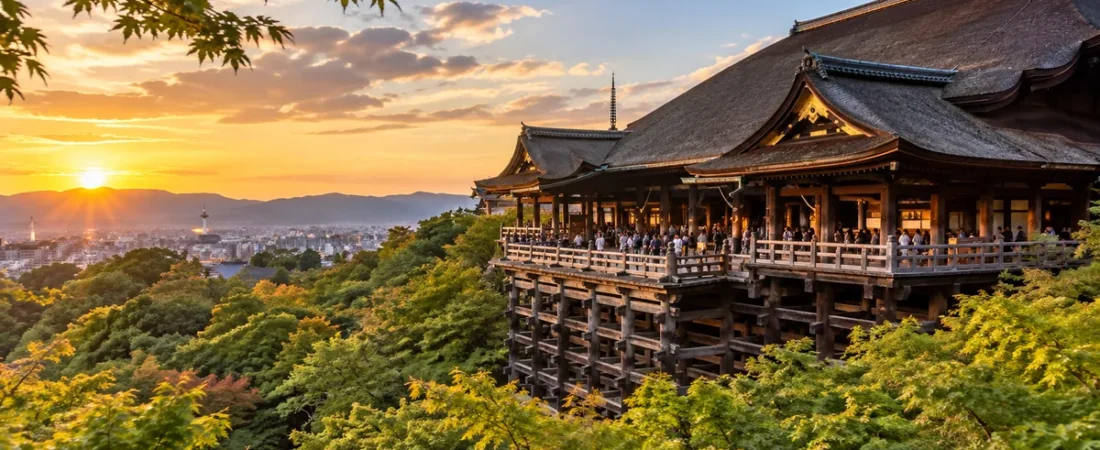
Kyoto is one of Japan’s most rewarding destinations, combining centuries-old temples, traditional neighbourhoods, peaceful gardens, atmospheric shrines and outstanding seasonal scenery. Once Japan’s imperial capital, the city preserves an extraordinary concentration of cultural landmarks while remaining a lively modern destination with excellent food, shopping and transport connections.
This Kyoto travel guide covers the city’s essential attractions, neighbourhoods, transport, food, seasonal considerations and practical travel tips to help you plan a memorable first visit.
Price note: All prices in this article are approximate and were checked at the time of publication. Prices may change.
Why Visit Kyoto?
Kyoto offers an experience quite different from Japan’s largest modern cities. Instead of skyscrapers dominating the landscape, many of its most memorable places are temple gardens, wooden streets, mountain paths and historic districts.
The city is particularly famous for Buddhist temples and Shinto shrines, including Kinkaku-ji, Kiyomizu-dera and Fushimi Inari Taisha. Visitors can also explore the bamboo groves and temples of Arashiyama, walk through the historic streets of Gion and discover traditional gardens throughout the city.
Kyoto is also an excellent destination for Japanese cuisine. Kaiseki dining, tofu dishes, matcha sweets, ramen, seasonal wagashi and the food stalls of Nishiki Market provide plenty to discover between sightseeing stops.
For more inspiration across Japan and beyond, browse our complete collection of travel guides.
Top Tours & Experiences in Kyoto
Discover popular Kyoto tours and experiences. Check current availability, ratings and prices before you book.
Affiliate disclosure: If you book through these links, we may earn a commission from Viator. This does not increase the price you pay.
Top Attractions in Kyoto
Fushimi Inari Taisha
Fushimi Inari Taisha is one of Kyoto’s most recognisable landmarks, famous for the thousands of vermilion torii gates climbing the forested slopes of Mount Inari.
Many visitors walk only through the lower sections, but those with more time can continue farther up the mountain. The atmosphere generally becomes quieter as you move beyond the most photographed areas.
Because the shrine grounds can become extremely busy, arriving early in the morning can provide a more peaceful experience. The main shrine grounds are free to visit.
Kiyomizu-dera
Kiyomizu-dera occupies a hillside in eastern Kyoto and is known for its large wooden terrace overlooking the city and surrounding trees.
The approach is part of the experience. Traditional streets such as Sannenzaka and Ninenzaka are lined with shops, cafés and historic buildings, making this area worth exploring before or after visiting the temple.
Seasonal foliage makes Kiyomizu-dera particularly attractive during spring and autumn. Special evening openings are also held during selected periods.
Kinkaku-ji
Kinkaku-ji, commonly known as the Golden Pavilion, is among Kyoto’s most photographed sights. The upper floors of the pavilion are covered in gold leaf, creating a striking reflection across the surrounding pond when conditions are calm.
The standard adult admission is currently ¥500. The sightseeing route through the grounds is relatively compact, so Kinkaku-ji can be combined with other northern Kyoto attractions.
Arashiyama
Arashiyama sits on Kyoto’s western side and deserves at least half a day.
The famous bamboo grove receives most of the attention, but the district offers considerably more. Visitors can explore Tenryu-ji, walk beside the Katsura River, cross Togetsukyo Bridge and discover smaller temples away from the busiest streets.
Tenryu-ji’s garden admission is currently ¥500 for high-school-age visitors and adults, with an additional charge to enter the temple buildings.
Visit early if the bamboo grove is a priority, as the central paths can become crowded later in the morning.
Gion and Higashiyama
Gion is Kyoto’s best-known traditional entertainment district. Historic wooden machiya buildings, teahouses and narrow lanes give parts of the neighbourhood a distinctive atmosphere.
Nearby Higashiyama contains some of Kyoto’s most attractive walking routes. Combining Yasaka Shrine, Maruyama Park, Ninenzaka, Sannenzaka and Kiyomizu-dera creates an excellent introduction to eastern Kyoto.
Remember that Gion is also a residential and working neighbourhood. Follow signs concerning photography and access, avoid blocking narrow streets and respect private property.
Nijo Castle
Nijo Castle provides a different perspective on Kyoto’s history. Built during the Tokugawa shogunate, the complex includes fortifications, gardens and elaborately decorated palace interiors.
General castle admission is currently ¥800 for adults. A combined adult ticket including Ninomaru Palace costs ¥1,300. Access to Honmaru Palace requires a separate ticket and advance reservation.
The castle works particularly well alongside central Kyoto attractions because it is accessible by subway.
Best Areas to Stay in Kyoto
Where you stay can significantly affect your experience because Kyoto’s attractions are spread across a wide area.
Kyoto Station
The Kyoto Station area is one of the most practical choices for first-time visitors. It provides excellent railway connections, numerous buses, restaurants, shopping and straightforward access to destinations outside Kyoto.
It is especially convenient if you plan day trips or are travelling with luggage.
Gion and Higashiyama
Stay around Gion or Higashiyama if atmosphere and historic surroundings are priorities.
You can reach several temples, shrines and traditional streets on foot, particularly early in the morning or evening when day visitors have left. Accommodation ranges from hotels to traditional-style properties.
Downtown Kyoto
The central area around Shijo and Kawaramachi provides a useful balance of transport, shopping, restaurants and nightlife.
Nishiki Market, department stores and numerous dining options are nearby, while buses, subway services and private railway lines connect the district with other parts of Kyoto.
Arashiyama
Arashiyama suits travellers seeking a quieter stay away from central Kyoto. Staying overnight also makes it easier to experience the bamboo grove and riverside before the main daytime crowds arrive.
The trade-off is additional travel time when visiting attractions in eastern Kyoto.
Getting Around Kyoto
Kyoto has trains, two municipal subway lines and an extensive bus network. Walking is also essential because many attractions are best explored as neighbourhood clusters.
Trains
JR, Keihan, Hankyu, Randen and other railway services are useful for different parts of the city.
Trains are particularly convenient for destinations such as Fushimi Inari and Arashiyama. When possible, using rail instead of buses can also help avoid road congestion.
Subway
Kyoto’s Karasuma and Tozai subway lines connect several important areas and are easy to navigate.
The Subway 1-Day Pass currently costs ¥800 for adults and ¥400 for children.
Buses
City buses reach many temples and neighbourhoods that are not directly beside railway or subway stations. The standard flat-zone city-bus fare is ¥230 for adults and ¥120 for children.
Buses serving famous attractions can become crowded, particularly during peak sightseeing seasons. Consider combining trains, subway services and walking rather than relying entirely on buses.
Subway & Bus 1-Day Pass
The Subway & Bus 1-Day Pass currently costs ¥1,100 for adults and ¥550 for children. It provides unlimited travel on Kyoto City Subway and eligible bus services.
Whether it saves money depends on your itinerary, so compare the pass price with the journeys you expect to make.
Getting to Kyoto
Kyoto does not have its own major international airport. Many international visitors arrive through Kansai International Airport near Osaka.
The JR Kansai-Airport Express HARUKA provides direct rail access between Kansai Airport and Kyoto. An eligible discounted HARUKA one-way ticket for temporary foreign visitors is currently listed at ¥2,200 for adults between Kansai Airport and Kyoto.
Kyoto is also extremely well connected by rail with other Japanese cities. The Tokaido Shinkansen connects Kyoto with Tokyo, Nagoya and Shin-Osaka, making Kyoto easy to combine with a wider Japan itinerary.
Best Time to Visit Kyoto
Kyoto is a year-round destination, but each season feels very different.
Spring
Spring is one of the most popular times to visit because of cherry blossoms and generally comfortable sightseeing weather.
Exact blossom timing varies every year. Accommodation demand can be extremely high during the peak period, so booking well ahead is sensible.
Summer
Summer is hot and humid, but it also brings important cultural events, including the famous Gion Matsuri in July.
Plan outdoor sightseeing early in the morning, take regular breaks and carry water during the hottest periods.
Autumn
Autumn is another exceptionally popular season. Temple gardens and forested hillsides turn shades of red, orange and gold, particularly during the later part of the season.
Expect increased crowds and accommodation demand around peak foliage periods.
Winter
Winter is colder and generally quieter outside the New Year period. Snowfall is not guaranteed in central Kyoto, but occasional snow can transform temple gardens and historic districts.
Winter can be an excellent choice for travellers who prefer fewer crowds and do not mind cold weather.
Food to Try in Kyoto
Kyoto’s cuisine reflects the city’s long cultural and religious history.
Kaiseki
Kaiseki is a traditional multi-course dining style focused on seasonality, presentation and carefully balanced flavours. Kyoto is one of Japan’s most celebrated destinations for experiencing it.
Yudofu
Yudofu is gently heated tofu commonly associated with Kyoto’s temple districts. It is a simple dish particularly enjoyable during cooler weather.
Matcha Sweets
Kyoto Prefecture is closely associated with high-quality green tea, particularly nearby Uji. Matcha appears in parfaits, cakes, ice cream, traditional sweets and drinks throughout Kyoto.
Nishiki Market
Nishiki Market is a narrow covered shopping street filled with food vendors, specialist shops and local ingredients.
It is an interesting place to sample small dishes, but visitors should follow individual shops’ guidance about where food may be eaten rather than walking through crowded areas while eating.
Kyoto Accommodation Tax
Visitors staying overnight should remember Kyoto City’s accommodation tax when planning their budget.
Since March 1, 2026, the tax is charged per person, per night according to the accommodation rate. It currently ranges from ¥200 per night for accommodation costing less than ¥6,000 per person to substantially higher amounts for luxury accommodation.
Check whether the tax is included in your booking total or collected separately by your accommodation.
Practical Kyoto Travel Tips
Start sightseeing early. Famous locations such as Fushimi Inari, Kiyomizu-dera and Arashiyama can become considerably busier later in the day.
Organise each day geographically. Kyoto’s attractions are spread out, so repeatedly crossing the city wastes valuable sightseeing time.
Wear comfortable shoes. Temple complexes, historic neighbourhoods and hillside attractions involve considerable walking, steps and uneven surfaces.
Carry some cash. Card and contactless payments are increasingly common, but smaller temples, shops and traditional businesses may still prefer cash.
Respect religious spaces. Follow photography restrictions, speak quietly where requested and avoid entering areas marked as private.
Avoid treating residential streets as tourist attractions. Kyoto has introduced measures to address disruptive visitor behaviour in heavily visited neighbourhoods, so always obey local signs and access restrictions.
Allow flexibility during cherry-blossom and autumn-foliage seasons, when popular buses and attractions may be particularly crowded.
How Many Days Do You Need in Kyoto?
3 days provide a good introduction to Kyoto.
One day can focus on eastern Kyoto, including Kiyomizu-dera, Higashiyama and Gion. Another can combine northern or central attractions such as Kinkaku-ji and Nijo Castle. A third day can be dedicated to Arashiyama and additional temples.
Four or five days are even better if you enjoy gardens, temples, photography or slower neighbourhood exploration. Additional time also creates opportunities for excursions to places such as Uji, Nara or Osaka.
Frequently Asked Questions
Is Kyoto worth visiting for first-time visitors to Japan?
Absolutely. Kyoto offers one of Japan’s greatest concentrations of historic temples, shrines, gardens and traditional neighbourhoods and provides a strong contrast to larger modern cities.
Is 3 days enough for Kyoto?
3 days are enough to experience several major areas without rushing excessively. Four or five days allow more time for smaller temples, gardens and nearby excursions.
Is Kyoto expensive?
Kyoto can accommodate different budgets. Temples and transport are relatively manageable individually, but accommodation prices can rise considerably during cherry-blossom season, autumn foliage and major holidays.
Can you walk around Kyoto?
Yes, and walking is one of the best ways to explore individual neighbourhoods. However, Kyoto is too spread out to explore entirely on foot, so most visitors combine walking with trains, buses and subway services.
Is Kyoto easy to combine with Osaka?
Yes. Kyoto and Osaka are connected by frequent railway services, making them easy to combine on the same Japan trip or even visit as day trips from one another.
Final Thoughts
Kyoto rewards travellers who resist the temptation to rush between famous landmarks. Its most memorable experiences often come from walking between temples, exploring a quiet garden, discovering a traditional street or simply spending extra time in a neighbourhood after the crowds begin to disappear.
For a first visit, organise sightseeing by area, start early at the busiest attractions and leave enough flexibility to explore places you discover along the way. You can also browse our destinations page when planning the next stop on a wider Asian or international trip.
Book Your Kyoto Experiences
Ready to start planning? Compare popular Kyoto tours and activities, check current prices and availability, and book the experiences that suit your trip.
Affiliate disclosure: If you book through these links, we may earn a commission from Viator. This does not increase the price you pay.
Explore more places through our destinations page or browse our complete collection of itineraries.