
Finding the best free things to do in Osaka is surprisingly easy. Some of the city’s most memorable experiences cost nothing, from walking beneath Dotonbori’s neon lights and exploring Osaka Castle Park to visiting historic temple grounds, riverside parks and colorful neighborhoods.
That makes Osaka particularly appealing to travelers trying to control their Japan budget. You can spend an entire day exploring different neighborhoods without buying an attraction ticket and then save your money for the city’s famous food.
This guide covers 22 genuinely free Osaka experiences. Where a location contains an optional paid attraction, that distinction is clearly explained so you know exactly what you can enjoy without paying.
For more general planning advice, start with our Osaka travel guide and use our Osaka travel budget to estimate your overall trip costs.
1. Explore Osaka Castle Park
Osaka Castle Park is one of the best free attractions in the city.
The enormous park covers approximately 105.6 hectares and surrounds Osaka Castle with moats, stone walls, trees and open spaces.
Walking through the park and viewing Osaka Castle from outside costs nothing.
The park is particularly attractive during seasonal blossom periods. Its plum grove contains more than 1,200 plum trees representing over 100 varieties.
Free: Osaka Castle Park and exterior castle views.
Optional paid activity: Entry to Osaka Castle Museum and certain other facilities within the park requires admission.
2. Walk Through Dotonbori
You do not need to spend anything to experience Osaka’s most famous entertainment district.
Dotonbori is at its best when explored on foot. Walk beside the canal, watch the enormous illuminated signs come to life and experience the crowds moving between restaurants and entertainment venues.
Ebisubashi provides the classic view toward the famous Glico running-man display.
Visit around dusk and stay after dark to experience the change in atmosphere.
Food, cruises and entertainment are optional expenses; walking through Dotonbori itself is free.
3. Walk the Tombori Riverwalk
While visiting Dotonbori, descend to the pedestrian paths beside the canal.
The Tombori Riverwalk provides a different perspective from the streets above. You can watch sightseeing boats passing beneath the bridges while neon signs reflect across the water.
It is particularly enjoyable in the evening.
The river cruises are paid activities, but walking along the riverside is free.
4. Explore Shinsaibashi-suji
Shinsaibashi-suji is one of Osaka’s major covered shopping streets.
You obviously need to pay if you purchase something, but simply exploring the long arcade costs nothing.
It is also a useful free activity during rainy or extremely hot weather because much of the route is covered.
Combine Shinsaibashi with Dotonbori and Namba to create several hours of free sightseeing.
5. Discover Amerikamura
Close to Shinsaibashi, Amerikamura offers a completely different atmosphere.
The neighborhood is associated with youth fashion, vintage clothing, music and street culture.
Wander through its side streets, browse storefronts and watch the activity around Triangle Park.
Shopping and cafés are optional; exploring the neighborhood is free.
6. Experience Shinsekai
Shinsekai is one of Osaka’s most distinctive neighborhoods and costs nothing to explore.
Walk beneath its colorful signs, look toward Tsutenkaku Tower and explore the streets lined with kushikatsu restaurants and retro-style businesses.
The neighborhood becomes particularly atmospheric as the lights come on.
Free: Exploring Shinsekai and viewing Tsutenkaku from street level.
Optional paid activity: Entering Tsutenkaku’s observation facilities and other tower attractions requires admission.
7. Walk Along Janjan Yokocho
While exploring Shinsekai, continue through Janjan Yokocho.
This narrow shopping street retains an old-fashioned atmosphere and contains inexpensive restaurants and local businesses.
You do not need to buy anything to enjoy walking through it.
Combining Janjan Yokocho with Shinsekai creates an excellent free route through southern Osaka.
8. Visit Shitennoji Temple Grounds
Shitennoji is one of Osaka’s most historically significant religious sites and traces its origins to Prince Shotoku.
Visitors can enter the general temple grounds without charge and experience the atmosphere of this historic complex.
This is an important distinction for budget travelers.
Free: General temple grounds.
Paid: The central temple complex currently charges ¥500 for adults, while the garden and treasure facilities have separate admission charges.
You can therefore still include Shitennoji in a free Osaka sightseeing day without entering the ticketed sections.
9. Explore Nakanoshima Park
Nakanoshima Park provides one of the most attractive free walks in central Osaka.
The park sits between the Dojima and Tosabori rivers and stretches for approximately 1.5 kilometers.
Its waterfront paths provide views of bridges, modern buildings and some of Osaka’s most attractive historic architecture.
The location between Umeda and central Osaka also makes it easy to include without a major detour.
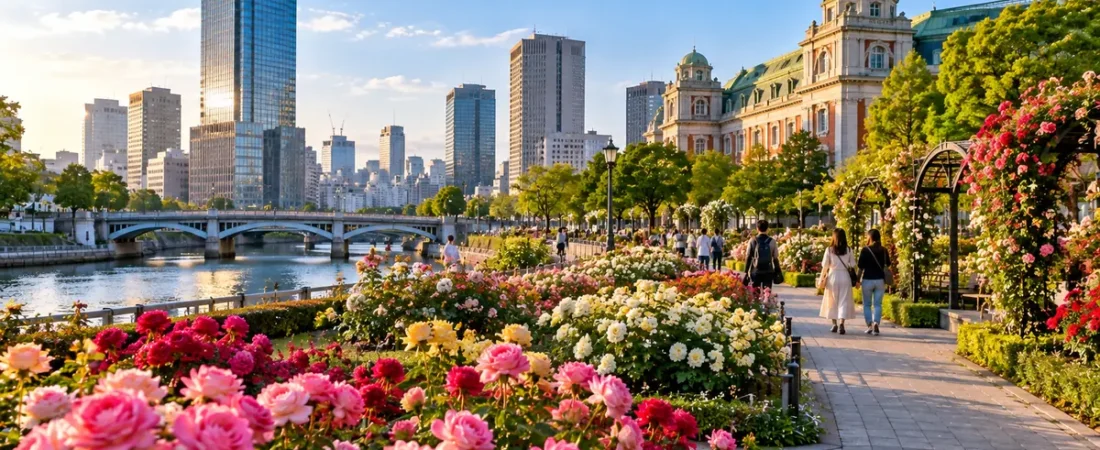
10. Visit Nakanoshima Rose Garden
Within Nakanoshima Park, the rose garden is another genuinely free attraction.
Official Osaka tourism information describes approximately 3,700 rose bushes representing around 310 varieties, with the main displays particularly attractive during the spring and autumn flowering periods.
Admission to the garden is free.
Outside peak rose season, Nakanoshima remains worthwhile for its riverside scenery.
11. Admire Osaka City Central Public Hall
While walking through Nakanoshima, stop to admire Osaka City Central Public Hall.
The red-brick building is one of the area’s most distinctive architectural landmarks and contrasts dramatically with the modern towers surrounding it.
Viewing and photographing the exterior costs nothing.
Combine it with Nakanoshima Park and the rose garden for a free architectural and riverside walk.
12. Walk Through Kema Sakuranomiya Park
Kema Sakuranomiya Park stretches along the Okawa River and is particularly famous during cherry blossom season.
Even outside spring, the riverside paths provide an enjoyable escape from Osaka’s busy commercial districts.
Bring a drink or picnic and spend some time beside the river rather than rushing from attraction to attraction.
The park itself is free.
13. Explore Tennoji Park
Tennoji Park provides another green space close to several major attractions in southern Osaka.
Its open areas make it a useful stop between Tennoji and Shinsekai.
Some attractions within or beside the wider park area charge admission, but walking through the public park areas does not require buying those tickets.
This makes Tennoji easy to combine with other free southern Osaka sights.
14. Climb Chausuyama
Chausuyama sits within Tennoji Park and provides a small but interesting historical stop.
At approximately 26 meters above sea level, it is hardly a serious mountain hike, but the location is connected with the Winter and Summer Sieges of Osaka.
Historical information and monuments around the summit explain its role in the conflict between the Toyotomi and Tokugawa forces.
Official Osaka tourism information lists admission as free.
15. Visit Sumiyoshi Taisha
Sumiyoshi Taisha is one of Osaka’s most important Shinto shrines.
Its history stretches back roughly 1,800 years, and its distinctive architectural style is considered one of Japan’s oldest shrine styles.
Walking around the shrine provides a very different experience from Osaka’s modern entertainment districts.
Observe normal shrine etiquette and remember that this is an active religious site rather than simply a tourist attraction.
16. Walk Through Sumiyoshi Park
Combine your Sumiyoshi Taisha visit with neighboring Sumiyoshi Park.
Established in 1873, it is Osaka’s oldest park.
The area contains seasonal greenery, historic connections with the shrine and the Takatoro high lantern.
The park is particularly easy to add because it sits close to Sumiyoshi Taisha.
17. Walk Down Midosuji
Midosuji is Osaka’s grand central avenue and one of the easiest free ways to experience the modern city.
The boulevard links major districts and is lined with commercial buildings, luxury shops and rows of ginkgo trees.
Autumn is particularly attractive when the leaves turn yellow.
During seasonal illumination periods, the avenue can take on a completely different character after dark.
18. Explore Namba’s Back Streets
Namba’s main attractions receive most of the attention, but some of the best free exploring happens away from the busiest routes.
Walk through smaller covered arcades, restaurant streets and side lanes around Namba.
You will encounter everything from tiny eateries and game centers to specialist shops.
There is no need for a strict route. Give yourself time to wander before eventually returning toward Dotonbori or Shinsaibashi.
19. Browse Sennichimae Doguyasuji
Sennichimae Doguyasuji is a shopping street devoted largely to restaurant and kitchen supplies.
Even if you have no intention of purchasing commercial cookware, it is fascinating to browse.
You may see knives, bowls, utensils, restaurant signs and realistic plastic food displays.
Browsing is free, although serious cooks may find it difficult to leave without buying something.
20. Explore Kuromon Ichiba Market
Kuromon Ichiba Market is famous for food, but there is no admission fee to enter and explore the covered market.
Walk past seafood displays, fruit shops and food counters while observing the daily activity.
Eating here obviously costs money, so treat this as a free browsing experience rather than describing the market’s food as free.
Be considerate of businesses and avoid blocking narrow walkways while taking photographs.
21. Walk Around Osaka Station and Umeda
Umeda demonstrates Osaka’s modern side.
The enormous station district contains elevated walkways, underground passages, skyscrapers and vast commercial complexes.
Simply navigating the Osaka/Umeda station area can feel like an attraction in itself.
Walk around the outdoor plazas and surrounding streets, explore the public areas of shopping complexes and enjoy the modern architecture.
Observation decks and other ticketed attractions remain optional.
22. Relax in Nagai Park
For travelers who want more greenery, Nagai Park provides another genuinely free option.
Official Osaka tourism information lists entry to Nagai Park as free and notes that the park itself is always open, although individual facilities inside have separate operating arrangements.
The large green space is popular for walking, exercise and recreation.
Free: General park access.
Optional paid activities: Individual facilities within the park may charge admission.
Book Your Osaka Experiences
Ready to start planning? Compare popular Osaka tours and activities, check current prices and availability, and book the experiences that suit your trip.
Affiliate disclosure: If you book through these links, we may earn a commission from Viator. This does not increase the price you pay.
How to Plan a Free Day in Osaka
One of the easiest approaches is to group free attractions geographically.
For a central Osaka day, combine Osaka Castle Park with a riverside walk through Nakanoshima and finish around Umeda.
For a Minami day, explore Kuromon Ichiba Market, Namba, Doguyasuji, Shinsaibashi, Amerikamura and Dotonbori.
For a southern Osaka day, combine Shitennoji, Tennoji Park, Chausuyama, Shinsekai and Janjan Yokocho.
This approach reduces transport journeys and gives you more time to explore.
Our 3 days in Osaka itinerary can help you organize the city’s main sightseeing areas efficiently.
How to Keep Your Osaka Trip Affordable
Free sightseeing does not mean you should avoid every paid attraction.
A better strategy is to choose one or two ticketed experiences that genuinely interest you and surround them with free neighborhoods, parks and historic areas.
For example, you could pay to enter Osaka Castle Museum but spend the rest of the day exploring Osaka Castle Park, Nakanoshima and Umeda without another attraction ticket.
Similarly, you can explore Shinsekai for free and decide whether the paid Tsutenkaku experience is important to you.
Accommodation location also affects your spending. Our guide to where to stay in Osaka explains which neighborhoods work best for different travelers.
Season matters too. Check our guide to the best time to visit Osaka if you want to combine free outdoor sightseeing with comfortable weather, cherry blossoms or autumn colors.
Are Osaka’s Free Attractions Worth It?
Definitely. Osaka’s character is found as much in its neighborhoods, parks, markets and streets as in its ticketed attractions.
You can see Osaka Castle from its surrounding park, experience Dotonbori after dark, explore retro Shinsekai, walk beside the rivers at Nakanoshima, visit historic religious grounds and wander through some of Japan’s liveliest shopping districts without paying admission.
That makes free attractions useful not only for budget travelers but for anyone who wants to experience more of everyday Osaka.
Mix several of these experiences with a few carefully chosen paid attractions and plenty of time for local food, and you can build a memorable Osaka trip without allowing sightseeing costs to dominate your budget.
Explore more places through our destinations page or browse our complete collection of itineraries.