
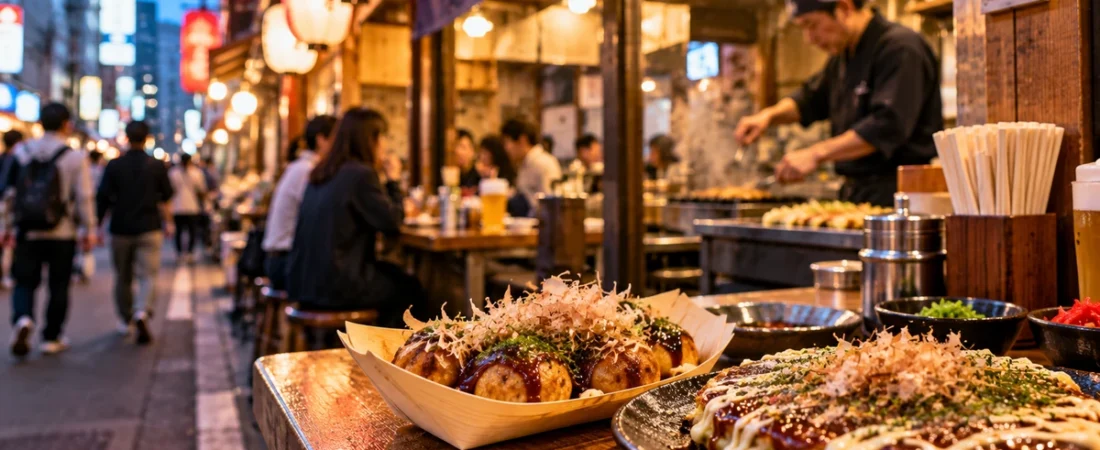
Planning your Osaka travel budget is relatively straightforward because the city works well for several travel styles. Budget travelers can use inexpensive business hotels, public transport and casual restaurants, while visitors looking for more comfort have an enormous selection of mid-range hotels, restaurants and paid attractions.
A realistic daily budget depends heavily on accommodation. Food and public transport can remain reasonably manageable even if you spend your days exploring Osaka’s major neighborhoods.
As a general planning estimate, a budget traveler might spend around ¥8,000–¥15,000 per person per day excluding accommodation, while a mid-range traveler could spend approximately ¥15,000–¥30,000 excluding accommodation. Travelers choosing upscale restaurants, premium hotels and multiple paid attractions can easily spend considerably more.
These figures are planning estimates rather than fixed costs.
For an introduction to the city, read our Osaka travel guide. You can also use our 3 days in Osaka itinerary to estimate how many attractions and transport journeys you might make.
Price note: All prices in this article are approximate and were checked at the time of publication. Prices may change.
How Much Money Do You Need for Osaka?
A useful way to calculate your Osaka budget is to divide spending into five categories:
- Accommodation
- Food
- Local transport
- Attractions
- Shopping and entertainment
Flights are best calculated separately because airfare varies enormously according to your origin, season and booking date.
Accommodation is normally the largest daily expense.
Travelers who control hotel costs can enjoy Osaka without spending heavily because walking through areas such as Dotonbori, Shinsekai and many shopping streets costs nothing.
Budget Travel in Osaka
Budget-conscious travelers have plenty of ways to control costs.
A reasonable target excluding accommodation might be around ¥8,000–¥15,000 per person per day.
This could cover inexpensive meals, public transport, occasional snacks and one or two modest paid activities.
Travelers who concentrate heavily on free neighborhoods, parks and walking routes may spend even less.
Accommodation would be additional.
Capsule hotels, hostels and basic business hotels can reduce costs, although rates change substantially according to dates and demand.
Mid-Range Osaka Budget
A mid-range visitor might plan approximately ¥15,000–¥30,000 per person per day excluding accommodation.
This provides more flexibility for restaurant meals, cafés, transport and paid attractions.
You could enjoy a sit-down dinner, visit an observation deck or museum, use public transport freely and still have room for snacks and smaller purchases.
Add your hotel separately according to the level of accommodation you prefer.
For help choosing a convenient neighborhood, see our guide to where to stay in Osaka.
Luxury Osaka Budget
There is effectively no upper limit to an upscale Osaka trip.
Luxury hotels, high-end sushi, premium wagyu restaurants, cocktail bars, private experiences and extensive shopping can increase spending dramatically.
A traveler seeking a premium experience could easily spend more than ¥40,000 per person per day before accommodation, particularly when fine dining is involved.
Luxury accommodation should again be calculated separately because room prices vary significantly.
Osaka Accommodation Costs
Hotel prices are one of the most variable parts of an Osaka budget.
Rates change according to season, weekends, Japanese holidays, major events, hotel category and how far in advance you book.
Instead of relying on one fixed nightly price, compare accommodation for your exact dates.
Budget Accommodation
Hostels, capsule hotels and simple business hotels generally provide the lowest-cost options.
Business hotels are particularly useful in Japan because many provide private rooms with compact bathrooms at prices below larger international hotels.
Look beyond Dotonbori itself if central accommodation seems expensive.
Tennoji, Honmachi and areas slightly outside the busiest streets can sometimes provide better value while retaining convenient public transport.
Mid-Range Hotels
Mid-range accommodation gives travelers significantly more choice.
Namba and Umeda have particularly large selections, while Shinsaibashi is convenient for travelers interested in shopping and nightlife.
Do not judge accommodation by nightly price alone. A slightly more expensive hotel beside a useful subway station can save time and transport costs.
Osaka Accommodation Tax
Osaka Prefecture charges an accommodation tax based on the accommodation charge per person per night.
Current rates are:
- Under ¥5,000: no accommodation tax
- ¥5,000 to under ¥15,000: ¥200
- ¥15,000 to under ¥20,000: ¥400
- ¥20,000 or more: ¥500
The current structure took effect on September 1, 2025.
The tax may be collected separately depending on how your accommodation was booked, so account for it when calculating your final trip cost.
Food Costs in Osaka
Osaka’s food culture is one of the best reasons to visit, and enjoying it does not necessarily require a large budget.
The city has everything from convenience-store meals and inexpensive noodle shops to premium sushi and fine dining.
Breakfast
Travelers staying at hotels with breakfast included can simplify their daily budget.
Otherwise, convenience stores and bakeries provide inexpensive options.
Coffee shops and casual Japanese chains are another possibility.
A simple breakfast might cost roughly ¥500–¥1,000, while a larger café or hotel breakfast can cost considerably more.
Lunch
Lunch can offer particularly good value.
Many restaurants provide lunch sets that are less expensive than their evening menus.
For a casual meal, budgeting around ¥800–¥1,500 provides a reasonable starting point.
Ramen, udon, curry, rice bowls and set meals are widely available.
Dinner
Dinner costs vary enormously.
A casual meal may cost approximately ¥1,000–¥2,500, while a more substantial restaurant experience can easily reach ¥3,000–¥6,000 or more per person.
Premium sushi, wagyu and tasting menus can cost considerably more.
Osaka Street Food
Leave part of your food budget for snacks.
Takoyaki is one of Osaka’s signature foods, while okonomiyaki and kushikatsu should also be considered during your visit.
Instead of eating 3 large restaurant meals every day, combining smaller dishes with one substantial meal can be both enjoyable and budget-friendly.
Osaka Public Transport Costs
Public transport is efficient and relatively easy to budget.
Osaka Metro’s standard adult subway fares depend on distance, so the cost of individual journeys varies.
Travelers making numerous journeys in a day should compare individual fares with a day pass.
Enjoy Eco Card
The Osaka Metro Enjoy Eco Card currently costs:
- ¥820 for adults on weekdays
- ¥620 for adults on Saturdays, Sundays and public holidays
It provides unlimited eligible rides on Osaka Metro and Osaka City Bus services for the day, with certain exclusions.
It can also provide discounts at participating sightseeing facilities.
Do not assume the pass automatically saves money.
If your itinerary involves only 2 or 3 subway journeys and considerable walking, individual fares or an IC card may be cheaper.
IC Cards
IC cards are useful for travelers who value convenience.
Load money onto a compatible card and tap through ticket gates instead of buying an individual ticket for every journey.
The card does not necessarily make individual rides cheaper, but it simplifies transport considerably.
Airport Transport Costs
Kansai International Airport is the main international gateway for Osaka.
Nankai Railway provides direct services between Kansai Airport and Namba, including Airport Express and Limited Express Rapi:t services.
JR services can be more convenient for some other parts of Osaka.
Airport transport prices depend on the service and ticket product you choose, so check the current fare shortly before traveling.
When comparing hotels, consider airport access as well as nightly price. A convenient hotel near Namba can simplify arrival and departure considerably.
Osaka Attraction Costs
You can experience a surprising amount of Osaka without paying admission.
Dotonbori, Shinsaibashi, Shinsekai, Osaka Castle Park and many shopping streets can all be explored without purchasing attraction tickets.
Paid attractions can then be selected according to your interests.
For example, Osaka Castle Museum currently charges ¥1,200 for standard adult admission.
Other attractions such as observation decks, aquariums and museums have separate charges.
Instead of automatically visiting every paid attraction, choose the ones that genuinely interest you.
This can reduce your Osaka travel budget significantly without reducing the quality of your trip.
How Much Does 3 Days in Osaka Cost?
For 3 full sightseeing days, a budget traveler could plan approximately:
¥24,000–¥45,000 per person excluding accommodation, flights and major shopping.
A mid-range traveler might plan:
¥45,000–¥90,000 per person excluding accommodation, flights and major shopping.
These estimates cover everyday food, local transport, attractions and incidental spending.
Your actual total could be lower if you focus on free sightseeing or significantly higher if you choose premium restaurants and expensive attractions.
Use our 3 days in Osaka itinerary to see how a first visit can be organized.
How Much Does 5 Days in Osaka Cost?
For five days, a budget sightseeing allowance of approximately ¥40,000–¥75,000 per person excluding accommodation and flights is a reasonable planning range.
A mid-range traveler might consider approximately ¥75,000–¥150,000 excluding accommodation and flights.
Remember that day trips can change the calculation.
Traveling to Kyoto, Nara, Kobe or Himeji introduces additional railway costs and potentially extra attraction fees.
Ways to Save Money in Osaka
Walk Within Neighborhoods
Osaka’s major districts reward walking.
Dotonbori, Namba and Shinsaibashi can easily be combined on foot rather than using the subway for every short journey.
Compare Day Passes Carefully
Do not purchase transport passes automatically.
Count your likely journeys first and compare them with the cost of the relevant pass.
Eat Lunch Specials
Restaurants often offer attractive lunchtime sets.
If there is a restaurant you particularly want to try, check whether its lunch menu provides better value than dinner.
Use Convenience Stores Strategically
Japanese convenience stores can be useful for breakfast, drinks and quick snacks.
They should not replace Osaka’s excellent restaurant scene, but they can prevent every meal from becoming a major expense.
Choose Free Attractions
Exploring Dotonbori, Shinsekai, shopping arcades, parks and many neighborhoods costs nothing.
Mixing free experiences with selected paid attractions is one of the easiest ways to manage your budget.
Stay Near Useful Transport
A cheaper hotel far from the places you want to visit is not always a bargain.
Consider the combined cost of accommodation, transport and travel time.
Travel Outside Major Holiday Periods
Accommodation demand can rise during cherry blossom season, Golden Week and other popular periods.
If your schedule is flexible, compare several travel dates.
Our guide to the best time to visit Osaka explains seasonal weather and crowd patterns in more detail.
Cash or Card in Osaka?
Card and cashless payments are widely available, particularly in hotels, department stores and larger businesses.
However, carrying some Japanese yen remains sensible.
Smaller restaurants, traditional businesses, ticket machines or other establishments may have different payment arrangements.
Do not rely on a single payment method.
Keeping a modest amount of cash available can make everyday travel easier.
Sample Daily Osaka Budget
A practical budget day might look something like this:
Breakfast: ¥600
Lunch: ¥1,000
Dinner: ¥1,800
Snacks and drinks: ¥1,000
Transport: ¥800
Attraction: ¥1,200
Miscellaneous: ¥1,000
Approximate total: ¥7,400 excluding accommodation.
This is only an example rather than a recommended fixed amount. One premium dinner or major attraction can change the daily total substantially.
A mid-range traveler could comfortably spend twice this amount while adding cafés, more expensive restaurants, attractions and shopping.
Is Osaka Expensive to Visit?
Osaka can be expensive if you choose premium hotels, high-end dining and multiple ticketed attractions, but it does not have to be.
Excellent public transport, casual restaurants and numerous free neighborhoods make it possible to control costs.
The biggest factor is often accommodation rather than sightseeing.
Travelers who book strategically, walk between nearby attractions and mix inexpensive local meals with occasional premium experiences can enjoy Osaka without needing an excessive daily budget.
Set your accommodation budget first, estimate food and transport next, and then decide how much you want to reserve for attractions and shopping.
That approach produces a more realistic Osaka travel budget than trying to follow one universal daily figure.
Explore more places through our destinations page or browse our complete collection of itineraries.