
Planning 3 days in Osaka itinerary stops can seem challenging because the city has historic landmarks, huge shopping districts, famous food streets and modern waterfront attractions spread across several neighborhoods. Fortunately, Osaka’s excellent public transport makes 3 days enough to experience many of its highlights without rushing constantly between opposite sides of the city.
This itinerary groups attractions geographically wherever possible. Day one combines Osaka Castle with Umeda, day two explores the food and entertainment districts around Kuromon, Shinsaibashi and Dotonbori, and day 3 takes you through Shinsekai before continuing toward Osaka Bay.
For a broader introduction to the city, read our Osaka travel guide. If you have not booked accommodation yet, our guide to where to stay in Osaka compares the most convenient neighborhoods.
Price note: All prices in this article are approximate and were checked at the time of publication. Prices may change.
Top Tours & Experiences in Osaka
Discover popular Osaka tours and experiences. Check current availability, ratings and prices before you book.
Affiliate disclosure: If you book through these links, we may earn a commission from Viator. This does not increase the price you pay.
Day 1: Osaka Castle, Central Osaka and Umeda
Your first day combines Osaka’s best-known historic landmark with the modern northern center of the city.
Morning: Osaka Castle and Osaka Castle Park
Start early at Osaka Castle Park.
The spacious grounds provide a pleasant introduction to Osaka before the busiest part of the sightseeing day begins. Walk through the park toward the castle tower while taking time to appreciate the stone walls, moats and views of the reconstructed keep.
Osaka Castle played an important role in Japanese history and is closely associated with Toyotomi Hideyoshi.
Today, the castle tower houses Osaka Castle Museum.
Standard adult admission is currently ¥1,200. Normal opening hours are 9:00 a.m. to 6:00 p.m., with last admission at 5:30 p.m., although arrangements can change on special dates.
Even travelers who decide not to enter the museum can enjoy walking through Osaka Castle Park and viewing the castle exterior.
Allow roughly 2 to 3 hours for the castle area if you plan to visit the museum.
Lunch Around Osaka Castle or Umeda
After exploring the castle, travel toward Umeda.
There is no need to plan a complicated lunch stop. Osaka Station and the surrounding department stores contain an enormous selection of Japanese and international restaurants.
Department-store basement food halls are also worth exploring. They provide everything from bento boxes and sushi to pastries and Japanese sweets.
Afternoon: Explore Umeda
Spend your afternoon discovering Osaka’s modern northern center.
The Osaka/Umeda station complex is surrounded by skyscrapers, shopping centers and department stores. Grand Front Osaka and other large commercial complexes make this one of the city’s main shopping districts.
You could spend hours exploring Umeda, but avoid filling your first afternoon entirely with shopping unless that is a major priority.
Instead, wander through the district and experience the contrast between modern Umeda and the historic castle area you visited earlier.
Evening: Umeda Sky Building
Finish your first day around the Umeda Sky Building.
Its distinctive architecture makes it one of northern Osaka’s recognizable modern landmarks. The observation area is particularly popular around sunset and after dark when Osaka’s urban landscape begins to illuminate.
If you prefer not to pay for an observation deck, simply enjoy dinner in Umeda and explore the surrounding streets.
There are countless restaurants around Osaka Station, making this an easy area to finish the evening without another long journey.
Day 2: Kuromon Market, Shinsaibashi and Dotonbori
Day two is dedicated to the food, shopping and street atmosphere for which Osaka is particularly famous.
The attractions are relatively close together, so today involves more walking and fewer long transport journeys.
Morning: Kuromon Ichiba Market
Begin at Kuromon Ichiba Market.
Often nicknamed “Osaka’s kitchen,” the covered market stretches for approximately 580 meters and contains around 150 shops.
Expect seafood, meat, fruit, vegetables, sushi, sweets and prepared foods.
Rather than eating a large breakfast beforehand, consider trying several smaller dishes while exploring.
Opening hours vary between individual businesses, so there is no single opening time for the entire market. The official Osaka tourism guide suggests allowing approximately one to two hours if you want to combine browsing with food.
Remember that Kuromon remains a working market. Avoid blocking walkways while taking photographs or eating.
Late Morning: Walk Toward Namba
From Kuromon, continue toward Namba.
This part of Osaka rewards slow exploration. You will pass countless restaurants, shops, arcades and side streets on the way toward the city’s busiest entertainment districts.
If kitchenware or Japanese cooking interests you, consider a short detour through Sennichimae Doguyasuji, a shopping street known for restaurant equipment and cooking supplies.
Afternoon: Shinsaibashi
Continue toward Shinsaibashi.
Shinsaibashi-suji is one of Osaka’s best-known covered shopping streets. You will find Japanese retailers, international brands, pharmacies, cafés and souvenir shops.
Because the arcade is covered, it is also useful when Osaka’s weather becomes rainy or extremely hot.
Nearby Amerikamura provides a different atmosphere with youth fashion, vintage stores and smaller independent businesses.
You do not need to buy anything to enjoy this part of Osaka. The constant movement between traditional stores, modern fashion and narrow side streets is part of the experience.
Late Afternoon: Rest Before Dotonbori
If your accommodation is nearby, consider taking a short break before the evening.
Dotonbori becomes much more atmospheric after the lights come on, so there is little benefit in exhausting yourself there during the afternoon.
Travelers staying in Namba or Shinsaibashi have a particular advantage because they can return to their accommodation briefly and then walk back out for the evening.
Evening: Dotonbori
Spend your second evening in Dotonbori.
This is the Osaka that appears on countless postcards and travel photographs: enormous illuminated signs, restaurants, crowds and reflections across the canal.
Walk along the Tombori Riverwalk and cross Ebisubashi for views of the famous Glico running-man sign.
Then concentrate on food.
Try takoyaki if you have not already done so. These small batter balls containing octopus are among Osaka’s most recognizable street foods.
Okonomiyaki is another essential local dish. The savory pancake typically combines batter and cabbage with various additional ingredients before being cooked on a hot griddle.
There is no need to choose the most famous restaurant. Dotonbori contains an enormous number of dining options, and exploring the surrounding side streets can be just as enjoyable as following the busiest tourist route.
Finish the evening walking around Namba before returning to your hotel.
Day 3: Shinsekai, Tennoji and Osaka Bay
Your final day combines retro Osaka with one of the city’s modern waterfront districts.
Morning: Shinsekai
Start in Shinsekai.
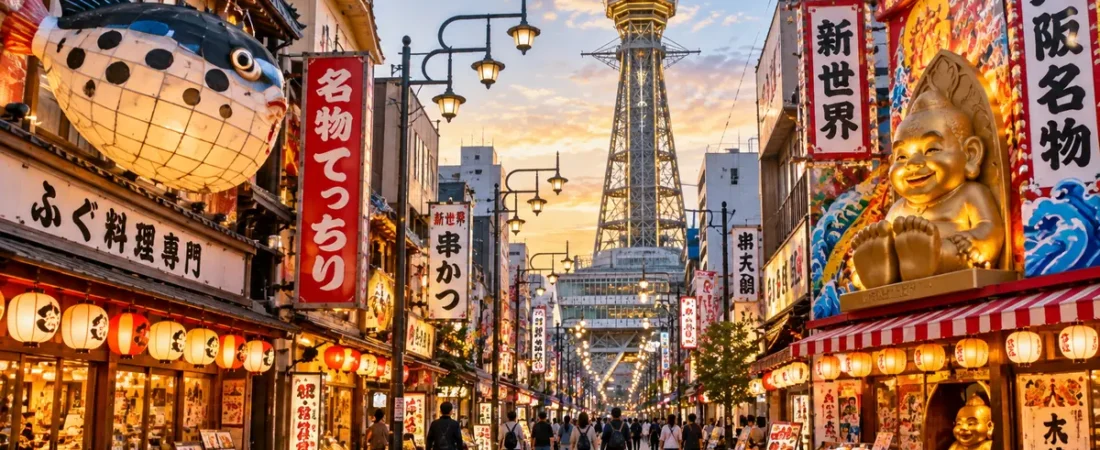
This distinctive neighborhood developed around Tsutenkaku Tower and retains a colorful retro atmosphere that feels very different from Umeda or Shinsaibashi.
Walk beneath the signs and lanterns, explore Janjan Yokocho and enjoy views of Tsutenkaku rising above the neighborhood.
Shinsekai is particularly famous for kushikatsu.
These skewers of meat, seafood or vegetables are coated in breadcrumbs and deep-fried. If you want to try them, an early lunch here fits naturally into today’s itinerary.
You can visit Tsutenkaku’s observation facilities if they interest you, but exploring Shinsekai itself is worthwhile even without paying to enter the tower.
Late Morning: Tennoji
From Shinsekai, continue toward Tennoji.
The neighborhood combines modern commercial development with parks and historic sites.
If history interests you, consider visiting Shitennoji, traditionally regarded as one of Japan’s oldest Buddhist temples.
Alternatively, spend some time around Tennoji Park and the surrounding Abeno area.
Avoid trying to visit every attraction. The aim is to leave enough time for Osaka Bay later in the day.
Afternoon: Travel to Osaka Bay
After lunch, make your way toward the Tempozan Harbor Village area.
Osaka Bay provides a major change of scenery after the dense streets of Shinsekai.
The waterfront area is home to Osaka Aquarium Kaiyukan, one of Osaka’s major visitor attractions.
Visit Osaka Aquarium Kaiyukan
Kaiyukan is built around an impressive series of marine habitats, with visitors gradually moving through the building around its large central Pacific Ocean exhibit.
Allow roughly 2 to 3 hours if the aquarium is a priority.
Kaiyukan uses date-based admission pricing and operating hours can vary, so check its current official calendar shortly before your visit rather than relying on a fixed ticket price.
Advance planning can be worthwhile during busy travel periods.
If you are not particularly interested in aquariums, you can instead spend more time exploring Tennoji and Shinsekai or simply enjoy the waterfront surroundings.
Evening: Tempozan Harbor Village
Finish the afternoon and early evening around Tempozan.
The harbor area includes shops, restaurants and the Tempozan Giant Ferris Wheel.
Riding the Ferris wheel is optional, but the waterfront itself provides a relaxed ending to 3 busy days of sightseeing.
Afterward, return to Namba or Umeda for your final Osaka dinner.
Getting Around During Your 3 Days in Osaka
Osaka Metro will handle many of the journeys in this itinerary.
For travelers making numerous subway and city-bus journeys in a single day, the Enjoy Eco Card may be worth comparing with individual fares.
The adult card currently costs ¥820 on weekdays and ¥620 on Saturdays, Sundays and public holidays. It provides unlimited travel on eligible Osaka Metro and Osaka City Bus services for the day, with certain exclusions.
Do not automatically buy a pass every day. On days when most attractions are within walking distance, paying separately or using an IC card may make more sense.
IC cards are particularly convenient because you can load credit and tap through compatible ticket gates rather than purchasing individual tickets repeatedly.
Where to Stay for This Osaka Itinerary
Namba is particularly convenient for this itinerary because Dotonbori, Kuromon and Shinsaibashi are nearby.
It also provides useful transport connections to other parts of Osaka.
Umeda is another excellent choice, especially if Osaka forms part of a larger Kansai trip involving rail journeys to destinations such as Kyoto or Kobe.
Tennoji can work well for travelers looking for convenient transport while staying outside the busiest entertainment districts.
For a detailed comparison, see our guide to where to stay in Osaka.
What to Eat During 3 Days in Osaka
3 days gives you enough time to try several Osaka specialties rather than squeezing everything into one meal.
Look for:
- Takoyaki
- Okonomiyaki
- Kushikatsu
- Kitsune udon
- Sushi and seafood
- Japanese sweets
Kuromon Market, Dotonbori and Shinsekai provide particularly convenient opportunities to sample different foods during this itinerary.
Do not overlook department-store food halls either. They are excellent places to discover beautifully presented Japanese dishes, desserts and takeaway meals.
Can You See Osaka in 3 Days?
Yes. 3 days is a good amount of time for a first Osaka visit.
You will not see every attraction, but you can experience several very different sides of the city: historic Osaka around the castle, modern Umeda, the food and nightlife of Minami, retro Shinsekai and the Osaka Bay waterfront.
Travelers with four or five days can slow the itinerary down or add a day trip.
Kyoto, Nara, Kobe and Himeji are all possible additions to a longer Kansai itinerary.
Final Tips for Your Osaka Itinerary
Wear comfortable shoes. Even with Osaka’s excellent public transport, this itinerary involves considerable walking through markets, parks, shopping streets and entertainment districts.
Start relatively early, but avoid scheduling every hour. Osaka is a city where spontaneous stops for food, shopping and interesting side streets are part of the experience.
Check attraction opening information shortly before each visit, particularly for places such as Kaiyukan where operating hours and admission prices can vary by date.
Most importantly, leave enough time to enjoy the neighborhoods themselves. Osaka is not simply a collection of individual attractions. The city’s food streets, covered arcades, station districts and lively neighborhoods are among the main reasons it is so enjoyable to explore.
With 3 well-planned days, you can experience Osaka’s history, modern city life, famous food culture and distinctive neighborhoods without turning your trip into a race between attractions.
Book Your Osaka Experiences
Ready to start planning? Compare popular Osaka tours and activities, check current prices and availability, and book the experiences that suit your trip.
Affiliate disclosure: If you book through these links, we may earn a commission from Viator. This does not increase the price you pay.
Explore more places through our destinations page or browse our complete collection of itineraries.