
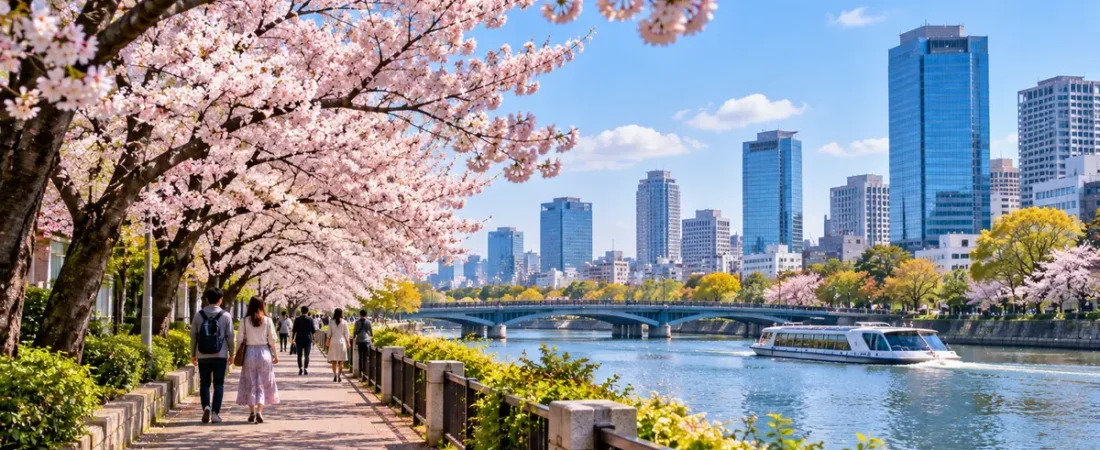
The best time to visit Osaka for many travelers is spring or autumn, when temperatures are generally comfortable for walking and exploring the city’s outdoor attractions. Spring brings cherry blossoms, while autumn offers cooler weather and colorful foliage. However, Osaka is a year-round destination, and every season has advantages depending on your budget, tolerance for heat and interest in seasonal events.
Osaka experiences four distinct seasons. Summers are hot and humid, winters are relatively cool but manageable, and the transitional months of spring and autumn usually provide the easiest sightseeing conditions.
This guide explains Osaka’s weather month by month, the advantages and disadvantages of each season, when crowds are likely to increase, and how to choose the right travel period for your trip.
For general trip planning, start with our Osaka travel guide. Once you choose your dates, our 3 days in Osaka itinerarycan help organize your sightseeing.
Osaka Weather at a Glance
Osaka has a humid subtropical climate with hot summers and relatively mild winters compared with colder parts of Japan.
Japan Meteorological Agency climate normals for 1991–2020 show an average annual temperature of approximately 17.1°C in Osaka.
Average monthly temperatures range from about 6.2°C in January to 29.0°C in August.
June is one of the wetter months, averaging about 185 mm of precipitation, while January is considerably drier at around 47 mm.
These figures are long-term averages rather than forecasts. Actual conditions can vary considerably from year to year, so always check the weather forecast shortly before traveling.
Spring in Osaka: March to May
Spring is one of Osaka’s most popular travel seasons.
Temperatures become progressively more comfortable through March and April, gardens begin to brighten, and cherry blossoms transform parks and riversides.
Osaka in March
March is a transition month between winter and spring.
Osaka’s long-term average temperature is approximately 9.9°C, although afternoons can feel considerably warmer on sunny days.
Early March can still require a warm jacket, especially in the morning and evening.
As the month progresses, spring conditions become more noticeable.
Cherry blossom timing varies each year according to weather conditions, so travelers visiting specifically for blossoms should follow current seasonal forecasts rather than relying on dates from previous years.
Osaka in April
April is one of the most attractive months for sightseeing.
Osaka’s average temperature rises to around 15.2°C, making extended walks around neighborhoods such as Namba, Umeda and Shinsekai generally more comfortable than during summer.
Cherry blossom season often overlaps late March and early April, although exact peak dates vary annually.
Popular blossom locations can become extremely busy during peak flowering.
If seeing cherry blossoms is important, book accommodation well in advance and remain flexible about the exact places you visit.
Osaka in May
May is warmer, with a long-term average temperature around 20.1°C.
This can be an excellent month for outdoor sightseeing because conditions are generally warm without reaching the intense heat of midsummer.
However, the Golden Week holiday period around late April and early May brings increased domestic travel.
In 2027, Japan’s national holidays include Showa Day on April 29 and Constitution Memorial Day, Greenery Day and Children’s Day on May 3, 4 and 5 respectively.
Expect popular attractions, transport and accommodation to become busier around this period.
Summer in Osaka: June to August
Summer brings long days, festivals and energetic evenings, but it also produces Osaka’s most challenging weather for sightseeing.
Heat and humidity should be taken seriously when planning a summer visit.
Osaka in June
June’s average temperature is approximately 23.6°C.
It is also one of Osaka’s wetter months, with long-term average precipitation of about 185 mm.
Japan’s rainy season generally affects this part of the country around early summer, although the timing and intensity vary from year to year.
Rain does not necessarily continue throughout every day. There can be dry periods between showers and longer spells of wet weather.
Osaka is relatively manageable in rainy conditions because attractions such as shopping centers, museums, covered shopping arcades and indoor food areas provide alternatives.
Pack a compact umbrella and lightweight waterproof layer.
Osaka in July
July becomes considerably hotter.
The average monthly temperature is approximately 27.7°C, while the average daytime maximum reaches around 31.8°C.
Humidity can make the temperature feel even more intense.
Schedule outdoor sightseeing for mornings and evenings where possible. Use the middle of the day for indoor attractions, shopping centers, museums or longer meals.
Drink water regularly and avoid packing your itinerary so tightly that you cannot take breaks.
Osaka in August
August is typically Osaka’s hottest month.
The long-term mean temperature is around 29.0°C, with an average daily maximum of approximately 33.7°C.
Actual temperatures can rise above these averages.
Summer remains a lively time in Japan, but travelers uncomfortable with heat and humidity may find prolonged outdoor sightseeing tiring.
Lightweight breathable clothing, sun protection and regular indoor breaks become important.
Autumn in Osaka: September to November
Autumn is another excellent season for visiting Osaka.
Temperatures gradually become more comfortable, humidity decreases and foliage eventually changes across parks and tree-lined streets.
Osaka in September
September can still feel very much like summer.
The average temperature remains around 25.2°C, so do not expect cool autumn conditions simply because the calendar has reached September.
September can also experience unsettled weather, and tropical systems can affect Japan during this broader part of the year.
Monitor forecasts carefully if severe weather is predicted.
Osaka in October
October is one of the most comfortable months for general sightseeing.
The long-term average temperature is approximately 19.5°C, substantially cooler than September.
Walking around Osaka Castle Park, Dotonbori, Shinsekai and central shopping districts becomes much more comfortable than during midsummer.
October is particularly suitable for travelers whose priority is sightseeing rather than a specific seasonal spectacle.
Osaka in November
November becomes cooler, averaging approximately 13.8°C.
Autumn colors become an increasingly important part of the seasonal landscape.
Osaka’s official tourism information highlights the yellow ginkgo trees along Midosuji and autumn colors around Osaka Castle Park among the city’s seasonal sights.
Foliage timing varies according to annual weather conditions, so check current reports if autumn colors are the main reason for your visit.
Winter in Osaka: December to February
Winter receives less attention than cherry blossom and autumn foliage seasons, but it can be an excellent period for certain travelers.
Conditions are cooler and generally drier than the summer months.
Osaka in December
December averages approximately 8.7°C.
Days can be crisp, while mornings and evenings feel significantly colder.
Seasonal illuminations provide an additional reason to explore Osaka after dark.
A warm coat and layers should be sufficient for most visitors, although individual tolerance to cold varies.
Osaka in January
January is Osaka’s coldest month according to long-term averages, with a mean temperature around 6.2°C.
Average daytime highs are approximately 9.7°C and average lows around 3.0°C.
January is also relatively dry compared with much of the year.
Sightseeing remains completely practical with suitable winter clothing, and indoor attractions make it easy to escape cold periods.
Be aware that the New Year holiday period can affect business opening arrangements.
Osaka in February
February remains cool, averaging around 6.6°C.
Temperatures begin moving upward toward the end of winter, but warm clothing is still necessary.
For travelers who do not require cherry blossoms or warm weather, February can provide a straightforward city-break experience before spring demand increases.
Best Time for Cherry Blossoms in Osaka
Travelers hoping to see cherry blossoms usually focus on late March and early April.
However, there is no guaranteed annual date.
Flowering and full bloom depend heavily on temperatures during the preceding weeks. A warm late winter can accelerate the season, while colder conditions can delay it.
For that reason, avoid planning an entire trip around one exact blossom date many months in advance.
Instead, choose a broader travel window and monitor official forecasts as your trip approaches.
Popular blossom areas can become extremely crowded, particularly on weekends.
Visiting early in the morning can provide a calmer experience.
Best Time for Autumn Colors
November is generally the most useful month to consider if autumn foliage is a major priority in Osaka.
Midosuji’s ginkgo-lined avenue is particularly attractive as the leaves turn yellow, while parks provide additional seasonal scenery.
Again, foliage timing varies each year.
Travelers visiting Osaka as part of a broader Kansai itinerary may also find autumn especially rewarding because Kyoto and other nearby destinations have famous seasonal landscapes.
When Is Osaka Most Crowded?
Crowds depend on both international tourism and Japanese domestic travel patterns.
Cherry blossom season can produce heavy demand around late March and early April.
Golden Week around late April and early May is another period to approach carefully because Japanese residents travel extensively during the national holiday period.
Summer holidays and major festival dates can increase local activity, while autumn foliage season attracts additional visitors later in the year.
Weekends are naturally busier at major attractions throughout much of the year.
If possible, visit headline attractions on weekday mornings.
When Is Osaka Less Busy?
January after the New Year holiday period, February and parts of June can feel less intense than major spring and autumn periods.
However, lower crowds can come with weather compromises.
Winter means colder temperatures, while June can bring significant rainfall.
This trade-off can be worthwhile for travelers who prioritize availability and a less crowded sightseeing experience over ideal weather.
Best Time to Visit Osaka for Families
April, May, October and November are strong choices for families because walking conditions are generally easier than during midsummer.
Families traveling during school holiday periods should expect greater demand at major attractions.
If Universal Studios Japan forms part of your plans, check its operating calendar and ticket arrangements separately because crowd patterns there can differ from general city sightseeing.
Choosing convenient accommodation also becomes particularly important when traveling with children. Our guide to where to stay in Osaka explains the advantages of Namba, Umeda, Tennoji and other major areas.
Best Time to Visit Osaka on a Budget
There is no single guaranteed cheapest month because accommodation prices respond to demand, weekends, holidays, events and booking patterns.
Instead of choosing dates solely by season, compare several travel windows.
Winter outside the New Year holiday period can be worth investigating, as can periods outside peak blossom and autumn foliage demand.
June may also provide opportunities for travelers willing to accept wetter weather.
Avoid assuming that every weekday will be cheaper than every weekend or that one entire month will always offer low prices. Check actual accommodation and airfare for your travel dates before deciding.
What to Pack for Osaka by Season
Spring
Bring layers, a light jacket and comfortable walking shoes. Early spring can still be cool, while May can become quite warm.
Summer
Pack breathable lightweight clothing, sun protection and a compact umbrella. Comfortable walking shoes remain essential.
Autumn
September still requires summer-style clothing, while October and November increasingly call for layers and a light or medium jacket.
Winter
Bring a warm coat and layers, particularly for mornings and evenings. Gloves or a scarf may be useful for travelers who feel the cold easily.
So, What Is the Best Time to Visit Osaka?
For comfortable general sightseeing, April, May, October and November are particularly attractive months.
Choose late March or early April if cherry blossoms are your priority and you are comfortable with higher visitor numbers.
Choose October or November for comfortable temperatures and autumn atmosphere.
Summer can still be rewarding if festivals and lively evenings matter more to you than comfortable daytime weather, but prepare carefully for heat, humidity and rain.
Winter suits travelers who prefer cooler sightseeing conditions and do not need Osaka’s most famous seasonal scenery.
Ultimately, the best season depends on what you want from the trip. Osaka’s combination of indoor attractions, food districts, shopping streets and outdoor landmarks means there is something worthwhile to experience throughout the year.
Once you have chosen your travel dates, use our 3 days in Osaka itinerary to organize the major sights efficiently.
Explore more places through our destinations page or browse our complete collection of itineraries.