
Finding free things to do in Seoul is surprisingly easy. South Korea’s capital may be packed with shopping districts, cafés and ticketed attractions, but some of its most memorable experiences cost nothing at all.
You can walk beside the Han River, explore traditional neighbourhoods, hike alongside historic city walls, visit major museums, relax in enormous parks and experience modern districts without paying an admission fee.
This guide covers 25 genuinely free activities that can help you experience Seoul while keeping your sightseeing budget under control.
For a broader introduction to the city, read our Seoul travel guide. If you are planning your overall spending, our Seoul travel budget explains accommodation, food, transport and attraction costs in more detail.
Price note: All prices in this article are approximate and were checked at the time of publication. Prices may change.
1. Walk Along Cheonggyecheon Stream
Cheonggyecheon is one of the easiest free attractions to include in a central Seoul itinerary.
The restored urban stream runs through the heart of the city, providing a pedestrian route below busy surrounding streets.
Walk beside the water, cross stepping stones and enjoy a different perspective on downtown Seoul.
The atmosphere becomes particularly attractive after sunset when surrounding buildings and bridges illuminate.
Walking along the stream itself is free.
2. Explore Bukchon Hanok Village
Bukchon is known for narrow streets lined with traditional Korean hanok houses.
Walking through publicly accessible streets costs nothing, but visitors need to remember that Bukchon remains a residential neighbourhood.
The designated Red Zone has visitor restrictions, including prohibited tourist access between 5:00 PM and 10:00 AM.
Visit during permitted daytime hours, keep noise to a minimum and follow all local signs.
You can combine Bukchon with nearby Insadong and central Seoul.
3. Wander Through Insadong
Insadong is one of Seoul’s best neighbourhoods for simply wandering.
Its streets and alleys contain galleries, traditional craft stores, tea houses, souvenir shops and restaurants.
You do not need to buy anything to enjoy the atmosphere.
Look beyond the main street and explore some of the smaller surrounding lanes.
Insadong fits particularly well into the historic first day of our 3 days in Seoul itinerary.
4. Relax at Seoul Forest
Seoul Forest is one of the city’s largest and most enjoyable green spaces.
Admission to the park is free.
Its extensive grounds include landscaped areas, walking paths, ecological spaces and connections towards the Han River.
Spring brings cherry blossoms and tulips, while autumn transforms parts of the park with seasonal colour.
It is an excellent place to escape Seoul’s dense commercial districts for a few hours.
5. Spend Time Beside the Han River
You do not need a river cruise or paid activity to enjoy the Han River.
Seoul’s Hangang parks provide extensive spaces for walking, relaxing and enjoying views across the city.
Bring snacks and create your own riverside picnic, particularly during comfortable spring and autumn weather.
Watching the city change around sunset can be one of Seoul’s simplest free experiences.
6. Visit Starfield Library
Starfield Library sits inside the COEX complex in Gangnam.
Its enormous bookshelves have made it one of Seoul’s most photographed modern interiors.
Entry is free, and visitors can browse the space, sit down and explore its collection without purchasing anything from the surrounding mall.
The library is currently open daily from 10:30 AM until 10:00 PM.
It is also useful on extremely hot, cold or rainy days because it provides an indoor free attraction.
7. Visit the National Museum of Korea
The National Museum of Korea is one of the strongest free cultural attractions in the city.
General admission to the permanent museum collection is free.
Its collections cover Korean history, archaeology, art and cultural heritage, making it possible to spend several hours here without paying admission.
Some temporary or special exhibitions can require separate tickets, so check what is included when you arrive.
The museum is an excellent choice for a rainy day or when you need a break from outdoor sightseeing.
8. Explore the Seoul Museum of History
The Seoul Museum of History provides another completely free museum experience.
Admission is free, and its exhibitions explore the development of Seoul from earlier historical periods into the enormous modern city you see today.
The museum is particularly useful early in a trip because understanding Seoul’s growth helps put its palaces, old neighbourhoods and modern districts into context.
Check the current opening schedule before visiting because the museum has regular closure days.
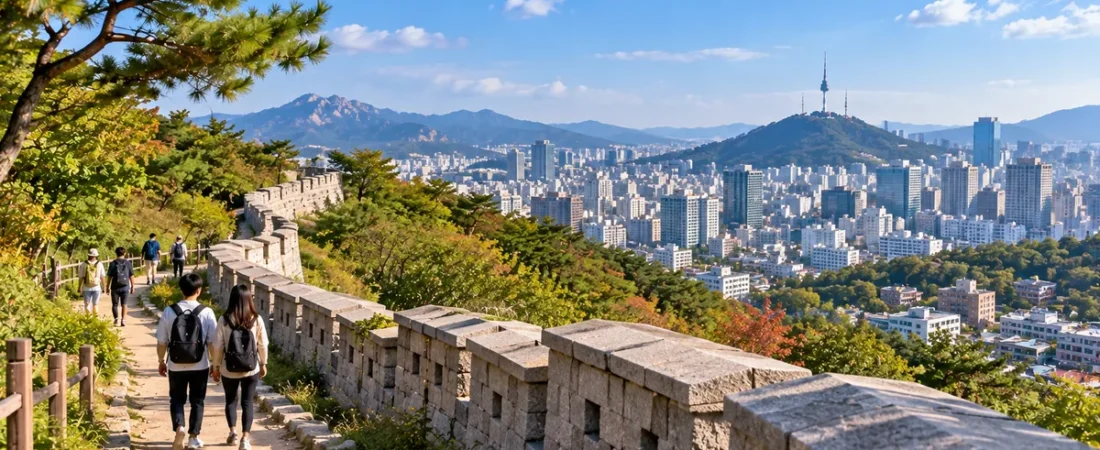
9. Walk Part of the Seoul City Wall
The historic Seoul City Wall once surrounded Hanyang, the Joseon-era capital.
Sections of the wall now form walking and hiking routes through the modern city.
The Inwangsan section is particularly rewarding for travellers who enjoy combining history with elevated city views.
One established route runs roughly 4.1 kilometres and takes a little over two hours.
Wear suitable shoes because parts of the route involve slopes and uneven surfaces.
10. Explore Namsan Park
Namsan is often associated with N Seoul Tower, but you do not have to buy an observatory ticket to enjoy the mountain.
Walking routes through Namsan Park provide greenery, exercise and views over Seoul.
The park is especially pleasant during spring and autumn.
Budget travellers can enjoy the mountain and surrounding public spaces while skipping the paid tower observatory entirely.
11. Walk Around Hongdae
Hongdae is one of Seoul’s liveliest neighbourhoods.
Walking its streets costs nothing and provides an immediate contrast with the city’s palace district.
Explore side streets filled with fashion shops, cafés, restaurants and entertainment venues.
Even if you do not spend money, Hongdae is enjoyable for people-watching and experiencing Seoul’s younger urban culture.
Late afternoon into evening is generally the most atmospheric time to visit.
12. Explore Myeongdong
Myeongdong is famous for shopping, but browsing costs nothing.
Walk through its busy pedestrian streets, see the cosmetics stores and experience the district as it becomes increasingly lively in the evening.
You will need money if the temptation to shop or eat becomes too strong, but there is no admission fee simply to explore.
If you are considering staying here, our guide to where to stay in Seoul explains why Myeongdong is convenient for first-time visitors.
13. Browse Namdaemun Market
Namdaemun is one of Seoul’s most famous traditional markets.
There is no fee to enter and wander through its extensive lanes.
Browse clothing, household goods, accessories and food stalls while experiencing a more traditional side of Seoul’s commercial life.
You only spend money if you decide to shop or eat.
Visit with time to wander rather than trying to follow a strict route.
14. Explore Gwangjang Market
Gwangjang Market is particularly famous for food.
Although eating obviously costs money, exploring the market itself is free.
Walking through the busy food sections gives you an opportunity to see vendors preparing Korean dishes and observe the energetic atmosphere.
If you are travelling on a tight budget, browse first and decide whether one inexpensive snack fits your daily spending plan.
15. Visit Dongdaemun Design Plaza’s Public Areas
Dongdaemun Design Plaza, usually called DDP, is one of modern Seoul’s most distinctive architectural landmarks.
You can explore the surrounding outdoor spaces and publicly accessible areas without purchasing an exhibition ticket.
The building is particularly striking in the evening.
Specific exhibitions, events or interior attractions may charge admission, so treat the architecture and public spaces as the free experience.
16. Walk Through Gwanghwamun Square
Gwanghwamun Square occupies one of central Seoul’s most historically important urban spaces.
The broad public plaza provides views towards Gwanghwamun Gate and the surrounding city.
It is an easy free stop when moving between central Seoul attractions.
Seasonal events and installations are sometimes held here, meaning the atmosphere can vary considerably depending on when you visit.
17. Experience the Seoul Outdoor Library When Operating
Seoul’s Outdoor Library programme transforms locations including Seoul Plaza, Gwanghwamun Square and parts of Cheonggyecheon into open-air reading spaces.
For 2026, the programme runs seasonally from April into November, with outdoor operations concentrated on selected days and no operation during July and August.
Admission is free.
Schedules can change because of weather and special events, so check the current programme before travelling specifically for it.
18. Walk Around Seongsu-dong
Seongsu has developed into one of Seoul’s trendiest neighbourhoods.
Former industrial buildings now sit alongside cafés, shops, galleries and creative spaces.
You do not have to spend money to enjoy walking around the neighbourhood and seeing how Seoul has transformed older urban spaces.
Combine Seongsu with nearby Seoul Forest for an inexpensive half-day.
19. Explore Ikseon-dong’s Alleys
Ikseon-dong provides another interesting contrast between traditional architecture and contemporary Seoul.
Its compact lanes contain renovated hanok buildings housing cafés, shops and restaurants.
Walking through the neighbourhood is free.
Visit relatively early if you want to appreciate the architecture before the narrow lanes become busy.
20. Walk Around Deoksugung Stone Wall Road
The road running beside Deoksugung Palace is one of central Seoul’s pleasant urban walks.
You do not need to enter the paid palace grounds to enjoy the exterior stone wall and surrounding streets.
The route is particularly attractive during autumn when trees along the road change colour.
Combine it with nearby Seoul Plaza and the Seoul Museum of History for several low-cost or free experiences in the same part of the city.
21. Explore Seoul Plaza
Seoul Plaza is the large public space outside Seoul City Hall.
Depending on the season, it hosts cultural activities, public events and temporary installations.
Even when nothing special is taking place, it provides a convenient stop while exploring central Seoul.
It is also one of the locations used for the seasonal Seoul Outdoor Library programme.
22. Walk Around Gangnam
Gangnam does not require a shopping budget.
Explore the streets around major commercial areas, see Seoul’s modern office towers and compare the district with older neighbourhoods north of the Han River.
Combine the walk with free Starfield Library for a modern-Seoul sightseeing day.
Our Seoul travel guide explains how Gangnam fits into a broader first-time visit.
23. Visit Olympic Park’s Open Spaces
Olympic Park provides extensive open areas, walking routes and landscaped scenery in southeastern Seoul.
The park itself is a pleasant place for walking, photography and relaxing outdoors.
Some museums, facilities, performances or special exhibitions within the broader complex may charge admission, but exploring the general park areas does not require a sightseeing ticket.
It is particularly appealing when the weather is mild.
24. Explore Yeouido’s Riverside Areas
Yeouido sits beside the Han River and provides another excellent location for enjoying Seoul without an attraction ticket.
Walk through riverside park areas, watch cyclists and enjoy views across the water.
Spring can be especially attractive when cherry blossoms appear around parts of Yeouido, although popular blossom periods can become extremely crowded.
For help choosing the right season, see our guide to the best time to visit Seoul.
25. Watch Seoul From a Free Viewpoint
You do not always need to buy a ticket to see Seoul from above.
Hiking routes, elevated parks and sections of the Seoul City Wall provide broad views over the city.
The combination of mountains and dense urban development is one of Seoul’s defining visual characteristics.
Instead of paying for every observation deck, include at least one free elevated walk in your itinerary.
Inwangsan and sections of Namsan are good options depending on your route and fitness level.
Book Your Seoul Experiences
Ready to start planning? Compare popular Seoul tours and activities, check current prices and availability, and book the experiences that suit your trip.
Affiliate disclosure: If you book through these links, we may earn a commission from Viator. This does not increase the price you pay.
How to Spend a Free Day in Seoul
It is possible to create an entire sightseeing day using mostly free attractions.
Start around Gwanghwamun Square before walking towards Cheonggyecheon.
Continue towards Insadong and explore its streets before heading to one of Seoul’s free museums.
Later, travel towards the Han River or Seoul Forest and spend the final part of the afternoon outdoors.
Your main unavoidable expense will normally be public transport between districts, along with whatever you choose to eat.
Free Things to Do in Seoul When It Rains
Rain does not mean you need to start buying expensive attraction tickets.
The National Museum of Korea is an excellent free indoor option.
The Seoul Museum of History is another useful choice, while Starfield Library provides a completely different modern environment.
You can also spend time browsing shopping centres, although avoiding purchases may require some discipline.
For summer travellers, having several indoor options is particularly useful because Seoul’s rainy season can disrupt outdoor plans.
Free Things to Do in Seoul at Night
Some of Seoul’s best free experiences happen after sunset.
Walk along Cheonggyecheon, explore Hongdae, wander through Myeongdong or enjoy the riverside atmosphere at one of the Hangang parks.
Dongdaemun’s architecture is also particularly interesting after dark.
Remember that Bukchon is different: tourist access to its designated Red Zone is restricted between 5:00 PM and 10:00 AM, so do not treat it as a nighttime sightseeing area.
How to Save Even More Money in Seoul
Free attractions are only part of a low-cost Seoul trip.
Use public transport rather than taxis, eat at local neighbourhood restaurants and avoid paying for multiple observation decks.
Traditional markets can provide inexpensive meals, while convenience stores are useful for drinks and simple breakfasts.
Most importantly, group attractions by neighbourhood.
Crossing Seoul repeatedly wastes both time and transport money.
Our Seoul travel budget provides realistic daily spending estimates and additional ways to reduce costs.
Frequently Asked Questions
Are there really free attractions in Seoul?
Yes. Major parks, public neighbourhoods, riverside areas and several museums can be visited without admission charges. The National Museum of Korea’s general admission and the Seoul Museum of History are two particularly valuable examples.
Is Seoul Forest free?
Yes. Admission to Seoul Forest is free, making it one of the best outdoor options for travellers on a budget.
Is Starfield Library free?
Yes. Starfield Library inside COEX is open to visitors free of charge.
Is the National Museum of Korea free?
General admission is free. Some special exhibitions may require separate paid tickets.
Can I see Seoul from above for free?
Yes. Hiking routes and elevated sections of the Seoul City Wall provide excellent city views without requiring an observation-deck ticket.
Can I visit Seoul cheaply?
Yes. Combining free attractions with public transport, local restaurants and carefully chosen accommodation can keep overall costs manageable.
Final Thoughts
The best free things to do in Seoul are not simply substitutes for paid attractions. Many are among the city’s most rewarding experiences in their own right.
Walking beside the Han River, exploring Seoul Forest, visiting national museums, wandering through traditional neighbourhoods and hiking beside the historic city wall can reveal more about Seoul than moving continuously between ticketed attractions.
Mix these free experiences with a few carefully selected paid sights and you can build a varied Seoul itinerary without allowing attraction fees to dominate your travel budget.
With this article complete, you can combine our guides to plan the entire trip—from choosing the right season and neighbourhood to building an itinerary and estimating your daily costs.
Explore more places through our destinations page or browse our complete collection of itineraries.