
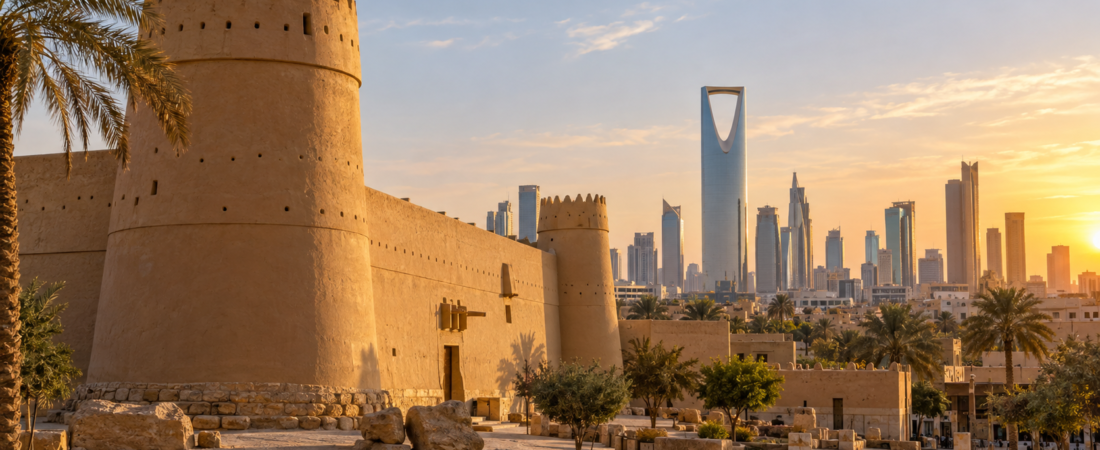
This Riyadh Travel Guide will help you explore a city where centuries-old Arabian heritage meets ambitious modern development. Saudi Arabia’s capital offers mud-brick forts, atmospheric traditional markets, striking skyscrapers, excellent museums, desert landscapes and a rapidly expanding dining and entertainment scene.
Once primarily visited by business travellers, Riyadh is now becoming one of the Middle East’s most intriguing city-break destinations. The historic streets of Diriyah reveal the origins of the Saudi state, while areas such as the King Abdullah Financial District represent the city’s forward-looking character.
Whether you are interested in Saudi history, traditional food, contemporary architecture or desert adventures, Riyadh offers far more variety than many first-time visitors expect.
Price note: Prices, operating hours and entry arrangements can change, particularly during Ramadan, public holidays and major events. Always confirm the latest information through the attraction’s official website before visiting.
Top Tours & Experiences in Riyadh
Discover popular Riyadh tours and experiences. Check current availability, ratings and prices before you book.
Affiliate disclosure: If you book through these links, we may earn a commission from Viator. This does not increase the price you pay.
Why Visit Riyadh?
Riyadh provides a different experience from many other major cities in the Arabian Gulf. It does not have the beaches of Dubai or Doha, but it offers a deeper introduction to the history and culture of central Arabia.
The city’s greatest appeal lies in its contrasts. You can walk through a restored UNESCO-listed mud-brick settlement in the afternoon, watch the sunset from a modern skyscraper and then enjoy Saudi cuisine or speciality coffee in a contemporary restaurant.
Some of the main reasons to visit Riyadh include:
- Exploring the UNESCO-listed At-Turaif District
- Learning about Saudi history at the National Museum
- Visiting the historic Masmak Fortress
- Enjoying panoramic views from the Kingdom Centre Sky Bridge
- Shopping for traditional products at Souq Al Zal
- Discovering the restaurants and public spaces of modern Riyadh
- Taking a guided excursion into the surrounding desert
- Experiencing seasonal festivals, exhibitions and sporting events
Riyadh is especially rewarding for travellers who enjoy learning about a destination’s history while also experiencing how it is changing.
Best Things to Do in Riyadh
1. Explore At-Turaif in Historic Diriyah
At-Turaif is one of the most important cultural attractions in Riyadh. Located in Diriyah on the northwestern edge of the city, the district was the first capital of the Saudi dynasty and became a UNESCO World Heritage Site in 2010.
Its carefully restored mud-brick palaces, courtyards and narrow passageways provide a fascinating look at traditional Najdi architecture. Interpretation displays help visitors understand the development of the First Saudi State and the importance of Diriyah in the country’s history.
At-Turaif is particularly beautiful in the evening, when the buildings are illuminated and temperatures are more comfortable. Access arrangements can vary, so reserve an official entry pass before travelling to Diriyah.
Allow at least two hours to explore the district without rushing.
2. Spend an Evening at Bujairi Terrace
Bujairi Terrace sits opposite At-Turaif and offers excellent views across the historic district. It contains landscaped walkways, restaurants and cafés serving Saudi, Middle Eastern and international cuisine.
Although the restaurants can be expensive, walking around the public areas and viewing the illuminated mud-brick buildings creates a memorable evening experience. Combining Bujairi Terrace with At-Turaif is one of the easiest ways to experience Diriyah in a single visit.
Advance reservations are advisable for popular restaurants, especially during weekends and major events.
3. Visit Masmak Fortress
Masmak Fortress is one of Riyadh’s most recognisable historic landmarks. The clay-and-mud-brick fort played an important role in the recapture of Riyadh by King Abdulaziz in 1902, an event closely associated with the foundation of modern Saudi Arabia.
Inside, exhibitions, photographs, maps and historical objects explain the fort’s significance. Its thick walls, watchtowers and traditional courtyard also provide an excellent introduction to the architecture of old Riyadh.
Masmak Fortress is located near Souq Al Zal, making it easy to combine both attractions.
4. Discover the National Museum of Saudi Arabia
The National Museum is one of the best places to understand Saudi Arabia’s history before exploring the rest of Riyadh. Its galleries cover the geology of the Arabian Peninsula, prehistoric communities, ancient trade routes, the rise of Islam and the formation of the modern Saudi state.
The museum forms part of the King Abdulaziz Historical Centre in the Al Murabba district. The surrounding gardens and public spaces make this a pleasant area to explore, particularly in the late afternoon.
Give yourself approximately 2 to 3 hours for the museum. It normally closes on Sundays, while hours may differ on Fridays and public holidays.
5. See Murabba Historical Palace
Murabba Palace was constructed for King Abdulaziz outside the walls of old Riyadh. The building’s simple courtyards, decorative wooden details and traditional Najdi design contrast sharply with the towers that now define the city.
The palace is situated close to the National Museum, so both attractions can be included in the same half-day itinerary. Availability may depend on restoration work or special events, so verify access before visiting.
6. Shop at Souq Al Zal
Souq Al Zal is one of Riyadh’s oldest traditional markets. Its stores sell carpets, incense, oud, prayer beads, antiques, traditional clothing, decorative swords and other Saudi products.
Even if you do not intend to buy anything, the market offers an interesting look at local commerce and craftsmanship. Bargaining may be possible in some shops, but it should always remain polite and good-natured.
Visit in the late afternoon or evening, when more stores are open and the surrounding neighbourhood becomes livelier.
7. Cross the Kingdom Centre Sky Bridge
Kingdom Centre is one of Riyadh’s signature modern landmarks. Near the top of the tower, a 65-metre-long enclosed Sky Bridge spans the building’s distinctive opening.
The bridge offers panoramic views across Riyadh’s vast urban landscape. Sunset is the most popular time to visit, but arriving after dark also reveals the city’s illuminated roads and towers.
Queues and operating hours can change, so check the official Kingdom Centre information before visiting.
8. Explore the King Abdullah Financial District
The King Abdullah Financial District, commonly called KAFD, showcases Riyadh’s contemporary architecture. Its angular towers, pedestrian walkways, public spaces, restaurants and metro connections make it an interesting area for an evening walk.
The district is particularly attractive to architecture and photography enthusiasts. It also provides a clear contrast with the traditional buildings of Diriyah and old Riyadh.
Some buildings are commercial offices rather than tourist attractions, but the public areas, restaurants and cafés make KAFD worth exploring.
9. Walk Through Wadi Hanifah
Wadi Hanifah is a long natural valley running through the western side of Riyadh. Landscaped sections contain walking areas, picnic locations, palm trees and water features.
It is a popular escape from the city’s traffic and dense development, especially during the cooler months. Families often visit in the late afternoon and remain until evening.
The valley is extensive, so decide which section you want to visit before leaving your hotel. Travelling by taxi or car is generally the easiest option.
10. Visit Salam Park
Salam Park is a large urban park close to central Riyadh. It includes greenery, walking paths, palm trees and a lake, providing a relaxing break from sightseeing.
The park becomes especially active after sunset, when local families gather outdoors. It can be a pleasant addition to an evening spent around old Riyadh.
Entry policies and maintenance schedules may change, so confirm the latest information before travelling.
11. Discover Riyadh’s Contemporary Art Scene
Riyadh’s creative scene has expanded considerably, with galleries, exhibitions, public artworks and cultural events appearing across the city.
JAX District in Diriyah has become an important creative neighbourhood, hosting studios, exhibitions and cultural programmes. Temporary events vary throughout the year, so consult the official Saudi events calendar shortly before your trip.
This changing programme means repeat visitors can often discover something new.
12. Experience Riyadh Season
Riyadh Season is a large annual entertainment programme typically held during the cooler part of the year. Its attractions can include concerts, sporting events, themed entertainment areas, restaurants, exhibitions and family activities.
Venues, dates and ticket prices change with each edition. Treat Riyadh Season as an optional addition rather than building your entire trip around an attraction that may not be operating.
If your visit coincides with the programme, reserve popular experiences early.
13. Take a Desert Excursion
Riyadh’s location in central Arabia makes it an excellent base for desert experiences. Guided excursions may include dune scenery, sunset viewpoints, hiking, picnics and visits to dramatic escarpments.
The Edge of the World is the best-known excursion from Riyadh. Its towering cliffs overlook an apparently endless plain and create one of the region’s most striking landscapes.
Road conditions and access arrangements can change, and the final sections may require a suitable vehicle. For safety, use an experienced licensed operator rather than attempting an independent journey in an ordinary rental car. Carry water, sun protection and appropriate footwear.
What to Eat in Riyadh
Riyadh is an excellent destination for discovering Saudi cuisine. Traditional dishes are often designed for sharing and may include rice, slow-cooked meat, flatbread, dates and aromatic spices.
Kabsa
Kabsa is one of Saudi Arabia’s most famous dishes. It normally consists of seasoned rice served with chicken or lamb and garnished with nuts or raisins.
Jareesh
Jareesh is made from crushed wheat cooked to a soft consistency, often with yoghurt, onions and spices. It is particularly associated with the Najd region.
Mandi
Mandi combines fragrant rice with tender meat traditionally cooked slowly in an underground oven. It is widely available in casual restaurants.
Mutabbaq
Mutabbaq is a folded and filled pancake that can contain spiced meat, vegetables or sweet ingredients. It makes a satisfying snack or light meal.
Saudi Coffee and Dates
Saudi coffee, or gahwa, is lightly roasted and commonly flavoured with cardamom. It is traditionally served in small cups alongside dates and plays an important role in local hospitality.
Riyadh also has a strong contemporary café culture, with independent coffee shops found throughout the city.
Best Areas to Stay in Riyadh
Riyadh is geographically large, so choosing the right neighbourhood can save considerable travelling time.
Olaya
Olaya is convenient for first-time visitors who want central accommodation, shopping centres, restaurants and access to major roads. Kingdom Centre and Al Faisaliah Tower are nearby.
King Abdullah Financial District
KAFD is suitable for travellers who prefer modern surroundings and easy access to the metro. Accommodation here generally leans towards the upscale end of the market.
Diplomatic Quarter
The Diplomatic Quarter offers landscaped public spaces and a quieter atmosphere. It is convenient for embassies and western Riyadh but less practical for travellers planning to spend most of their time in the eastern districts.
Al Malqa and Hittin
These northern neighbourhoods provide access to restaurants, cafés and entertainment areas. They are useful during major events but can be affected by heavy traffic.
Near Diriyah
Staying near Diriyah is convenient for heritage attractions and evening dining at Bujairi Terrace. However, it places you farther from central Riyadh’s museums and commercial districts.
A dedicated accommodation guide will follow this article. In the meantime, our Where to Stay in Doha guidedemonstrates the practical neighbourhood-by-neighbourhood format we use for Gulf destinations.
Getting Around Riyadh
Riyadh Metro
Riyadh’s modern metro network has significantly improved public transportation in the capital. The system covers 176 kilometres and includes 85 stations across six lines.
Standard fares currently begin at SAR 4 for two hours of travel, with longer-duration passes available. Certain major areas, including KAFD and central Riyadh, are served directly by the network.
The metro is clean, air-conditioned and useful for avoiding road traffic. However, not every attraction is within comfortable walking distance of a station, particularly during hot weather.
Taxis and Ride-Hailing Apps
Taxis and app-based ride services are widely used. They are often the most convenient option for reaching attractions that are not directly served by the metro.
Traffic can become heavy during morning and evening commuting periods. Allow additional travel time when you have a timed reservation.
Renting a Car
A rental car provides flexibility, especially for families or travellers visiting outlying neighbourhoods. Nevertheless, Riyadh’s fast-moving traffic, complex junctions and large distances can be challenging for first-time visitors.
Avoid driving into remote desert areas without the correct vehicle, navigation and local experience.
Walking
Riyadh is not consistently pedestrian-friendly. Individual areas such as Diriyah, KAFD, parks and shopping districts can be explored on foot, but moving between neighbourhoods normally requires transportation.
During warmer months, plan walking activities for early morning or evening.
Getting to Riyadh
King Khalid International Airport is the main gateway to Riyadh and is located north of the city. International and domestic flights connect the capital with destinations across Saudi Arabia, the Middle East, Asia, Europe and other regions.
Allow enough time to identify the correct terminal before your return journey. Taxi and ride-hailing fares depend on traffic and the location of your accommodation.
Travellers combining several Middle Eastern destinations may also find our Dubai Travel Guide, Abu Dhabi Travel Guideand Doha Travel Guide useful.
Best Time to Visit Riyadh
The most comfortable period for sightseeing is generally from November through February. Daytime conditions are usually pleasant, while evenings can become surprisingly cool.
March, April, October and early November are transitional months. Temperatures may still be manageable, but midday sightseeing can become uncomfortable.
Summer, particularly from June through August, is extremely hot. Most activities move indoors, and outdoor attractions are best visited after sunset.
Ramadan can provide a meaningful cultural experience, but restaurant hours, attraction schedules and daily routines may change. Visitors should check the relevant dates and plan accordingly.
We will prepare a separate Best Time to Visit Riyadh article with detailed monthly weather, crowds and seasonal considerations.
How Many Days Do You Need in Riyadh?
3 days provide a good introduction:
- Day 1: National Museum, Murabba Palace, Masmak Fortress and Souq Al Zal
- Day 2: Diriyah, At-Turaif and Bujairi Terrace
- Day 3: KAFD, Kingdom Centre and a park, gallery or seasonal attraction
Add a fourth day if you want to take a guided desert excursion or attend a major event.
A complete 3 Days in Riyadh Itinerary will be the next article in this destination series.
Cultural Etiquette and Important Rules
Saudi Arabia has distinctive customs and laws that visitors should understand before travelling.
Dress Modestly
Both men and women should choose modest clothing in public. Clothing should not display offensive images or messages. Lightweight, loose-fitting clothes are practical for the climate.
Alcohol Is Prohibited
The possession, importation and consumption of alcohol are prohibited in Saudi Arabia. Do not attempt to bring alcohol into the country.
Respect Prayer and Religious Customs
Businesses generally operate normally throughout much of the day, but schedules can change during Ramadan and religious holidays. Visitors should behave respectfully around mosques and religious areas.
Ask Before Photographing People
Do not photograph individuals, especially families, without permission. Photography may also be restricted around government, security and military facilities.
Public Behaviour
Avoid loud, disruptive or intimate behaviour in public. Respecting local customs will make interactions smoother and more enjoyable.
Check Visa Requirements
Visa eligibility and entry conditions depend on nationality and can change. Use Saudi Arabia’s official visa portal and avoid relying entirely on older travel articles or social-media posts.
Practical Riyadh Travel Tips
- Download offline maps before travelling.
- Keep mobile data available for navigation and ride-hailing.
- Carry water, particularly during outdoor excursions.
- Use sun protection even during the cooler months.
- Schedule outdoor attractions in the morning or evening.
- Keep some Saudi riyals for small purchases, although cards are widely accepted.
- Reserve popular restaurants and ticketed attractions in advance.
- Allow additional travel time during peak traffic.
- Check Friday opening hours separately.
- Confirm seasonal and Ramadan schedules shortly before visiting.
- Bring a light jacket for cool winter evenings.
- Use licensed operators for remote desert excursions.
Is Riyadh Safe for Tourists?
Riyadh is generally considered a secure city for visitors, but normal precautions remain important. Protect valuables, use reputable transportation, follow local laws and avoid isolated desert areas without a guide.
Road traffic and extreme heat may present more practical risks than street crime. Purchase appropriate travel insurance and consult your government’s latest travel advice before departure.
Solo travellers should plan transportation carefully because attractions can be spread across distant neighbourhoods. Women travel independently in Riyadh, but all visitors should observe local standards of dress and public conduct.
Is Riyadh Expensive?
Riyadh can accommodate different budgets, although accommodation and upscale restaurants can be costly during major events.
Costs can be controlled by:
- Using the metro where practical
- Eating at casual Saudi restaurants
- Combining nearby attractions
- Visiting museums, markets and public spaces
- Booking accommodation away from premium event districts
- Comparing prices before reserving desert excursions
We will cover realistic daily expenses in a separate Riyadh Travel Budget article later in this series.
Final Thoughts
Riyadh rewards travellers who look beyond its highways and modern towers. Historic Diriyah, Masmak Fortress and the National Museum reveal the stories that shaped Saudi Arabia, while KAFD, contemporary restaurants and major events show how rapidly the capital is evolving.
3 or 4 thoughtfully planned days will allow you to experience both sides of the city without rushing. Begin with Riyadh’s historical sites, reserve an evening for Diriyah and include at least one modern viewpoint or neighbourhood.
As Saudi Arabia continues developing its tourism infrastructure, attraction schedules and access arrangements may change. Confirm essential information before travelling and remain flexible during your visit.
Book Your Riyadh Experiences
Ready to start planning? Compare popular Riyadh tours and activities, check current prices and availability, and book the experiences that suit your trip.
Affiliate disclosure: If you book through these links, we may earn a commission from Viator. This does not increase the price you pay.
Explore more inspiring places on our Destinations page, or browse our 3-day itineraries to plan your next city break.