
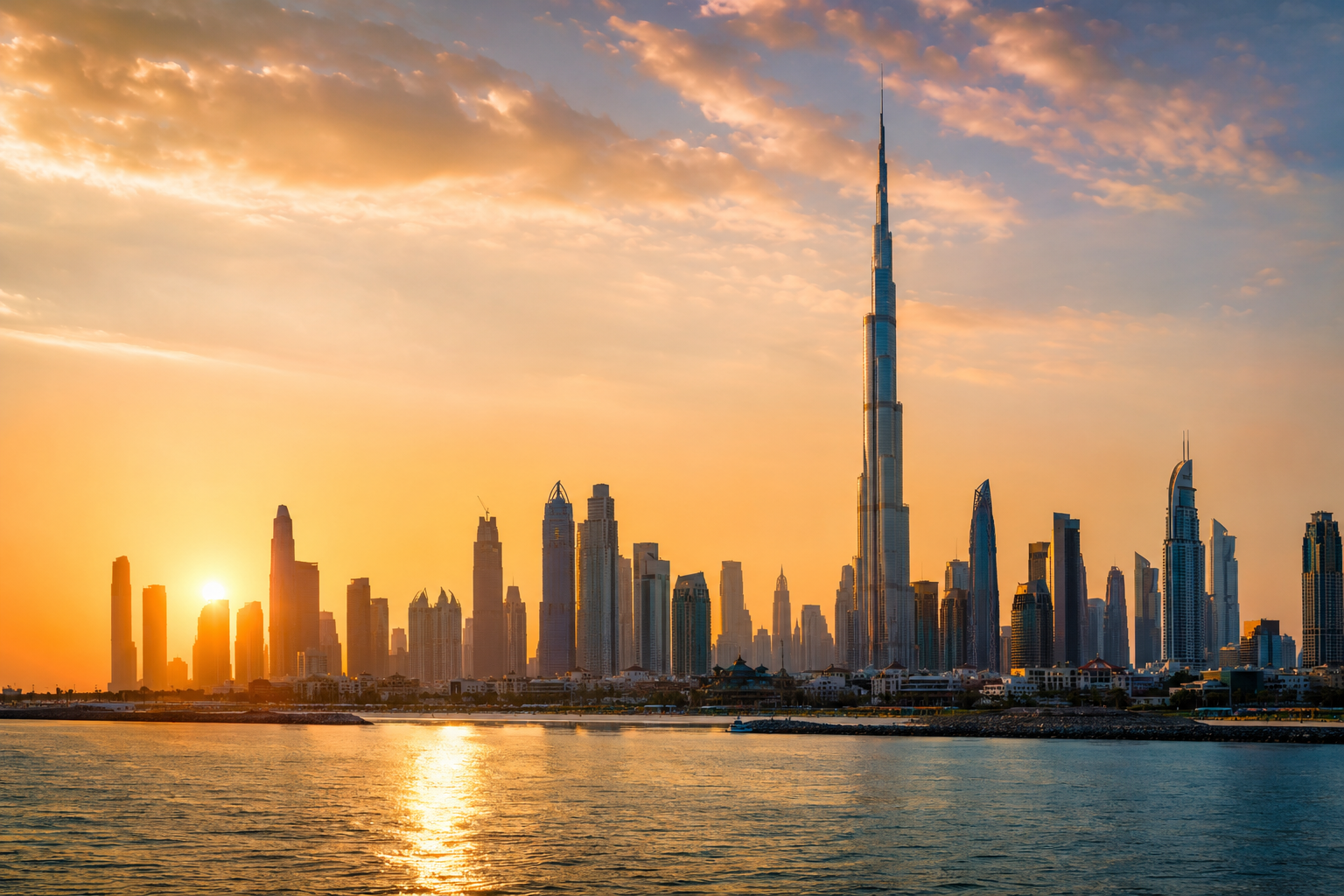
This complete Dubai travel guide covers the best places to visit, where to stay, public transport, typical costs, local customs and practical advice for first-time visitors. Dubai combines futuristic architecture, beaches, traditional markets, desert landscapes and international dining, making it suitable for short stopovers, family holidays and longer city breaks.
Price note: All prices in this article are approximate and were checked at the time of publication. Prices may change.
Dubai is one of seven emirates forming the United Arab Emirates. Although it is famous for luxury hotels and ambitious modern landmarks, visitors can also explore historic neighbourhoods, ride traditional boats across Dubai Creek and enjoy public beaches without maintaining a luxury-level budget.
This guide will help you decide when to visit, how many days to stay and how to organise your time efficiently.
Dubai at a Glance
- Country: United Arab Emirates
- Currency: UAE dirham
- Currency code: AED
- Official language: Arabic
- Commonly spoken language: English
- Time zone: Gulf Standard Time, UTC+4
- Main airport: Dubai International Airport
- Second airport: Al Maktoum International Airport
- Best time to visit: November to March
- Recommended stay: 3 to 5 days
- Weekend: Saturday and Sunday
- Emergency number: 999 for police and 998 for ambulance
The UAE dirham is officially pegged to the US dollar at approximately AED 3.67 to USD 1, although the amount you receive when exchanging money may differ because of fees or commission.
Top Tours & Experiences in Dubai
Discover popular Dubai tours and experiences. Check current availability, ratings and prices before you book.
Affiliate disclosure: If you book through these links, we may earn a commission from Viator. This does not increase the price you pay.
Top Tours & Experiences in Dubai
Discover popular Dubai tours and experiences. Check current availability, ratings and prices before you book.
Affiliate disclosure: If you book through these links, we may earn a commission from Viator. This does not increase the price you pay.
Why Visit Dubai?
Dubai provides several different travel experiences within one city.
You can begin the morning in a traditional market beside Dubai Creek, spend the afternoon on a beach and finish the day watching the illuminated Downtown skyline.
Some of the main reasons to visit include:
- Burj Khalifa and Downtown Dubai
- Traditional souqs and historic neighbourhoods
- Public and private beaches
- Desert excursions
- International restaurants
- Large shopping centres
- Family attractions
- Modern architecture
- Luxury hotels
- Convenient public transport
- Easy connections to other UAE destinations
Dubai is also an important international aviation hub, making it practical for a stopover between Europe, Asia, Africa and the Americas.
Best Time to Visit Dubai
The best time to visit Dubai is from November through March. These months provide the most comfortable weather for beaches, outdoor dining, neighbourhood walks and desert excursions.
January is usually Dubai’s coolest month, with an average temperature of approximately 21°C. Even during winter, daytime sunshine can feel strong.
November
November is warm and increasingly comfortable. Beach conditions are generally good, and outdoor venues become livelier.
December to February
These are the coolest and most popular months. Daytime sightseeing is pleasant, while evenings may require a light layer.
Hotel prices can rise during Christmas, New Year, school holidays and major events.
March
March is warm but usually remains manageable for outdoor sightseeing. It can offer a useful balance between weather and visitor demand.
April and May
Temperatures rise rapidly. Schedule outdoor activities for the morning or evening and use air-conditioned attractions during the afternoon.
June to September
Summer is extremely hot and humid. Daytime temperatures commonly exceed 40°C, making extended outdoor sightseeing uncomfortable and potentially unsafe.
Hotels may offer attractive summer rates, but your itinerary will need to focus on museums, shopping centres and other indoor attractions.
October
October remains hot, but evenings gradually become more comfortable. It can be a reasonable alternative to the busy winter season.
Read our detailed guide to the best time to visit Dubai for month-by-month weather, crowds and seasonal advice.
How Many Days Do You Need in Dubai?
3 days are enough for a useful introduction to Dubai.
A 3-day visit can cover:
- Downtown Dubai
- Burj Khalifa
- Dubai Mall
- Dubai Marina
- Jumeirah
- Old Dubai
- Dubai Creek
- A desert experience
Four or five days allow a more relaxed pace and additional time for beaches, museums, theme parks or a day trip to Abu Dhabi.
Travellers with only one or two days should concentrate on two or three connected districts rather than attempting to cross the entire city repeatedly.
Use our complete 3 days in Dubai itinerary to organise the main attractions efficiently.
Best Areas to Stay in Dubai
The right neighbourhood depends on your budget, preferred attractions and whether beach access or public transport is more important.
Downtown Dubai
Downtown Dubai is best for first-time visitors who want to stay close to Burj Khalifa, Dubai Mall and the Dubai Fountain area.
Advantages
- Close to major landmarks
- Numerous restaurants
- Impressive evening atmosphere
- Convenient for short visits
- Metro access from nearby areas
Disadvantages
- Expensive accommodation
- Heavy traffic
- Crowded during major events
- Limited affordable restaurants immediately beside the main attractions
Dubai Marina and Jumeirah Beach Residence
Dubai Marina and JBR suit travellers who want restaurants, a waterfront setting and access to the beach.
Advantages
- Beach access
- Marina promenade
- Many restaurants and cafés
- Metro and tram connections
- Lively evening atmosphere
Disadvantages
- Far from Old Dubai
- Traffic congestion
- Higher hotel prices near the beach
- Long travel times to some historical attractions
Deira
Deira is suitable for budget-conscious visitors and travellers interested in markets and Old Dubai.
Advantages
- Affordable hotels
- Close to traditional souqs
- Metro access
- Local restaurants
- Convenient for Dubai International Airport
Disadvantages
- Far from Dubai Marina
- Busy streets
- Older accommodation requires careful review
- Less convenient for beach-focused trips
Bur Dubai
Bur Dubai provides access to Al Fahidi Historical Neighbourhood, Dubai Creek, museums and affordable restaurants.
It is a strong option for cultural travellers and visitors who want more reasonably priced accommodation.
Palm Jumeirah
Palm Jumeirah is best for resorts, private beaches and luxury stays.
It is less suitable for budget travellers or visitors planning to spend most of their time exploring central Dubai because transport expenses can accumulate.
Al Barsha
Al Barsha offers mid-range hotels, apartments, local restaurants and access to Mall of the Emirates.
It can provide better value than Downtown or the Marina while remaining connected to the metro.
For a detailed comparison, read our guide to where to stay in Dubai.
Best Things to Do in Dubai
1. See Burj Khalifa
Burj Khalifa is Dubai’s most recognisable landmark and the tallest building in the world.
Visitors can book different observation experiences, including Levels 124 and 125, Level 148 and the higher lounge experience. Prices vary significantly according to the level and whether you choose peak sunset hours.
Reserve through the official Burj Khalifa website and compare the available packages carefully. Sunset sessions are popular and usually more expensive.
If you do not want to purchase an observation ticket, you can view and photograph Burj Khalifa from public areas around Downtown Dubai.
2. Explore Dubai Mall
Dubai Mall is more than a shopping centre. Its public areas contain shops, restaurants and views of several major attractions.
Entering the mall is free, but individual activities charge separately. These can include the aquarium, ice rink, cinema and various entertainment experiences.
The mall is enormous, so allow extra time to find attractions and return to the correct exit.
3. Watch the Dubai Fountain Area
The waterfront beside Dubai Mall provides views of Burj Khalifa and the surrounding Downtown skyline.
Fountain operations have sometimes been affected by maintenance and redevelopment, so confirm the current show schedule shortly before visiting rather than relying on an old timetable.
Viewing the waterfront area is free. Boat rides, boardwalk access and restaurant seating are optional paid experiences.
4. Discover Al Fahidi Historical Neighbourhood
Al Fahidi is one of the best areas for understanding Dubai before the era of skyscrapers.
Walk through narrow lanes containing restored courtyard buildings, traditional wind towers, galleries, museums and cultural spaces.
The neighbourhood is most comfortable during the morning or late afternoon. Walking through its public lanes is free, while individual museums or programmes may have their own admission arrangements.
5. Cross Dubai Creek by Abra
A traditional abra ride across Dubai Creek is one of the city’s simplest and most memorable experiences.
The small wooden boats connect areas around Bur Dubai and Deira. Traditional public routes usually cost only a few dirhams, making the crossing considerably cheaper than a sightseeing cruise.
Carry a small amount of cash and confirm the fare before boarding. Private abra hire costs more than the public crossing.
6. Browse the Gold Souk
The Gold Souk in Deira contains shop windows filled with jewellery in numerous designs and styles.
Browsing is free. Gold prices are linked to the daily market rate, while workmanship and design charges vary between pieces.
Compare prices, request proper documentation and purchase only from established retailers.
7. Visit the Spice Souk
Near the Gold Souk, the Spice Souk offers fragrant displays of spices, dried fruits, herbs, tea and incense.
Browsing costs nothing, but ask before photographing individual sellers. Polite negotiation may be possible when purchasing several products.
8. Walk Around Dubai Marina
Dubai Marina’s waterfront promenade offers views of residential towers, yachts and the surrounding skyline.
Walking through the public areas is free. Restaurants, cruises and water activities are optional.
Visit early in the morning or after sunset, particularly outside the cooler winter months.
9. Spend Time at JBR and The Beach
Jumeirah Beach Residence combines public beach areas, a waterfront promenade, restaurants and shopping.
Basic access to public sections of the beach is generally free. Sunbeds, umbrellas, water sports and private facilities cost extra.
Observe swimming warnings and follow lifeguard instructions.
10. Explore Bluewaters Island
Bluewaters Island is connected to the JBR area by a pedestrian bridge.
Visitors can walk around its public waterfront areas, admire the skyline and choose from restaurants and shops. Individual attractions and entertainment venues charge separately.
11. Visit Madinat Jumeirah
Madinat Jumeirah is designed around waterways, hotels, restaurants and a modern souq inspired by traditional architecture.
Walking through the accessible public souq and viewing areas is free. Restaurants, boat rides and resort facilities are paid.
Some of the public viewpoints provide attractive views towards Burj Al Arab.
12. See Burj Al Arab
Burj Al Arab is one of Dubai’s most photographed hotels.
The hotel’s interior is not freely open for general sightseeing. Entry normally requires a hotel, restaurant or official tour reservation.
You can photograph its exterior free of charge from public viewpoints around Jumeirah, subject to local access arrangements.
13. Visit Palm Jumeirah
Palm Jumeirah contains resorts, residences, restaurants, beaches and attractions.
The Palm Monorail provides elevated views but operates separately from the standard RTA metro fare system. Observation decks, beach clubs, water parks and resort experiences also require tickets.
Visitors can still explore accessible public areas and enjoy exterior views without booking an attraction.
14. Enjoy Dubai’s Beaches
Dubai has public, managed and private beaches.
Popular areas include:
- JBR Beach
- Kite Beach
- Umm Suqeim Beach
- Al Mamzar Beach Park
- Jumeirah Beach
Some beaches are free, while managed parks, private beach clubs and hotel beaches may charge admission.
Carry sun protection, respect designated swimming areas and follow posted rules.
15. Take a Desert Excursion
A desert excursion can include dune driving, sandboarding, camel rides, dinner and entertainment.
Experiences vary considerably in quality. Before booking, check:
- Whether hotel transfers are included
- Group size
- Vehicle type
- Insurance
- Meal arrangements
- Exact activities
- Cancellation policy
- Whether optional extras are added later
Dune driving may not suit pregnant travellers or visitors with back, neck or certain medical conditions.
16. Explore the Museum of the Future
The Museum of the Future is known for its distinctive calligraphy-covered architecture and exhibitions about technology and possible futures.
Tickets frequently sell out, so advance booking is recommended. Even without entering, visitors can photograph the exterior from accessible public areas.
17. Visit Dubai Frame
Dubai Frame creates a visual connection between older neighbourhoods and the modern skyline.
The ticketed visit includes exhibitions and elevated city views. Opening hours and admission prices can change, so check the official booking platform before travelling.
The surrounding Zabeel Park may have a separate entry charge.
18. See Dubai Miracle Garden
Dubai Miracle Garden is a seasonal outdoor attraction featuring large floral displays.
It normally operates during the cooler months and closes during the hottest part of the year. Confirm that the garden is open before purchasing transport or tickets.
19. Explore Global Village
Global Village is another seasonal attraction, combining country-themed pavilions, food, shopping and entertainment.
It generally operates during the cooler months. Entry tickets do not include every ride, game, meal or premium experience.
Check the current season dates and programme before visiting.
20. Visit a Water Park or Theme Park
Dubai offers several large paid attractions for families and entertainment-focused travellers.
Options can include:
- Aquaventure World
- Wild Wadi
- IMG Worlds of Adventure
- Motiongate Dubai
- Legoland Dubai
- Ski Dubai
Ticket prices vary, and transport may add to the overall cost. Compare official online rates, family packages and attraction passes before booking.
For affordable alternatives, see our guide to the best free things to do in Dubai.
Getting Around Dubai
Dubai has an extensive network of metro trains, trams, buses, marine transport and taxis.
Dubai Metro
The metro is clean, air-conditioned and useful for travelling between the airport, Downtown Dubai, Business Bay, Mall of the Emirates, Dubai Marina and other major districts.
However, metro stations are not always directly beside attractions. Walking from a station may take longer than expected, particularly around large developments.
Metro Hours
Operating hours vary by day and may change during public holidays or special occasions. Check the official RTA journey planner for your exact travel date.
Do not rely on the last train time from a different station because the final departure varies along the route.
Nol Cards and Tickets
You need a nol card or valid nol ticket to travel on Dubai’s metro, buses and trams.
A Red Ticket is designed for occasional visitors and currently costs approximately AED 2 before journeys are added.
Current regular Red Ticket fares are approximately:
- One zone: AED 4
- Two adjacent zones: AED 6
- More than two zones: AED 8.50
Gold Class fares are approximately double the corresponding regular fare.
A Silver nol card currently costs approximately AED 25, including around AED 19 in usable balance. It can be practical for travellers making repeated journeys.
Remember to tap in and tap out correctly.
Dubai Tram
The tram is useful around Dubai Marina, JBR and connections towards Palm Jumeirah.
It connects with selected metro stations, but the Palm Monorail has a separate ticketing system.
Public Buses
Dubai’s buses reach areas not directly served by the metro. Many stops have air-conditioned shelters, although waiting outdoors can still be uncomfortable during summer.
Use the official RTA journey planner to identify the correct stop and direction.
Taxis
Official taxis are widely available and use regulated meters.
The final cost depends on distance, traffic, booking method, toll gates and the location where the journey begins. Airport taxis have a higher starting charge than ordinary street journeys.
Card acceptance is common, but keeping a small amount of cash is sensible.
Ride-Hailing Services
Careem and Uber operate in Dubai. They can be convenient for hotel pickups and locations where finding a street taxi is difficult.
Compare the estimated fare before confirming because prices can increase during busy periods.
Walking
Dubai is not consistently walkable between districts.
Individual neighbourhoods such as Al Fahidi, Downtown, Dubai Marina and JBR can be explored on foot, but crossing from one district to another normally requires transport.
Summer heat, wide roads and large building complexes can make apparently short distances uncomfortable.
Driving
Renting a car may be useful for families, longer stays and trips outside central Dubai.
Consider:
- Hotel parking
- Paid public parking
- Salik road tolls
- Heavy traffic
- Insurance coverage
- Navigation
- Security deposits
Visitors staying close to the metro may not need a rental car.
Getting from Dubai International Airport to the City
Dubai International Airport is connected to the city by metro, taxi, bus and private transfer.
The metro is usually the least expensive option during operating hours. Check which terminal your airline uses and whether your accommodation is within practical walking distance of a station.
A taxi is more convenient for families, travellers carrying heavy luggage and late-night arrivals.
Travel times vary considerably depending on your destination and road traffic.
Typical Dubai Travel Costs
Dubai can be expensive, but travellers can control costs by using public transport, choosing local restaurants and mixing paid attractions with free experiences.
Accommodation
Approximate nightly prices:
- Budget hotel or basic apartment: AED 150–350
- Comfortable mid-range hotel: AED 350–800
- Luxury hotel: AED 900–2,500 or more
Beachfront resorts, Downtown hotels and properties on Palm Jumeirah are generally more expensive.
Food
Approximate prices:
- Shawarma or simple takeaway meal: AED 8–20
- Casual local meal: AED 25–60
- Mid-range restaurant: AED 70–180 per person
- Upscale restaurant: AED 250 or more per person
- Coffee: AED 15–30
- Bottled water: AED 1–5
Daily Budget
Excluding flights:
- Budget traveller: AED 250–500 per day
- Mid-range traveller: AED 650–1,200 per day
- Luxury traveller: AED 2,000 or more per day
See our detailed Dubai travel budget for sample 3-day costs and money-saving advice.
Food to Try in Dubai
Dubai’s population is highly international, so the city’s food extends far beyond Emirati cuisine.
Try:
- Machboos
- Harees
- Luqaimat
- Grilled fish
- Shawarma
- Manakish
- Falafel
- Mandi
- Karak tea
- Arabic coffee and dates
You will also find excellent Indian, Pakistani, Filipino, Iranian, Lebanese and other international restaurants.
For inexpensive meals, look beyond hotel restaurants and major tourist attractions. Deira, Bur Dubai, Karama and Al Barsha contain many affordable choices.
Dubai Culture and Etiquette
Dubai is international and accustomed to visitors, but local laws and customs must be respected.
Dress Modestly
Swimwear is appropriate at beaches and pools but not in shopping centres, restaurants or traditional neighbourhoods.
In ordinary public areas, choose clothing that covers the shoulders and knees. More conservative clothing may be expected at religious or government sites.
Public Behaviour
Avoid aggressive behaviour, offensive gestures and excessive public displays of affection.
Never photograph people closely without permission, particularly families and women.
Do not photograph government buildings, military facilities, security operations or accidents.
Alcohol
Alcohol is available only through licensed venues and is restricted to people meeting the legal requirements.
Being intoxicated or behaving disorderly in public can result in serious consequences. Never drink and drive.
Medicines
Some medicines available in other countries are controlled in the UAE.
Travellers carrying prescription medication should check official UAE guidance before departure and bring supporting documentation where required.
Ramadan
During Ramadan, daily schedules change.
Some restaurants modify their operating hours, attractions may open later and roads become busy before sunset. Evenings become lively after iftar.
Follow current guidance regarding eating, drinking and smoking in public during fasting hours.
Friday Arrangements
Friday remains an important religious day, although the UAE weekend is Saturday and Sunday.
Some attractions, businesses and transport services may follow different Friday schedules.
Money and Payments
Cards and contactless payments are widely accepted.
Carry a small amount of cash for:
- Abra crossings
- Small markets
- Tips
- Minor purchases
- Situations where card terminals are unavailable
Use bank-operated or reputable ATMs and choose to be charged in UAE dirhams if your card provider offers better foreign-exchange terms than dynamic currency conversion.
Tipping in Dubai
Tipping is appreciated but not always compulsory.
Common approaches include:
- Restaurants: approximately 5–10% for good service if a service charge is not already included
- Hotel staff: AED 5–20
- Taxi drivers: round up the fare
- Tour guides: according to service quality and group size
Always check the bill before adding a tip.
Internet and SIM Cards
Free Wi-Fi is common in hotels, shopping centres, airports and cafés.
Visitors can purchase prepaid SIM cards or eSIM packages from UAE telecommunications providers. Compare the data allowance, validity and any tourist-specific packages available when you arrive.
Keep mobile data available for maps, taxi bookings and attraction confirmations.
Is Dubai Safe?
Dubai generally has low levels of street crime and a visible security presence.
Normal precautions remain important:
- Keep valuables secure
- Use official taxis or recognised applications
- Avoid leaving belongings unattended
- Follow beach warnings
- Protect yourself from heat
- Purchase suitable travel insurance
- Respect UAE laws
Road traffic and extreme summer heat may present more immediate risks to visitors than ordinary street crime.
Health and Heat Safety
During hot weather:
- Drink water regularly
- Use sunscreen
- Wear a hat and sunglasses
- Avoid extended midday walking
- Schedule outdoor activities early or after sunset
- Take regular air-conditioned breaks
- Never leave children or pets inside a parked vehicle
The contrast between outdoor heat and strong indoor air conditioning can be significant, so carrying a light layer is useful.
Dubai for Families
Dubai is well suited to families, with beaches, parks, aquariums, water parks, indoor entertainment and family-oriented hotels.
Before booking an attraction, check:
- Age restrictions
- Height requirements
- Stroller access
- Family ticket options
- Operating hours
- Transport distance
- Whether food is available
- Rules about outside drinks
During summer, focus on indoor attractions and avoid long outdoor transfers with young children.
Dubai for Solo Travellers
Dubai’s transport network and widespread use of English make it manageable for solo travellers.
Choose accommodation near a metro station and group attractions by neighbourhood to reduce taxi expenses.
Solo visitors should follow the same local laws, clothing expectations and photography etiquette as other travellers.
Dubai for Couples
Couples can combine beaches, rooftop restaurants, desert excursions and Downtown attractions.
Public displays of affection should remain restrained. Check hotel and venue policies if you have specific concerns about documentation or local regulations.
Day Trips from Dubai
Abu Dhabi
Abu Dhabi is the most popular day trip and offers attractions such as Sheikh Zayed Grand Mosque, Louvre Abu Dhabi and the Corniche.
Travelling independently is possible by intercity bus, taxi or rental car. A guided tour can be more convenient when combining several widely separated attractions.
Sharjah
Sharjah is closer to Dubai and is known for museums, heritage areas and cultural attractions.
Traffic between Dubai and Sharjah can be extremely heavy during commuting hours.
Hatta
Hatta offers mountain scenery, outdoor recreation and a different landscape from central Dubai.
Activities and access vary seasonally, and some experiences require advance booking.
Desert Areas
Independent desert driving requires a suitable vehicle, preparation and relevant experience. First-time visitors should use a reputable licensed operator rather than attempting off-road driving alone.
Common Dubai Travel Mistakes
Avoid these frequent mistakes:
- Scheduling too many distant attractions on one day
- Assuming every part of Dubai is walkable
- Visiting outdoor attractions during summer afternoons
- Booking an airport hotel for a city-centre holiday
- Ignoring rush-hour traffic
- Forgetting that the Palm Monorail uses separate tickets
- Relying on old attraction schedules
- Purchasing from unofficial ticket sellers
- Wearing beachwear in ordinary public spaces
- Photographing people without permission
- Underestimating restaurant and attraction costs
Essential Dubai Planning Tips
Group Attractions by Area
Combine:
- Burj Khalifa and Dubai Mall
- Al Fahidi, Dubai Creek and Deira souqs
- Dubai Marina, JBR and Bluewaters
- Madinat Jumeirah and nearby Jumeirah attractions
This reduces transport expenses and time spent in traffic.
Reserve Major Attractions
Burj Khalifa, the Museum of the Future and popular seasonal attractions can sell out. Book through official platforms.
Check the Weather
Dust, humidity, rain or extreme heat can affect outdoor activities and skyline visibility.
Download Useful Applications
The official RTA application can help with public-transport planning. A reliable maps application and recognised taxi-booking service are also useful.
Keep Your Schedule Flexible
Dubai changes quickly. Construction, maintenance, private events and seasonal operating arrangements can affect access.
Is Dubai Expensive?
Dubai can be expensive, but it does not have to be.
A luxury trip involving beachfront resorts, premium restaurants and several ticketed attractions can cost thousands of dirhams per day.
A more affordable visit is possible by:
- Staying in Deira, Bur Dubai or Al Barsha
- Using the metro
- Eating at local restaurants
- Visiting public beaches
- Exploring historical districts
- Using traditional public abra routes
- Choosing only one or two major paid attractions
Is Dubai Worth Visiting?
Dubai is worth visiting for travellers interested in modern architecture, international dining, beaches, shopping, family entertainment and the contrast between old trading districts and rapid urban development.
The city is particularly convenient for first-time visitors to the region because English is widely used and tourist services are well established.
The key to an enjoyable trip is choosing the right season, staying near your main attractions and avoiding an overcrowded itinerary.
Final Thoughts
Dubai offers far more than luxury shopping and skyscrapers. A well-planned visit can combine Burj Khalifa, beaches, Dubai Creek, historical neighbourhoods, traditional markets, desert landscapes and food from around the world.
Visit between November and March for the most comfortable outdoor weather. Stay near the metro if you want to reduce transport costs, and group attractions by district because Dubai covers a large area.
3 days provide a strong introduction, while four or five days allow time for beaches, museums, family attractions or an Abu Dhabi day trip
Book Your Dubai Experiences
Ready to start planning? Compare popular Dubai tours and activities, check current prices and availability, and book the experiences that suit your trip.
Affiliate disclosure: If you book through these links, we may earn a commission from Viator. This does not increase the price you pay.
Explore more places through our destinations page or browse our complete collection of itineraries.