
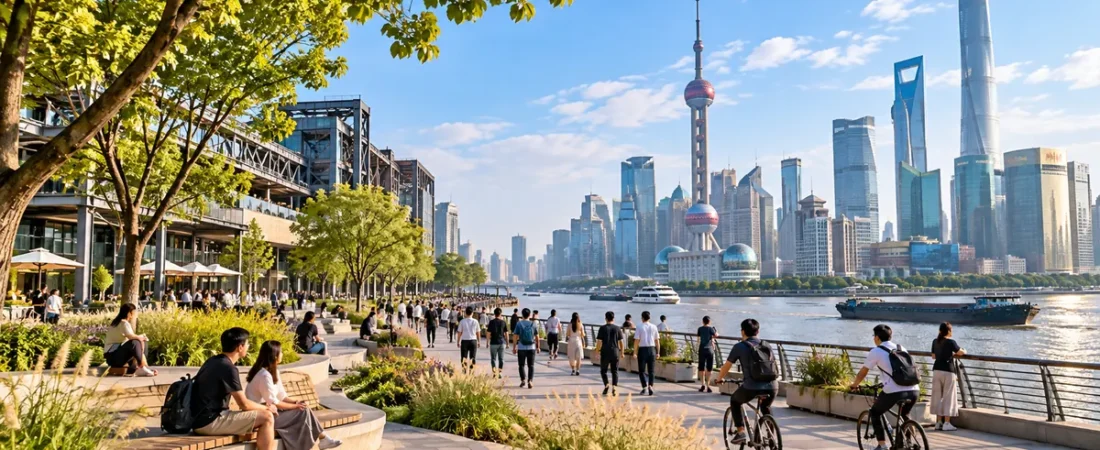
Finding free things to do in Shanghai is surprisingly easy. Despite its futuristic skyline, luxury shopping districts and famous paid attractions, many of the city’s most memorable experiences cost nothing.
You can walk beside the Huangpu River, explore historic neighbourhoods, photograph the Pudong skyline, visit major museum collections and relax in public parks without paying an admission fee.
This guide covers 15 genuinely free Shanghai experiences that are ideal for travellers who want to explore more while keeping costs under control.
For an overview of the city before you start exploring, see our Shanghai travel guide.
1. Walk Along the Bund
The Bund is one of Shanghai’s essential experiences, and walking along its waterfront promenade is completely free.
Historic buildings line one side of the Huangpu River while the futuristic skyscrapers of Pudong rise across the water.
Visit during daylight to appreciate the architecture, then return after dark when the skyline is illuminated.
You don’t need to pay for a cruise or observation deck to enjoy one of Shanghai’s most famous views.
2. Explore Nanjing Road
Nanjing Road is one of Shanghai’s best-known shopping streets, but you don’t have to buy anything to enjoy it.
The pedestrianised sections are lively with illuminated storefronts, historic buildings and crowds moving between People’s Square and the Bund.
Evening is particularly atmospheric when signs and buildings light up.
Walking Nanjing Road also fits easily into our 3 Days in Shanghai itinerary.
3. Stroll Around People’s Square
People’s Square provides an open public space in the heart of central Shanghai.
The surrounding area includes major cultural institutions, landscaped spaces and some of the city’s busiest commercial streets.
It’s an easy place to combine with Nanjing Road and other central attractions.
Simply walking through the square and watching everyday city life makes a worthwhile free stop.
4. Visit Shanghai Museum East
Shanghai Museum East in Pudong is one of the best cultural experiences available without a standard admission charge.
Its permanent galleries explore Chinese ceramics, bronzes, calligraphy, painting, jade, sculpture, seals and other areas of Chinese art and history.
At the time of publication, individual visitors can enter without an advance general reservation by presenting valid identification and completing the required security procedures.
The museum is normally open Wednesday to Monday from 10:00 AM to 6:00 PM, with last admission at 5:00 PM, and is closed on Tuesdays except national holidays.
Some special exhibitions and interactive areas may require separate tickets or reservations, so check the museum’s latest information before visiting.
5. Walk Through the Former French Concession
The Former French Concession offers a completely different atmosphere from Pudong’s skyscrapers.
Tree-lined streets, historic villas, cafés and distinctive residential architecture make the neighbourhood ideal for exploring on foot.
Wukang Road is particularly popular, but wandering beyond the busiest streets can reveal quieter residential corners.
Walking is free, although cafés, shops and individual attractions naturally charge separately.
If this atmosphere appeals to you, our guide to where to stay in Shanghai explains the neighbourhood in more detail.
6. Explore Xintiandi’s Pedestrian Streets
Xintiandi combines restored traditional shikumen-style buildings with modern restaurants, shops and public spaces.
Dining and shopping here can be expensive, but exploring the pedestrian streets costs nothing.
Look at the contrast between historic brick architecture and contemporary Shanghai development.
It’s particularly pleasant in the evening when the neighbourhood becomes lively.
7. Walk Along the West Bund
Shanghai’s West Bund waterfront is one of the city’s best places for a long free walk.
This regenerated section of the Huangpu River combines riverside paths, landscaped public spaces, contemporary architecture and cultural venues.
You can walk, relax beside the river or simply watch boats travelling along the Huangpu.
Some museums and exhibitions in the district charge admission, but enjoying the waterfront itself doesn’t require a ticket.
8. Explore the Pudong Riverside
You don’t need to pay for an observation deck to enjoy Pudong.
Walking along the riverside provides views back toward the Bund’s historic architecture and offers another perspective on the Huangpu River.
The contrast is striking: Pudong represents modern Shanghai while the opposite riverbank showcases much of the city’s historic commercial architecture.
Visit around sunset for changing light across the waterfront.
9. Walk Along Wukang Road
Wukang Road is one of Shanghai’s most photogenic historic streets.
The area is known for mature trees, historic residences and distinctive architecture, including the famous wedge-shaped Wukang Mansion.
The best activity here is simply walking.
Take time to explore nearby streets rather than photographing only the best-known building.
Early morning can be especially enjoyable before the area becomes busier.
10. Visit Century Park
Century Park provides a large green escape in Pudong and is one of the city’s major public parks.
Its landscaped spaces, paths, lawns and water features provide a welcome contrast to Shanghai’s dense urban districts.
It works particularly well if you’re already exploring Pudong.
Bring water, walk through the park and enjoy a quieter side of the city without adding another attraction ticket to your budget.
11. Explore Jing’an’s Streets
Jing’an mixes traditional Shanghai, modern commercial development and residential neighbourhoods.
You can explore streets surrounding Jing’an Temple, browse public areas and walk through nearby neighbourhoods without spending anything.
Entering certain attractions may require admission, but exploring the district itself is free.
Jing’an is particularly interesting for travellers who want to see a part of Shanghai where sightseeing and everyday city life overlap.
12. See the Pudong Skyline After Dark
Shanghai’s skyline changes dramatically after sunset.
One of the easiest free evening activities is simply finding a public waterfront viewpoint and watching Pudong illuminate across the Huangpu River.
The Oriental Pearl Tower and surrounding skyscrapers create one of Asia’s most recognisable cityscapes.
Check current lighting arrangements locally because illumination schedules can vary.
13. Wander Through Tianzifang
Tianzifang is a maze of narrow lanes inside a historic residential area.
Small shops, cafés, studios and galleries occupy buildings along the alleyways.
You can walk through the lanes without paying an entrance fee, although almost everything you buy inside obviously costs extra.
It can become crowded, so visiting earlier in the day often provides a more relaxed experience.
14. Explore Shanghai’s Free Public Waterfronts
The Huangpu River has become increasingly accessible through pedestrian-friendly waterfront development.
Beyond the famous Bund, several stretches provide promenades, seating areas, landscaped spaces and views across the river.
These areas are excellent for walking or taking a break between sightseeing stops.
Shanghai’s waterfronts demonstrate that some of the city’s best views don’t require an observation-deck ticket.
15. Discover Shanghai on Foot
One of Shanghai’s best free experiences is simply choosing a neighbourhood and walking without rushing between attractions.
Try the historic streets around the Former French Concession, the Bund’s architectural corridor, modern Pudong or the lanes around Jing’an.
Walking reveals small details that are easily missed when travelling entirely by Metro or taxi.
Combine neighbourhoods with public transport and you can spend an entire day exploring Shanghai for little more than your transport and food costs.
For realistic daily spending estimates, see our Shanghai travel budget.
How to Enjoy Shanghai for Less
Group nearby free attractions together rather than repeatedly crossing the city.
For example, People’s Square, Nanjing Road and the Bund work naturally together, while Pudong’s riverside, Shanghai Museum East and Century Park can be combined on another day.
The Metro keeps transportation costs relatively low, and local restaurants can help control food spending.
Weather also matters when much of your sightseeing involves walking. Our guide to the best time to visit Shanghai explains which seasons are most comfortable for exploring outdoors.
With thoughtful planning, it’s entirely possible to experience Shanghai’s skyline, neighbourhoods, waterfronts, parks and cultural attractions without building every day around expensive tickets.
Explore more places through our destinations page or browse our complete collection of itineraries.