
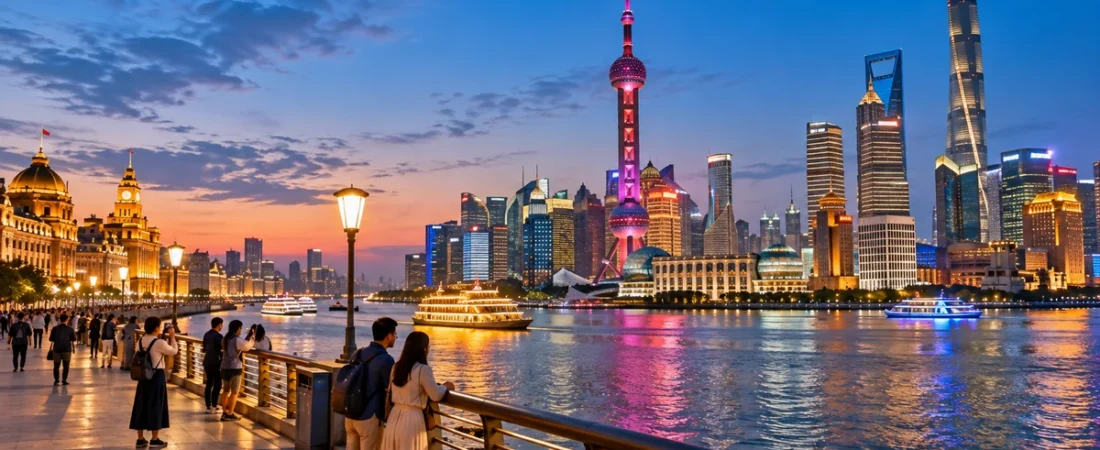
Shanghai is one of China’s most exciting cities, combining futuristic skyscrapers, historic neighbourhoods, traditional gardens, waterfront promenades and one of the world’s most recognisable skylines. This Shanghai travel guide covers the essential sights, neighbourhoods, transport and practical information you need when planning a first visit.
The contrast is what makes Shanghai memorable. You can begin your morning among traditional pavilions and ponds at Yu Garden, walk through streets lined with early twentieth-century architecture in the afternoon, and finish the day looking across the Huangpu River at the illuminated towers of Pudong.
Shanghai is enormous, but an efficient Metro system makes the main visitor areas relatively straightforward to explore.
Price note: All prices in this article are approximate and were checked at the time of publication. Prices may change.
Why Visit Shanghai?
Shanghai offers an unusually diverse city experience.
The Bund preserves the city’s historic waterfront architecture, while directly across the river, Lujiazui represents modern Shanghai with some of China’s tallest skyscrapers.
Elsewhere, traditional neighbourhoods, temples, museums, parks, shopping streets and food districts reveal very different sides of the city.
Shanghai also works well as a gateway for exploring nearby destinations in eastern China, including Suzhou, Hangzhou and several historic water towns.
For a first visit, 3 to 5 days gives you enough time to see the major highlights without rushing constantly between neighbourhoods.
Walk Along the Bund
The Bund is the classic starting point for a Shanghai visit.
Running beside the Huangpu River, the promenade is lined with historic buildings that once housed banks, trading companies, hotels and consulates.
Across the river is Pudong’s futuristic Lujiazui skyline.
The contrast between these two waterfronts has become one of Shanghai’s defining views.
Walking along the Bund itself is free.
Visit during daylight to appreciate the architecture, then return around sunset or after dark when Pudong’s towers illuminate across the river.
Early morning offers a completely different atmosphere, with fewer visitors and locals exercising along the waterfront.
See the Pudong Skyline
Cross the Huangpu River to Lujiazui and you enter Shanghai’s modern financial district.
The Oriental Pearl Tower remains one of the skyline’s most recognisable structures, while Shanghai Tower dominates the cluster of skyscrapers around it.
Even without paying for an observation deck, walking through Lujiazui gives you a dramatic perspective on the scale of modern Shanghai.
If panoramic views are a priority, compare the observation options available during your visit before choosing one.
Weather matters. Low cloud or haze can significantly reduce visibility from very high observation decks.
Explore Yu Garden and the Old City
Yu Garden provides a completely different experience from Shanghai’s skyscrapers.
The classical Chinese garden contains traditional halls, pavilions, ponds, rockeries, bridges and carefully designed landscaping.
The surrounding Old City area is also popular for traditional-style architecture, shops and food.
Expect this part of Shanghai to become busy, particularly during weekends and national holidays.
Arriving earlier in the day can make the experience more comfortable.
Allow enough time to explore the surrounding lanes rather than visiting only the garden itself.
Discover the Former French Concession
For leafy streets, cafés and historic residential architecture, spend several hours exploring the Former French Concession.
The area isn’t one single attraction with an entrance gate. Instead, it covers neighbourhoods where tree-lined streets, villas, shops, restaurants and traditional lane houses create a more intimate side of Shanghai.
Wukang Road is one of the best-known streets for architecture and walking.
Nearby streets are equally worth exploring.
This is a good area to slow down after spending time among the city’s major landmarks.
Walk Along Nanjing Road
Nanjing Road is Shanghai’s most famous shopping corridor.
Its central pedestrian section leads towards the Bund and is filled with shops, department stores, restaurants, signs and large crowds.
The street becomes especially energetic after dark.
You don’t necessarily need to spend much time shopping. Walking along Nanjing Road is worthwhile simply for the atmosphere and as a convenient route between People’s Square and the Bund.
Side streets often provide a welcome break from the busiest pedestrian areas.
Visit Shanghai Museum
Shanghai Museum is one of the city’s major cultural attractions, but visitors should pay attention to which building they intend to visit.
Shanghai Museum East in Pudong contains the museum’s major permanent collections, including Chinese bronzes, sculpture, calligraphy, painting, ceramics, jade, seals and numismatics.
The East building is generally open Wednesday to Monday from 10:00 to 18:00, with last admission at 17:00, and normally closes on Tuesdays except national holidays.
Individual visitors currently do not generally need an advance reservation for standard admission, although particular galleries and special exhibitions can have separate requirements.
The historic People’s Square building operates separately and may host ticketed special exhibitions, so always check the current programme before visiting.
Explore People’s Square
People’s Square is an important central reference point when navigating Shanghai.
The large urban space is surrounded by cultural institutions, shopping areas and major transport connections.
From here, you can walk towards Nanjing Road and eventually continue to the Bund.
The area is especially useful when building a sightseeing itinerary because several Metro lines and central attractions converge nearby.
Experience Xintiandi
Xintiandi demonstrates how Shanghai has adapted historic architecture for modern city life.
Traditional shikumen-style buildings have been restored and incorporated into a pedestrian district filled with restaurants, cafés and shops.
Dining here can be relatively expensive, but walking around the district costs nothing.
Visit during the day to appreciate the architecture or in the evening when restaurants and terraces create a livelier atmosphere.
Visit Jing’an Temple
Jing’an Temple provides a striking contrast with the high-rise buildings surrounding it.
The Buddhist temple has a long history, although its structures have undergone extensive reconstruction and restoration.
Its golden roofs stand out dramatically against the modern commercial district.
The surrounding Jing’an neighbourhood is also useful for shopping, restaurants and exploring another side of central Shanghai.
Check current admission arrangements before visiting because ticketing and opening details can change.
Explore Tianzifang
Tianzifang is a maze of narrow lanes filled with small shops, cafés, studios and restaurants.
It developed within a traditional residential neighbourhood and retains a more compact street pattern than Shanghai’s major commercial districts.
The area is very tourist-oriented, but its narrow lanes still make an interesting contrast to Pudong’s enormous towers and avenues.
Entry to the neighbourhood itself is free.
Visit earlier if you’d prefer to avoid the busiest periods.
Take a Huangpu River Cruise
A Huangpu River cruise is one of Shanghai’s popular paid experiences.
Cruises provide views of both sides of the city’s architectural story: the historic Bund on one bank and Pudong’s skyscrapers on the other.
Evening cruises are particularly popular because the skyline is illuminated.
Prices and cruise durations vary by operator and ticket type, so compare current options rather than relying on a fixed fare quoted well before your trip.
If you’re travelling on a tighter budget, the Bund promenade still provides excellent skyline views for free.
Explore Shanghai’s Food
Food should be part of any Shanghai itinerary.
One of the city’s best-known dishes is xiaolongbao, delicate soup dumplings traditionally associated with the Shanghai region.
Other local foods include shengjianbao, pan-fried buns with juicy fillings, noodles and numerous regional Chinese dishes.
Shanghai’s enormous restaurant scene ranges from simple local eateries to international fine dining.
Don’t restrict yourself to restaurants around the biggest tourist attractions. Exploring neighbourhood restaurants can provide both better value and a more varied experience.
Getting Around Shanghai
Shanghai’s Metro is usually the most practical transport option for visitors.
The network reaches major sightseeing districts, railway stations and both international airports.
Station signage and announcements commonly include English alongside Chinese, which makes the system easier for international visitors than many first-time travellers expect.
Fares vary according to distance.
A useful strategy is to group attractions geographically rather than repeatedly crossing the city.
For example, combine the Bund with Nanjing Road, and explore the Former French Concession during a separate part of your itinerary.
Taxis and app-based transport can also be useful, particularly late in the evening or when travelling with luggage.
Getting From Shanghai’s Airports to the City
Shanghai has two major airports: Pudong International Airport and Hongqiao International Airport.
Pudong handles a large share of international flights and is considerably farther from central Shanghai.
Metro services connect Pudong Airport with the city, while other airport transport options include buses, taxis and the Maglev connection towards Longyang Road.
Hongqiao Airport is closer to central districts and is integrated with Shanghai’s transport network.
Your best option depends on your arrival time, hotel location and amount of luggage.
Check operating hours before relying on rail or Metro services for very late arrivals.
Where to Stay in Shanghai
For first-time visitors, staying near convenient Metro connections is more important than choosing a hotel based purely on distance.
The Bund and People’s Square provide convenient access to many central attractions.
Jing’an is a good option for restaurants, shopping and transport.
Areas around the Former French Concession appeal to visitors who prefer leafy streets and neighbourhood atmosphere.
Pudong can work well for business travellers and anyone who wants to stay close to the modern financial district.
We’ll cover these neighbourhoods in detail in our dedicated Where to Stay in Shanghai guide.
Best Time to Visit Shanghai
Spring and autumn are generally attractive periods for sightseeing because temperatures can be more comfortable than during the hottest and coldest parts of the year.
Summer can be hot, humid and rainy.
Winter is colder, although major snowfall is uncommon in central Shanghai.
China’s national holiday periods require special consideration.
Travel demand can become extremely high around major public holidays, particularly the National Day holiday period in early October.
Hotel availability, transport and major attractions can all become significantly busier.
We’ll cover seasonal conditions month by month in our dedicated Best Time to Visit Shanghai guide.
How Many Days Do You Need in Shanghai?
3 days is a good minimum for a first visit.
With 3 full days you can experience the Bund, Pudong, Yu Garden, central shopping streets, a museum and parts of the Former French Concession.
Four or five days gives you considerably more flexibility.
You can spend longer exploring neighbourhoods, add museums and parks, or make a day trip outside central Shanghai.
Avoid trying to see everything. Shanghai’s size means an itinerary built around a smaller number of areas usually feels much more enjoyable.
Internet, Payments and Apps in Shanghai
International visitors should prepare for China’s digital environment before travelling.
Some websites and online services commonly used elsewhere may not operate normally in mainland China.
Mobile payments are widely used throughout Shanghai, and international visitors should check the latest options for linking eligible foreign bank cards to supported Chinese payment apps before departure.
Keep at least one backup payment method.
It is also useful to save your hotel’s name and address in Chinese so you can show it to a taxi driver or ask for directions if necessary.
Because digital access and payment arrangements can change, verify the latest requirements shortly before travelling rather than relying on old travel advice.
Essential Shanghai Travel Tips
Download any essential maps, booking information and translation tools before your trip.
Carry your passport when required for attractions, transport or identification.
Avoid scheduling too many distant attractions on the same day.
Use the Metro for longer journeys and walk within individual neighbourhoods.
Check museum closing days carefully because different institutions may close on different weekdays.
For skyline views, keep your schedule flexible enough to choose a clearer day.
And allow time simply to walk. Some of Shanghai’s most memorable contrasts appear when you move between traditional lanes, tree-lined neighbourhoods and modern commercial districts rather than travelling directly from attraction to attraction.
Is Shanghai Worth Visiting?
Absolutely for travellers interested in cities, architecture, Chinese culture and food.
Few destinations demonstrate the contrast between historic and contemporary China as dramatically as Shanghai.
The Bund, Pudong skyline, traditional gardens, museums, neighbourhood streets and enormous food scene provide enough variety for several days.
Rather than seeing Shanghai only as a futuristic skyline, explore both sides of the Huangpu River and spend time away from the largest attractions.
That’s where the city’s character becomes much more interesting.
Explore more places through our destinations page or browse our complete collection of itineraries.