
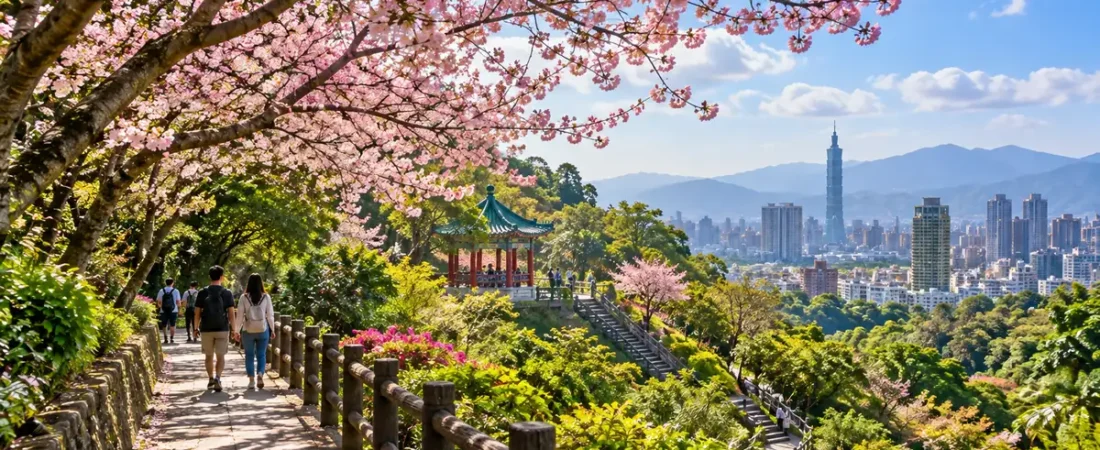
The best time to visit Taipei for many travellers is during autumn, particularly October and November, when conditions are often more comfortable for sightseeing, walking and outdoor activities. Spring can also be attractive, with flowers and pleasant temperatures, although rainfall becomes more frequent. Summer is hot and humid with a risk of typhoons, while winter is cooler and generally mild compared with many northern destinations.
However, there is no single perfect month for everyone. The right time depends on whether you prioritise comfortable sightseeing weather, seasonal scenery, festivals, hiking or lower visitor numbers.
This guide explains Taipei’s seasons month by month so you can decide when to plan your trip.
For general planning, attractions and transport information, read our Taipei Travel Guide. Once you’ve chosen your travel dates, our Where to Stay in Taipei guide can help you choose the right neighbourhood.
Taipei Weather Overview
Taipei has a humid subtropical climate influenced by its location in northern Taiwan and the surrounding mountains.
The city experiences warm to hot conditions for much of the year, substantial humidity and regular rainfall.
Unlike destinations with sharply defined dry and wet seasons, rain can occur in Taipei at any time of year. Carrying a small umbrella is therefore useful even outside the traditionally wetter months.
Taiwan’s official Tourism Administration describes the island as having warm weather throughout the year, with more variable conditions during spring and winter.
Summer brings high temperatures, humidity and occasional typhoons, while autumn is generally associated with cooler, more comfortable conditions.
Best Time to Visit Taipei for Most Travellers
October and November
October and November are among the strongest choices for a first Taipei trip.
Summer’s most intense heat begins to ease, making long sightseeing days, neighbourhood walks and hiking more comfortable.
This is particularly useful if your plans include Elephant Mountain, Dadaocheng, night markets and other outdoor attractions.
Autumn can also be a good time for exploring Taiwan beyond Taipei.
However, pleasant weather naturally attracts visitors, so do not assume that ideal conditions automatically mean the lowest accommodation rates.
Taipei in Spring: March to May
Spring brings warmer temperatures, greenery and seasonal flowers, but also increasing rainfall.
Taiwan’s Tourism Administration identifies March to May as a period when continuous drizzle can sometimes occur and advises travellers to carry an umbrella.
March
March marks the transition away from Taipei’s cooler winter conditions.
Temperatures become more comfortable for outdoor exploration, but the weather can be changeable.
A light jacket is still useful, particularly during cooler evenings or damp days.
Spring flowers can make parks and mountain areas particularly attractive.
March is a good option if you prefer mild conditions and do not mind carrying rain protection.
April
April is generally warmer and increasingly humid.
This can be a pleasant month for combining urban sightseeing with outdoor areas such as Yangmingshan, Maokong and Taipei’s parks.
Rain becomes an important consideration, so build flexibility into your itinerary.
Rather than scheduling every outdoor attraction on a specific day, keep one or two activities interchangeable according to the forecast.
May
By May, Taipei begins to feel considerably warmer and more humid.
Rain can be frequent, and conditions increasingly resemble the approach to summer.
May can still be rewarding, especially if you do not mind humidity, but waterproof footwear or quick-drying shoes can be useful.
Is Spring a Good Time to Visit Taipei?
Yes, particularly for travellers who enjoy greenery and seasonal flowers.
The main compromise is rainfall.
Keep a compact umbrella in your bag and make use of Taipei’s excellent museums, shopping centres, cafés and covered transport system when showers arrive.
Taipei in Summer: June to August
Summer in Taipei is hot, humid and frequently wet.
June through August also falls within the period when typhoons can sometimes approach or affect Taiwan.
That does not mean you should automatically avoid Taipei in summer. The city remains lively, and its extensive indoor attractions and air-conditioned transport make sightseeing possible.
You simply need to plan differently.
June
June is warm, humid and wet.
Outdoor sightseeing is often most comfortable earlier in the morning or later in the afternoon.
Use the hottest part of the day for museums, Taipei 101, shopping areas or a long lunch.
July
July is firmly within Taipei’s hot summer.
Heat and humidity can make walking more tiring than the distances on a map suggest.
Carry water, use sun protection and schedule regular indoor breaks.
If you plan to hike Elephant Mountain, avoid the hottest part of the afternoon. An early morning or later climb can be considerably more comfortable.
August
August remains hot and humid.
Typhoon-related weather is another consideration. Tropical systems do not affect Taipei continuously, but when one approaches Taiwan, conditions can change rapidly and transport or attractions may be disrupted.
Monitor official weather information during your trip and follow local instructions if severe weather is forecast.
Should You Visit Taipei in Summer?
Summer can work well if your travel dates are fixed or you enjoy hot weather.
Taipei’s MRT, shopping centres, museums, restaurants and convenience stores make it easier to escape the heat than in destinations where sightseeing is almost entirely outdoors.
The biggest mistake is trying to maintain the same sightseeing pace you would use in cooler weather.
Slow down, drink plenty of water and take indoor breaks.
Taipei in Autumn: September to November
Autumn is one of the most appealing periods for visiting Taipei.
Taiwan’s Tourism Administration describes September through November as a season of cooler, comfortable weather.
September
September can still feel very summery.
Temperatures and humidity may remain high, and tropical weather systems can still affect Taiwan.
However, conditions gradually begin transitioning towards autumn.
If visiting in September, prepare more like a summer traveller than a winter traveller.
October
October is one of the months many travellers will find especially comfortable.
Conditions are generally better suited to walking and outdoor sightseeing than during midsummer.
This makes October excellent for attractions such as:
- Elephant Mountain
- Dadaocheng
- Taipei’s temple districts
- Maokong
- Yangmingshan
- Riverside areas
- Night markets
The improved outdoor conditions also make it easier to follow our 3 Days in Taipei Itinerary without needing as many heat-related breaks.
November
November is another excellent month for Taipei.
The combination of milder weather and reduced summer humidity makes city exploration more comfortable.
Evenings can feel cooler, particularly in elevated areas, so carrying a light layer is sensible.
Is Autumn the Best Season for Taipei?
For many first-time visitors, yes.
October and November offer an especially attractive balance for sightseeing, food exploration, neighbourhood walking and outdoor activities.
Weather is never guaranteed, however, so rain protection remains useful.
Taipei in Winter: December to February
Taipei’s winter is relatively short and mild compared with winters in many parts of Europe, North America and northern Asia.
However, humidity can make cool weather feel colder than the thermometer suggests.
December
December generally brings cooler conditions that are comfortable for sightseeing.
Walking around Ximending, Dihua Street or Taipei’s temple districts can be much easier than during summer.
Bring layers rather than relying on one heavy coat.
January
January is among Taipei’s cooler periods.
This can be an excellent time for travellers who dislike heat and humidity.
Cool, damp days do occur, so a light waterproof outer layer is useful.
Winter is also an appealing time to experience Taiwan’s hot-spring culture.
Beitou, easily accessible from central Taipei, is particularly attractive on cooler days.
February
February remains relatively cool but begins moving towards spring.
An important consideration is Lunar New Year, whose dates change each year.
The holiday period can affect domestic travel patterns, business hours, transport demand and accommodation availability.
At the same time, festive decorations and traditional celebrations can make the period culturally interesting.
If your trip overlaps Lunar New Year, plan accommodation and longer-distance transportation well ahead and check attraction opening arrangements individually.
Taipei Month-by-Month Guide
January
Best for: Cooler sightseeing and hot springs
Expect: Cool, sometimes damp conditions
Pack: Layers, light waterproof jacket and umbrella
February
Best for: Cooler weather and seasonal celebrations
Expect: Variable conditions and possible Lunar New Year travel demand
Pack: Layers and rain protection
March
Best for: Spring scenery and comfortable walking
Expect: Increasing rainfall and changing temperatures
Pack: Light layers and umbrella
April
Best for: Parks, flowers and outdoor exploration
Expect: Warm weather with regular rain
Pack: Breathable clothing and rain protection
May
Best for: Travellers comfortable with warmth and humidity
Expect: Wetter, increasingly summer-like conditions
Pack: Light clothing, umbrella and quick-drying footwear
June
Best for: Indoor attractions mixed with shorter outdoor periods
Expect: Heat, humidity and rain
Pack: Lightweight clothing, sunscreen and umbrella
July
Best for: Travellers who enjoy tropical summer weather
Expect: Strong heat and humidity
Pack: Breathable clothing, sunscreen and water bottle
August
Best for: Summer travel with flexible plans
Expect: Hot, humid conditions and possible typhoon disruption
Pack: Summer clothing and reliable rain protection
September
Best for: Late-summer travel
Expect: Warm weather with lingering humidity
Pack: Lightweight clothing and rain protection
October
Best for: Overall sightseeing and outdoor activities
Expect: Increasingly comfortable autumn conditions
Pack: Light clothing plus a thin evening layer
November
Best for: Walking, hiking and first-time visits
Expect: Comfortable temperatures and cooler evenings
Pack: Light layers
December
Best for: Cooler city sightseeing
Expect: Mild winter weather and occasional damp conditions
Pack: Layers and a light jacket
Best Time for Taipei Night Markets
Taipei’s night markets operate throughout the year, so there is no single season required to experience them.
However, cooler autumn and winter evenings can make walking through busy markets more comfortable.
Raohe Street, Ningxia and Shilin are among the city’s best-known night-market areas.
Summer evenings remain lively, but heat and humidity can persist after sunset.
Best Time for Hiking
Autumn is particularly appealing for hiking around Taipei.
Trails such as Elephant Mountain are considerably more comfortable when temperatures and humidity ease.
Spring can also be beautiful, but rainfall may make trails slippery.
Summer hiking requires additional caution because of heat, humidity and intense sun exposure.
Carry sufficient water and avoid strenuous activity during the hottest part of the day.
Best Time for Hot Springs
Cooler months are ideal for experiencing Taipei’s hot springs.
Beitou is the city’s most famous hot-spring area and can be reached by public transport.
Taiwan’s official tourism information currently highlights its 2026–2027 Hot Spring & Fine-Cuisine Carnival running from September 2026 into June 2027, illustrating how strongly the cooler seasons are associated with hot-spring travel.
Even though hot springs operate beyond winter, the experience can feel particularly enjoyable when the outside air is cool.
Best Time for Taipei 101 Views
Clear visibility matters more than the season itself.
Taipei’s humidity, rain and clouds can obscure long-distance views at any time of year.
If visiting the Taipei 101 Observatory, check conditions before purchasing or using your ticket whenever your schedule allows.
Similarly, save Elephant Mountain for a clearer day if skyline photography is important to you.
When to Avoid Taipei
There is no month when Taipei must be avoided completely.
Instead, certain periods require different expectations.
Avoid choosing midsummer if you strongly dislike heat and humidity.
Travellers who want extensive outdoor sightseeing may find prolonged spring rain inconvenient.
If a typhoon is forecast during your stay, follow official weather and local government guidance rather than attempting outdoor sightseeing.
Lunar New Year also requires additional planning because domestic travel demand and business schedules can change significantly.
What to Pack for Taipei by Season
Spring
Bring breathable layers, comfortable walking shoes and a compact umbrella.
Summer
Prioritise lightweight clothing, sun protection, a refillable water bottle and rain protection.
Autumn
Lightweight clothes generally work well, with a thin layer for cooler evenings later in the season.
Winter
Pack layers, a light or medium jacket and rain protection. Taipei’s dampness can make cool weather feel more noticeable.
How Weather Should Affect Your Taipei Itinerary
Flexibility is one of the best strategies for visiting Taipei.
Schedule weather-dependent activities such as Elephant Mountain, Maokong and extended neighbourhood walks on the clearest days.
Keep indoor attractions available for rainy periods.
Good wet-weather options include museums, Taipei 101, shopping districts and Taipei’s extensive café scene.
The MRT also helps considerably because many journeys require relatively little exposure to the weather.
So, What Is the Best Time to Visit Taipei?
For most first-time travellers, October and November are excellent months to visit Taipei because autumn generally provides comfortable conditions for exploring the city on foot and enjoying outdoor attractions.
Spring is a strong alternative if you appreciate flowers and greenery and do not mind rainfall.
Winter suits travellers who prefer cooler sightseeing weather and want to combine their visit with hot springs.
Summer offers the same great food, culture and city attractions but requires more preparation for heat, humidity, heavy rain and possible typhoon-related disruption.
Ultimately, Taipei is a year-round destination. Choosing the right season is less about finding a single perfect month and more about matching the weather to the way you like to travel.
Explore more places through our destinations page or browse our complete collection of itineraries.