
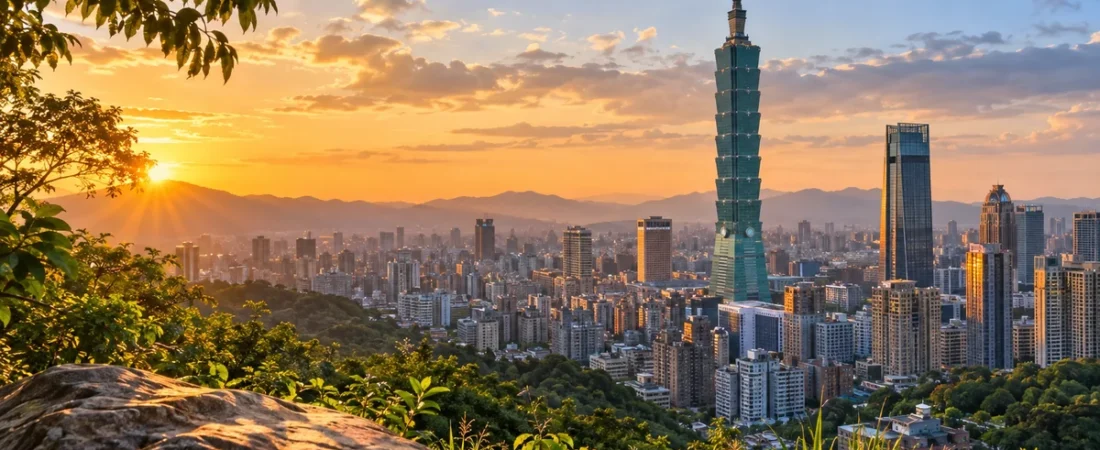
Taipei is a city where traditional temples, lively night markets, forested mountains and futuristic architecture fit naturally into the same trip. Taiwan’s capital is compact enough to explore efficiently yet varied enough to keep first-time visitors busy for several days. This Taipei travel guide covers the city’s essential attractions, neighbourhoods, food, transport and practical planning tips to help you make the most of your visit.
Price note: All prices in this article are approximate and were checked at the time of publication. Prices may change.
Why Visit Taipei?
Taipei combines many of the things travellers look for in an Asian city break without feeling overwhelmingly difficult to navigate. Its metro system makes sightseeing straightforward, food is a major part of everyday life, and mountains and hot-spring areas are within easy reach of the centre.
One moment you can be standing beneath Taipei 101 and the next wandering through an incense-filled temple or ordering dumplings at a neighbourhood restaurant.
Taipei is especially rewarding for travellers interested in food, history, architecture, markets and easy access to nature. It can also work as the starting point for a longer trip around Taiwan.
If you are exploring several cities in Asia, browse our Travel Guides for more destination ideas.
Top Tours & Experiences in Taipei
Discover popular Taipei tours and experiences. Check current availability, ratings and prices before you book.
Affiliate disclosure: If you book through these links, we may earn a commission from Viator. This does not increase the price you pay.
Best Things to Do in Taipei
See the City from Taipei 101
Taipei 101 remains the city’s most recognisable landmark. The 508-metre skyscraper dominates the Xinyi skyline and combines offices, shopping, restaurants and observation areas.
The main observatory provides panoramic views across Taipei and the surrounding mountains. A standard adult observatory ticket is currently NT$600, while access to the 101st floor requires an additional charge.
Even if you decide not to visit the observation deck, walking around the Xinyi district gives you excellent ground-level views of the tower.
For another memorable perspective, head toward nearby Xiangshan, better known as Elephant Mountain.
Hike Elephant Mountain
Elephant Mountain is one of Taipei’s classic viewpoints and one of the best places to photograph Taipei 101.
The trail begins close to Xiangshan MRT station. Although the climb includes plenty of stairs, it is relatively short, making it manageable for many visitors.
Late afternoon is particularly popular because you can watch the skyline change as daylight fades and Taipei’s buildings illuminate. Allow additional time if you want to secure a good viewing position around sunset.
The trail is free, but Taipei’s heat and humidity can make the climb more demanding than its distance suggests. Carry water and wear comfortable shoes.
Explore the National Palace Museum
The National Palace Museum houses one of the world’s major collections of Chinese imperial art and historical objects.
Its enormous collection spans centuries and includes ceramics, calligraphy, paintings, jade and other treasures associated with China’s imperial courts.
The regular admission price for Exhibition Hall I is currently NT$350. The main exhibition hall normally opens Tuesday to Sunday from 9:00 a.m. to 5:00 p.m., although selected Mondays may have special opening arrangements.
Give yourself at least 2 or 3 hours if museums are an important part of your trip.
Visit Longshan Temple
Longshan Temple in Wanhua is one of Taipei’s most atmospheric historic religious sites.
Originally established in the 18th century, the temple remains an active place of worship rather than simply a tourist attraction. Visitors encounter elaborate carvings, incense, offerings and local residents practising traditional religious customs.
Admission is free. When visiting, remember that this is a functioning temple: dress respectfully, avoid obstructing worshippers and keep photography considerate.
Afterwards, explore the surrounding Wanhua neighbourhood, one of Taipei’s oldest urban districts.
Walk Around Chiang Kai-shek Memorial Hall
The vast plaza surrounding Chiang Kai-shek Memorial Hall is one of Taipei’s most recognisable public spaces.
The large white memorial building with its blue roof sits between the National Theater and National Concert Hall, while landscaped gardens and monumental gates create impressive photo opportunities.
Beyond its architecture, the site provides visitors with an opportunity to learn about Taiwan’s complex modern history. Exhibitions and uses of the memorial space have evolved over time, so check current arrangements when you visit.
The outdoor grounds are also enjoyable for a relaxed walk.
Discover Dihua Street and Dadaocheng
For a different side of Taipei, spend a few hours around Dihua Street.
This historic commercial district is lined with traditional shopfronts, restored buildings, tea stores, dried-food merchants, cafés and small boutiques. It is particularly atmospheric around Lunar New Year, when the neighbourhood becomes one of the city’s busiest shopping areas.
Continue towards Dadaocheng Wharf beside the Tamsui River. The riverside is pleasant around sunset and provides a welcome contrast to Taipei’s busy central streets.
Experience Ximending
Ximending is one of Taipei’s busiest entertainment districts.
Neon signs, fashion stores, cinemas, restaurants and street-food vendors make the neighbourhood particularly lively in the evening. The pedestrianised streets are excellent for people-watching and provide an energetic introduction to contemporary Taipei.
Look for the historic Red House, browse side streets away from the busiest intersections and arrive hungry — Ximending has everything from inexpensive snacks to sit-down restaurants.
Explore Taipei’s Night Markets
Night markets are an essential part of the Taipei experience.
Shilin Night Market
Shilin is Taipei’s most famous night-market area and attracts both visitors and local residents. Expect food stalls, shops, games and busy lanes that remain active well into the evening.
Raohe Street Night Market
Raohe Street is more compact and easy to explore. The market stretches along one main street near Songshan Station and Ciyou Temple.
Popular foods include pepper buns, grilled meats, dumplings, sweet potato balls and Taiwanese desserts.
Ningxia Night Market
Ningxia is smaller than Shilin but particularly appealing for travellers who want to concentrate on food. Its manageable size makes it easy to combine with nearby Dadaocheng.
Bring cash in small denominations because many traditional market stalls remain cash-oriented.
What to Eat in Taipei
Taipei deserves to be explored through its food as much as through its landmarks.
Beef noodle soup is one of the city’s signature comfort foods, with countless restaurants serving their own versions. Xiao long bao — delicate steamed dumplings filled with meat and broth — are another Taipei favourite.
Other dishes worth looking for include lu rou fan, or braised pork rice; scallion pancakes; oyster omelettes; Taiwanese fried chicken; gua bao; and freshly prepared dumplings.
For dessert, try shaved ice, tofu pudding or traditional pastries. Bubble tea originated in Taiwan and remains easy to find throughout the capital.
Convenience stores are also unusually useful in Taiwan, offering inexpensive drinks, snacks, simple meals and everyday essentials.
Getting Around Taipei
Taipei is one of the easier major Asian cities to navigate using public transport.
Taipei Metro
The MRT connects most areas visitors are likely to explore. Stations are generally clean, clearly marked and easy to use, with signage and announcements that make the system accessible to international travellers.
Single-journey fares currently range from NT$20 to NT$65 depending on distance.
An EasyCard or other compatible stored-value card can make frequent public-transport journeys more convenient because you can simply tap when entering and leaving the system.
Buses
Taipei’s extensive bus network fills gaps between MRT stations and is particularly useful for attractions away from the central metro network.
Navigation apps make buses considerably easier for first-time visitors than they once were.
Taipei FunPASS
Visitors planning heavy use of public transport can also investigate the Taipei FunPASS. Transportation versions provide unlimited travel on participating Taipei Metro services, city buses and selected Taiwan Tourist Shuttle routes during their validity period.
The Airport MRT is not included in the standard unlimited Taipei Metro coverage, so check exactly what a pass covers before buying it.
Getting from Taoyuan Airport to Taipei
Most international visitors arrive through Taiwan Taoyuan International Airport.
The Taoyuan Airport MRT is usually one of the simplest ways to reach central Taipei. Services connect the airport with A1 Taipei Main Station, where travellers can transfer to the city’s wider transport network.
The standard fare between the airport and Taipei Main Station is currently NT$160.
Taxis and private transfers are alternatives for travellers carrying substantial luggage or arriving in groups, but they cost considerably more than the train.
Taipei also has Songshan Airport, located much closer to the city centre and connected directly to the MRT network. It primarily serves domestic and selected regional international routes.
Best Areas to Stay in Taipei
Choosing accommodation close to an MRT station is generally more important than staying beside a particular attraction.
Ximending
Ximending works well for first-time visitors who want restaurants, shopping and nightlife immediately outside their accommodation. It is energetic and conveniently connected to other parts of the city.
Taipei Main Station
Staying near Taipei Main Station is especially practical for travellers planning day trips or onward rail journeys. MRT, conventional rail, high-speed rail and airport connections converge around this area.
Xinyi
Xinyi is Taipei’s modern business and shopping district and is home to Taipei 101. It suits travellers who prefer contemporary hotels, malls, restaurants and polished surroundings.
Zhongshan
Zhongshan offers a good balance of central location, restaurants, cafés and transport connections. Its atmosphere is generally calmer than Ximending while still providing easy access to major sights.
A dedicated Taipei accommodation guide will be added to TravelersCity as we build the rest of the Taipei destination collection.
Best Time to Visit Taipei
Taipei can be visited throughout the year, but the experience changes considerably with the seasons.
Spring generally brings warm weather and increasing rainfall. Summer is hot, humid and frequently wet, while tropical cyclones can affect Taiwan during the warmer months.
Autumn often provides comfortable conditions for sightseeing, while winter is cooler and can be damp. Taipei’s winter temperatures are mild compared with many northern destinations, but humidity can make cool days feel colder than expected.
Weather in northern Taiwan can change quickly, so carrying a compact umbrella is useful during much of the year.
How Many Days Do You Need in Taipei?
3 full days is a good starting point for a first visit.
With 3 days, you can combine major landmarks such as Taipei 101, Longshan Temple and the National Palace Museum with night markets and neighbourhood exploration.
Four or five days provide a more relaxed experience and allow time for places such as Beitou, Maokong or day trips beyond central Taipei.
Taipei also works well as a base for exploring northern Taiwan, including destinations such as Jiufen and the Pingxi area.
Practical Taipei Travel Tips
Taipei is generally straightforward for independent travellers, but a few habits make the experience easier.
Carry some cash because smaller restaurants, markets and traditional shops may not accept international cards. A stored-value transport card is useful for public transport and many everyday purchases.
Comfortable walking shoes are important. Even with an excellent metro network, sightseeing often involves significant walking.
Keep a lightweight rain layer or umbrella in your day bag, especially during wetter periods. In summer, water, sunscreen and breathable clothing are equally important.
English signage is widespread across the transport system and major visitor attractions, although knowing a few basic Mandarin phrases can still be helpful.
Most importantly, leave room in your schedule for spontaneous food stops and neighbourhood walks. Taipei’s appeal is not limited to famous attractions; some of its most memorable moments happen in temple courtyards, market lanes, small restaurants and quiet side streets.
Is Taipei Worth Visiting?
Taipei is an excellent destination for travellers who want a city that combines food, culture, history, efficient public transport and easy access to nature.
Its major landmarks are impressive, but the city’s everyday atmosphere is equally rewarding. A morning can begin with a traditional breakfast, continue through an imperial art collection and historic temple, and finish with sunset views and dinner at a night market.
That variety makes Taipei suitable for both a short city break and the beginning of a longer journey through Taiwan.
As we expand our Taipei collection, TravelersCity will also cover where to stay, a 3-day itinerary, the best time to visit, realistic travel costs and the best free experiences around the city.
Book Your Taipei Experiences
Ready to start planning? Compare popular Taipei tours and activities, check current prices and availability, and book the experiences that suit your trip.
Affiliate disclosure: If you book through these links, we may earn a commission from Viator. This does not increase the price you pay.
Explore more places through our destinations page or browse our complete collection of itineraries.