
Spending 3 days in Taipei gives you enough time to experience Taiwan’s capital without rushing through every attraction. You can explore historic temples and neighbourhoods, see Taipei 101, eat your way through night markets, visit the National Palace Museum and still make time for mountain or gondola views.
This 3-day Taipei itinerary is designed for first-time visitors and groups nearby attractions together to reduce unnecessary travel. It combines Taipei’s essential sights with food, culture and neighbourhood exploration while leaving enough flexibility to enjoy the city at your own pace.
Before your trip, read our Taipei Travel Guide for an overview of transport, attractions, food and practical planning. If you have not booked accommodation yet, our Where to Stay in Taipei guide compares the city’s best neighbourhoods.
Price note: All prices in this article are approximate and were checked at the time of publication. Prices may change.
Top Tours & Experiences in Taipei
Discover popular Taipei tours and experiences. Check current availability, ratings and prices before you book.
Affiliate disclosure: If you book through these links, we may earn a commission from Viator. This does not increase the price you pay.
Taipei 3-Day Itinerary at a Glance
This itinerary divides Taipei into three different experiences.
Day 1: Longshan Temple, historic Wanhua, Chiang Kai-shek Memorial Hall, Ximending and a night market.
Day 2: Taipei 101, Xinyi, Elephant Mountain and Raohe Street Night Market.
Day 3: National Palace Museum followed by Maokong and a relaxed final evening.
You can change the order according to weather. Save Elephant Mountain and Maokong for clearer days whenever possible.
Day 1: Historic Taipei, Temples and Ximending
Your first day focuses on Taipei’s older neighbourhoods before ending in one of its liveliest entertainment districts.
Start at Longshan Temple
Begin the morning at Longshan Temple in Wanhua.
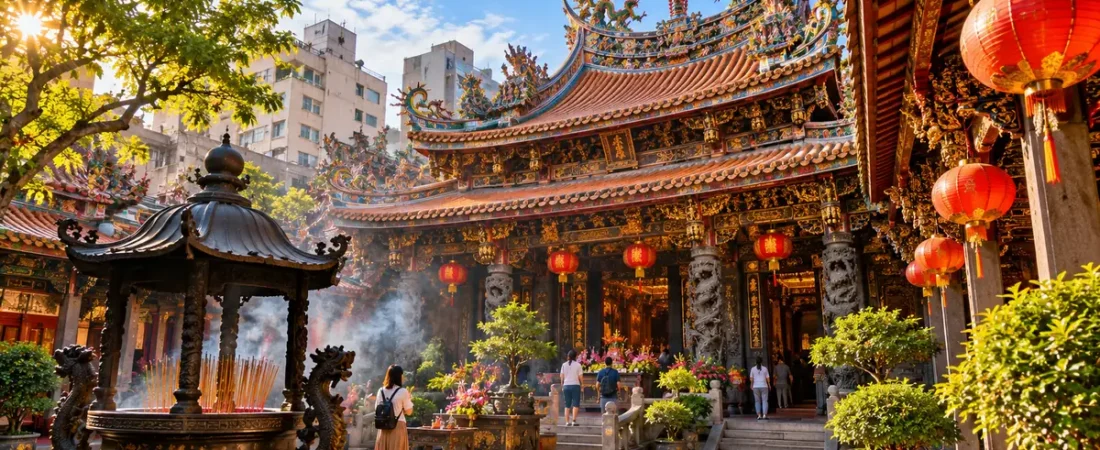
The temple is one of Taipei’s best-known religious sites and provides a striking introduction to the city’s traditional culture. Elaborate roof decorations, incense, carved stone columns and worshippers making offerings create a completely different atmosphere from Taipei’s modern commercial districts.
Longshan remains an active place of worship, so visit respectfully and avoid interfering with religious ceremonies.
Admission is free.
Allow around 30–45 minutes, although photographers and travellers interested in traditional architecture may want longer.
Explore Historic Wanhua
After visiting Longshan Temple, spend some time walking around Wanhua.
This is one of Taipei’s oldest urban areas, and exploring on foot reveals temples, markets, traditional shops and streets that feel very different from the modern eastern districts.
Bopiliao Historic Block is a worthwhile nearby stop. Its restored architecture provides an opportunity to see another side of Taipei’s urban history.
Rather than racing between individual attractions, use this part of the morning for a relaxed neighbourhood walk.
Head to Chiang Kai-shek Memorial Hall
Take the MRT towards Chiang Kai-shek Memorial Hall.
The enormous complex is one of Taipei’s most recognisable public spaces. Its white memorial building and blue roof overlook a broad plaza framed by the National Theater and National Concert Hall.
Walk through the monumental gates, explore the landscaped grounds and allow time to appreciate the scale of the complex.
The outdoor areas are particularly photogenic on clear days.
The memorial also offers an opportunity to engage with Taiwan’s complicated modern political history. Exhibitions and the interpretation of the site have evolved over time, so pay attention to current displays during your visit.
Allow approximately one to one-and-a-half hours.
Lunch: Try Taiwanese Food
By lunchtime, look for a restaurant around Zhongzheng, Ximending or the streets between your next stops.
Taipei is a city where some of the most memorable meals come from modest restaurants rather than expensive dining rooms.
Good dishes to try include:
- Beef noodle soup
- Braised pork rice
- Dumplings
- Scallion pancakes
- Taiwanese fried chicken
- Gua bao
- Noodles
- Seasonal vegetable dishes
Do not worry about trying every famous dish in one meal. You will have several opportunities during the next 3 days.
Afternoon: Explore Ximending
Spend the afternoon around Ximending.
This pedestrian entertainment district is packed with shops, restaurants, cafés, cinemas and street-food vendors.
The atmosphere is completely different from your morning in Wanhua despite the relatively short distance between them.
See the Red House
Stop at the historic Red House near Ximen MRT station.
The distinctive red-brick building is one of the neighbourhood’s landmarks and today forms part of Ximending’s creative and cultural scene.
From there, wander through the pedestrian streets rather than following a strict route.
Ximending is best experienced by exploring whatever catches your attention.
Evening: Night-Market Food
Night markets are central to Taipei’s food culture, so make your first evening a casual food experience.
You could remain around Ximending or travel to Ningxia Night Market.
Ningxia is relatively compact and particularly food-focused, making it manageable after a full day of sightseeing.
Try several small dishes rather than buying one large meal.
Popular night-market foods can include grilled meats, dumplings, oyster omelettes, sweet potato balls, fried snacks and Taiwanese desserts.
Carry cash in small denominations because many traditional vendors remain cash-oriented.
After dinner, return to your hotel and rest. Day two includes one of Taipei’s best short hikes.
Day 2: Taipei 101, Xinyi and Elephant Mountain
Day two explores modern Taipei and its famous skyline.
Morning: Taipei 101
Start at Taipei 101 before the surrounding shopping district becomes busier.
At 508 metres tall, Taipei 101 remains Taiwan’s most recognisable skyscraper.
The observatory provides panoramic views across the Taipei Basin and surrounding mountains.
The standard adult ticket for the main observatory is currently NT$600. The observatory is currently open from 10:00 a.m. until 9:00 p.m.
Allow approximately one-and-a-half to two hours if you plan to visit the observation levels.
Weather matters. On very cloudy days, visibility can be limited, so consider rearranging this part of your itinerary if the forecast looks poor.
If you prefer not to pay for the observatory, you can still explore the surrounding district and enjoy excellent ground-level views of the tower.
Explore Xinyi
After Taipei 101, spend some time walking through Xinyi.
This is Taipei’s modern commercial centre, filled with shopping malls, restaurants, offices, public spaces and contemporary architecture.
The contrast with yesterday’s historic Wanhua neighbourhood demonstrates just how varied Taipei can feel.
Stop for lunch around Xinyi before continuing.
You will find everything from inexpensive food courts to international restaurants and higher-end dining.
Afternoon: Take a Break Before Elephant Mountain
Do not underestimate Taipei’s heat and humidity.
If you are visiting during warmer months, use the early afternoon for indoor attractions, cafés or shopping before hiking later in the day.
Elephant Mountain is most rewarding towards late afternoon when temperatures begin to ease and the light improves.
Hike Elephant Mountain
Travel to Xiangshan MRT station and follow signs towards the Elephant Mountain trail.
The trail climbs steeply through a series of steps, but you do not need to hike for hours to reach excellent viewpoints.
The famous view places Taipei 101 against the surrounding city and mountains.
Admission is free.
Wear comfortable shoes and carry drinking water.
During hot or humid weather, climb slowly and take breaks. Although the route is relatively short, the stairs can feel demanding.
Stay for Sunset
If conditions are clear, try to reach the viewpoint before sunset.
Watching Taipei transition from daylight to evening is one of the highlights of this itinerary.
As darkness falls, Taipei 101 and the surrounding towers begin to illuminate.
Sunset is also the busiest period, so expect other visitors at the most popular viewing areas.
Evening: Raohe Street Night Market
After descending Elephant Mountain, head towards Raohe Street Night Market.
Raohe is one of Taipei’s classic night markets and is easy to navigate because stalls line a relatively straightforward street.
Ciyou Temple beside the market entrance is also worth seeing, particularly when illuminated at night.
Arrive hungry.
Pepper buns are one of Raohe’s best-known foods, but you will find a wide variety of grilled foods, dumplings, noodles, desserts and drinks.
After two busy days, take the MRT back to your hotel rather than adding another attraction.
Day 3: National Palace Museum and Maokong
Your final day combines one of Taipei’s most important museums with mountain scenery.
Morning: National Palace Museum
Start at the National Palace Museum.
The museum contains an extraordinary collection of Chinese art and historical objects accumulated across centuries.
Its collections include ceramics, paintings, calligraphy, jade, bronze objects and imperial treasures.
The regular admission ticket for Exhibition Hall I is currently NT$350.
The museum normally opens Tuesday through Sunday from 9:00 a.m. until 5:00 p.m., with special Monday openings on selected dates. If your third day falls on a Monday, check the current calendar before travelling there.
Allow at least 2 to 3 hours.
Trying to see everything is unrealistic. Instead, focus on galleries that interest you most and take breaks when necessary.
Lunch
After the museum, have lunch before travelling towards Maokong.
The afternoon involves additional transport, so this is a good point to sit down and recharge.
If weather conditions are poor, consider replacing Maokong with additional indoor attractions or neighbourhood exploration.
Afternoon: Ride the Maokong Gondola
Travel towards Taipei Zoo station and board the Maokong Gondola.
The gondola climbs into the hills southeast of central Taipei and offers a completely different perspective on the city.
A regular single-journey ticket is currently NT$180 per person.
Crystal cabins with transparent flooring are also available for an additional charge, but regular cabins provide excellent views.
Gondola services can be affected by weather, particularly strong winds or thunderstorms, so check operating conditions before travelling.
Explore Maokong
Maokong is known for tea cultivation and hillside tea houses.
Once you arrive, spend time walking around the area and enjoying the mountain atmosphere.
You do not need a complicated sightseeing schedule here. The appeal is the change of pace after several days in central Taipei.
Stop for tea, walk along one of the accessible paths or simply enjoy the views.
If you are travelling during hot weather, late afternoon is particularly pleasant.
Final Evening in Taipei
Return to central Taipei for your final evening.
There are several good ways to finish your trip.
Option 1: Return to Your Favourite Night Market
If night-market food has been a highlight, revisit your favourite or try another market.
Shilin is the most famous option and offers a much larger commercial area than Ningxia or Raohe.
Option 2: Visit Dadaocheng
For something calmer, head towards Dadaocheng and Dihua Street.
Historic shopfronts, tea merchants, cafés and traditional businesses make this one of Taipei’s most atmospheric neighbourhoods.
Continue towards the riverside around sunset if timing allows.
Option 3: Spend the Evening in Zhongshan
Zhongshan is ideal for a relaxed final dinner.
The neighbourhood contains restaurants, cafés, boutiques and attractive streets that are enjoyable after dark without the intensity of Ximending.
Getting Around During Your 3 Days in Taipei
Taipei’s MRT will handle most journeys in this itinerary.
Single-journey fares vary according to distance. A stored-value EasyCard or another compatible transport card makes repeated journeys simpler because you can tap in and out rather than purchasing individual tickets each time.
Buses are useful for destinations that are not directly beside MRT stations, including the National Palace Museum.
Walking remains an important part of sightseeing, so comfortable shoes are essential.
Taipei can also be hot and humid. Carry water and take breaks rather than trying to follow an overly rigid schedule.
What to Do If It Rains
Rain should not ruin a Taipei trip.
Taipei 101, museums, shopping centres, cafés and underground shopping areas provide plenty of indoor alternatives.
If heavy rain is forecast, move Elephant Mountain or Maokong to whichever day offers better conditions.
The National Palace Museum is particularly useful for a wet morning or afternoon.
Keep a compact umbrella with you even when the day begins dry because Taipei’s weather can change quickly.
Can You See Taipei in 3 Days?
3 days is enough for a rewarding first introduction to Taipei.
This itinerary covers historic neighbourhoods, temples, Taipei 101, night markets, mountain views and one of the city’s major museums without turning every day into a race.
However, Taipei easily rewards a longer stay.
With four or five days, you can add Beitou’s hot springs, more time around Dadaocheng, Taipei Zoo, additional museums or excursions beyond the city.
Popular day-trip possibilities outside central Taipei include Jiufen and destinations along the Pingxi area.
Tips for Your Taipei Itinerary
Start early when visiting major attractions, particularly on weekends.
Keep some cash for markets and smaller restaurants.
Use MRT stations as reference points when planning each day. Taipei addresses can initially look complicated, but the metro makes navigating between neighbourhoods straightforward.
Avoid scheduling Elephant Mountain immediately after a large meal, especially during humid weather.
Check weather conditions before travelling to Maokong because gondola operations can be affected by poor weather.
Most importantly, leave some unscheduled time.
Taipei is a city where wandering into a temple, small restaurant, traditional shop or quiet side street can become just as memorable as visiting the major landmarks.
Final Thoughts on 3 Days in Taipei
A well-planned 3 days in Taipei provides an excellent introduction to Taiwan’s capital.
Day one introduces the city’s traditional side through Longshan Temple, Wanhua and historic public spaces before ending among the bright streets and food stalls of central Taipei.
Day two reveals the modern city through Taipei 101, Xinyi and the panoramic views from Elephant Mountain.
Day 3 adds deeper cultural context at the National Palace Museum before escaping into the green hills around Maokong.
Together, these experiences show why Taipei works so well for first-time visitors: history, food, modern architecture, efficient transport and nature all exist within easy reach of one another.
Book Your Taipei Experiences
Ready to start planning? Compare popular Taipei tours and activities, check current prices and availability, and book the experiences that suit your trip.
Affiliate disclosure: If you book through these links, we may earn a commission from Viator. This does not increase the price you pay.
Explore more places through our destinations page or browse our complete collection of itineraries.