
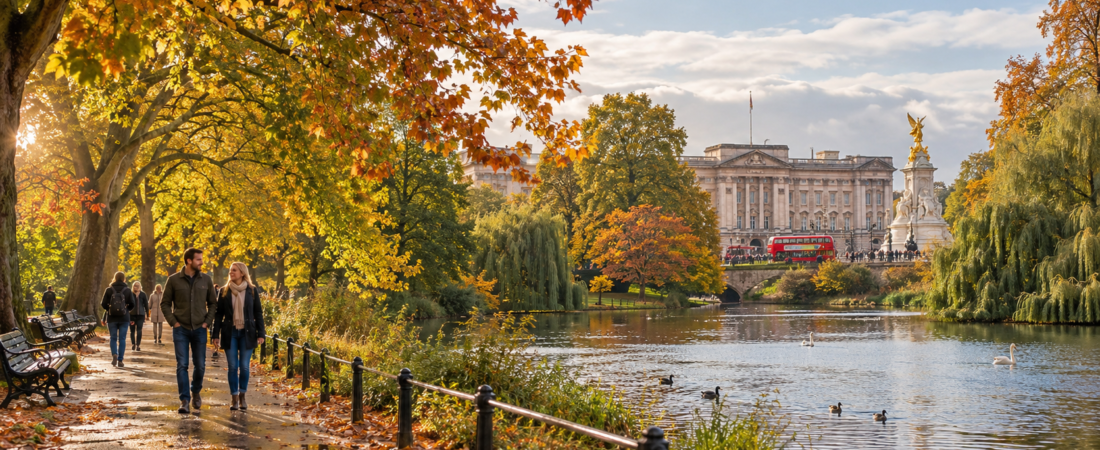
The best time to visit London is generally from late April to June or from September to early October. These periods provide a useful balance of mild weather, longer daylight hours and manageable visitor numbers.
Summer offers the warmest weather and longest days, but it is also one of the busiest and most expensive periods. Winter can provide lower accommodation prices, except during the Christmas and New Year holidays.
This guide compares London’s seasons, weather, crowds, prices and major events to help you choose the right time for your trip.
Quick Guide to the Best Time to Visit London
- Best overall weather: May to June
- Best balance of weather and crowds: May and September
- Best for lower prices: January to March
- Best for parks and gardens: April to June
- Best for outdoor events: June to August
- Best for autumn colours: October to early November
- Best for Christmas atmosphere: Late November to December
- Quietest period: January and February
London can be visited throughout the year because museums, theatres, restaurants and most major attractions remain available in every season.
Spring in London: March to May
Spring is one of the best seasons for sightseeing in London. Temperatures gradually become milder, daylight hours increase and parks begin to bloom.
Average temperatures are generally around 11°C to 15°C during much of the season, although March can feel colder and May can occasionally be considerably warmer.
Rain remains possible, so carry a small umbrella or waterproof jacket.
March
March marks the beginning of spring, but the weather can still feel cold and unpredictable.
Crowds are generally lower than during Easter and summer. Accommodation prices may be more reasonable, particularly earlier in the month.
March is suitable for museums, markets and sightseeing routes that combine indoor and outdoor attractions.
April
April brings longer days, spring flowers and generally milder conditions. Temperatures often range from approximately 9°C to 15°C.
Visitor numbers and accommodation prices can increase around Easter. Public transport and business hours may also change during the Easter holiday period.
May
May is one of the best months to visit London. Parks and gardens are colourful, daylight hours are long and temperatures are usually comfortable for walking.
Bank holiday weekends and the school half-term period can produce larger crowds and higher prices. Travelling during the middle of the week may provide a calmer experience.
Advantages of visiting in spring
- Mild sightseeing weather
- Longer daylight hours
- Colourful parks and gardens
- Lower crowds than peak summer
- Good balance of indoor and outdoor activities
Disadvantages of visiting in spring
- Unpredictable rain
- Cooler evenings
- Higher prices around Easter and bank holidays
- Changing temperatures during the same day
Summer in London: June to August
Summer provides London’s longest daylight hours and warmest average temperatures.
June is often particularly attractive because the days are long and the busiest school holiday period has not fully begun. July and August bring more families, international visitors and outdoor events.
Average summer temperatures are generally comfortable, but hotter periods can rise above 30°C. Some hotels and older buildings may not have air conditioning.
June
June is one of the best months for outdoor sightseeing, parks, river walks and evening activities.
The city becomes progressively busier throughout the month. Reserve accommodation and major attractions early.
July
July is part of London’s peak season. Visitors can enjoy long days, parks, festivals and outdoor performances.
Major attractions, transport services and central neighbourhoods can become crowded. Hotel prices are normally high, particularly during important sporting and cultural events.
August
August remains warm and busy because it coincides with school holidays in Britain and other countries.
Average temperatures can range from approximately 18°C to 23°C, although conditions vary. Popular attractions should be booked well in advance.
The Notting Hill Carnival, usually held around the August bank holiday, brings large crowds and transport changes to west London.
Advantages of visiting in summer
- Long daylight hours
- Warm weather
- Outdoor festivals and events
- Excellent conditions for parks and river walks
- More evening sightseeing time
Disadvantages of visiting in summer
- High accommodation prices
- Large crowds
- Longer queues at attractions
- Possible hot weather
- Busy public transport
Autumn in London: September to November
Autumn begins with relatively mild weather before becoming cooler and darker during October and November.
September is one of the best times to visit London because the busiest summer period begins to ease while the weather often remains comfortable.
Parks become colourful later in the season, and Christmas lights begin appearing during November.
September
September provides a strong balance of weather, daylight and visitor numbers.
The beginning of the month may remain busy, but crowds generally decrease after the main summer holiday period. Early booking is still recommended because conferences, fashion events and cultural festivals can affect hotel availability.
October
October brings cooler weather and attractive autumn colours in parks such as Hyde Park, St James’s Park and Greenwich Park.
Average temperatures during parts of October can range from approximately 10°C to 16°C. Daylight becomes noticeably shorter after the clocks change near the end of the month.
The school half-term holiday can temporarily increase family visitor numbers.
November
November is cooler, darker and generally quieter than early autumn. Seasonal lights and Christmas displays begin appearing around central London.
Bonfire Night events take place around the beginning of the month, while festive markets and winter activities start later.
Rain and cold winds can make outdoor sightseeing less comfortable, so include museums and galleries in your itinerary.
Advantages of visiting in autumn
- Pleasant weather in September
- Fewer visitors after summer
- Attractive autumn colours
- Cultural events and exhibitions
- Christmas decorations from November
Disadvantages of visiting in autumn
- Shorter daylight hours
- Increasing rain and cooler temperatures
- Busy school half-term period
- Higher prices during major events
Winter in London: December to February
Winter offers festive celebrations followed by one of London’s quietest and most economical travel periods.
Typical temperatures generally range from approximately 2°C to 10°C. Snow is possible but is not common enough to plan around.
Days are short, so schedule outdoor attractions during daylight and museums or theatre performances later.
December
December is popular for Christmas lights, decorated shopping streets, markets, theatre performances and seasonal events.
Despite the winter weather, accommodation can be expensive because demand is high. Christmas and New Year transport schedules may be reduced, and some attractions close on specific holidays.
January
After New Year, January is usually one of the quietest and least expensive times to visit London.
The weather is cold and daylight hours are limited, but museums, galleries, restaurants and theatres provide many indoor activities.
Some attractions may close temporarily for maintenance, so check schedules before travelling.
February
February remains relatively quiet, although prices and visitor numbers can increase around Valentine’s Day and the school half-term holiday.
The weather is still cold, but daylight gradually increases. February can be a practical choice for travellers prioritising museums, theatre and lower accommodation costs.
Advantages of visiting in winter
- Lower prices in January and February
- Smaller crowds after New Year
- Christmas lights and festive events in December
- Excellent museums and indoor attractions
- Potential theatre and accommodation offers
Disadvantages of visiting in winter
- Short daylight hours
- Cold and wet weather
- Higher prices during Christmas and New Year
- Possible holiday closures
- Less comfortable outdoor sightseeing
London Weather Throughout the Year
London’s weather can change quickly in every season. A sunny morning may be followed by rain, wind or cooler temperatures.
Pack layers that can be added or removed during the day. A light waterproof jacket is generally more practical than relying only on a heavy coat.
Useful items include:
- Compact umbrella
- Waterproof jacket
- Comfortable walking shoes
- Light layers
- Warm outer layer in winter
- Sun protection during summer
- Reusable water bottle
Rain occurs throughout the year rather than being limited to one particular season.
When Is London Most Crowded?
London’s peak visitor period usually runs from June through September.
Crowds also increase during:
- Easter holidays
- May bank holidays
- British school holidays
- Major sporting events
- August bank holiday
- October school half-term
- Christmas and New Year
Westminster, Buckingham Palace, Tower Bridge, the Tower of London and the British Museum are busy throughout the year.
Visit major outdoor landmarks early in the morning and reserve timed attractions in advance.
When Is London Cheapest?
January through March is generally the cheapest period to visit London, excluding special events and school holidays.
Hotel and flight prices often decrease after the Christmas and New Year period. November can also provide reasonable prices before the busiest festive weeks.
To save money:
- Compare several neighbourhoods
- Stay near a Zone 1 or Zone 2 station rather than beside a landmark
- Book cancellable accommodation early
- Travel during the week
- Use free museums and public parks
- Avoid major event dates
- Reserve popular attractions online
Read our guide to where to stay in London before selecting your accommodation.
Best Time for First-Time Visitors
May, June and September are the strongest choices for a first London trip.
These months generally provide enough daylight for a full sightseeing schedule while avoiding the coldest winter conditions.
May and September often offer a better balance of weather and crowds. June provides longer evenings but can be busier and more expensive.
Use our 3-day London itinerary to organise your first visit efficiently.
Best Time for Families
Late spring and summer provide long daylight hours and suitable conditions for parks, outdoor attractions and river activities.
However, accommodation prices rise during school holidays. Families seeking better value can consider May or September when school schedules allow.
South Kensington is particularly convenient for families because several major museums and parks are located nearby.
Best Time for Museums and Theatre
London’s museums and theatres can be enjoyed throughout the year.
January, February and November are useful choices for travellers who prefer indoor cultural activities and smaller crowds. December offers a festive atmosphere but usually has greater demand for popular performances.
Reserve major West End productions in advance or check authorised ticket sellers for availability.
Best Time for Parks and Gardens
April through June is excellent for flowers and fresh spring growth.
October and early November provide autumn colours in Hyde Park, St James’s Park, Regent’s Park, Greenwich Park and other green spaces.
Summer is suitable for picnics and long evenings, although parks become busy during warm weekends.
Best Time for Christmas in London
Visit from late November through December for Christmas lights, decorated shops, seasonal markets and winter events.
Oxford Street, Regent Street, Carnaby Street and Covent Garden are popular for festive displays.
Book accommodation and theatre tickets early because December is not normally a low-cost period.
Month-by-Month Summary
- January: Cold, quiet and generally economical
- February: Cool with lower crowds outside school holidays
- March: Early spring and improving daylight
- April: Flowers, milder weather and Easter crowds
- May: Excellent weather balance and colourful parks
- June: Long days and outdoor events
- July: Warm, lively and crowded
- August: Busy school holidays and major events
- September: Mild weather with decreasing crowds
- October: Autumn colours and cooler conditions
- November: Quieter sightseeing and early Christmas displays
- December: Festive atmosphere with high seasonal demand
Final Thoughts
The best time to visit London depends on your priorities.
Choose May or September for the strongest balance of weather and crowds. Visit from June to August for long days and outdoor events, but expect higher prices. January and February are better for lower costs and indoor attractions.
Late November and December provide the city’s most festive atmosphere, while April, May and October are excellent for parks and seasonal colours.
For complete advice about attractions, transportation and trip planning, read our London travel guide.