
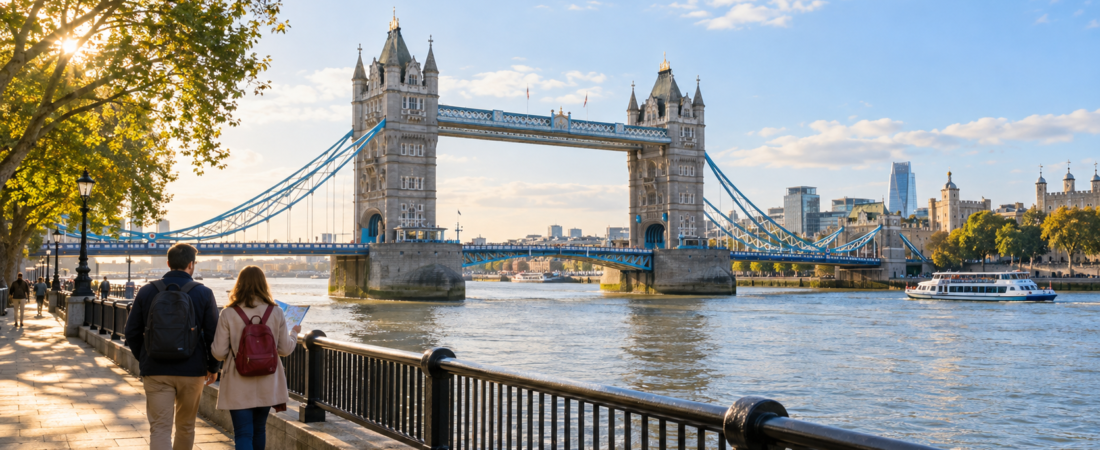
3 days in London gives first-time visitors enough time to experience the city’s royal landmarks, historic attractions, famous museums and distinctive neighbourhoods.
This itinerary groups nearby attractions together to reduce unnecessary travel. It includes a mixture of paid landmarks, free museums, public parks and riverside walks.
Price note: All prices in this article are approximate and were checked at the time of publication. Prices may change.
Overview of Your 3-Day London Itinerary
- Day 1: Westminster, Buckingham Palace, Trafalgar Square and the South Bank
- Day 2: Tower of London, Tower Bridge, Borough Market and St Paul’s Cathedral
- Day 3: British Museum, Covent Garden, Notting Hill and Hyde Park
Reserve popular ticketed attractions before travelling and check their official opening times shortly before your visit.
Top Tours & Experiences in London
Discover popular London tours and experiences. Check current availability, ratings and prices before you book.
Affiliate disclosure: If you book through these links, we may earn a commission from Viator. This does not increase the price you pay.
Day 1: Westminster and the South Bank
Your first day focuses on London’s most recognisable landmarks. Most of this route can be completed on foot.
Start at Westminster
Begin the morning at Westminster Underground station. When you leave the station, you will be close to the Houses of Parliament and Elizabeth Tower.
The bell inside Elizabeth Tower is called Big Ben, although the name is commonly used for the complete tower.
Walk across Westminster Bridge for excellent views of the Palace of Westminster beside the River Thames. Morning generally provides a calmer atmosphere than later in the day.
Visit Westminster Abbey
Return across the bridge and continue to Westminster Abbey. This historic church has hosted royal coronations, weddings and important national ceremonies.
Entry requires a ticket. Allow approximately 90 minutes to two hours if you want to explore the interior.
Travellers who do not wish to enter can still admire the abbey’s exterior and surrounding architecture.
Walk Through St James’s Park
From Westminster Abbey, walk along Great George Street towards St James’s Park.
The park provides a pleasant green route between Westminster and Buckingham Palace. Its lake, trees and landscaped gardens offer a peaceful break from the surrounding traffic.
See Buckingham Palace
Continue through the park to Buckingham Palace.
View the palace from the Victoria Memorial and walk around the public areas outside the gates. If you hope to see the Changing of the Guard, check the official schedule before your visit because the ceremony does not necessarily happen every day.
Arrive early when a ceremony is scheduled because the area becomes crowded.
Lunch Near Victoria or St James’s
Restaurants immediately beside major landmarks can be expensive. Walk towards Victoria, St James’s or Piccadilly for a wider selection of cafés, pubs and casual restaurants.
A supermarket meal or takeaway lunch in the park can help reduce costs.
Walk to Trafalgar Square
After lunch, walk along The Mall or through St James’s towards Trafalgar Square.
The square is surrounded by historic buildings and contains Nelson’s Column. It is also home to the National Gallery.
Visit the National Gallery
The National Gallery displays major European paintings and offers free general admission to its permanent collection.
You can spend an hour seeing selected galleries or remain longer if you are particularly interested in art. Temporary exhibitions may require separate tickets.
Explore Covent Garden
Walk from Trafalgar Square towards Covent Garden. Explore the covered market, surrounding streets and performance areas.
Covent Garden is a convenient place for an early dinner, although prices around the market can be higher than in nearby streets.
Evening on the South Bank
Finish the day beside the River Thames.
Cross to the South Bank using the Golden Jubilee Bridges or Waterloo Bridge. Walk past the London Eye and enjoy illuminated views of Westminster across the river.
Riding the London Eye is optional and requires a ticket. The riverside walk itself is free.
Day 2: Historic London and the River Thames
Day two explores the Tower of London, Tower Bridge, Borough Market and the City of London.
Visit the Tower of London
Start early at the Tower of London. The nearest Underground station is Tower Hill.
The Tower has served as a fortress, royal residence and prison. Today, visitors can see its historic buildings, exhibitions and the Crown Jewels.
Allow at least 3 hours for a comfortable visit. Booking an early entry time can help you see the most popular sections before the site becomes busier.
Walk Across Tower Bridge
After leaving the Tower, walk towards Tower Bridge.
Crossing the bridge at street level is free and provides excellent views of the Thames. The paid Tower Bridge exhibition includes the towers, high-level walkways and information about the bridge’s engineering.
Check the bridge-lift schedule if you would like to see the roadway open for a passing vessel.
Lunch at Borough Market
Continue along the riverside or cross to the south bank and walk towards Borough Market.
The market contains food stalls, bakeries and casual dining options. It can become crowded at lunchtime, so consider arriving slightly before or after the busiest period.
Browsing the market is free, and you can choose food according to your budget.
See Shakespeare’s Globe
After lunch, walk west along the Thames. You will pass Shakespeare’s Globe, a reconstruction of the historic open-air theatre associated with Shakespeare’s plays.
You can admire the exterior for free. Performances, tours and exhibitions require tickets.
Cross the Millennium Bridge
Continue to the Millennium Bridge and cross the river towards St Paul’s Cathedral.
The bridge provides one of the best views of the cathedral’s dome. Pause near the centre for photographs while remaining considerate of other pedestrians.
Visit St Paul’s Cathedral
St Paul’s Cathedral is one of London’s most important architectural landmarks.
A paid sightseeing ticket provides access to the cathedral floor, crypt and galleries, subject to current opening arrangements.
If you decide not to enter, explore the surrounding streets and enjoy views of the exterior from the Millennium Bridge area.
Explore the City of London
Spend the late afternoon walking around London’s historic financial district.
Possible stops include:
- St Dunstan in the East
- Leadenhall Market
- The Monument area
- The exterior of the Bank of England
- Royal Exchange
- Guildhall
Many of these outdoor sights can be visited for free.
Evening in Shoreditch or the West End
For a lively evening, continue towards Shoreditch for restaurants and street art.
Alternatively, return to the West End for dinner or a theatre performance. Book popular productions early, or check authorised same-day ticket options.
Day 3: Museums, Markets and Neighbourhoods
Your final day combines culture, shopping streets, colourful neighbourhoods and one of London’s largest green spaces.
Visit the British Museum
Begin at the British Museum when it opens.
The museum’s permanent collection covers human history, art and culture from around the world. General admission is free, although advance booking is recommended and special exhibitions may require tickets.
The collection is enormous, so choose a few galleries rather than trying to see everything. Allow approximately 2 or 3 hours.
Return to Covent Garden or Explore Soho
After the museum, walk towards Covent Garden or Soho for lunch.
Soho offers cafés and restaurants representing many international cuisines. Nearby Chinatown is another convenient option.
If you did not have enough time in Covent Garden on your first day, you can return to explore its shops and side streets.
Travel to Notting Hill
Take the Underground towards Notting Hill Gate or Ladbroke Grove.
Walk through Notting Hill’s residential streets and continue towards Portobello Road. The area is known for colourful houses, independent shops and its famous market.
Market activity varies by day, with Saturday generally being the busiest. Even when fewer stalls are operating, the neighbourhood remains enjoyable to explore.
Remember that the colourful houses are private homes. Take photographs respectfully and avoid blocking entrances.
Walk Through Kensington Gardens
Travel or walk towards Kensington Gardens.
The gardens contain broad pathways, trees, memorials and the exterior of Kensington Palace. Continue into Hyde Park if you have sufficient time.
Walking through both parks is free.
See the Natural History Museum Exterior
From Kensington Gardens, walk towards South Kensington.
The Natural History Museum is known for its impressive Romanesque building and extensive collections. General admission is normally free, although advance reservations may be recommended.
Depending on your interests, you can visit the Natural History Museum, the Victoria and Albert Museum or the Science Museum.
Trying to explore all 3 properly in one afternoon would feel rushed, so select one.
Finish With Dinner in Kensington or Soho
End your London itinerary with dinner in Kensington, Soho or another neighbourhood you particularly enjoyed.
For a memorable final evening, consider returning to the Thames, seeing a West End performance or visiting a public viewpoint.
Optional Changes to This Itinerary
Every traveller has different interests. You can replace one section with any of these alternatives:
Greenwich
Take a boat or public transport to Greenwich for its maritime attractions, market, riverside scenery and park.
Camden Market
Replace Notting Hill with Camden if you prefer alternative fashion, music culture, street food and a busier market atmosphere.
Museums in South Kensington
Spend most of day 3 at the Natural History Museum, Victoria and Albert Museum or Science Museum if museums are your main interest.
Harry Potter Studio Tour
The Warner Bros. Studio Tour requires advance booking and is located outside central London. It normally takes a substantial part of the day, so replace several central attractions rather than adding it to an already full schedule.
Windsor
Windsor Castle makes a popular day trip, but including it means sacrificing much of one London sightseeing day. It is better suited to visits of four days or longer.
Getting Around During 3 Days in London
Use contactless payment or an Oyster card for Underground, bus, tram and many railway journeys.
Always use the same payment card or device when touching in and out so the system can calculate the correct fare and daily cap. Each traveller needs a separate payment method.
London buses require you to touch in when boarding. On the Underground and most railway services, touch in at the start and out at the end of the journey.
Group nearby attractions together and walk whenever practical. This itinerary has been organised to reduce repeated journeys across the city.
Estimated Cost for 3 Days in London
Your total cost will depend on accommodation, restaurants and paid attractions.
A general 3-day estimate per person, excluding international flights, is:
- Budget trip: £270–£480
- Mid-range trip: £550–£900
- Comfortable trip: £1,100 or more
You can reduce costs by using free museums, walking between nearby landmarks and choosing only one major paid attraction each day.
What to Book Before Your Trip
Consider booking these in advance:
- Accommodation
- Tower of London
- Westminster Abbey
- London Eye
- Buckingham Palace State Rooms when open
- Popular theatre performances
- Special museum exhibitions
- Warner Bros. Studio Tour if included
Always check official websites for current opening hours, ticket conditions and closures.
Practical Tips for Your London Itinerary
- Wear comfortable shoes because this itinerary includes considerable walking.
- Carry a light waterproof jacket or compact umbrella.
- Avoid scheduling too many timed tickets close together.
- Allow additional travel time during peak commuting hours.
- Keep phones and valuables secure in crowded areas.
- Check for weekend Underground or railway closures.
- Carry a contactless payment card and a backup payment option.
- Reserve free museum entry when advance booking is available.
Is 3 Days in London Enough?
3 days is enough for a rewarding first visit covering London’s principal landmarks, historic attractions and several neighbourhoods.
However, you will not see everything. Four or five days would provide more time for museums, markets, Greenwich or a day trip.
For information about attractions, neighbourhoods, transport and entry requirements, read our complete London travel guide.
Book Your London Experiences
Ready to start planning? Compare popular London tours and activities, check current prices and availability, and book the experiences that suit your trip.
Affiliate disclosure: If you book through these links, we may earn a commission from Viator. This does not increase the price you pay.
Final Thoughts
This 3-day London itinerary balances famous landmarks with free museums, public parks, riverside walks and neighbourhood experiences.
Day 1 introduces royal London and Westminster. Day 2 explores the Tower of London, Tower Bridge and the historic city. Day 3 combines museums, markets and green spaces.
Book your most important attractions in advance, but leave enough flexibility to enjoy unexpected discoveries along the way.