
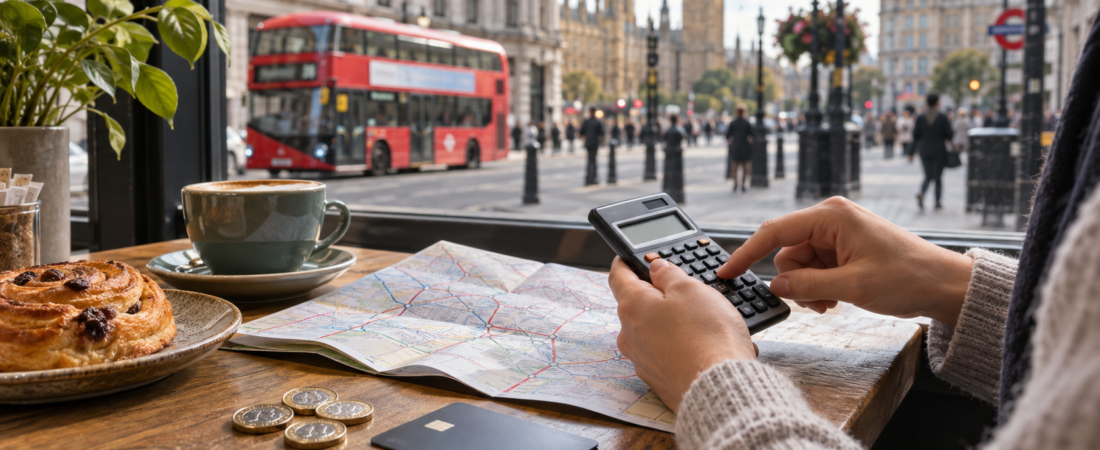
London is one of Europe’s more expensive destinations, particularly for accommodation and major ticketed attractions. However, free museums, public parks, markets and an extensive transportation network make it possible to control your expenses.
This London travel budget guide covers estimated accommodation, food, transportation and attraction costs. It also includes sample daily and three-day budgets with practical ways to save money.
All prices are approximate, shown in British pounds and calculated per person unless stated otherwise. International flights are not included.
Price note: All prices in this article are approximate and were checked at the time of publication. Prices may change.
Average London Travel Budget
A realistic daily budget for London is:
- Budget traveller: £85–£150 per day
- Mid-range traveller: £175–£300 per day
- Comfortable or luxury traveller: £350 or more per day
Accommodation will normally be your largest expense. Travelling with another person can reduce the cost per person because you can share a private hotel room.
Prices increase during summer, school holidays, major events and the Christmas period.
Accommodation Costs in London
London has everything from hostel dormitories and budget chains to serviced apartments and luxury hotels.
Approximate nightly accommodation prices include:
- Hostel dormitory bed: £30–£70
- Budget private room: £90–£160
- Mid-range hotel room: £180–£300
- Upscale or luxury hotel: £400 or more
These are general estimates for one room or one dormitory bed. Hotel prices vary significantly according to the neighbourhood, booking date and season.
Central neighbourhoods such as Westminster, Covent Garden and South Kensington are convenient but expensive. Paddington, King’s Cross and properties slightly outside the busiest central areas may provide better value.
Before booking, compare the complete price, cancellation conditions, room size and distance from the nearest station.
Read our guide to where to stay in London for a detailed comparison of ten neighbourhoods.
Food and Drink Costs
London offers food for almost every budget. Markets, supermarkets, bakeries and casual restaurants can help keep daily costs manageable.
Approximate prices include:
- Coffee and pastry: £5–£10
- Supermarket meal deal: £4–£7
- Casual breakfast: £8–£15
- Market or takeaway lunch: £10–£18
- Pub meal: £15–£25
- Mid-range restaurant dinner: £25–£50
- Beer or glass of wine: £6–£10
- Afternoon tea: £35–£80 or more
A budget traveller may spend approximately £30–£50 per day on food. A mid-range food budget of £60–£100 per day provides greater flexibility for restaurant meals and drinks.
Food markets such as Borough Market, Camden Market and Greenwich Market provide many choices in one location, although some popular stalls are not necessarily inexpensive.
Restaurants immediately beside major landmarks may charge more. Walk a few streets away and compare menus before choosing where to eat.
London Public Transportation Costs
Most visitors use the Underground, buses, trains and walking to explore London.
Contactless payment and Oyster cards provide pay-as-you-go travel. Use the same payment method for every journey so the system can calculate the correct fare and daily cap.
At the time of writing, the adult daily cap for travel within Zones 1 and 2 is £8.90. The standard bus and tram fare is £1.75, with a daily bus and tram cap of £5.25.
Transport prices and conditions can change, so check the official Transport for London website before travelling.
Ways to reduce transport expenses
- Stay near a well-connected station.
- Group nearby attractions together.
- Walk between central landmarks.
- Travel outside peak commuting hours when practical.
- Use the same contactless card or device for every journey.
- Avoid unnecessary taxis.
- Check whether your bank charges foreign transaction fees.
Each traveller needs a separate contactless payment card, device or Oyster card.
Airport Transfer Costs
London is served by several airports, and transfer costs depend on the airport and service selected.
Heathrow is connected by the Underground, Elizabeth line, Heathrow Express, buses and taxis. The Underground is generally economical but may take longer than express services.
Gatwick, Stansted and Luton have train and coach connections. Booking certain services in advance may reduce the price.
When comparing flights, include the airport transfer cost. A cheaper flight arriving at a distant airport may not produce the lowest total travel cost.
London Attraction Costs
Many London landmarks require admission tickets, but several important museums and galleries offer free general entry.
At the time of writing:
- Tower of London standard adult admission is approximately £37.
- London Eye online admission starts at approximately £29, while walk-up prices can be higher.
- Westminster Abbey, St Paul’s Cathedral and Tower Bridge also require paid sightseeing tickets.
- British Museum, National Gallery, Natural History Museum and Tate Modern offer free general admission, although special exhibitions may cost extra.
Ticket prices can vary by date, demand and booking method. Always confirm the current price on the attraction’s official website.
A reasonable daily attraction budget is:
- Budget sightseeing: £0–£25
- One major paid attraction: £30–£50
- Several attractions or tours: £60–£120
- Premium experiences: £150 or more
Choose the paid attractions that matter most to you and balance them with free museums, markets, parks and walking routes.
Free Things to Do in London
London’s free attractions can reduce the cost of a trip considerably.
Popular free experiences include:
- British Museum
- National Gallery
- Natural History Museum
- Victoria and Albert Museum
- Science Museum
- Tate Modern
- Hyde Park
- Kensington Gardens
- St James’s Park
- Greenwich Park
- Changing of the Guard when scheduled
- Walking along the South Bank
- Crossing Tower Bridge at street level
- Exploring Covent Garden
- Browsing Borough Market
- Visiting Trafalgar Square
- Seeing Buckingham Palace from outside
- Walking through Notting Hill
- Exploring Portobello Road
- Viewing the Houses of Parliament from Westminster Bridge
We will create a separate article covering the best free things to do in London.
Sample Daily London Budget
Budget traveller: approximately £115 per day
A possible daily budget is:
- Hostel bed: £45
- Food: £35
- Transportation: £9
- Attractions: £15
- Additional expenses: £11
This approach uses free attractions, casual meals and public transportation.
Mid-range traveller: approximately £235 per day
A possible daily budget is:
- Shared mid-range hotel room: £110 per person
- Food and drinks: £70
- Transportation: £10
- Attractions: £35
- Additional expenses: £10
Sharing accommodation makes a considerable difference to the total.
Comfortable traveller: approximately £450 per day
A possible daily budget is:
- Upscale hotel: £250
- Food and drinks: £110
- Transportation and taxis: £30
- Attractions and entertainment: £60
Luxury hotels, premium theatre seats, private tours and fine dining can raise the cost significantly.
Estimated Three-Day London Budget
A general estimate for three days in London, excluding international flights, is:
Budget trip: £300–£500 per person
This may include:
- Hostel accommodation
- Supermarket breakfasts and casual meals
- Public transportation
- Mostly free attractions
- One major paid attraction
Mid-range trip: £600–£950 per person
This may include:
- A comfortable hotel shared by two travellers
- Casual and mid-range restaurants
- Public transportation
- Several paid attractions
- Some evening entertainment
Comfortable trip: £1,200 or more per person
This may include:
- Upscale central accommodation
- Restaurant dining
- Taxis or premium airport transfers
- Multiple paid attractions
- Theatre, tours or other premium experiences
Follow our 3-day London itinerary to group nearby attractions and reduce unnecessary transportation.
How to Save Money in London
Visit free museums
London’s free museums and galleries are among the best ways to experience the city without increasing your sightseeing budget.
Select one or two museums and allow enough time to explore them properly.
Book accommodation early
Central accommodation can become expensive during summer, holidays and major events.
Book a cancellable room early and continue checking prices. Confirm the full cost before the free cancellation deadline.
Stay near public transportation
A hotel close to an Underground or railway station can save time and reduce reliance on taxis.
A slightly less central property with direct transport connections may provide better value than a poorly connected room closer to the centre.
Use contactless or Oyster payments
Pay-as-you-go travel with daily capping can be more convenient than buying individual tickets.
Use the same card or device throughout the day and remember that each traveller requires a separate payment method.
Walk between nearby attractions
Several central attractions are closer together than they appear on the Underground map.
Westminster, Buckingham Palace, Trafalgar Square and Covent Garden can form one walking route. Tower Bridge, Borough Market and St Paul’s Cathedral can form another.
Choose only essential paid attractions
Do not purchase tickets for every famous landmark. Choose the experiences that genuinely interest you and see the others from outside.
Eat at supermarkets and markets
Supermarket meal deals, bakeries and casual restaurants can reduce food expenses. Carry snacks and a reusable water bottle while sightseeing.
Avoid unnecessary currency charges
Use a payment card that does not charge excessive foreign transaction fees. If a payment terminal offers currency conversion, compare the exchange rate before accepting it.
Travel during a quieter season
January, February and early March can offer lower accommodation prices than summer and December.
Read our guide to the best time to visit London before choosing your dates.
Are London Sightseeing Passes Worth It?
A sightseeing pass may save money if you intend to visit several included paid attractions within a short period.
Before buying one:
- List the attractions you genuinely want to visit.
- Check their individual official prices.
- Confirm that the pass covers your selected dates.
- Check whether advance time-slot reservations are required.
- Compare the pass price with the individual total.
A pass is unlikely to provide good value if most of your itinerary consists of free museums, parks and neighbourhood walks.
Cash or Card in London?
Contactless cards and mobile payments are widely used throughout London. Public transportation is designed around contactless and Oyster payments.
Carry a small backup payment option, but you may not need large amounts of cash.
Before travelling, inform your bank if necessary and check international transaction charges.
How Much Spending Money Should You Bring?
For a three-day trip after accommodation has already been paid, consider approximately:
- Budget spending: £150–£250
- Mid-range spending: £300–£500
- Comfortable spending: £600 or more
This should cover food, local transportation, attraction tickets and smaller additional expenses, depending on your travel style.
Keep an emergency reserve separate from your normal daily budget.
Is London Expensive?
London is expensive compared with many European cities, particularly for accommodation, theatre tickets and major attractions.
However, the city also offers an unusually large selection of free museums, parks, markets and historic walking routes.
Careful accommodation selection, public transportation and a combination of free and paid attractions can make the total cost more manageable.
For complete planning guidance, read our London travel guide.
Final Thoughts
A realistic London travel budget should include accommodation, food, airport transfers, local transportation, attraction tickets and emergency expenses.
Budget travellers can reduce costs by using hostels, casual food options, public transportation and free museums. Mid-range travellers should book accommodation early and select paid attractions carefully.
Decide which experiences matter most, establish a daily spending limit and leave a small reserve for unexpected costs.