
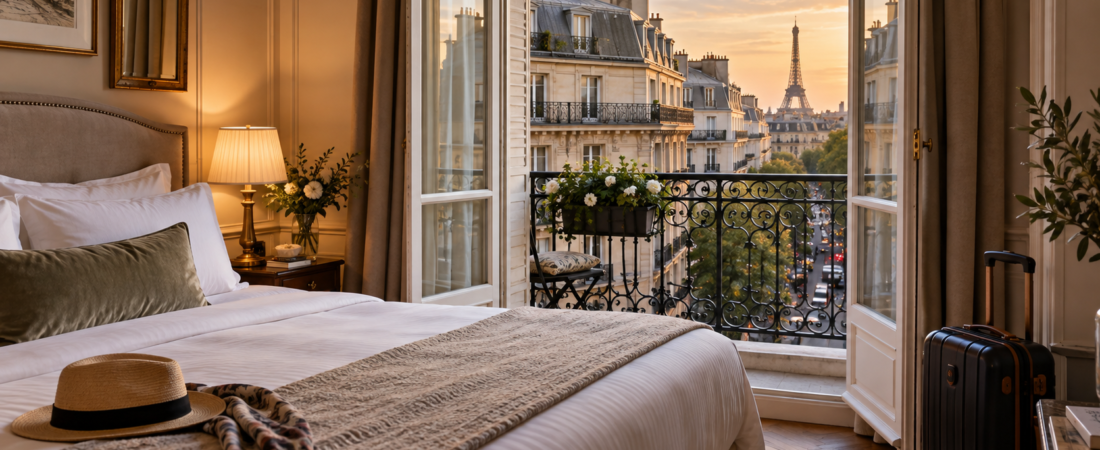
Choosing where to stay in Paris can have a major effect on your trip. The city’s 20 arrondissements offer very different experiences, from the historic streets of Le Marais and the Latin Quarter to the artistic hills of Montmartre and quieter residential neighborhoods farther from the center.
For most first-time visitors, Le Marais, the Latin Quarter, Saint-Germain-des-Prés and the 1st arrondissement provide the best combination of atmosphere, walkability and access to major attractions. However, travelers prioritizing nightlife, families, lower prices or an Eiffel Tower view may prefer a different district.
Price note: All prices in this article are approximate and were checked at the time of publication. Prices may change.
Best Areas to Stay in Paris at a Glance
| Area | Best for | Main advantages | Possible drawbacks |
|---|---|---|---|
| Le Marais | First-time visitors | Central, historic and lively | Expensive and busy |
| Latin Quarter | History and atmosphere | Walkable, energetic and close to Notre-Dame | Some streets are touristy |
| Saint-Germain-des-Prés | Couples and classic Paris | Elegant cafés, galleries and excellent location | High prices |
| 1st arrondissement | Short visits | Near the Louvre and Seine | Expensive and less residential |
| 7th arrondissement | Eiffel Tower views | Quiet, elegant and close to major landmarks | Limited nightlife |
| 9th arrondissement | Shopping and convenience | Strong transport and hotel selection | Busy main roads |
| Montmartre | Character and photography | Artistic atmosphere and possible savings | Hills and longer journeys |
| 11th arrondissement | Dining and nightlife | Local restaurants and evening energy | Farther from western attractions |
| 15th arrondissement | Families and value | Calm, residential and practical | Requires more public transport |
| Canal Saint-Martin | Local atmosphere | Trendy cafés and relaxed surroundings | Less convenient for some landmarks |
If you are organizing your first visit, our complete Paris travel guide explains the city’s attractions, transport, food and essential planning information.
Understanding Paris Arrondissements
Paris is divided into 20 administrative districts known as arrondissements. They spiral clockwise from the center in a shape sometimes compared to a snail.
The arrondissement number appears in addresses and postal codes. For example, an address with the postal code 75005 is in the 5th arrondissement, while 75018 indicates the 18th.
Arrondissement boundaries do not always match the neighborhood names travelers commonly use. Le Marais, for example, extends across parts of the 3rd and 4th arrondissements, while Montmartre occupies only part of the 18th.
Do not choose accommodation using the arrondissement number alone. Check the exact street, nearest Métro station, walking route and recent guest reviews before booking.
1. Le Marais: Best Overall Area for First-Time Visitors
Le Marais covers parts of the 3rd and 4th arrondissements on the Right Bank. It combines historic architecture, museums, independent boutiques, restaurants, cafés and active evening streets.
The district’s central position makes it possible to walk to the Seine, Notre-Dame, Hôtel de Ville, Île Saint-Louis and parts of the historic center. Place des Vosges, Rue des Rosiers, Musée Carnavalet and the Picasso Museum are within the neighborhood.
Le Marais is also an important center of Jewish and LGBTQ+ culture. Its streets feel lively throughout the week, particularly around Saint-Paul and Rue des Archives.
Why Stay in Le Marais?
- Excellent central location
- Historic streets and architecture
- Strong restaurant and café selection
- Good nightlife without relying entirely on clubs
- Easy access to Notre-Dame and the Seine
- Useful Métro connections at Saint-Paul, Hôtel de Ville and République
- Plenty to explore directly outside your accommodation
Possible Drawbacks
Le Marais is popular and accommodation can be expensive. Rooms in historic buildings may be small, and older properties do not always have elevators or strong soundproofing.
The busiest streets become crowded on weekends. Travelers wanting quiet nights should avoid rooms directly above restaurants, bars or heavily used pedestrian routes.
Typical Accommodation Prices
- Hostel or basic room: €50–€120
- Budget or lower mid-range double room: €140–€240
- Comfortable mid-range hotel: €220–€400
- Upscale or luxury accommodation: €400 and above
Best For
First-time visitors, couples, LGBTQ+ travelers, food lovers, shoppers and anyone wanting a central neighborhood with activity after dark.
2. Latin Quarter: Best for History and a Lively Atmosphere
The Latin Quarter occupies much of the 5th arrondissement on the Left Bank. Its name comes from the Latin once used by students and scholars connected with the Sorbonne.
The neighborhood includes historic churches, universities, bookshops, cinemas, cafés and narrow streets. Major attractions include the Panthéon, Rue Mouffetard, Place de la Contrescarpe and the northern edge of the Luxembourg Garden.
Notre-Dame, Sainte-Chapelle and Île de la Cité are within walking distance from the northern part of the district.
Why Stay in the Latin Quarter?
- Walkable historic surroundings
- Convenient for Notre-Dame and the Seine
- Easy access to the Luxembourg Garden
- Numerous cafés, bakeries and casual restaurants
- Lively atmosphere during the day and evening
- Useful Métro and RER connections
- Good base for a short first visit
Possible Drawbacks
Some streets immediately south of the Seine are highly tourist-oriented. Restaurants in these areas may prioritize location over quality, and rooms can be noisy.
The neighborhood includes slopes as you move south from the river. The exact location matters, particularly for travelers with luggage or limited mobility.
Typical Accommodation Prices
- Hostel or basic room: €45–€110
- Budget or lower mid-range double room: €130–€220
- Comfortable mid-range hotel: €200–€350
- Upscale accommodation: €350 and above
Best For
History enthusiasts, students, solo travelers, first-time visitors and people wanting a lively Left Bank base.
3. Saint-Germain-des-Prés: Best for Classic Parisian Charm
Saint-Germain-des-Prés in the 6th arrondissement is associated with literary cafés, galleries, fashion boutiques and elegant architecture.
The neighborhood places you close to the Seine, Musée d’Orsay, Luxembourg Garden and the Latin Quarter. Central attractions can be reached on foot, while several Métro lines provide connections to other districts.
Famous cafés contribute to the area’s reputation, but visitors do not need to limit themselves to well-known establishments. The quieter side streets contain bakeries, independent restaurants and smaller cafés.
Why Stay in Saint-Germain-des-Prés?
- Beautiful and highly walkable streets
- Central Left Bank location
- Convenient for museums and gardens
- Excellent cafés, galleries and shopping
- Attractive evening atmosphere
- Suitable for romantic trips
Possible Drawbacks
Saint-Germain is one of the more expensive places to stay in Paris. Famous cafés and restaurants can also charge premium prices.
Nightlife is generally more refined than energetic, so travelers looking for clubs and late-night bars may prefer the 11th arrondissement.
Typical Accommodation Prices
- Basic or lower mid-range double room: €170–€280
- Comfortable mid-range hotel: €250–€450
- Boutique or luxury hotel: €450 and above
Best For
Couples, repeat visitors, café lovers, art enthusiasts and travelers seeking a classic Paris atmosphere.
4. The 1st Arrondissement: Best for Major Attractions and Short Visits
The 1st arrondissement lies at the geographic heart of Paris. It includes the Louvre Museum, Palais Royal, Tuileries Garden, Place Vendôme and sections of the Seine.
Staying here minimizes travel time for several major sights. It is particularly practical when you have only two or three days and want to walk to the historic center.
The area around Les Halles provides extensive transport connections, while locations closer to the Louvre feel grander and generally more expensive.
Why Stay in the 1st Arrondissement?
- Exceptional central location
- Walking distance to the Louvre and Seine
- Convenient for a short sightseeing trip
- Strong Métro and RER connections
- Easy access to Le Marais and the Left Bank
- Luxury hotels and high-end shopping
Possible Drawbacks
This is one of Paris’s most expensive districts. Some streets feel commercial or quiet after offices and attractions close, and the neighborhood has less residential character than Le Marais or the Latin Quarter.
The large Châtelet–Les Halles transport complex is useful but can be confusing for first-time users.
Typical Accommodation Prices
- Budget or lower mid-range double room: €170–€280
- Comfortable mid-range hotel: €250–€450
- Luxury accommodation: €450–€1,000 or more
Best For
Short visits, luxury travelers, museum enthusiasts and visitors who value convenience over neighborhood character.
5. The 7th Arrondissement: Best for the Eiffel Tower
The 7th arrondissement contains the Eiffel Tower, Champ de Mars, Les Invalides, Musée Rodin and several government buildings.
It is one of the most elegant and recognizable parts of Paris. Some hotels offer Eiffel Tower views, although rooms marketed this way usually command significantly higher prices.
The district is calmer in the evening than Le Marais, Montmartre or the 11th arrondissement. This can appeal to couples and families but may disappoint travelers wanting a lively nightlife scene.
Why Stay in the 7th Arrondissement?
- Close to the Eiffel Tower
- Elegant and generally quiet streets
- Convenient for Musée d’Orsay and Les Invalides
- Attractive for couples and families
- Good access to Seine walks
- Potential Eiffel Tower views
Possible Drawbacks
The area can feel quiet after dinner, and its restaurant selection is less concentrated than in some livelier districts.
Not every property in the 7th is close to the Eiffel Tower. The arrondissement covers a substantial area, so check the exact address.
A room described as having an Eiffel Tower view may offer only a partial or angled view. Confirm the specific room category and do not assume every room in the hotel has the advertised outlook.
Typical Accommodation Prices
- Budget or lower mid-range double room: €150–€260
- Comfortable mid-range hotel: €230–€420
- Eiffel Tower-view or luxury room: €400–€1,000 or more
Best For
Couples, families, first-time visitors and travelers who consider proximity to the Eiffel Tower their main priority.
6. The 9th Arrondissement: Best for Shopping and Transport
The 9th arrondissement includes the Palais Garnier area, Galeries Lafayette, Printemps, theaters and several historic covered passages.
It offers a broad selection of hotels and restaurants at different price levels. Transport connections are strong, and travelers arriving at Gare du Nord or Gare Saint-Lazare can reach many parts of the district conveniently.
Southern parts near Opéra and the department stores are busy and polished. Northern sections closer to Rue des Martyrs feel more residential and connect naturally with the lower slopes of Montmartre.
Why Stay in the 9th Arrondissement?
- Wide choice of hotels
- Excellent shopping
- Strong public-transport connections
- Convenient for Opéra Garnier
- Restaurants and theaters nearby
- Often better value than the most central arrondissements
- Easy access to Montmartre
Possible Drawbacks
Major roads around Opéra and Boulevard Haussmann can be crowded and noisy. The district’s atmosphere changes considerably from one street to another.
Travelers seeking medieval streets or immediate access to the Seine may prefer Le Marais or the Latin Quarter.
Typical Accommodation Prices
- Hostel or basic room: €45–€100
- Budget or lower mid-range double room: €120–€220
- Comfortable mid-range hotel: €190–€350
- Upscale accommodation: €350 and above
Best For
Shoppers, theater visitors, first-time travelers, friends and people wanting good transport without paying the highest central prices.
7. Montmartre: Best for Character and City Views
Montmartre occupies the hill in the northern part of Paris and forms part of the 18th arrondissement. It is known for Sacré-Cœur Basilica, artistic history, steep lanes, stairways and wide views across the city.
The most atmospheric streets are generally found uphill and behind Sacré-Cœur rather than along the busiest approach from Boulevard de Rochechouart.
Accommodation can offer better value than the historic center, but travelers should examine the exact location carefully. The broader 18th arrondissement includes areas with very different atmospheres.
Why Stay in Montmartre?
- Distinctive neighborhood character
- Beautiful streets and photography locations
- Views from Sacré-Cœur
- Cafés, restaurants and small hotels
- Possible savings compared with central Paris
- Lively evening options around Pigalle and Abbesses
Possible Drawbacks
Hills, cobblestones and stairs can be difficult with heavy luggage, strollers or limited mobility. Abbesses Métro station is deep below ground, although it has a lift.
Travel to the Louvre, Notre-Dame and Eiffel Tower takes longer than from central districts. Some streets near the busiest visitor routes can also feel crowded or commercial.
Typical Accommodation Prices
- Hostel or basic room: €40–€90
- Budget or lower mid-range double room: €100–€190
- Comfortable mid-range hotel: €170–€300
- Boutique or upscale accommodation: €300 and above
Best For
Photographers, couples, younger travelers, repeat visitors and people who prefer character over maximum convenience.
8. The 11th Arrondissement: Best for Restaurants and Nightlife
The 11th arrondissement lies east of central Paris and includes areas near Bastille, Oberkampf and Rue de Charonne.
It is known for independent restaurants, bars, music venues and a more local evening atmosphere. Accommodation can offer better value than Le Marais while remaining within a manageable Métro journey of central attractions.
The 11th is an excellent choice for travelers who expect to spend their evenings near their hotel rather than returning to the monument districts.
Why Stay in the 11th Arrondissement?
- Excellent restaurant and bar selection
- Lively nightlife
- More residential atmosphere
- Potentially better accommodation value
- Convenient Métro connections
- Close to Le Marais and Canal Saint-Martin
Possible Drawbacks
Most famous attractions are not within immediate walking distance. Some streets remain noisy late at night, especially around popular bars and venues.
Families and light sleepers should read recent accommodation reviews carefully and request a courtyard-facing room where available.
Typical Accommodation Prices
- Hostel or basic room: €40–€90
- Budget or lower mid-range double room: €100–€190
- Comfortable mid-range hotel: €170–€300
- Upscale accommodation: €300 and above
Best For
Food lovers, nightlife, friends, couples and repeat visitors seeking a more local base.
9. The 15th Arrondissement: Best for Families and Better Value
The 15th arrondissement is a large residential district southwest of the center. It contains neighborhood shops, supermarkets, parks and restaurants used primarily by local residents.
Accommodation may provide more space or better value than central Paris. The district also has practical connections to the Eiffel Tower, Montparnasse and Porte de Versailles.
Families may appreciate the quieter atmosphere and access to everyday services. Choosing a property close to a useful Métro station is essential.
Why Stay in the 15th Arrondissement?
- Quiet residential streets
- Potentially larger rooms
- Good choice for families
- Supermarkets and local restaurants
- Possible savings on accommodation
- Convenient for Porte de Versailles events
- Reasonable access to the Eiffel Tower
Possible Drawbacks
You will rely more heavily on public transport. Travel to Montmartre, Le Marais and the historic center can take longer.
Because the arrondissement is large, two hotels described as being in the 15th can offer very different levels of convenience.
Typical Accommodation Prices
- Basic or lower mid-range double room: €100–€180
- Comfortable mid-range hotel: €160–€280
- Apartment-style or upscale accommodation: €250 and above
Best For
Families, longer stays, business travelers, convention visitors and travelers prioritizing quiet surroundings or value.
10. Canal Saint-Martin: Best for a Local and Trendy Atmosphere
Canal Saint-Martin passes through parts of the 10th arrondissement. Its tree-lined banks, footbridges, cafés and independent shops attract local residents as well as visitors.
The neighborhood is less monumental than central Paris, but it offers an enjoyable everyday atmosphere. République provides useful transport connections, while Gare du Nord and Gare de l’Est are relatively close.
Why Stay Near Canal Saint-Martin?
- Relaxed neighborhood environment
- Cafés, restaurants and independent shops
- Pleasant canal walks
- Convenient for major railway stations
- Active without feeling entirely tourist-oriented
- Easy access to République and the eastern districts
Possible Drawbacks
The Eiffel Tower and western Paris require longer journeys. Canal-side areas can become lively during warm evenings, and street noise varies.
As elsewhere in Paris, conditions can change within a few blocks. Check the precise route between the accommodation and station.
Typical Accommodation Prices
- Hostel or basic room: €40–€90
- Budget or lower mid-range double room: €100–€190
- Comfortable mid-range hotel: €170–€300
- Boutique accommodation: €280 and above
Best For
Younger travelers, couples, repeat visitors and people seeking cafés and neighborhood life.
Best Paris Areas by Traveler Type
Best for First-Time Visitors
Choose Le Marais, the Latin Quarter, Saint-Germain-des-Prés or the 1st arrondissement. These areas reduce travel time and provide easy access to several major sights.
Best for Couples
Saint-Germain-des-Prés, the 7th arrondissement and Montmartre offer romantic streets, attractive restaurants and memorable surroundings.
Best for Families
The 7th and 15th arrondissements are relatively calm and practical. The Latin Quarter can also work well for families wanting a central location.
Best for Nightlife
Choose the 11th arrondissement for bars, restaurants and music venues. Pigalle and parts of Montmartre provide another lively option.
Best for Food
Le Marais and the 11th offer particularly strong restaurant choices. The Latin Quarter, 9th arrondissement and Canal Saint-Martin also provide considerable variety.
Best for Luxury Hotels
The 1st arrondissement, Saint-Germain-des-Prés, the 7th arrondissement and areas near the Champs-Élysées contain many of the city’s most luxurious properties.
Best for Budget Travelers
Consider Montmartre, the 11th, 15th or Canal Saint-Martin. Prices still vary by season, and an inexpensive room far from a station may not offer genuine value.
Best for Eiffel Tower Views
The 7th arrondissement provides the closest options, while selected properties in the 15th, 16th and around Trocadéro may also have views.
Confirm whether the exact room—not merely a rooftop, corridor or shared terrace—has the promised view.
Best for a Three-Day Trip
For a short visit, prioritize Le Marais, the Latin Quarter, Saint-Germain-des-Prés, the 1st or the 7th. Our 3 days in Paris itinerary shows how these central locations connect with the city’s principal attractions.
Areas Requiring Extra Research Before Booking
Paris does not have a single district that every visitor must avoid. Conditions vary street by street, and inexpensive accommodation may be located beside busy stations, nightlife zones or major roads.
Before booking anywhere:
- Read recent guest reviews rather than relying only on the average score.
- Inspect the immediate surroundings using a current map.
- Check the walking route from the nearest station.
- Search reviews for comments about noise, cleanliness and nighttime access.
- Confirm whether reception operates 24 hours.
- Avoid booking solely because a property is described as being “near” a landmark.
- Check whether nearby transport operates during your arrival time.
Around major stations such as Gare du Nord, Gare de l’Est and some outer districts, the atmosphere may feel busier and less polished than the historic center. These areas can still be practical, particularly for rail connections, but first-time visitors should examine the exact street carefully.
How Close Should You Stay to a Métro Station?
For most travelers, staying within approximately five to ten minutes’ walk of a useful Métro station is ideal.
Paris’s transport network makes it unnecessary to stay beside every attraction. In 2026, a single Metro–Train–RER journey costs €2.55, while a Bus–Tram ticket costs €2.05.
Consider the lines serving the station, not only its distance from the hotel. A station with direct access to several areas may be more useful than a closer station requiring repeated transfers.
Popular transport hubs can involve long underground walks. Châtelet–Les Halles, Montparnasse–Bienvenüe and République are well connected, but changing lines may take longer than the map suggests.
Not all Métro stations are step-free. Travelers with mobility limitations, strollers or heavy luggage should check accessible routes and consider buses, RER stations with appropriate facilities or taxis.
How Much Does Accommodation in Paris Cost?
Paris accommodation prices change significantly by season, location, room size and booking demand.
Approximate nightly rates for a double room are:
- Budget: €100–€180
- Lower mid-range: €160–€250
- Comfortable mid-range: €220–€400
- Upscale: €350–€600
- Luxury: €600 and above
Hostel beds may range from approximately €40 to €90, although central properties and peak travel dates can cost more.
Spring, summer, September, major holidays, fashion events and large trade fairs often bring higher rates. January, February and parts of November may offer better value outside holiday periods.
Accommodation is generally the largest part of a Paris trip. Use our detailed Paris travel budget to estimate food, transport and attraction expenses as well.
Tourist Tax in Paris
Paris accommodation usually carries a nightly tourist tax charged per adult. The amount depends on the accommodation category, and luxury hotels have higher rates than hostels or lower-category hotels.
This charge may appear separately from the room price, particularly on booking platforms. Before confirming a reservation, review whether taxes and fees are included in the displayed total.
Unclassified furnished accommodation can be taxed according to a percentage calculation subject to an official nightly limit. Because rates and classifications can change, check the final booking breakdown rather than relying on an old fixed figure.
Hotels Versus Apartments
Hotels
Hotels provide reception services, housekeeping and a clearer formal classification. They are usually the easiest choice for a short visit.
Before booking, check:
- Room size
- Elevator access
- Air-conditioning
- Breakfast cost
- Luggage storage
- Reception hours
- Cancellation conditions
- Exact bed configuration
Apartments
Apartments can offer more space, kitchens and laundry facilities, which may suit families or longer stays.
Short-term furnished rentals in Paris are subject to local regulations. Choose an established platform, look for any required registration information and avoid arrangements asking you to conceal the purpose of your stay.
Check-in procedures may be less flexible than at hotels, and cleaning or service fees can substantially increase the advertised nightly price.
Hostels
Hostels can reduce costs for solo travelers, but private rooms sometimes cost nearly as much as basic hotels. Check whether towels, lockers, breakfast and city tax are included.
What to Check Before Booking
Exact Location
Open the property on a map and identify the nearest station, supermarket, pharmacy and late-night route.
Room Size
Parisian rooms can be compact. Floor area is more useful than wide-angle photographs when comparing options.
Elevator
Historic buildings may have no elevator or only a very small one. Confirm access if stairs will be difficult.
Air-Conditioning
Do not assume that every Paris hotel has air-conditioning. This is particularly important during summer heat waves.
Noise
Read reviews for street, hallway and neighboring-room noise. A central location above a lively café may not suit a light sleeper.
Bathroom Arrangement
Some budget properties have shared bathrooms. Check whether the selected room category includes a private bathroom and toilet.
Cancellation Terms
Flexible rates cost more but may be valuable when travel plans could change. Read the deadline and time zone carefully.
Total Price
Compare the final cost after tourist tax, cleaning charges, resort-style fees and breakfast rather than looking only at the first advertised rate.
Recent Reviews
Focus on reviews from the past few months. They are more useful for evaluating current cleanliness, maintenance, construction and service.
When to Book Paris Accommodation
For trips between April and October, booking three to six months ahead provides a stronger selection. Travelers seeking family rooms, Eiffel Tower views or specific boutique hotels should consider booking even earlier.
For winter trips outside Christmas and New Year, later bookings may still provide reasonable options. However, waiting does not guarantee lower prices.
Check the best time to visit Paris before reserving, as weather, crowds and accommodation demand vary throughout the year.
How to Save Money on Paris Accommodation
- Stay near a Métro station outside the most central arrondissements.
- Compare the 9th, 11th, 15th and 18th arrondissements.
- Travel during quieter winter periods.
- Avoid dates overlapping major exhibitions and events.
- Compare the full price, including taxes and fees.
- Consider a room without breakfast and use a local bakery.
- Join free hotel loyalty programs when they provide a genuine discount.
- Check refundable and non-refundable rates carefully.
- Compare direct hotel rates with reputable booking platforms.
- Avoid paying a premium for a landmark view unless it is a priority.
- Book early when traveling with children or needing multiple beds.
- Stay fewer nights in central Paris rather than choosing an inconvenient location that increases transport time.
Saving €20 per night may not be worthwhile if the room adds long journeys, multiple transfers or an uncomfortable late-night walk.
Frequently Asked Questions
What is the best area to stay in Paris for a first visit?
Le Marais is one of the best overall choices because it combines historic surroundings, restaurants and a central location. The Latin Quarter and Saint-Germain-des-Prés are excellent Left Bank alternatives.
Which arrondissement is most central?
The 1st arrondissement is geographically central and places visitors near the Louvre, Tuileries Garden and Seine. The 4th, 5th and 6th are also highly convenient.
Where should couples stay?
Saint-Germain-des-Prés, Montmartre and the 7th arrondissement are attractive choices for couples. Select based on whether you prefer classic cafés, artistic character or proximity to the Eiffel Tower.
Where should families stay?
The 7th and 15th arrondissements are relatively quiet and practical. Families wanting maximum walkability may prefer the Latin Quarter or Le Marais despite higher prices.
Is Montmartre too far from central Paris?
Montmartre is farther from several central attractions, but the Métro makes sightseeing manageable. Expect approximately 25–40 minutes for many cross-city journeys, including walking and transfers.
Is it better to stay near the Eiffel Tower or Louvre?
Stay near the Eiffel Tower if it is your highest priority and you prefer quiet evenings. Stay near the Louvre for a more central base with easier access to the historic center and Right Bank.
Is it safe to stay near a Paris railway station?
Major station districts are busy and useful but may feel less relaxed than residential neighborhoods. Safety and atmosphere vary by street. Research the precise location and recent reviews before booking.
Is an Eiffel Tower-view room worth the price?
It can be worthwhile for a special occasion, but only if the view is guaranteed for the exact room category. Public viewpoints such as Trocadéro offer excellent tower views for free.
Should I stay outside Paris to save money?
Outer locations can reduce the room price, but calculate additional transport time and late-night convenience. For a short first trip, staying within Paris near a Métro station is usually worth the extra cost.
Final Verdict
Le Marais is the strongest all-round choice for many first-time visitors because it combines history, restaurants, atmosphere and a central location. The Latin Quarter provides a lively Left Bank alternative, while Saint-Germain-des-Prés offers classic Parisian elegance at a higher price.
Choose the 1st arrondissement for maximum sightseeing convenience, the 7th for the Eiffel Tower, the 9th for shopping and transport, Montmartre for character, the 11th for nightlife, and the 15th for families or a quieter stay.
The best accommodation is not necessarily in the most famous arrondissement. A well-reviewed property on a suitable street, close to a useful station and within your budget will usually provide a better experience than an inconvenient room selected only for its postcode.
Explore more places through our destinations page or browse our complete collection of itineraries.