
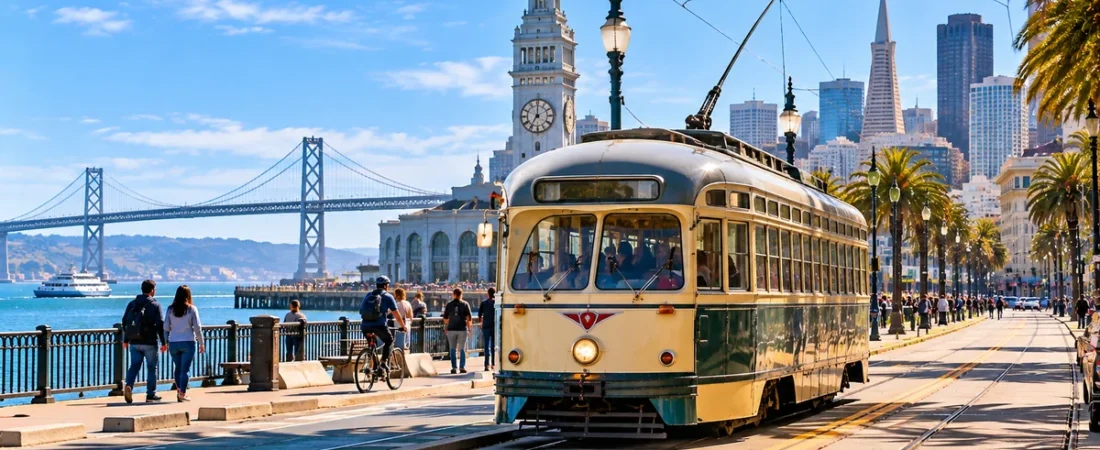
Planning a San Francisco travel budget can be challenging because the city has a reputation for expensive hotels, restaurants and attractions. However, many of San Francisco’s most memorable experiences — including Golden Gate Bridge views, neighbourhood walks, parks and waterfront scenery — can be enjoyed for little or nothing.
For most travellers, accommodation will be the largest expense. Food, transport and attractions can then be adjusted considerably depending on your travel style.
A realistic daily San Francisco travel budget, excluding flights, is approximately $120–$200 per person for a budget trip, $250–$400 for a comfortable mid-range trip, and $500 or more for a higher-end visit. These figures assume some accommodation costs are shared between two travellers.
Price note: All prices in this article are approximate and were checked at the time of publication. Prices may change.
For help planning what to see, start with our San Francisco travel guide.
San Francisco Daily Budget at a Glance
Your spending will depend heavily on accommodation and dining choices.
Budget Traveller: $120–$200 Per Person Per Day
This budget generally means:
- Hostel or inexpensive accommodation
- Casual meals, bakeries and takeaway food
- Muni public transportation
- Mostly free attractions
- One or two paid experiences during the trip
Solo travellers may spend more because they cannot split a hotel room.
Mid-Range Traveller: $250–$400 Per Person Per Day
A mid-range budget can provide:
- Comfortable hotel accommodation shared by two people
- Restaurant meals mixed with casual dining
- Public transportation and occasional rideshares
- Several paid attractions
- Drinks, cafés and moderate additional spending
Higher-End Traveller: $500+ Per Person Per Day
A higher budget allows for:
- Upscale or luxury hotels
- Fine dining
- Frequent taxis or rideshares
- Premium tours and attractions
- Shopping and nightlife
There is effectively no upper limit once luxury hotels and restaurants are included.
Accommodation Costs in San Francisco
Accommodation is usually the biggest part of a San Francisco travel budget.
San Francisco Travel’s 2026 forecast puts the city’s overall hotel average daily rate at about $266, although that is a market-wide average rather than the price every visitor will pay.
Budget accommodation can be considerably cheaper. The city’s official tourism organisation notes that some hotel deals can start around $105 per night, while hostel beds can start around $60 per person per night.
For planning purposes, consider approximately:
Hostels and basic accommodation: $60–$150 per night
Budget and lower mid-range hotels: $120–$220 per night
Comfortable mid-range hotels: $200–$350 per night
Upscale and luxury hotels: $350–$600+ per night
Rates can change dramatically around conventions, festivals, sporting events and holidays.
San Francisco also imposes a 14% Transient Occupancy Tax on accommodation stays of fewer than 30 days. Other applicable hotel assessments or charges can further increase the final amount.
Always compare the final booking total rather than only the advertised nightly rate.
Our where to stay in San Francisco guide compares the best neighbourhoods for different types of visitors.
Public Transportation Costs
Public transportation is one of the easiest areas to control your spending.
San Francisco’s Muni system includes buses, light rail, historic streetcars and cable cars.
The current adult single Muni fare is approximately:
Clipper/contactless credit or debit card: $2.85
Cash: $3
A standard single fare provides up to 120 minutes of travel on regular Muni services.
The Muni Day Pass currently costs $5.70 and includes unlimited rides on buses, trains and historic streetcars for the day, but it does not include cable cars.
Cable Car Cost
San Francisco’s historic cable cars use a different fare.
A single cable-car ride currently costs $9.
If you plan to ride cable cars several times, compare the cost with available visitor passes rather than buying repeated single tickets.
Current Visitor Passport prices are approximately:
1-Day Visitor Passport: $15
3-Day Visitor Passport: $35
7-Day Visitor Passport: $47
These include Muni, Muni Metro, historic streetcars and cable cars.
Do You Need a Rental Car?
Most first-time visitors do not need one.
Many major attractions are connected by public transportation, and several neighbourhoods are best explored on foot.
A rental car also introduces additional costs such as parking, fuel and possible hotel parking charges.
For a typical sightseeing trip concentrated within San Francisco, Muni combined with occasional rideshares is usually simpler.
Our 3 Days in San Francisco itinerary is designed to work without a rental car.
Food Costs in San Francisco
Food spending can vary enormously.
A practical daily estimate is:
Budget: $30–$50 per person
Mid-range: $60–$100 per person
Higher-end: $120+ per person
You can keep costs lower by mixing restaurant meals with bakeries, cafés, supermarkets and casual neighbourhood restaurants.
San Francisco’s food culture extends well beyond expensive waterfront restaurants.
Chinatown, the Mission District and other neighbourhoods offer plenty of casual choices.
Breakfast
A coffee and simple bakery breakfast may cost roughly $8–$15.
A full sit-down breakfast or brunch can easily reach $20–$35 per person once drinks, tax and tip are included.
Travellers staying somewhere with breakfast included can reduce daily costs considerably.
Lunch
Allow around $12–$25 for an inexpensive lunch.
Sandwiches, noodles, burritos and other casual meals are useful options when you’re sightseeing.
A sit-down restaurant lunch can cost considerably more.
Dinner
A casual dinner might cost approximately $20–$35 per person, while a mid-range restaurant meal can easily reach $40–$70+ before additional drinks.
Fine dining can push the budget much higher.
Attraction Costs
The good news is that you don’t need to pay for attractions every day.
Some of San Francisco’s best experiences are free.
You can walk around Golden Gate Park, explore Chinatown, visit the Painted Ladies from Alamo Square, enjoy waterfront views and walk onto the Golden Gate Bridge without an admission charge.
Paid attractions can then be selected according to your interests.
Alcatraz
Alcatraz is one experience many first-time visitors choose to pay for.
There is no separate National Park Service entrance fee, but visitors need an official ferry ticket to reach the island.
Because tickets can sell out, reserve in advance rather than relying on last-minute availability.
Museums
Museum admission varies considerably.
Instead of visiting several paid museums automatically, choose those that genuinely interest you and balance them with free neighbourhoods and outdoor attractions.
Example 3-Day Budget Trip
A budget-conscious traveller sharing accommodation might spend approximately:
Accommodation: $240–$450
Food: $90–$150
Local transport: $20–$50
Attractions: $50–$100
Miscellaneous: $30–$60
That produces a rough 3-day total of $430–$810 per person, excluding flights.
A solo traveller using a private hotel room should expect substantially higher accommodation costs.
Example 3-Day Mid-Range Trip
A traveller sharing a comfortable hotel room might budget:
Accommodation: $350–$550 per person
Food: $180–$300
Transport: $30–$80
Attractions: $100–$180
Miscellaneous: $60–$120
A reasonable total is approximately $720–$1,230 per person for 3 days, excluding flights.
These are planning estimates rather than fixed prices.
How to Save Money in San Francisco
Accommodation provides the biggest opportunity for savings.
Compare several neighbourhoods and check different dates, particularly if a major convention or event is affecting hotel rates.
Use Muni instead of relying heavily on rideshares.
Group attractions geographically so you aren’t repeatedly crossing the city.
Balance paid attractions with free experiences such as the Golden Gate Bridge, Chinatown, Alamo Square, neighbourhood walks and parks.
Carry a reusable water bottle and consider casual lunches rather than 3 sit-down restaurant meals every day.
Is San Francisco Expensive?
Yes, San Francisco can be an expensive destination, particularly for accommodation.
But the city is easier to experience on a moderate budget than its reputation suggests.
Public transportation is reasonably priced, a car isn’t essential for most visitors, and many famous sights are free.
The key is controlling hotel and restaurant spending while choosing a few paid experiences that matter most to you.
If you’re flexible about accommodation, comfortable using public transport and willing to combine free sights with paid attractions, you can enjoy San Francisco without turning every day into an expensive one.
For seasonal planning before booking your trip, see our best time to visit San Francisco.
Explore more places through our destinations page or browse our complete collection of itineraries.