
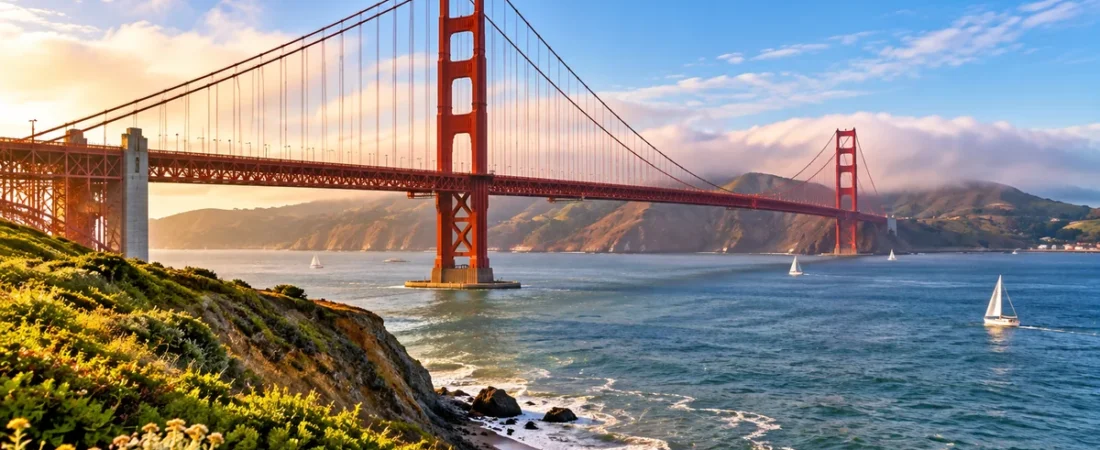
San Francisco is one of the most distinctive cities in the United States, combining dramatic hills, waterfront scenery, historic neighbourhoods and some of California’s most recognisable landmarks. The Golden Gate Bridge may be the city’s defining image, but San Francisco offers much more than a single famous viewpoint.
Ride a historic cable car, explore Chinatown, walk along the Embarcadero, visit Alcatraz Island or spend an afternoon discovering neighbourhoods such as North Beach and the Mission District. San Francisco’s relatively compact centre makes it possible to experience a surprising amount in a short trip.
This San Francisco travel guide covers the essential attractions, neighbourhoods, transport and practical information you need when planning your first visit.
Price note: All prices in this article are approximate and were checked at the time of publication. Prices may change.
Why Visit San Francisco?
San Francisco packs an unusual amount of variety into a relatively small area.
Within one trip, you can walk across one of the world’s most famous bridges, visit a former island prison, explore America’s oldest Chinatown, see Victorian architecture and ride historic public transport through steep city streets.
The city’s setting is another major attraction. San Francisco occupies a peninsula surrounded by the Pacific Ocean and San Francisco Bay, creating waterfront walks and viewpoints throughout the city.
Its neighbourhoods also have strong individual identities, so exploring beyond the headline attractions is worthwhile.
Best Things to Do in San Francisco
Walk Across the Golden Gate Bridge
The Golden Gate Bridge should be high on any first-time itinerary.
The bridge stretches approximately 1.7 miles across the Golden Gate strait between San Francisco and Marin County.
Walking onto the bridge is free and provides dramatic views of the bay, city and surrounding headlands.
Pedestrians currently use the east sidewalk. Access hours vary seasonally, generally running from 5:00 AM until 9:00 PM during Pacific Daylight Time and until 6:30 PM during Pacific Standard Time. Temporary construction-related closures can affect these hours, so check current conditions before visiting.
Weather around the bridge can change quickly. Bring an extra layer even when central San Francisco feels comfortable.
Visit Alcatraz Island
Alcatraz Island is one of San Francisco’s most fascinating historical attractions.
The island served as a federal penitentiary from 1934 until 1963 and housed prisoners including Al Capone.
Today it forms part of Golden Gate National Recreation Area.
There is no separate National Park Service entrance fee, but reaching Alcatraz requires a paid ferry ticket. Standard tickets include round-trip ferry transportation and the Cellhouse audio tour.
Advance reservations are strongly recommended because popular departures can sell out.
Ride a San Francisco Cable Car
San Francisco’s cable cars are both public transportation and a historic attraction.
The Powell-Hyde and Powell-Mason routes are particularly popular with visitors because they connect central areas with the northern waterfront.
A single cable-car ride currently costs $9.
If you plan to ride several times, compare that cost with the available Visitor Passports, which include unlimited rides on Muni, Muni Metro, historic streetcars and cable cars for their validity period.
Cable cars can develop long queues around popular terminals, so riding earlier in the morning can save time.
Explore Fisherman’s Wharf
Fisherman’s Wharf is touristy, but first-time visitors will probably want to see it at least once.
The waterfront district includes restaurants, shops, harbour views and easy access to Pier 39.
At Pier 39, look for the famous sea lions around the docks.
You can combine the area with a waterfront walk toward Fort Mason or continue along the Embarcadero.
Discover Chinatown
San Francisco’s Chinatown is one of the city’s most atmospheric neighbourhoods.
Walk through the Dragon Gate and explore streets lined with restaurants, markets, bakeries and traditional businesses.
Grant Avenue attracts the largest number of visitors, while exploring nearby side streets provides a broader view of the neighbourhood.
Chinatown is easy to combine with Union Square and North Beach.
Walk Through North Beach
North Beach has long been associated with San Francisco’s Italian-American community and later became connected with Beat Generation writers.
Today the neighbourhood offers cafés, restaurants and lively streets below Telegraph Hill.
Washington Square provides a pleasant break while exploring.
From North Beach, you can continue toward Coit Tower or Chinatown.
See Lombard Street
The famous section of Lombard Street between Hyde and Leavenworth streets contains eight sharp turns descending a steep hill.
Walking to the viewpoint costs nothing.
The surrounding streets are extremely steep, so comfortable shoes are useful.
Rather than building an entire outing around Lombard Street, combine it with a cable-car ride, Russian Hill or Fisherman’s Wharf.
See the Painted Ladies
The row of colourful Victorian houses beside Alamo Square is another classic San Francisco view.
The park provides the familiar perspective of the houses with the modern skyline behind them.
Visiting Alamo Square is free and works particularly well when exploring the city’s residential neighbourhoods.
Explore San Francisco’s Neighbourhoods
San Francisco becomes much more interesting when you move beyond its most famous landmarks.
The Mission District is known for murals, food and cultural history.
Haight-Ashbury retains associations with San Francisco’s 1960s counterculture.
North Beach offers cafés and Italian heritage, while Chinatown provides one of the city’s most distinctive urban environments.
For waterfront access, Fisherman’s Wharf and the Embarcadero are convenient. Union Square remains useful for central transport connections, shopping and hotels.
We’ll compare these areas in detail in our upcoming Where to Stay in San Francisco guide.
Getting Around San Francisco
You don’t need a rental car for a typical city-centre visit.
Muni operates buses, light rail, historic streetcars and cable cars throughout San Francisco.
As of September 2026, visitors can pay an adult single-ride Muni fare with Clipper or by tapping an eligible chip-enabled debit or credit card on fare readers. Single-ride tickets are no longer sold through MuniMobile, although other pass products remain available there.
Cable cars have a separate $9 single-ride fare.
Visitor Passports currently cost approximately $15 for one day, $35 for 3 days and $47 for seven days and include cable cars.
Walking is also important, but don’t underestimate San Francisco’s hills.
When to Visit San Francisco
San Francisco’s climate is different from what many visitors expect from California.
Summers can be cool and foggy, particularly around the coast and Golden Gate Bridge.
September and October often bring pleasant conditions, while spring can also be an attractive period for sightseeing.
Winter is generally cooler and wetter but can mean fewer visitors.
Regardless of season, pack layers. Conditions can vary considerably between neighbourhoods during the same day.
We’ll cover weather, crowds and seasonal differences in detail in our Best Time to Visit San Francisco guide.
What to Eat in San Francisco
San Francisco’s food reflects its multicultural population and coastal setting.
Popular experiences include sourdough bread, seafood around the waterfront, Mission-style burritos and Chinese food in and around Chinatown.
The wider Bay Area also has a strong contemporary restaurant and café culture.
Food prices can be high compared with many destinations, so mixing casual meals with occasional restaurant dining can help control your budget.
How Many Days Do You Need?
3 days is a good starting point for a first visit.
That gives you enough time to see the Golden Gate Bridge, explore central neighbourhoods, visit the waterfront and dedicate part of a day to Alcatraz.
With four or five days, you can travel more slowly and add Golden Gate Park, museums or additional neighbourhoods.
Extra time also opens possibilities for trips beyond central San Francisco.
Practical Tips for Visiting
Wear comfortable shoes because San Francisco involves plenty of walking and steep streets.
Carry an extra layer even on sunny days, particularly when visiting the waterfront.
Book Alcatraz ahead if it is important to your trip.
Use public transportation rather than renting a car unless your wider California itinerary requires one. Parking can be expensive and inconvenient.
Avoid leaving luggage or valuables visible inside parked vehicles.
Finally, don’t judge the city’s weather from your hotel window. Conditions near the Golden Gate Bridge can differ significantly from downtown or the Mission District.
Is San Francisco Worth Visiting?
Yes, particularly if you enjoy cities where scenery, architecture, history and neighbourhood exploration can be combined in the same trip.
San Francisco’s famous attractions deserve their reputation, but much of the city’s appeal comes from moving between them: climbing a steep residential street, seeing the bay unexpectedly between buildings or riding historic transit through neighbourhoods.
For a first visit, focus on a manageable selection rather than trying to cover everything.
The Golden Gate Bridge, Alcatraz, Chinatown, the waterfront and a few neighbourhoods provide an excellent introduction to the city.
Explore more places through our destinations page or browse our complete collection of itineraries.