
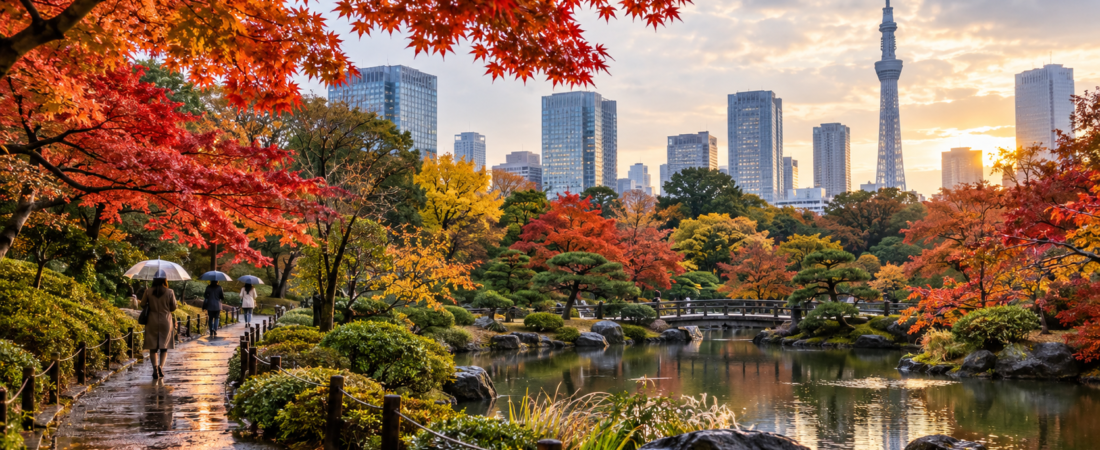
The best time to visit Tokyo for comfortable sightseeing is generally late March through May or October through November. Spring brings mild weather and famous cherry blossoms, while autumn offers lower humidity, colorful foliage and excellent conditions for exploring on foot.
However, Tokyo is a year-round destination. Summer delivers energetic festivals and fireworks, and winter offers crisp days, illuminations and potentially smaller crowds. The ideal month ultimately depends on whether your priority is seasonal scenery, comfortable temperatures, festivals or avoiding the busiest travel periods.
Best Time to Visit Tokyo at a Glance
- Best overall weather: April, May, October and November
- Best for cherry blossoms: Usually late March to early April
- Best for autumn foliage: Mid-November to early December
- Best for fewer crowds: January, February and parts of June
- Best for festivals and fireworks: July and August
- Best for winter illuminations: Late November through December
- Most humid period: June through August
- Major periods to approach carefully: Golden Week, Obon and New Year
Cherry-blossom and foliage dates vary each year. Consult current forecasts shortly before travelling rather than planning around a guaranteed flowering date.
For help organizing your first visit, begin with our complete Tokyo travel guide.
Understanding Tokyo’s Climate
Tokyo has four recognizable seasons. Summers are hot and humid, whereas winters are generally cold, sunny and comparatively dry. Spring and autumn offer the most comfortable balance for long sightseeing days.
August is normally the hottest month, with an average daytime high around 32°C. January is the coldest, with an average high near 10°C. Winter nights can approach freezing, although persistent heavy snow is unusual in central Tokyo.
The rainy season typically affects Tokyo from June into the first half of July. This does not necessarily mean continuous rain every day. Visitors are more likely to encounter humid conditions, cloudy skies, intermittent drizzle and occasional heavy downpours.
Typhoons can affect Tokyo from late summer into autumn. Direct impacts are not constant, but severe weather can interrupt flights and railway services. Monitor Japan Meteorological Agency forecasts during your visit.
Tokyo in Spring: March to May
Spring is Tokyo’s most celebrated season. Temperatures gradually become warmer, flowers brighten parks and riverbanks, and outdoor sightseeing becomes increasingly pleasant.
March
Early March can still feel like winter, particularly in the morning and after sunset. A warm jacket and layers are advisable. Conditions usually become milder as the month progresses.
Plum blossoms and other early flowers appear before the cherry blossoms. Sakura may begin opening toward the end of March, but the timing changes annually according to the weather.
Late March is especially popular with international visitors. Reserve accommodation early if seeing cherry blossoms is central to your trip. Our guide to where to stay in Tokyo can help you choose a convenient neighborhood.
April
Early April frequently overlaps with peak cherry-blossom viewing in central Tokyo. Popular locations such as Ueno Park, Chidorigafuchi, the Meguro River and Sumida Park can become exceptionally busy.
The weather is usually comfortable, although cool or rainy days remain possible. Bring a light jacket, compact umbrella and clothing that can be layered.
After the main blossoms fall, visitor pressure may ease slightly. Later-blooming flowers and fresh greenery still make the second half of April attractive.
Golden Week begins near the end of April and continues into early May. This collection of national holidays is one of Japan’s busiest domestic travel periods. Tokyo’s business districts may feel quieter, but major attractions, trains, hotels and destinations outside the capital can be crowded.
May
May is one of the best months for a first visit. Days are generally warm without the intense humidity of midsummer, while parks and gardens are lush and green.
The beginning of May falls within Golden Week, so travellers seeking a calmer experience should consider visiting after the holiday period. Mid-to-late May often combines pleasant conditions with fewer seasonal crowds than peak cherry-blossom weeks.
Spring is best for travellers who want flowers, mild weather and outdoor exploration. Its main disadvantages are greater demand and congestion during the sakura period and Golden Week.
Tokyo in Summer: June to August
Summer is lively, colorful and culturally rewarding, but the heat and humidity require realistic planning.
June
June marks the beginning of Tokyo’s rainy season. Rain may range from light drizzle to concentrated downpours, and humidity rises noticeably.
This can still be a worthwhile time to visit. Hydrangeas and irises bloom, indoor attractions provide easy alternatives during wet weather, and some areas may be less crowded than in spring.
Pack breathable clothing, quick-drying shoes and a compact umbrella. Keep a flexible schedule so museums, shopping districts or observation decks can replace outdoor plans when necessary.
July
The rainy season normally fades during July, followed by hotter and sunnier conditions. Seasonal festivals, outdoor celebrations and fireworks begin appearing across the city.
Plan demanding walks for the morning, take an indoor break during the hottest part of the afternoon and resume sightseeing later. Convenience stores, railway stations and vending machines make it easy to obtain drinks, but carrying water remains essential.
August
August is typically Tokyo’s hottest month. High humidity can make the temperature feel more intense, especially in paved districts with limited shade.
Festivals, fireworks and evening events create a memorable atmosphere. Nevertheless, travellers sensitive to heat may find August uncomfortable. Build shorter outdoor periods into your schedule and watch for symptoms of heat exhaustion.
Obon, generally observed around the middle of August, is another busy domestic travel period. Long-distance trains and flights may be heavily booked as residents travel to visit family.
Typhoon season also begins affecting Tokyo around this time. Keep plans flexible and follow official weather and transport updates if a storm approaches.
Tokyo in Autumn: September to November
Autumn gradually replaces summer’s humidity with cooler, clearer conditions. October and November rank among the most dependable months for exploring Tokyo.
September
September often remains hot and humid, particularly during the first half of the month. Typhoons and heavy rain can also disrupt outdoor events or transportation.
Conditions usually become more manageable later in the month. Travellers visiting in September should retain some flexibility and avoid assuming it will already feel cool.
October
October is one of the best all-around months to visit Tokyo. Temperatures are generally comfortable, humidity declines and walking between neighborhoods becomes much easier.
Autumn foliage has not necessarily reached central Tokyo yet, but seasonal food, festivals and Halloween displays add interest. Pack light layers and a rainproof outer layer for occasional wet days.
October works particularly well for a first-time itinerary involving traditional districts, modern neighborhoods and extensive walking. Our 3 days in Tokyo itinerary provides a practical route through the city’s major highlights.
November
November brings crisp weather and autumn colors. Foliage often develops first in Tokyo’s western and elevated areas before spreading through central parks and gardens.
Popular locations include Rikugien Gardens, Koishikawa Korakuen, Meiji Jingu Gaien and Mount Takao. Peak color varies by location and weather, but mid-to-late November is usually a strong period for foliage-focused travel.
Morning and evening temperatures can be cool, so bring a sweater or light coat. November offers an excellent combination of seasonal scenery and comfortable sightseeing weather.
Tokyo in Winter: December to February
Winter receives less attention than spring or autumn, but it can be an excellent season for travellers who value clearer skies and a more relaxed atmosphere.
December
Early December may still feature autumn foliage in some central locations. As the month continues, elaborate illuminations transform shopping streets, commercial complexes and public spaces.
Temperatures fall, and daylight becomes shorter. Plan gardens and outdoor viewpoints earlier in the day, saving illuminations, dining and entertainment districts for the evening.
The New Year period requires advance preparation. Some museums, restaurants, shops and attractions close or reduce their hours from late December into early January. Temples and shrines, meanwhile, become busy with traditional New Year visits.
January
January is cold but frequently dry and bright. On clear days, visibility from observation decks can be excellent, with a possibility of seeing Mount Fuji in the distance.
The first days of January remain busy around major shrines and temples. Later in the month, many visitor areas become calmer. Dress in warm layers and expect cold evenings.
February
February remains chilly but is often less crowded than the major spring and autumn periods. Plum blossoms begin appearing toward the latter part of winter, offering an early preview of spring.
This month suits visitors who are comfortable wearing a coat and prefer museums, food experiences, shopping and urban sightseeing without peak-season congestion.
Use our collection of free things to do in Tokyo to create an affordable winter itinerary.
Best Time for Cherry Blossoms
Tokyo’s cherry blossoms generally reach their most anticipated stage between late March and early April. Exact dates cannot be guaranteed months in advance because flowering depends on winter and early-spring temperatures.
Full bloom is brief, and wind or rain can shorten the display. If possible, allow several days in Tokyo and visit more than one viewing area. Some trees bloom earlier or later than the most common varieties.
Travellers who dislike crowds can enjoy spring flowers other than sakura, including plum blossoms, azaleas, wisteria, irises and hydrangeas.
Best Time for Autumn Foliage
For autumn colors in central Tokyo, consider the second half of November through early December. Western Tokyo and Mount Takao may change earlier because of their higher elevation and cooler conditions.
Autumn foliage generally lasts longer than peak cherry blossom season, making it somewhat easier to plan. Weekday mornings provide a quieter experience at popular gardens.
Best Time for Smaller Crowds
January after the New Year holidays, February and parts of June can be relatively quiet. Weekdays are preferable throughout the year, particularly at famous attractions.
Avoid Golden Week in late April and early May, Obon around mid-August and the New Year period if minimizing crowds is your main goal. Cherry-blossom weekends and peak foliage weekends also draw large local audiences.
Accommodation demand varies significantly by season, neighborhood and event calendar. Review the Tokyo travel budget before choosing your dates.
What to Pack for Each Season
- Spring: Layers, a light or medium jacket and a compact umbrella
- Summer: Breathable clothing, sun protection, water and quick-drying footwear
- Autumn: Light layers, comfortable walking shoes and a rainproof jacket
- Winter: A warm coat, sweaters and accessories for cold evenings
Comfortable shoes are essential in every season. Even with Tokyo’s outstanding public transportation, a typical sightseeing day involves considerable walking through stations and neighborhoods.
Frequently Asked Questions
What is the best month to visit Tokyo?
October is an excellent all-around choice for comfortable weather and outdoor sightseeing. May after Golden Week and November are also strong options.
When should I visit Tokyo for cherry blossoms?
Late March through early April is the usual window, but flowering dates change annually. Check current official forecasts closer to departure.
What is Tokyo’s rainiest travel period?
The rainy season generally runs from June into mid-July. Typhoons and heavy rainfall may also affect late summer and early autumn.
Is winter a good time to visit Tokyo?
Yes. Winter offers crisp weather, seasonal illuminations and potentially smaller crowds. Some facilities close during the New Year holiday, so check individual schedules.
Is August too hot for Tokyo?
August can be very hot and humid. It remains possible to enjoy Tokyo by sightseeing early, scheduling indoor afternoon activities, staying hydrated and taking regular breaks.
Final Thoughts
For most first-time visitors, April, May, October and November provide the most comfortable sightseeing conditions. Choose late March or early April for cherry blossoms, November for autumn foliage and winter for clearer skies and a potentially quieter city.
No season is perfect for every traveller. Match your dates to the experiences you value most, account for major Japanese holiday periods and confirm forecasts shortly before departure.
Explore more places through our destinations page or browse our complete collection of itineraries.