
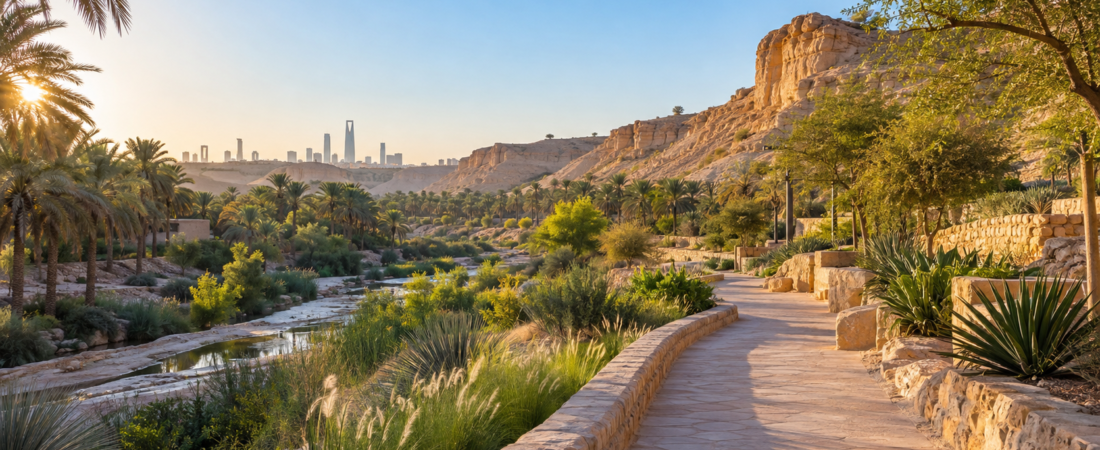
The best time to visit Riyadh is from November to February, when daytime temperatures are comfortable enough for outdoor sightseeing, walking around Diriyah and exploring the city’s parks and historical districts. March and October are also good months, while Riyadh’s extremely hot summer is better suited to indoor attractions and travellers comfortable with high temperatures.
Price note: All prices in this article are approximate and were checked at the time of publication. Prices may change.
Riyadh has a hot desert climate with long, intensely hot summers, mild winters, very little rainfall and significant differences between daytime and nighttime temperatures. The ideal month for your trip depends on whether you prioritise comfortable weather, lower hotel prices, seasonal events or fewer visitors.
This guide explains Riyadh’s weather throughout the year, the advantages and disadvantages of each season, what to pack and the best time for sightseeing, festivals and budget travel.
Before planning your visit, read our complete Riyadh travel guide. You can then organise your activities using our 3 days in Riyadh itinerary.
Quick Answer: When Should You Visit Riyadh?
Best overall period
November to February
These months bring Riyadh’s most comfortable daytime weather and are ideal for outdoor attractions, heritage districts, parks and evening dining.
Best for pleasant weather
December to February
Days are generally mild, while evenings and early mornings can feel surprisingly cool.
Best for fewer visitors
March, April and October
These shoulder-season months can offer a useful balance between manageable temperatures and lower demand, although afternoons become hot.
Best for lower hotel prices
June to August
Summer can bring lower accommodation prices at some hotels, but daytime temperatures frequently exceed 40°C.
Best for Riyadh Season
Riyadh Season usually runs across the cooler part of the year, but its dates, venues and programme change between editions. Check the official event calendar before booking flights or accommodation.
Riyadh Weather at a Glance
The following temperature ranges are approximate historical averages rather than forecasts:
| Month | Approximate daytime temperature | Approximate nighttime temperature | General conditions |
|---|---|---|---|
| January | 19–22°C | 7–10°C | Mild days and cool nights |
| February | 22–25°C | 9–12°C | Pleasant and mostly dry |
| March | 27–30°C | 14–17°C | Warm with occasional rain or dust |
| April | 32–36°C | 19–22°C | Hot afternoons |
| May | 38–41°C | 24–27°C | Very hot and dry |
| June | 41–44°C | 27–30°C | Extremely hot |
| July | 42–45°C | 29–31°C | Extremely hot |
| August | 42–44°C | 28–31°C | Extremely hot |
| September | 38–41°C | 25–28°C | Very hot |
| October | 32–36°C | 19–23°C | Hot days and improving evenings |
| November | 25–29°C | 13–17°C | Warm, comfortable weather |
| December | 20–24°C | 8–12°C | Mild days and cool nights |
Temperatures can move outside these ranges. Always check the short-term forecast immediately before your trip.
Visiting Riyadh in Winter: December to February
Winter is the most comfortable and popular season for visiting Riyadh.
Daytime temperatures are usually suitable for walking, sightseeing and outdoor dining. The cooler weather makes it easier to explore At-Turaif, Wadi Hanifah, KAFD and traditional markets without the intense heat experienced during much of the year.
Evenings can feel cold, especially in exposed areas or after a warm afternoon. Riyadh’s dry air and breeze can make the temperature feel lower than expected.
Advantages of Visiting in Winter
- Comfortable daytime sightseeing
- Pleasant conditions for walking
- Ideal weather for Diriyah and Wadi Hanifah
- Numerous outdoor events and dining options
- Lower risk of heat exhaustion
- Good conditions for excursions outside the city
Disadvantages of Visiting in Winter
- Greater demand for accommodation
- Higher room prices during major events
- Busy restaurants and entertainment venues
- Cool evenings requiring warmer clothing
- Occasional rain, wind or dusty conditions
What to Pack for Winter
Bring:
- Light layers for daytime
- A sweater or light jacket
- A warmer jacket for cold evenings
- Comfortable walking shoes
- Sunglasses
- Sunscreen
- Modest clothing suitable for local customs
Heating may be used inside hotels and restaurants on colder evenings, but indoor temperatures vary.
Is January a Good Time to Visit Riyadh?
January is one of the best months for outdoor sightseeing. Days are usually mild, while early mornings and evenings can be cool.
This is a particularly good month for walking around historical areas, spending time in Wadi Hanifah and exploring Diriyah after sunset.
Pack a jacket, especially if you plan to remain outdoors late at night.
Is February a Good Time to Visit Riyadh?
February usually offers pleasant daytime temperatures and slightly warmer conditions than January. It is an excellent month for visitors who want comfortable sightseeing without summer heat.
As with all winter visits, check whether major exhibitions, conferences or sporting events coincide with your dates because these can affect hotel availability.
Visiting Riyadh in Spring: March to May
Spring begins pleasantly but becomes hot very quickly.
March can still be a good month for visiting Riyadh, particularly during the first half of the month. By April, afternoons are often hot, and May usually feels like the beginning of summer.
Spring can also bring occasional rain, thunderstorms, strong winds or airborne dust. Conditions may change quickly, so check the daily forecast.
March
March is one of Riyadh’s better shoulder-season months. Mornings and evenings are generally comfortable, while afternoons are warm.
Outdoor sightseeing is still practical, although activities such as Wadi Hanifah and long walks should be scheduled for the morning or late afternoon.
April
April is noticeably hotter. Morning sightseeing remains manageable, but spending several hours outside during the afternoon can become uncomfortable.
Use the middle of the day for indoor attractions such as the Saudi National Museum, shopping centres and galleries.
May
May is generally very hot, with daytime temperatures commonly approaching or exceeding 40°C.
Outdoor activities should be limited to early morning and after sunset. Travellers sensitive to heat may prefer another time of year.
Advantages of Visiting in Spring
- March offers relatively comfortable weather
- Potentially lower demand than peak winter
- Good balance of indoor and outdoor activities early in the season
- Warm evenings suitable for outdoor dining
Disadvantages of Visiting in Spring
- Temperatures rise rapidly
- Possible dust and reduced visibility
- Outdoor afternoons become uncomfortable
- May can already feel like midsummer
What to Pack for Spring
Bring:
- Lightweight, breathable clothing
- A light layer for March evenings
- Sunscreen
- Sunglasses
- A hat
- Reusable water bottle
- Comfortable shoes
- A scarf or face covering for dusty conditions
Visiting Riyadh in Summer: June to August
Summer in Riyadh is extremely hot. Daytime temperatures regularly exceed 40°C, and the heat can remain intense well into the evening.
Outdoor sightseeing during the middle of the day is not recommended. Most residents and visitors move between air-conditioned buildings, cars, metro stations, shopping centres and indoor attractions.
A summer trip is possible, but the itinerary must be designed around the climate.
Advantages of Visiting in Summer
- Some hotels may offer lower rates
- Indoor attractions can be less crowded
- Extensive air conditioning in hotels, malls and restaurants
- Suitable for business trips focused mainly on indoor venues
- Evening activities remain possible with careful planning
Disadvantages of Visiting in Summer
- Extreme daytime heat
- Limited comfortable outdoor sightseeing
- Risk of dehydration and heat-related illness
- Walking between attractions can be difficult
- Outdoor venues may operate reduced or evening-only hours
- Dust or haze may reduce skyline views
How to Plan a Summer Day
A practical summer schedule is:
- Early morning: A short outdoor activity
- Late morning to afternoon: Museums, malls and indoor attractions
- Late afternoon: Rest at your hotel
- After sunset: Restaurants, markets and outdoor entertainment
Even after dark, temperatures can remain high. Carry water and avoid unnecessary exposure to the sun.
What to Pack for Summer
Bring:
- Loose, lightweight and modest clothing
- High-SPF sunscreen
- Sunglasses
- A wide-brimmed hat
- Reusable water bottle
- Electrolyte sachets
- Moisturiser and lip balm
- A light layer for heavily air-conditioned interiors
Do not underestimate the difference between outdoor heat and indoor air conditioning. A thin overshirt or scarf can be useful inside shopping centres and restaurants.
Visiting Riyadh in Autumn: September to November
Autumn begins with intense heat but gradually becomes one of the most enjoyable periods of the year.
September normally remains extremely hot. October brings better mornings and evenings, while November marks the beginning of the most comfortable travel season.
September
September usually feels similar to summer. Daytime outdoor activities remain difficult, although evenings gradually become more manageable later in the month.
Plan most sightseeing around air-conditioned attractions.
October
October is a transitional month. Afternoons can still be hot, but mornings and evenings are increasingly comfortable.
It can be a good time to visit if you want to avoid the busiest winter period and are willing to schedule outdoor activities carefully.
November
November is one of the best months to visit Riyadh. Daytime temperatures are generally warm rather than excessively hot, and evenings are pleasant.
This is an excellent month for Diriyah, Wadi Hanifah, outdoor restaurants and walking around modern districts such as KAFD.
Advantages of Visiting in Autumn
- Comfortable weather by November
- Increasing number of outdoor activities
- Good conditions for evening sightseeing
- Possible shoulder-season value in October
- Suitable weather for exploring Diriyah
Disadvantages of Visiting in Autumn
- September remains extremely hot
- October afternoons can still be uncomfortable
- Hotel prices may rise as the event season begins
- Popular attractions become busier by November
Best Time to Visit Riyadh for Outdoor Sightseeing
The best months for outdoor sightseeing are November, December, January and February.
During these months, you can comfortably spend more time at:
- At-Turaif
- Bujairi Terrace
- Wadi Hanifah
- The Diplomatic Quarter
- Souq Al Zal
- KAFD’s outdoor spaces
- Parks and landscaped walking areas
March and October can also work if outdoor activities are arranged in the morning or evening.
From May through September, schedule only brief outdoor visits during the coolest parts of the day.
Best Time to Visit Diriyah
Diriyah is most enjoyable from November to February, when the evening weather is comfortable for walking around the restored mud-brick buildings of At-Turaif.
At-Turaif often operates primarily during the afternoon and evening, but opening hours, access-pass arrangements and admission charges can change seasonally.
Always consult the official Diriyah website before visiting. Major events, temporary road closures and special programmes can affect entry and parking.
Best Time for Wadi Hanifah
Visit Wadi Hanifah between November and March.
Winter mornings and late afternoons offer the most pleasant conditions for walking, relaxing and enjoying the landscape. Avoid exposed sections during hot summer afternoons.
After unusual rain, conditions around natural channels and low-lying areas may change. Observe local warnings and never enter flooded areas.
Best Time for Skyline Views
Clear winter days can provide excellent views from the Sky Bridge at Kingdom Centre. However, dust, haze and strong sunlight can reduce visibility at any time of year.
For attractive lighting, visit shortly before sunset. This allows you to see Riyadh during daylight and watch the city illuminate after dark.
The official ticketing platform currently lists adult admission at approximately SAR 115, including VAT, but prices and operating hours may change. Check the official booking page before travelling.
Best Time for Riyadh Season
Riyadh Season is a major programme of entertainment, dining, cultural events, concerts, sports and temporary attractions.
It usually takes place during the cooler part of the year, but:
- Dates vary
- Venues change
- Some zones require paid admission
- Individual events may require separate tickets
- Popular activities can sell out
- Road traffic around venues can be heavy
Do not arrange your trip around a previous year’s programme. Check the current official Riyadh Season calendar before booking.
Hotel prices may increase near popular event zones and during major international sporting or entertainment events.
Visiting Riyadh During Ramadan
Ramadan follows the Islamic lunar calendar, so its dates move earlier each Gregorian year.
Riyadh remains accessible during Ramadan, but daily routines change:
- Some attractions operate shorter or later hours
- Restaurants may remain closed during daylight
- Roads become busy shortly before sunset
- Evenings become lively after iftar
- Shopping centres may remain open very late
- Government and business hours can be reduced
Non-Muslim visitors should avoid eating, drinking or smoking openly in public during fasting hours and follow current local guidance.
Ramadan can be a culturally meaningful time to visit, but travellers should confirm every attraction’s schedule individually.
Visiting During Eid
Eid al-Fitr and Eid al-Adha are major holidays in Saudi Arabia.
The holiday atmosphere can be enjoyable, with family activities, decorations and special events. However, opening hours and public-transport schedules may change, and some businesses close temporarily.
Hotels, flights and popular restaurants may become busy. Make reservations early and keep your itinerary flexible.
Cheapest Time to Visit Riyadh
The hottest summer months—particularly June, July and August—can sometimes offer lower hotel prices because leisure demand is reduced.
However, low accommodation prices should be weighed against:
- Greater dependence on taxis
- Limited outdoor sightseeing
- The need to stay close to indoor attractions
- Possible changes to outdoor venue schedules
March, April and October may provide better overall value by combining more manageable weather with potentially lower prices than the peak winter season.
For help selecting a convenient district, read our guide to where to stay in Riyadh.
Busiest Times in Riyadh
Riyadh does not have one simple tourist peak because demand is influenced by many different events.
Hotel availability may tighten during:
- Riyadh Season
- Major conferences and exhibitions
- International sporting events
- Public holidays
- School holidays
- Large concerts
- Religious holidays
- Important government or business gatherings
Always check the city’s event calendar before choosing dates. A large conference can increase hotel prices even when the weather would not normally create high tourism demand.
What to Wear in Riyadh
Visitors should choose modest clothing appropriate for Saudi customs.
Practical options include:
- Loose trousers
- Long skirts or dresses
- Tops covering the shoulders
- Lightweight long sleeves
- Comfortable walking shoes
Women visiting Saudi Arabia are not generally required to wear an abaya, but clothing should remain modest. Carry a scarf if you may visit a religious site or location where additional coverage is requested.
Men should avoid very short shorts and sleeveless tops in public places.
In winter, pack layers because temperatures can change considerably between afternoon and evening.
Weather and Health Tips
Drink Water Regularly
Riyadh’s dry climate can cause dehydration before you feel particularly thirsty. Carry water throughout the year.
Use Sun Protection
Wear sunscreen and sunglasses even during winter. The sun can remain strong despite comfortable air temperatures.
Avoid Midday Summer Heat
During summer, remain indoors through the hottest part of the day. Heat exhaustion can develop quickly.
Prepare for Dust
Dusty or windy conditions can occur in different seasons. Travellers with asthma or respiratory conditions should carry necessary medication and monitor weather alerts.
Expect Strong Air Conditioning
Indoor spaces can feel cold compared with the outdoor temperature. Carry a light layer, particularly during long visits to shopping centres or museums.
Best Month to Visit Riyadh
November is arguably the best individual month to visit Riyadh.
The intense summer heat has usually passed, daytime weather is suitable for outdoor activities and evenings are comfortable. The city’s event season is also becoming active.
February is another excellent choice, with pleasant weather and comfortable outdoor conditions.
Choose January if you prefer cooler temperatures, but pack warmer layers for evenings.
Is Riyadh Worth Visiting in Summer?
Riyadh can still be visited in summer if your expectations and schedule are realistic.
A summer trip works best for travellers who:
- Are comfortable with extreme heat
- Plan mostly indoor activities
- Use taxis, a rental car or the metro
- Stay in a central location
- Schedule outdoor sightseeing after sunset
- Want to look for lower hotel prices
First-time leisure visitors wanting to explore Diriyah, parks and outdoor districts should preferably choose the cooler months.
Final Recommendation
The best time to visit Riyadh is from November through February. This period provides the most comfortable weather for historical attractions, outdoor districts, parks and evening activities.
March and October are good alternatives for travellers seeking a balance between weather and value. April, May and September are hot but manageable with careful scheduling.
June through August should be chosen mainly by travellers prepared for extreme heat and an indoor-focused itinerary.
Whatever season you select, check the current weather forecast, event calendar and attraction schedules shortly before departure. Riyadh changes quickly, and seasonal opening arrangements can affect even a carefully planned visit.
Explore more places through our destinations page or browse our complete collection of itineraries.