
Planning an Athens travel budget is relatively straightforward because the Greek capital can accommodate very different travel styles. Budget travellers can use hostels, bakeries, inexpensive souvlaki and public transport, while visitors wanting boutique hotels, rooftop restaurants and private tours can easily spend considerably more.
As a practical starting point, a budget traveller might spend around €60–€100 per person per day, excluding flights. A mid-range traveller sharing a hotel room might spend approximately €120–€200 per person per day, while a more comfortable or upscale trip can exceed €250 per person per day.
Accommodation will usually be your largest expense. Paid archaeological attractions can also add significantly to the cost, especially if you plan to visit the Acropolis, Ancient Agora and several museums.
Fortunately, many memorable Athens experiences cost little or nothing. Walking through Plaka, exploring neighbourhoods, visiting public squares and enjoying panoramic viewpoints can balance the cost of major paid attractions.
Use our Athens travel guide to decide which attractions you want to prioritise, and our 3 days in Athens itinerary to organise them efficiently.
Price note: All prices in this article are approximate and were checked at the time of publication. Prices may change.
Average Athens Travel Budget Per Day
A realistic daily budget depends on your accommodation style, dining choices and number of paid attractions.
Budget Traveller: €60–€100 Per Person Per Day
A budget trip might include:
Hostel accommodation or a basic room shared between two people.
Breakfast from a bakery.
Souvlaki, gyros or inexpensive casual meals.
Mostly walking with occasional public transport.
A limited number of paid attractions each day.
Free neighbourhoods, viewpoints and public spaces.
Mid-Range Traveller: €120–€200 Per Person Per Day
A mid-range trip might include:
A comfortable centrally located hotel shared between two travellers.
Breakfast at a café or hotel.
Restaurant lunch and dinner.
Several paid attractions.
Public transport and occasional taxis.
Drinks, coffee and small additional expenses.
Comfortable Traveller: €250+ Per Person Per Day
A higher budget can include:
Upscale or boutique accommodation.
Frequent restaurant dining.
Rooftop bars.
Private transfers.
Guided tours.
Taxis.
Shopping and entertainment.
Luxury travellers can spend considerably more, particularly on accommodation with Acropolis views.
Accommodation Costs in Athens
Accommodation is likely to be the biggest component of your Athens travel budget.
Prices vary according to neighbourhood, hotel category, season, events and how early you book.
As a broad planning estimate:
Hostel bed: approximately €25–€50 per night.
Budget private room or simple hotel: approximately €60–€120 per night.
Mid-range hotel: approximately €120–€220 per night.
Upscale hotel: approximately €250–€450+ per night.
Premium hotels, luxury suites and rooms with exceptional Acropolis views can cost substantially more.
These figures are planning ranges rather than fixed prices.
Always compare accommodation for your actual dates.
Which Athens Neighbourhood Offers the Best Value?
The cheapest hotel is not necessarily the best value if it forces you to spend more time and money travelling to attractions.
For first-time visitors, staying centrally can reduce transport costs.
Plaka offers outstanding sightseeing convenience but can command higher rates.
Koukaki can provide a good balance between location and neighbourhood atmosphere.
Monastiraki is extremely central and well connected.
Syntagma works particularly well for transport.
Psirri can offer a wide range of accommodation close to nightlife and restaurants.
Our complete guide to where to stay in Athens compares these neighbourhoods in detail.
Athens Accommodation Taxes and Fees
When comparing hotel prices, check whether all mandatory charges are included in the displayed total.
Greece applies a Climate Crisis Resilience Fee to accommodation.
It is charged per room or apartment per day rather than simply as a percentage of your hotel bill.
The amount varies according to accommodation category and season.
Because these charges can change and differ by property type, check the final booking conditions rather than assuming the first advertised room price represents your complete accommodation cost.
This is particularly important when comparing hotels with short-term rental apartments.
Food Costs in Athens
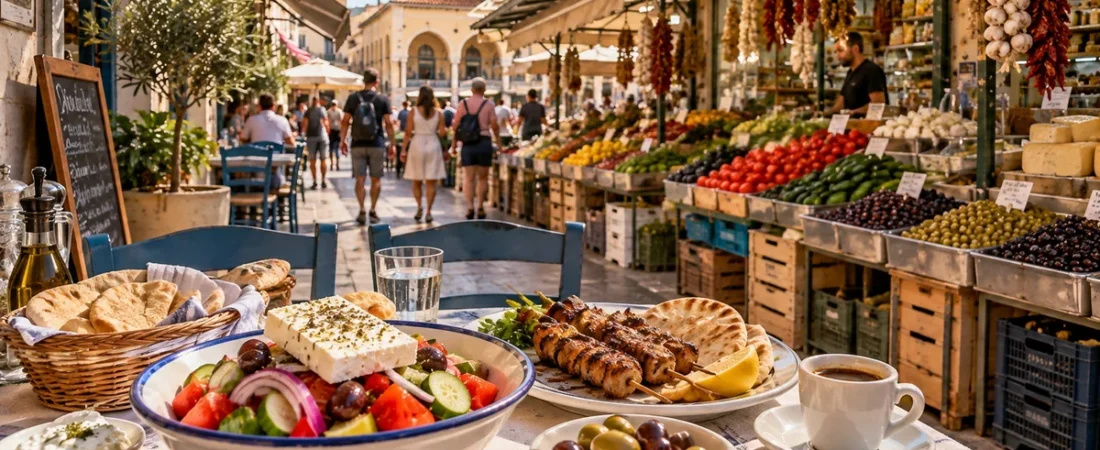
Food is one area where Athens can work well for both budget and higher-spending travellers.
You do not need to eat at expensive restaurants to enjoy Greek cuisine.
Breakfast
A bakery breakfast with coffee and a pastry might cost approximately €4–€8.
A larger sit-down breakfast or brunch can cost around €10–€18 or more.
If your hotel includes breakfast, this can reduce daily food spending.
Souvlaki and Gyros
Souvlaki and gyros are among the easiest ways to eat affordably in Athens.
A pita wrap may cost roughly €4–€6, depending on the restaurant and location.
A larger plated meal will cost more.
This means travellers can enjoy a filling lunch without spending restaurant-level prices every time.
Taverna Meals
At a casual Greek taverna, allow approximately €15–€30 per person for a meal, depending on what you order.
Sharing starters can work particularly well in Greece.
A meal might include Greek salad, tzatziki, grilled vegetables, meat or fish dishes and bread.
Seafood and restaurants in premium tourist locations can push the price considerably higher.
Mid-Range Restaurant Dinner
A restaurant dinner with multiple courses and drinks may cost roughly €25–€45 per person.
Restaurants with exceptional Acropolis views or fashionable rooftop locations can charge substantially more.
You are often paying for the setting as well as the food.
Coffee Costs
Coffee is an important part of everyday Athens life.
Allow around €2–€5 for coffee depending on the type of drink and where you order it.
Sitting at a fashionable café may cost more than taking a coffee away.
Instead of treating coffee stops as unnecessary spending, many travellers consider them part of the Athens experience.
Drinks and Alcohol
A bottle of water from a supermarket or kiosk is inexpensive.
Soft drinks and juices cost more in restaurants.
Beer might cost around €4–€7 in many casual venues.
Wine varies enormously.
A glass of house wine at a neighbourhood taverna can be reasonably priced, while cocktails at rooftop bars overlooking the Acropolis may cost significantly more.
If you’re watching your budget, enjoy one rooftop drink rather than spending an entire evening there.
Athens Public Transport Costs
Athens has relatively affordable public transportation.
The standard 90-minute urban ticket currently costs €1.20.
It covers eligible journeys on buses, trolleybuses, trams and the urban portions of the metro network during its validity period.
A 24-hour ticket currently costs €4.10.
For many tourists, however, walking plus occasional €1.20 tickets may cost less than purchasing a day ticket.
Calculate how many journeys you realistically expect to make.
Athens Airport Transport Costs
Athens International Airport lies outside the standard central fare area.
The Airport Express bus currently costs €5.50 one way.
The Metro airport ticket currently costs €9 one way.
A Metro airport return ticket is currently €16.
There is also a 3-day tourist ticket costing €20, which includes eligible urban transport for three 24-hour periods and two airport journeys by Metro or Airport Express bus.
Do not automatically buy the tourist ticket.
Compare the €20 price with the individual journeys you expect to make.
Can You Pay Contactless on Athens Transport?
Yes.
Athens public transport supports contactless payment with eligible bank cards and NFC-enabled devices for full-fare products including the €1.20 urban fare, €4.10 daily fare and airport fares.
This can be convenient for visitors who do not want to purchase a separate ticket before every journey.
Use the same card or device consistently when tapping.
How Much Should You Budget for Athens Transport?
If you stay in Plaka, Koukaki, Monastiraki or Syntagma, you can walk to many major attractions.
A 3-day visitor might therefore spend surprisingly little on city transportation.
A reasonable planning budget might be:
€5–€15 for local public transport over several days if you walk extensively.
Add €5.50–€9 each way for airport transport depending on whether you choose the express bus or Metro.
Travellers using taxis will naturally spend more.
Acropolis Ticket Cost
The Acropolis is likely to be the most important paid attraction on your first Athens trip.
Standard admission is currently €30.
The site includes the Parthenon, Erechtheion, Temple of Athena Nike and other major monuments on the Acropolis.
This is one expense we recommend planning into your Athens budget rather than trying to avoid.
For most first-time visitors, the Acropolis is fundamental to understanding the city.
Ancient Agora Ticket Cost
Standard admission to the Ancient Agora is currently €20.
The site contains one of Athens’ most impressive ancient monuments, the Temple of Hephaestus.
The reconstructed Stoa of Attalos and its museum are also part of the experience.
Our 3 days in Athens itinerary places the Ancient Agora on Day 2 so you can explore it alongside Monastiraki and Psirri.
Acropolis Museum Cost
The Acropolis Museum is separate from the Acropolis archaeological site.
Allow around €20 for standard admission under the current pricing.
The museum provides valuable context for what you see on the hill above.
If your sightseeing budget is limited, the Acropolis and Acropolis Museum are two of the strongest paid attractions to prioritise.
Other Attraction Costs
Your sightseeing budget can rise quickly if you enter every archaeological site and museum.
Before buying tickets, decide which places genuinely interest you.
Some travellers love archaeology and will happily spend much of their budget on ancient sites.
Others may prefer to pay for the Acropolis and one museum while experiencing the rest of Athens through neighbourhoods and free attractions.
There is no need to collect ticket stubs from every site simply because it appears on a map.
Free Things to Do in Athens
Athens has numerous free experiences that can substantially reduce your sightseeing budget.
You can explore Plaka, Anafiotika, Monastiraki and Psirri without admission.
Syntagma Square and the changing of the guard are free.
The National Garden is free.
Walking up Philopappos Hill costs nothing.
Walking to the summit of Lycabettus Hill is free, although the funicular costs extra.
You can also walk around the Acropolis pedestrian area and enjoy numerous views of ancient monuments without entering every archaeological site.
Our next Athens article will cover the best free experiences in much greater detail.
Example Budget: 3 Days in Athens for a Budget Traveller
Here is a simple planning example for one person.
Accommodation
3 nights in hostel or budget accommodation: approximately €90–€180.
Food
Around €25–€35 per day: approximately €75–€105.
Attractions
Acropolis plus one or two additional attractions: approximately €50–€70.
Local Transport
Approximately €5–€10, depending on how much you walk.
Airport Transport
Approximately €11 return by Airport Express bus or €16 return using the dedicated Metro return product.
Approximate Total
Around €230–€380 for 3 days, excluding flights and discretionary shopping.
Actual spending can fall outside this range.
Example Mid-Range Athens Budget for 3 Days
A couple sharing a comfortable hotel may budget approximately:
Hotel
€140–€200 per night × 3 nights = €420–€600 per room.
Per person when shared: €210–€300.
Food
Approximately €45–€70 per person per day = €135–€210.
Attractions
Approximately €70–€100 depending on museums and sites selected.
Transport
Approximately €20–€35, including airport transportation.
Extras
Coffee, drinks and small purchases: approximately €40–€80.
Approximate Total Per Person
Around €475–€725 for 3 days, excluding flights.
This provides a comfortable trip without requiring luxury spending.
Example Comfortable Athens Budget for 3 Days
A traveller choosing an upscale hotel, frequent restaurant meals, taxis and guided experiences might spend:
Accommodation share: €375–€700+
Food and drinks: €200–€350
Attractions and tours: €120–€250+
Transport: €50–€100
Extras: €100+
That produces a 3-day budget of roughly €845–€1,500+ per person, excluding flights.
Luxury hotels and private experiences can push the total much higher.
How to Save Money in Athens
Walk whenever practical.
Central Athens is compact enough that many major attractions can be linked on foot.
Eat some meals at bakeries, markets and casual souvlaki shops rather than restaurants.
Choose accommodation based on total price rather than the advertised nightly rate.
Use public transport instead of taxis for airport transfers if convenient.
Visit free viewpoints instead of paying for every rooftop terrace.
Carry water rather than repeatedly buying drinks in tourist areas.
Prioritise the paid attractions you genuinely want to see.
Spend time exploring neighbourhoods, which is one of the best Athens experiences and costs nothing.
Is the Athens 3-Day Tourist Transport Ticket Worth It?
The 3-day tourist ticket currently costs €20 and includes two airport journeys plus unlimited eligible urban travel during its validity period.
Whether it saves money depends on your itinerary.
For example, the dedicated Metro airport return currently costs €16.
If you use the Metro both ways, the tourist ticket costs only €4 more while adding 3 days of eligible city transport.
That can be attractive.
However, if you use the Airport Express bus both ways, the return cost is €11.
You would then need enough additional urban transport use to justify the difference.
Compare your own travel plans before purchasing.
Cash or Card in Athens?
Cards are widely useful in Athens, particularly at hotels, restaurants and established businesses.
It is still sensible to carry a small amount of cash.
Small purchases, markets and occasional independent businesses may be easier with cash.
Do not carry large amounts unnecessarily.
Using a travel card with low foreign-exchange fees can also reduce banking costs.
Should You Tip in Athens?
Tipping practices in Greece are generally less rigid than in countries where a large percentage is expected automatically.
At restaurants, visitors often round up the bill or leave a modest tip when service has been good.
For a larger restaurant meal, around 5–10% may be appreciated for good service, but check whether any service charge is already included.
You can also round up taxi fares or leave small tips for exceptional service.
Treat tipping as part of your discretionary budget rather than a fixed percentage on every transaction.
Is Athens Expensive Compared With Other European Capitals?
Athens can provide good value, particularly for food and public transport.
Accommodation in the most desirable central areas can still be expensive during popular periods.
Paid archaeological sites have also become a meaningful part of the sightseeing budget.
The easiest way to keep Athens affordable is to balance paid historical attractions with free neighbourhood exploration.
Spend where Athens is unique — the Acropolis and major archaeological sites — and save money on activities that can be enjoyed freely.
How Much Money Do You Need for 3 Days in Athens?
Excluding flights, a useful starting estimate per person is:
Budget: approximately €230–€380.
Mid-range: approximately €475–€725.
Comfortable: approximately €845–€1,500+.
These figures are not spending targets.
They are planning ranges to help you understand the likely scale of your trip.
Your accommodation choice can move the total significantly in either direction.
How Much Money Do You Need for 5 Days in Athens?
For five days, a budget traveller might plan approximately €350–€600, excluding flights.
A mid-range traveller might spend approximately €700–€1,100.
A comfortable traveller could easily exceed €1,300.
Longer stays can sometimes reduce the average daily cost because airport transportation and major attraction expenses are spread across more days.
Final Athens Travel Budget
Athens does not have to be an expensive destination.
A carefully planned trip can combine world-famous ancient monuments with inexpensive Greek food, affordable public transportation and numerous free experiences.
For most travellers, accommodation is the biggest variable.
Choose a central neighbourhood, walk whenever practical and decide in advance which paid attractions matter most.
A reasonable Athens travel budget for a mid-range traveller is around €120–€200 per person per day, excluding flights, assuming two people share a hotel room.
Budget travellers can spend less, while upscale accommodation, rooftop dining, taxis and private tours can quickly increase the total.
For planning the sightseeing portion of your trip, follow our 3 days in Athens itinerary. For seasonal planning, read our best time to visit Athens guide, and compare accommodation areas in our where to stay in Athens guide.
Explore more places through our destinations page or browse our complete collection of itineraries.