
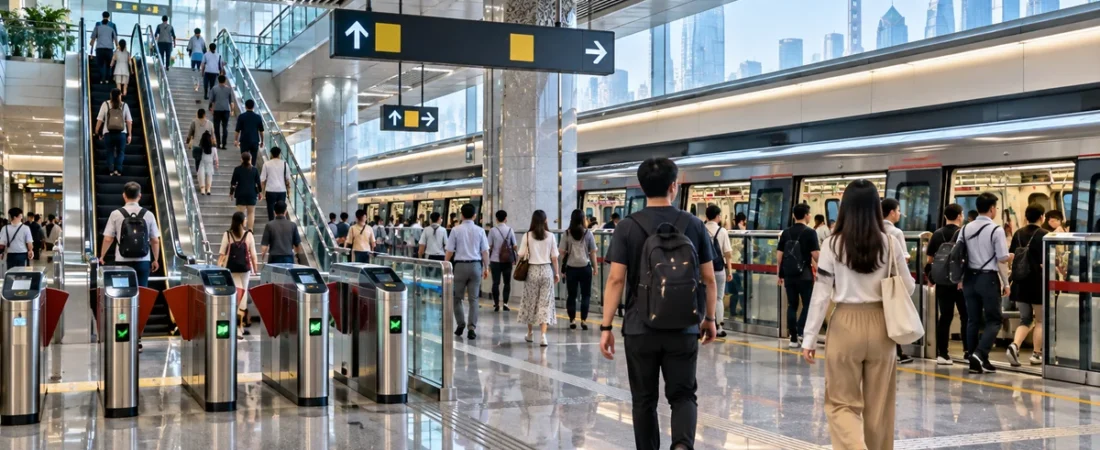
Planning a Shanghai travel budget is relatively flexible because the city offers everything from inexpensive Metro journeys and local meals to luxury hotels, observation decks and fine dining. Accommodation will usually be your largest expense, while public transport can be surprisingly affordable for such a large city.
A budget-conscious traveller can explore Shanghai without spending heavily by using the Metro, eating at casual local restaurants and enjoying free attractions such as the Bund and historic neighbourhoods. Mid-range travellers can add comfortable central hotels, paid attractions and occasional taxis without requiring a luxury-level budget.
This guide breaks down the approximate cost of accommodation, food, transport, sightseeing and a 3-day Shanghai trip.
For general trip planning, see our Shanghai travel guide.
Price note: All prices in this article are approximate and were checked at the time of publication. Prices may change.
How Much Does Shanghai Cost Per Day?
Excluding international flights, a useful daily planning range per person is:
- Budget traveller: ¥350–¥650 per day
- Mid-range traveller: ¥700–¥1,400 per day
- Higher-end traveller: ¥1,500+ per day
These figures assume accommodation costs are divided appropriately when two people share a room.
Your actual spending depends heavily on hotel choice.
Shanghai has inexpensive everyday food and transport, but premium hotels and upscale restaurants can quickly increase the total.
Accommodation Costs in Shanghai
Accommodation is likely to be your biggest expense.
Budget Accommodation
Hostels and simple rooms may cost roughly ¥100–¥300 per night.
Private rooms in convenient central locations will normally cost more than dormitory beds or accommodation farther from the main visitor districts.
Mid-Range Hotels
A comfortable mid-range hotel might cost approximately ¥400–¥900 per night.
Rates vary considerably according to neighbourhood, dates and hotel quality.
Higher-End Hotels
Upscale properties frequently start around ¥1,000 per night, while luxury hotels overlooking the Bund or Pudong skyline can cost considerably more.
If you haven’t chosen a neighbourhood yet, our guide to where to stay in Shanghai compares the main areas.
Booking outside major Chinese public holidays can improve both availability and your choice of rates.
Shanghai Metro Costs
The Metro is generally the best-value way to travel around Shanghai.
At the time of publication, the current fare system starts at ¥3 for journeys up to 6 kilometres, with fares increasing according to distance.
Shanghai has been reviewing proposals for a new fare structure during 2026, so travellers should check the latest fare information shortly before visiting.
Even with possible future changes, public transport remains one of the easiest areas in which to control your Shanghai travel budget.
For a typical sightseeing day, allowing around ¥15–¥30 for Metro journeys gives most visitors a reasonable planning estimate.
Shanghai Airport Transport Costs
Pudong International Airport is significantly farther from central Shanghai than Hongqiao Airport.
The Metro provides a budget-friendly option.
Shanghai’s Maglev connects Pudong International Airport with Longyang Road.
The current standard Maglev fare is ¥50 one way or ¥80 return.
A combined Maglev and Metro pass is also available, with the single-Maglev version costing ¥55 and the round-trip version ¥85.
Travellers prioritising price over speed can use regular public transport instead.
Taxis are more convenient with heavy luggage but cost considerably more than the Metro.
Taxi Costs in Shanghai
Shanghai’s standard taxi starting fare is currently ¥14 for the first 3 kilometres.
The standard distance rate after that is ¥2.7 per kilometre, with additional rules for longer journeys, waiting time and nighttime travel.
From 11 PM to 5 AM, surcharges apply.
Taxis are therefore useful when travelling with luggage, late at night or between places that require inconvenient Metro connections.
For everyday sightseeing, however, relying mainly on the Metro will keep costs lower.
Food Costs in Shanghai
Food can fit almost any budget.
Budget Meals
Simple local meals, noodles, dumplings and casual restaurants can often cost approximately ¥20–¥50 per person.
Local bakeries, convenience stores and small restaurants can also help keep breakfast and snack costs down.
Mid-Range Meals
Allow approximately ¥60–¥150 per person for a more comfortable restaurant meal.
Prices vary enormously depending on location and cuisine.
Higher-End Dining
Upscale restaurants can easily cost ¥300 or more per person, particularly when ordering premium dishes, alcohol or dining in luxury hotels.
You don’t need an expensive food budget to eat well in Shanghai.
Trying xiaolongbao, shengjianbao, noodles and other everyday dishes can be both affordable and an important part of the travel experience.
Attraction Costs
Many of Shanghai’s most memorable experiences cost little or nothing.
Walking along the Bund is free.
Exploring the historic streets around the Former French Concession is free.
Nanjing Road, People’s Square and many public parks can also be enjoyed without admission charges.
Paid attractions can include Yu Garden, observation decks, river cruises, temples and special exhibitions.
Prices vary, so don’t build your budget around outdated admission fees.
Instead, choose 2 or 3 paid experiences that genuinely interest you and combine them with Shanghai’s many free sights.
Our 3 Days in Shanghai itinerary shows how to organise the main attractions efficiently.
How Much Should You Budget for Sightseeing?
A traveller focusing heavily on free attractions could spend very little on admission.
Allowing approximately ¥100–¥300 per person over 3 days provides room for several modest paid attractions.
If you want observation decks, premium cruises or multiple ticketed experiences, increase this amount substantially.
Shanghai doesn’t require a large sightseeing budget to be enjoyable.
Some of its best experiences involve simply walking along the river or exploring neighbourhoods.
Free Things to Do
Keeping costs down is easy if you mix paid attractions with free activities.
You can:
- Walk along the Bund
- Explore Nanjing Road
- Walk through People’s Square
- Explore historic neighbourhood streets
- Visit the Pudong waterfront
- Walk around Xintiandi
- Explore parts of Jing’an
- Photograph Shanghai’s skyline
We will cover Shanghai’s best genuinely free attractions in detail in the final article of this city cluster.
Sample Budget for 3 Days in Shanghai
Here’s a rough example for one budget-conscious traveller, excluding international flights.
Accommodation
3 nights in budget accommodation:
¥450–¥900
Food
Approximately ¥100–¥180 per day:
¥300–¥540
Local Transport
Metro and occasional additional transport:
¥60–¥120
Attractions
A mixture of free sights and a few paid experiences:
¥100–¥300
Estimated 3-Day Total
Approximately:
¥910–¥1,860 per person
This is a planning range rather than a fixed cost.
A shared private hotel room can change the calculation, while premium attractions and nightlife can increase spending quickly.
Sample Mid-Range Budget
A traveller choosing a comfortable hotel, restaurants and several paid attractions might spend roughly:
Accommodation
3 nights:
¥1,500–¥2,700 per room
Food
3 days:
¥600–¥1,200 per person
Transport
¥100–¥250 per person
Attractions and Entertainment
¥300–¥800 per person
For two people sharing a hotel room, this gives a broad mid-range planning estimate of roughly ¥1,750–¥3,600 per person for 3 days.
How to Save Money in Shanghai
Use the Metro rather than taxis for most journeys.
Stay near a useful Metro station instead of paying solely for a famous address.
Eat some meals at local restaurants rather than tourist-focused waterfront venues.
Combine paid attractions with free neighbourhood walks.
Check visibility before buying an expensive observation-deck ticket.
Avoid major Chinese public holidays when hotel demand can rise sharply.
Our guide to the best time to visit Shanghai explains the main seasonal and holiday considerations.
Cash and Mobile Payments
Mobile payments are widely used in Shanghai.
International visitors should check the latest procedures for using eligible foreign bank cards with supported Chinese payment platforms before travelling.
International bank-card acceptance has also expanded in Shanghai’s transport system.
Keep more than one payment method available rather than relying entirely on a single app or card.
A modest amount of cash can also be useful as a backup.
Is Shanghai Expensive?
Shanghai can be expensive if you choose luxury hotels, rooftop restaurants and premium attractions, but it doesn’t have to be.
Public transport remains affordable, many major sights are free, and local food can provide excellent value.
For most travellers, accommodation is the expense that deserves the most attention.
Control your hotel costs, use public transport and select paid attractions carefully, and Shanghai can be surprisingly manageable.
A realistic Shanghai travel budget gives you enough flexibility to enjoy the city without monitoring every yuan while still avoiding unnecessary spending.
Explore more places through our destinations page or browse our complete collection of itineraries.