
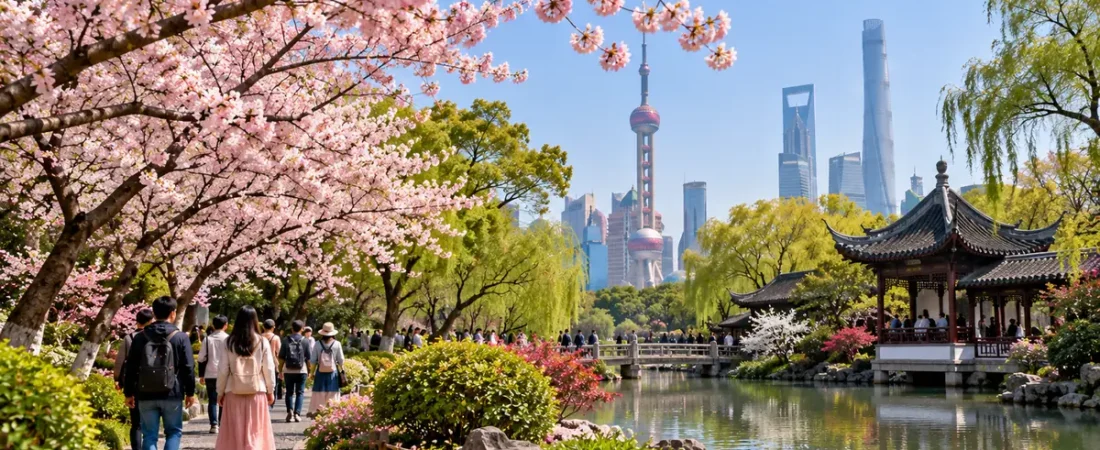
The best time to visit Shanghai is generally during spring and autumn, when temperatures are more comfortable for walking and outdoor sightseeing. April to May and late September to November can offer a good balance of pleasant weather, seasonal scenery and manageable conditions for exploring the city.
Shanghai has four distinct seasons. Summers are hot, humid and rainy, while winters can be cold and damp. The timing of major Chinese public holidays also matters because domestic travel can increase dramatically during these periods.
This guide explains Shanghai’s seasons, crowds and major holiday periods so you can choose the right time for your trip.
For general planning, attractions and transport information, see our Shanghai travel guide. You can also use our 3 Days in Shanghai itinerary to organise your sightseeing.
Price note: All prices in this article are approximate and were checked at the time of publication. Prices may change.
Best Time to Visit Shanghai Overall
For most first-time visitors, April, May, October and November are among the most attractive months.
Spring brings greener parks, flowers and generally comfortable sightseeing conditions, although rain is possible.
Autumn tends to offer milder temperatures after the summer heat and can be excellent for walking along the Bund, exploring historic neighbourhoods and spending time outdoors.
However, there is one major exception: China’s National Day holiday.
In 2026, the official National Day holiday runs from October 1 to October 7. This is an extremely important domestic travel period, so visitors who have flexibility may prefer dates later in October.
Shanghai in Spring: March to May
Spring is one of the best seasons for visiting Shanghai.
March
March marks the transition from winter into spring.
Conditions can still feel cool, particularly in the mornings and evenings, so bring layers.
Parks and gardens gradually become greener as the season develops.
March can work well if you prefer sightseeing before the warmer months and don’t mind variable weather.
April
April is an excellent month for outdoor exploration.
Spring flowers and fresh greenery make Shanghai’s parks and tree-lined neighbourhoods particularly attractive.
Walking through areas such as the historic streets around the Former French Concession becomes more enjoyable before summer humidity arrives.
There is a public holiday around Qingming Festival. In 2026, the official Qingming holiday runs from April 4 to 6, so attractions and transport can become busier around those dates.
May
May generally brings warmer conditions and remains a good month for sightseeing.
However, China’s Labour Day holiday is an important consideration.
In 2026, the official Labour Day break runs from May 1 to May 5.
Domestic tourism can increase substantially during the holiday, so consider visiting later in May if you want a calmer experience.
Shanghai in Summer: June to August
Summer is Shanghai’s hottest and most humid season.
It is still possible to enjoy the city, but sightseeing requires more planning.
June
June becomes increasingly warm and humid, with wetter conditions possible.
Carry a compact umbrella and plan some indoor attractions alongside outdoor sightseeing.
Museums, shopping centres and cafés provide useful breaks during rainy periods.
July
July is typically hot and humid.
Walking outside for hours during the middle of the day can become uncomfortable.
If visiting in July, schedule outdoor attractions such as the Bund earlier in the morning or later in the afternoon.
Use the hottest part of the day for museums, shopping or a long lunch.
August
August continues the hot and humid summer pattern.
Shanghai can also be affected by tropical weather systems during the warmer months, which can disrupt flights, trains and sightseeing plans.
Monitor local forecasts closely during your trip.
Summer travellers should pack breathable clothing, sun protection and rain protection and maintain some flexibility in their itineraries.
Shanghai in Autumn: September to November
Autumn is another excellent season for visiting Shanghai.
Temperatures gradually become more comfortable after summer, making long neighbourhood walks much easier.
September
Early September can still feel warm and humid, but conditions generally begin improving as the month progresses.
Late September can be attractive, although public holiday dates need attention.
In 2026, the Mid-Autumn Festival holiday runs from September 25 to 27.
October
October can offer some of Shanghai’s most comfortable sightseeing weather.
However, avoid assuming that the entire month is equally quiet.
The National Day holiday runs from October 1 to 7 in 2026, creating one of China’s major annual travel periods. Transport hubs and popular attractions can become exceptionally busy.
If possible, visit after this holiday period.
Later October can be an excellent time for the Bund, Yu Garden and long walks through Shanghai’s historic neighbourhoods.
November
November is another strong choice.
Temperatures become cooler, but conditions can remain comfortable for outdoor sightseeing with appropriate clothing.
Visitor pressure can also be easier to manage than during major holiday periods.
For travellers who prioritise walking, architecture and neighbourhood exploration, November deserves serious consideration.
Shanghai in Winter: December to February
Winter is Shanghai’s coldest season.
The city doesn’t normally experience the severe winter conditions found in northern China, but cold temperatures combined with damp weather can make it feel chilly.
December
December can be a good option for travellers comfortable with colder weather.
Pack a proper jacket and layers, particularly for evening walks along the Huangpu River.
One advantage is that you avoid summer’s heat and humidity.
January
January is generally among Shanghai’s colder periods.
Outdoor sightseeing remains possible, but you’ll appreciate indoor attractions between longer walks.
Clear winter days can still provide impressive skyline views.
February
February conditions vary from year to year, but the major planning consideration is often Spring Festival.
In 2026, China’s official Spring Festival holiday runs from February 15 to February 23.
This is one of the country’s most important holiday periods. Transport demand can become extremely high as people travel around China.
If your trip overlaps Spring Festival, make transport and accommodation arrangements well ahead.
When Is Shanghai Most Crowded?
Shanghai is a huge city and major attractions can be busy throughout the year.
However, Chinese public holidays can create a much more significant increase in domestic travel.
For 2026, particularly important periods include:
- Spring Festival: February 15–23
- Qingming Festival: April 4–6
- Labour Day: May 1–5
- Dragon Boat Festival: June 19–21
- Mid-Autumn Festival: September 25–27
- National Day: October 1–7
If you have flexibility, avoiding the largest holiday periods can make transport, accommodation and sightseeing easier.
Best Time for the Bund
The Bund can be visited throughout the year.
Spring and autumn are particularly comfortable for walking along the waterfront.
Regardless of season, early morning is best if you want fewer people.
Evening provides the famous illuminated Pudong skyline but attracts larger crowds.
On very hot summer days, visit around sunset rather than during the afternoon.
Best Time for Parks and Gardens
Spring is particularly attractive for Shanghai’s parks and gardens.
Flowers, blossoms and fresh foliage add colour to green spaces across the city.
Autumn provides another appealing period as temperatures cool.
Yu Garden can be visited throughout the year, although its popularity means timing within the day can matter almost as much as the season.
Arrive early when possible.
Best Time for Budget Travellers
Accommodation prices vary according to demand, events and holidays rather than following one simple seasonal pattern.
Travelling outside major public holidays generally gives you a better chance of finding reasonable hotel availability.
Winter can sometimes provide attractive accommodation rates, but compare actual prices for your dates before deciding.
For accommodation ideas, see our guide to where to stay in Shanghai.
What to Pack for Shanghai
Spring
Bring layers, comfortable walking shoes and rain protection.
Summer
Pack lightweight breathable clothing, sun protection and an umbrella.
Autumn
Light layers work well, with a warmer jacket becoming useful later in the season.
Winter
Bring a warm jacket and layers. The damp winter climate can feel colder than the temperature alone suggests.
Comfortable footwear is essential year-round because exploring Shanghai involves substantial walking even when you use the Metro.
So, When Should You Visit Shanghai?
For most travellers, April to May and mid-October to November provide the best combination of comfortable sightseeing conditions and seasonal atmosphere.
Choose spring if flowers, gardens and greener neighbourhoods appeal to you.
Choose autumn if you prefer cooler walking weather and want to avoid summer humidity.
Summer works if your schedule is fixed, but prepare for heat, humidity and rain.
Winter is suitable for travellers who don’t mind colder conditions and prefer visiting outside the warmer peak periods.
Most importantly, check China’s public holiday calendar before booking. A trip during a major national holiday can feel very different from visiting the same city just one or two weeks later.
Explore more places through our destinations page or browse our complete collection of itineraries.