
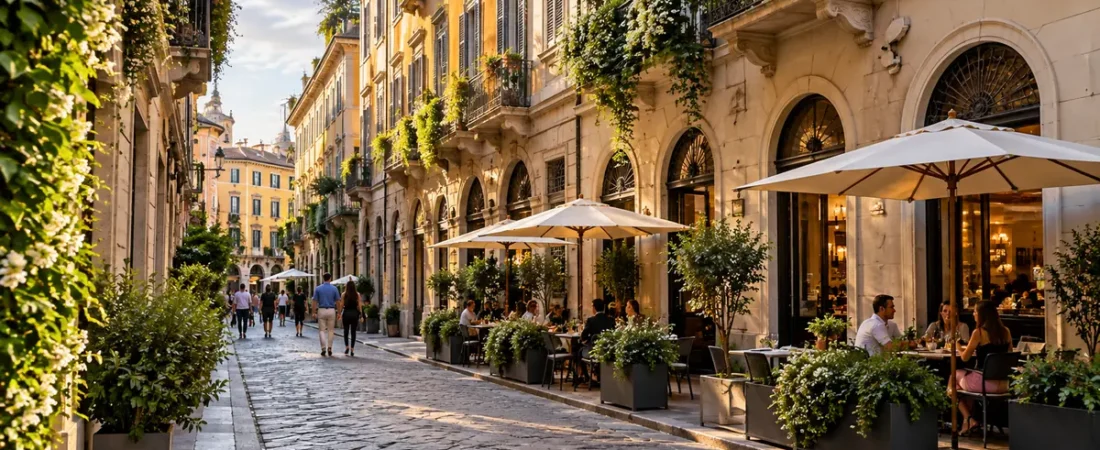
Choosing where to stay in Milan can make a significant difference to your trip. Milan is a large city, but many of its main attractions are concentrated around the historic centre and are connected by an efficient metro, tram and bus network. The best neighbourhood for you will depend on whether you prioritise sightseeing, nightlife, shopping, restaurants, transport connections or a quieter local atmosphere.
For most first-time visitors, Centro Storico, Brera, Navigli, Porta Venezia and the areas around Milano Centrale are among the most practical choices. This guide explains the advantages and disadvantages of each area so you can choose the right base for your Milan trip.
If you are still planning the overall trip, start with our Milan travel guide for the city’s main attractions, transport information and essential travel tips.
Price note: All prices in this article are approximate and were checked at the time of publication. Prices may change.
Quick Guide to the Best Areas to Stay in Milan
If you want to stay close to Milan’s biggest attractions, choose Centro Storico.
For beautiful streets, restaurants and a sophisticated atmosphere, consider Brera.
For nightlife, canals and evening dining, Navigli is one of the best options.
For shopping, cafés and a lively neighbourhood atmosphere, look at Porta Venezia.
For convenient train connections and potentially better accommodation value, consider the area around Milano Centrale.
Travellers interested in modern architecture and an upscale contemporary environment may prefer Porta Nuova.
There is no single neighbourhood that suits everyone, so consider what you want to do each day before booking.
Centro Storico – Best for First-Time Visitors
Centro Storico is Milan’s historic centre and the easiest choice for travellers who want to stay close to the city’s most famous sights.
The Duomo di Milano sits at its heart. Nearby attractions include Galleria Vittorio Emanuele II, Teatro alla Scala and some of Milan’s most famous shopping streets.
Why Stay in Centro Storico?
The biggest advantage is location.
If your hotel is reasonably close to Piazza del Duomo, you can begin sightseeing almost immediately after leaving your accommodation. Several important attractions are within walking distance, reducing the amount of time spent travelling across the city.
The area also has excellent metro connections, making it straightforward to reach attractions farther away.
Centro Storico works especially well for first-time visitors spending only two or 3 days in Milan.
Things to Consider
Convenience comes at a price.
Accommodation around the Duomo is often among the most expensive in Milan, particularly during major events, fashion weeks and busy travel periods.
The most tourist-heavy streets can also feel crowded during the day.
If you want a quieter neighbourhood experience or are travelling on a limited accommodation budget, another district may suit you better.
Best for: First-time visitors, short stays, sightseeing and travellers who want to walk to major attractions.
Brera – Best for Atmosphere and Couples
Brera is one of Milan’s most attractive central neighbourhoods.
Cobblestone streets, historic façades, restaurants, cafés, galleries and boutiques give the area a more intimate atmosphere than the streets immediately surrounding the Duomo.
It is still extremely central.
Why Stay in Brera?
Brera offers an excellent balance between sightseeing convenience and neighbourhood character.
The Pinacoteca di Brera is located here, while Sforza Castle, Parco Sempione, La Scala and the Duomo are all accessible on foot from many parts of the district.
Evenings are particularly enjoyable. Restaurants and cafés bring activity to the streets without giving the whole neighbourhood the late-night party atmosphere found in some parts of Navigli.
Brera can be particularly appealing for couples and travellers who enjoy walking around attractive neighbourhoods without needing a fixed sightseeing plan.
Things to Consider
Brera is not a budget district.
Its central location and desirable atmosphere can make accommodation expensive. Rooms in historic buildings may also be smaller than those in more modern hotels elsewhere in Milan.
Best for: Couples, restaurants, atmospheric streets, art lovers and travellers seeking a stylish central base.
Navigli – Best for Nightlife and Evening Atmosphere
Navigli is centred around Milan’s historic canal district and has one of the city’s liveliest evening scenes.
Naviglio Grande is lined with restaurants, bars and cafés, making this an appealing place to stay if you enjoy going out after sightseeing.
Why Stay in Navigli?
The neighbourhood changes character as the day progresses.
During daylight hours, visitors explore the canals, side streets and local shops. By early evening, terraces and bars become busy as people gather for aperitivo and dinner.
Staying here means you can enjoy the atmosphere without needing to travel across Milan late at night.
Navigli also feels visually different from the grand architecture around the Duomo, adding another dimension to a Milan visit.
Things to Consider
Nightlife is both Navigli’s biggest advantage and its main drawback.
Accommodation directly beside the busiest canal streets may experience noise, particularly on weekends. Light sleepers should consider staying a few streets away from the main nightlife areas.
Navigli is also not as convenient as Centro Storico if your priority is stepping outside your hotel and immediately reaching Milan’s headline attractions.
Best for: Nightlife, younger travellers, couples, aperitivo and travellers who enjoy lively evenings.
Porta Venezia – Best for Shopping and Local Energy
Porta Venezia is one of Milan’s most energetic neighbourhoods, combining elegant architecture, shopping, restaurants, cafés and green space.
Corso Buenos Aires, one of Milan’s major shopping streets, begins nearby, while the Giardini Indro Montanelli provide a welcome green space within the city.
Why Stay in Porta Venezia?
Porta Venezia offers a good compromise between central access and a more lived-in neighbourhood atmosphere.
Metro connections make reaching the Duomo and other parts of Milan easy, while many restaurants and cafés are within walking distance.
The area is also known for Art Nouveau architecture and a diverse cultural and nightlife scene.
Travellers staying several days may particularly appreciate having everyday shops, restaurants and public transport close to their accommodation rather than being surrounded entirely by tourist attractions.
Things to Consider
Porta Venezia covers a relatively broad area, so the exact location of your accommodation matters.
Check the walking distance to the nearest metro station before booking rather than relying only on the neighbourhood name.
Best for: Shopping, restaurants, repeat visitors, longer stays and travellers seeking a lively neighbourhood.
Milano Centrale – Best for Train Connections
The neighbourhood surrounding Milano Centrale railway station is one of the most practical bases for travellers arriving or departing by train.
Milano Centrale provides connections to destinations throughout Italy as well as international routes.
Why Stay Near Milano Centrale?
Convenience is the main reason.
If Milan is one stop in a longer Italian or European journey, staying near the station can simplify arrival and departure days considerably.
The area is also useful for travellers planning day trips by train.
Metro connections mean you do not need to stay beside the Duomo to reach central attractions efficiently.
Hotels around Centrale cover a broad range of styles and price levels, which can sometimes provide better value than equivalent accommodation in the historic centre.
Things to Consider
The immediate station surroundings are busy and more functional than romantic.
Travellers imagining picturesque cobbled streets outside their hotel may prefer Brera or another historic neighbourhood.
As around major railway stations in many large cities, stay aware of your belongings in crowded areas and choose accommodation based on recent reviews and its precise location.
Best for: Train travellers, short stays, early departures, day trips and practical transport connections.
Porta Nuova – Best for Modern Milan
Porta Nuova showcases Milan’s contemporary side.
The district around Piazza Gae Aulenti features modern towers, offices, restaurants and pedestrian spaces. Nearby buildings such as Bosco Verticale have become symbols of modern Milanese architecture.
Why Stay in Porta Nuova?
Travellers who prefer contemporary hotels and modern surroundings may find Porta Nuova more appealing than the historic centre.
The neighbourhood is also conveniently positioned between Centrale, Brera and other central districts.
Restaurants, shops and transport connections are readily available, and the pedestrian areas around Piazza Gae Aulenti provide a noticeably different atmosphere from historic Milan.
Things to Consider
Porta Nuova does not provide the classic old-Milan atmosphere that many first-time visitors imagine.
If your priority is opening your hotel door onto cobblestone streets and historic architecture, Brera may be a better choice.
Best for: Modern hotels, business travellers, contemporary architecture and upscale stays.
Isola – Best for a More Local Feel
Just beyond Porta Nuova, Isola has developed into one of Milan’s interesting residential and creative neighbourhoods.
The area mixes traditional buildings with contemporary developments and offers restaurants, cafés and bars without feeling quite as dominated by visitors as the historic centre.
Why Stay in Isola?
Isola can appeal to travellers who have already visited Milan or those who prefer staying slightly away from the principal tourist zone.
Metro access makes it relatively easy to reach central Milan while allowing you to return to a more residential neighbourhood at the end of the day.
Things to Consider
You will generally rely more on public transport than you would in Centro Storico or Brera.
For a very short first visit focused almost entirely on major attractions, a more central neighbourhood may be more efficient.
Best for: Longer stays, repeat visitors, restaurants and travellers looking for a neighbourhood atmosphere.
Which Area Is Best for a First Visit to Milan?
For most first-time visitors, Centro Storico or Brera provides the easiest overall experience.
Centro Storico wins on pure convenience because the Duomo and several major attractions are close by.
Brera offers almost the same central convenience while providing more neighbourhood character, making it particularly attractive if your budget allows.
Travellers prioritising nightlife should consider Navigli, while those using Milan as a rail base may prefer Centrale.
If you have not yet decided how long to spend in the city or which attractions to prioritise, our Milan travel guideprovides a broader overview.
Where to Stay in Milan Without a Car
Most visitors do not need a car in Milan.
In fact, staying near a metro station is usually far more useful than choosing accommodation with parking.
Centro Storico, Brera, Porta Venezia, Centrale, Porta Nuova, Navigli and Isola all provide access to public transport.
When comparing two similarly priced hotels, check their distance from the nearest metro or useful tram route. A hotel slightly outside the centre but only a few minutes from a metro station can be more convenient than accommodation that appears geographically closer but has weaker transport connections.
Milan Tourist Tax
Milan charges a tourist tax to non-residents staying in accommodation within the municipality.
Current rates depend on the accommodation category.
From 1 April 2026, the rate is €3 per person per night for 1-star hotels, €4 for 2-star hotels, €7 for 3-star hotels, €10 for 4-star hotels and €12 for 5-star hotels.
Many B&Bs, holiday apartments, guesthouses and short-term rentals are charged €9.50 per person per night. Youth hostels are charged €3.
Exemptions apply in certain circumstances, so confirm the amount applicable to your stay with your accommodation.
Remember to include the tax when comparing the total cost of different properties.
Tips for Booking Accommodation in Milan
Book well ahead if your trip overlaps with a major fashion event, trade fair, concert or other large event. Accommodation availability can tighten and prices may rise substantially.
Check the exact property location rather than choosing solely by neighbourhood name.
Look at the walking distance to the nearest metro station.
If you are sensitive to noise, avoid rooms directly facing the busiest nightlife streets around Navigli.
Travellers arriving late or leaving early by train may benefit from staying near Centrale for their first or final night.
Check whether breakfast is included before comparing hotel prices.
Review cancellation conditions carefully, particularly when booking months in advance.
Confirm whether the displayed accommodation price includes or excludes Milan’s tourist tax.
Choosing the Right Milan Neighbourhood
The best place to stay in Milan ultimately depends on how you want to experience the city.
Choose Centro Storico for maximum sightseeing convenience.
Choose Brera for attractive streets, restaurants and atmosphere.
Choose Navigli for canals, nightlife and aperitivo.
Choose Porta Venezia for shopping, restaurants and a lively local feel.
Choose Milano Centrale for train connections and practical transport.
Choose Porta Nuova for modern architecture and contemporary hotels.
Choose Isola for a more residential and local experience.
Milan’s public transport makes it possible to stay outside the historic centre without sacrificing easy access to the major sights. For many travellers, choosing a comfortable property near a metro station is more important than paying a premium to stay directly beside the Duomo.
Once you know which neighbourhood suits you, you can build the rest of your Milan trip around it and spend less time travelling between your accommodation and the places you want to explore.
If Milan is part of a longer Italian journey, you can also read our Rome travel guide for another major Italian city.
Explore more places through our destinations page or browse our complete collection of itineraries.