
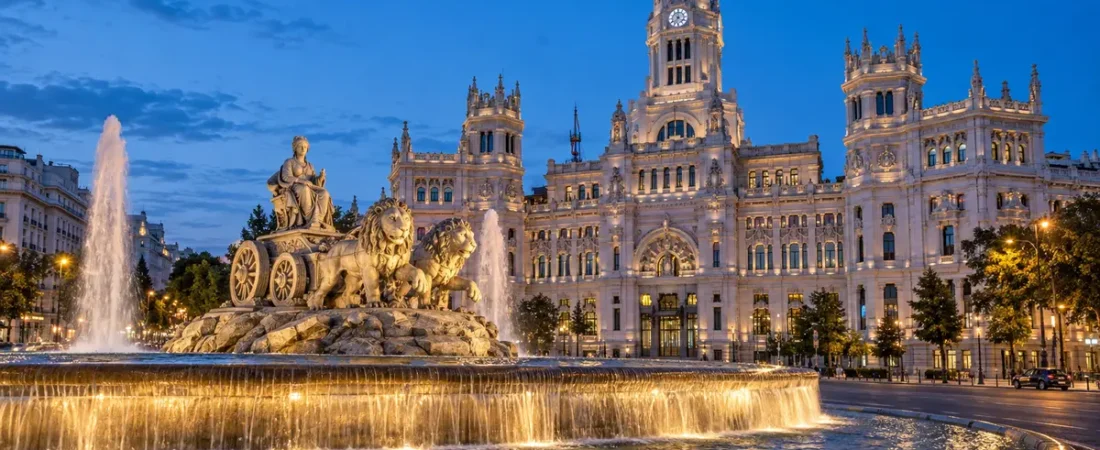
Madrid combines grand royal architecture, world-class art museums, lively neighbourhoods, leafy parks and one of Europe’s most enjoyable food cultures. This Madrid travel guide covers the city’s essential attractions, best areas, transport options, typical costs and practical tips to help first-time visitors plan a rewarding trip to Spain’s capital.
Price note: All prices in this article are approximate and were checked at the time of publication. Prices may change.
Madrid at a Glance
- Country: Spain
- Language: Spanish
- Currency: Euro (€)
- Recommended stay: 3–4 days
- Best months for sightseeing: April–May and September–October
- Main airport: Adolfo Suárez Madrid–Barajas Airport
- Best area for first-time visitors: Centro
- Famous for: Art museums, royal architecture, tapas, football and late-night dining
Top Tours & Experiences in Madrid
Discover popular Madrid tours and experiences. Check current availability, ratings and prices before you book.
Affiliate disclosure: If you book through these links, we may earn a commission from Viator. This does not increase the price you pay.
Why Visit Madrid?
Madrid does not depend on a single famous landmark. Its appeal comes from the complete city experience: palace rooms filled with royal history, masterpieces by Velázquez and Goya, traditional taverns, bustling food markets, elegant boulevards and public squares that remain lively well into the evening.
Many of Madrid’s central attractions are within walking distance of one another. You can explore the historic streets around Plaza Mayor in the morning, spend the afternoon inside a major museum and finish the day enjoying tapas in La Latina or Chamberí.
Madrid is also an excellent starting point for discovering central Spain. Toledo, Segovia, Ávila and the royal monastery at El Escorial are among the most popular day-trip possibilities.
Top Attractions in Madrid
1. Explore Puerta del Sol
Puerta del Sol is one of Madrid’s busiest gathering places and a convenient starting point for exploring the historic centre. The square contains the famous Bear and the Strawberry Tree statue, the symbol of Madrid, and Spain’s Kilometre Zero marker.
From here, it is an easy walk to Gran Vía, Plaza Mayor, the Royal Palace and several of the city’s best-known shopping streets. Visit in the morning if you want to see the square before the largest crowds arrive.
2. Walk Through Plaza Mayor
Plaza Mayor is Madrid’s grand arcaded square, surrounded by red façades, balconies and traditional restaurants. Once used for markets, public ceremonies and celebrations, it is now one of the city’s most recognisable public spaces.
Walking through the square is free. For a less expensive meal, explore the nearby side streets rather than choosing a restaurant directly on the plaza. The surrounding lanes lead towards Mercado de San Miguel and the historic La Latina district.
3. Visit the Royal Palace of Madrid
The Royal Palace is one of Madrid’s most impressive buildings. Although it is still used for official ceremonies, much of the palace is open to visitors. Highlights normally include the grand staircase, Throne Room, Royal Armoury and lavishly decorated state apartments.
Timed tickets are advisable, particularly during weekends and busy holiday periods. Access, opening arrangements and available rooms can change when official events are taking place, so check the palace calendar shortly before visiting.
Beside the palace, Almudena Cathedral is another important stop. General entry to the cathedral is usually donation-based, while its museum and dome require a separate paid ticket.
4. See Masterpieces at the Prado Museum
The Prado Museum houses one of the world’s great collections of European art. Its galleries are especially strong in Spanish, Italian and Flemish painting, with major works by Velázquez, Goya, El Greco, Rubens and Titian.
The standard general-admission ticket is approximately €15. The museum normally opens from 10:00 to 20:00 Monday through Saturday and from 10:00 to 19:00 on Sundays and public holidays. Free-entry periods are generally offered during the final two opening hours, but queues can be long and the available viewing time is limited.
A focused two- or three-hour visit is more manageable than attempting to see every gallery. Reserve a timed ticket if the Prado is one of your priorities.
5. Relax in El Retiro Park
El Retiro is Madrid’s best-known central park and one of the easiest places to take a break from sightseeing. Its paths lead past gardens, fountains, monuments and the large boating lake near the Monument to Alfonso XII.
Entry to the park is free. Rowboat rentals on the lake are optional and paid. The Glass Palace, or Palacio de Cristal, may be closed during restoration or because of weather and heat restrictions, so do not plan your visit around entering the building.
Retiro works particularly well in the early morning or late afternoon, especially during Madrid’s hotter months.
6. Visit the Reina Sofía Museum
The Reina Sofía focuses on modern and contemporary art. Its most famous work is Picasso’s Guernica, accompanied by art from Dalí, Miró and other influential Spanish and international artists.
General admission is approximately €12. The main museum opens from 10:00 to 21:00 on Monday and Wednesday through Saturday. On Sunday it generally opens from 10:00 to 14:30, with a free-entry period from 12:30. The museum is closed on Tuesday.
Free admission is also normally available from 19:00 to 21:00 on Monday and Wednesday through Saturday. A ticket is still required during free periods, and these times can be crowded.
7. Walk Along Gran Vía
Gran Vía is Madrid’s best-known commercial avenue, lined with theatres, shops and ornate early-20th-century buildings. It is lively throughout the day and looks especially attractive after dark, when its façades and theatre signs are illuminated.
Continue towards Plaza de España for views of the Edificio España and the monument to Miguel de Cervantes. From there, Templo de Debod is within walking distance and offers one of Madrid’s most popular sunset locations.
8. Discover Madrid’s Neighbourhoods
Madrid’s character changes noticeably from one neighbourhood to the next:
- La Latina: Traditional taverns, narrow streets and the popular Sunday El Rastro market.
- Malasaña: Independent shops, cafés and energetic nightlife.
- Chueca: Restaurants, boutiques and an inclusive social scene.
- Lavapiés: Multicultural food, street art and a more local atmosphere.
- Barrio de las Letras: Literary history, attractive streets and easy access to the museum district.
- Salamanca: Designer shopping, elegant architecture and upscale accommodation.
Leave at least one evening unplanned so you can explore a neighbourhood without rushing between attractions.
9. See Plaza de Cibeles
Plaza de Cibeles is centred on its famous fountain and surrounded by impressive architecture. The most prominent building is Palacio de Cibeles, now home to Madrid City Hall and a cultural centre.
The square is especially photogenic during blue hour, when the fountain and palace are illuminated. An observation area inside the palace may be available for a small admission charge, subject to opening arrangements.
10. Experience Madrid’s Football Culture
Football fans can visit either the Santiago Bernabéu, home of Real Madrid, or Atlético Madrid’s Riyadh Air Metropolitano stadium.
Stadium-tour routes and access can change around matches, construction work and special events. Check what is included before booking, particularly if entering the stands, dressing rooms or pitch-side areas is important to you.
How to Get From Madrid Airport to the Centre
Adolfo Suárez Madrid–Barajas Airport has four passenger terminals and several convenient transport options.
Airport Express Bus
The Airport Express bus connects the airport with central Madrid, including the Atocha area during its scheduled operating periods. The fare is approximately €5, and the service operates throughout the day and night, although its central stops can vary by time.
Metro
Metro Line 8 connects the airport terminals with Nuevos Ministerios. Passengers using an ordinary metro ticket must normally pay the airport supplement. From Nuevos Ministerios, change to another metro line or local train for your accommodation.
Cercanías Train
Cercanías trains serve Terminal 4 and connect it with stations including Chamartín, Nuevos Ministerios and Atocha. Travellers arriving at another terminal can use the airport’s terminal-transfer service to reach Terminal 4.
Taxi
Official airport taxis use a fixed fare of approximately €33 for journeys between the airport and addresses inside the M-30 ring road. Use the marked taxi rank and ignore unofficial transport offers inside the terminal.
Getting Around Madrid
Central Madrid is highly walkable, but the metro is useful for longer journeys. The network is extensive and generally operates from early morning until around 01:30.
A standard Zone A metro ticket costs approximately €1.50–€2, depending on the applicable fare rules at the time of travel. Ordinary EMT city-bus tickets are approximately €1.50. Madrid has announced fare changes, so confirm the current amount at the ticket machine before purchasing.
For multiple journeys, compare a ten-trip ticket with the Tourist Travel Pass. Tourist passes offer unlimited journeys for a fixed number of consecutive days and include the airport metro supplement, but the Airport Express bus is excluded.
A rechargeable Multi Card may be required for certain transport products. Travellers mainly staying in Centro may find that walking and occasional single tickets cost less than an unlimited pass.
Where to Stay in Madrid
Centro
Centro is the most convenient choice for first-time visitors. Staying near Sol, Gran Vía or Plaza Mayor places many major attractions within walking distance, though rooms facing busy streets can be noisy.
Barrio de las Letras
This atmospheric district is ideal for museum visitors. The Prado, Thyssen-Bornemisza and Reina Sofía are all nearby, while the neighbourhood offers plenty of restaurants and attractive evening walks.
Malasaña
Choose Malasaña for cafés, independent shops and nightlife. It suits travellers who prefer a creative, youthful neighbourhood, but some streets remain active late at night.
Salamanca
Salamanca offers elegant hotels, designer shopping and a quieter environment. Accommodation and dining tend to be more expensive than in the historic centre.
Chamberí
Chamberí has a residential feel, good local restaurants and straightforward metro connections. It is a strong choice for visitors who want to stay away from the busiest tourist streets without being far from the centre.
Best Time to Visit Madrid
Spring and autumn offer the most comfortable conditions for walking and sightseeing. April and May bring mild temperatures and greener parks, while September and October are generally warm without the most intense summer heat.
July and August can be extremely hot during the afternoon. If visiting in summer, schedule outdoor attractions early, spend the hottest hours in museums and resume sightseeing in the evening.
Winter is cooler but often bright and relatively dry. December has Christmas lights and seasonal markets, while January and February can provide lower accommodation prices outside major events.
What to Eat in Madrid
Madrid’s food scene ranges from traditional taverns to modern restaurants and international dining. Local dishes and snacks worth trying include:
- Cocido madrileño: A rich chickpea, vegetable and meat stew.
- Bocadillo de calamares: A fried-calamari sandwich associated with the Plaza Mayor area.
- Patatas bravas: Fried potatoes served with a spicy sauce.
- Huevos rotos: Potatoes topped with fried eggs, often with ham.
- Churros con chocolate: Churros served with thick hot chocolate.
- Tortilla española: A Spanish potato omelette found in cafés and tapas bars.
Madrid eats later than many destinations. Lunch often begins after 14:00, while dinner from 21:00 is normal. Some restaurants close between lunch and dinner service.
Typical Madrid Travel Costs
Madrid can accommodate different budgets, but prices rise around major events and busy weekends.
- Hostel dorm bed: €25–€55 per night
- Budget private room: €70–€130 per night
- Mid-range double room: €130–€230 per night
- Coffee: €1.80–€3
- Simple breakfast: €4–€8
- Menu del día lunch: €14–€22
- Casual dinner: €18–€35 per person
- Metro or city-bus journey: Approximately €1.50–€2
- Major museum admission: Approximately €12–€20
Accommodation will usually be the largest expense. Staying one or two metro stops outside Sol and Gran Vía can reduce the nightly rate without making sightseeing difficult.
Suggested Three-Day Madrid Plan
Day 1: Historic Madrid
Begin at Puerta del Sol, walk to Plaza Mayor and explore the surrounding historic lanes. Continue to Almudena Cathedral and the Royal Palace. Finish with sunset at Templo de Debod or dinner in La Latina.
Day 2: Art and Retiro
Spend the morning at the Prado Museum before walking through El Retiro Park. Visit the Reina Sofía in the afternoon or during its evening free-entry period. Have dinner in Barrio de las Letras.
Day 3: Modern Madrid and Local Neighbourhoods
Walk along Gran Vía, visit Plaza de Cibeles and explore Chueca or Malasaña. Football fans can substitute a stadium tour. End the trip with tapas in Chamberí or a relaxed evening around Plaza de Santa Ana.
If you are continuing through Europe, our Paris travel guide and Rome travel guide can help you compare other major capital-city experiences.
Practical Madrid Travel Tips
- Reserve the Royal Palace and major museums in advance during busy periods.
- Carry a refillable bottle and take regular breaks during summer.
- Keep phones and wallets secure in crowded squares, metro carriages and markets.
- Wear comfortable shoes because many central streets are best explored on foot.
- Check restaurant opening times rather than assuming dinner service starts early.
- Avoid unofficial taxi offers at the airport.
- Confirm attraction schedules close to your visit because ceremonies, maintenance and special events can affect access.
- Learn a few basic Spanish phrases; English is common in major tourist areas but less universal in neighbourhood businesses.
Is Madrid Worth Visiting?
Madrid is an excellent choice for travellers who enjoy art, food, architecture and city life. It offers enough major sights for a busy short break, but its parks, neighbourhoods and evening culture reward visitors who stay longer.
Three full days provide a satisfying introduction. Four days allow more time for museums and local areas, while a fifth day makes it easier to include an excursion to Toledo, Segovia or El Escorial.
Madrid feels monumental without being difficult to explore. Its walkable centre, efficient transport network and mixture of royal history and contemporary culture make it one of Europe’s most enjoyable capital cities.
Book Your Madrid Experiences
Ready to start planning? Compare popular Madrid tours and activities, check current prices and availability, and book the experiences that suit your trip.
Affiliate disclosure: If you book through these links, we may earn a commission from Viator. This does not increase the price you pay.
Explore more places through our destinations page or browse our complete collection of itineraries.