
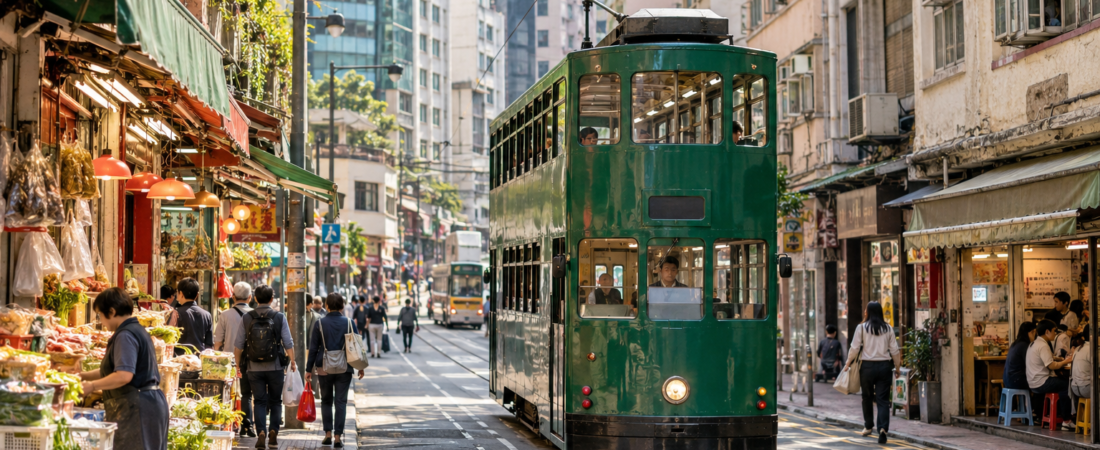
Planning a realistic Hong Kong travel budget is essential because the city can be either surprisingly affordable or extremely expensive depending on your accommodation, food and attraction choices. Budget-conscious visitors can use public transport, eat at local restaurants and enjoy numerous free attractions, while travellers seeking luxury hotels and fine dining will find almost unlimited premium options.
A budget traveller should allow approximately HK$500–900 per person per day, including a hostel bed or basic accommodation. A comfortable mid-range trip generally costs HK$1,300–2,600 per person per day, while a luxury visit can easily exceed HK$3,500 per person per day. International flights are not included in these estimates.
Price note: All prices in this article are approximate and were checked at the time of publication. Prices may change.
All amounts in this guide are shown in Hong Kong dollars, written as HK$.
Hong Kong Daily Travel Costs at a Glance
Budget Traveller
Allow approximately HK$500–900 per person per day.
This could include:
- Hostel bed or very basic room: HK$200–450
- Local meals and snacks: HK$150–250
- Public transport: HK$40–100
- Attractions and activities: HK$0–100
- Small additional expenses: HK$50–100
Mid-Range Traveller
Allow approximately HK$1,300–2,600 per person per day.
This could include:
- Share of a mid-range hotel room: HK$700–1,400
- Meals and drinks: HK$300–600
- Public transport and occasional taxis: HK$80–250
- Attractions: HK$100–300
- Additional expenses: HK$120–250
Solo travellers may spend more because they cannot divide the cost of a hotel room or taxi.
Luxury Traveller
Allow approximately HK$3,500–8,000 or more per person per day.
This could include:
- Luxury accommodation: HK$2,200–5,500 or more
- Fine dining and hotel meals: HK$800–2,000 or more
- Taxis and private transport: HK$300–800
- Premium attractions and experiences: HK$300–1,000 or more
- Shopping, drinks and additional expenses: HK$500 or more
How Much Does a Three-Day Trip to Hong Kong Cost?
For three days, excluding international flights, an approximate budget per person is:
- Budget trip: HK$1,500–2,700
- Mid-range trip: HK$3,900–7,800
- Luxury trip: HK$10,500–24,000 or more
These estimates assume two people share a mid-range or luxury hotel room. Solo travellers should expect accommodation to form a larger proportion of their total budget.
Our 3 days in Hong Kong itinerary can help you organise major attractions efficiently and reduce unnecessary journeys across the city.
Accommodation Costs in Hong Kong
Accommodation is usually the largest part of a Hong Kong travel budget. Room size, location, season and proximity to an MTR station can significantly affect the rate.
Hostel Beds
A dormitory bed generally costs approximately HK$180–400 per night.
The lowest rates are often found in Kowloon neighbourhoods such as Mong Kok, Jordan and parts of Tsim Sha Tsui. Check recent reviews carefully for cleanliness, room size, security and lift access.
Basic Guesthouses and Private Rooms
A basic private room may cost around HK$350–750 per night.
Some inexpensive guesthouses are located inside large mixed-use buildings. Rooms can be extremely compact, and the entrance or lift arrangement may feel unfamiliar to first-time visitors.
Budget Hotels
A basic hotel room usually costs approximately HK$500–1,000 per night.
Better-value properties can often be found in:
- Mong Kok
- Yau Ma Tei
- Jordan
- North Point
- Tin Hau
- Sham Shui Po
- Tsuen Wan
A hotel outside the central tourist districts may offer a larger room, but calculate the time and transport required to reach your planned attractions.
Mid-Range Hotels
Mid-range accommodation generally costs around HK$900–2,000 per night.
Rates vary considerably according to location. A room in Central or beside Victoria Harbour can cost much more than a similar property several MTR stops away.
Luxury Hotels
Luxury hotels commonly cost HK$2,200–6,000 or more per night.
Harbour views, club lounges, larger rooms and internationally recognised hotel brands can raise the cost substantially. Premium suites may cost far more during holidays and major events.
Read our guide to where to stay in Hong Kong before booking. Choosing the right neighbourhood can reduce both transport costs and daily travel time.
How to Save Money on Accommodation
Book early if travelling between October and December, during Lunar New Year or around major exhibitions.
Consider staying one or two MTR stops outside the most expensive areas. Jordan, Yau Ma Tei, Mong Kok, North Point and Tin Hau can offer convenient access without Central’s highest rates.
Before choosing a hotel, check:
- Distance from the nearest MTR entrance
- Whether taxes and service charges are included
- Room size
- Window availability
- Recent cleanliness reviews
- Lift access
- Cancellation conditions
- Charges for additional guests
- Whether breakfast is included
A very cheap room may not provide good value if it requires long journeys, has poor reviews or lacks basic facilities.
Food Costs in Hong Kong
Hong Kong’s dining options range from inexpensive bakeries and noodle shops to Michelin-starred restaurants and luxury hotel dining rooms.
Affordable Breakfast
A simple breakfast from a bakery or local café may cost approximately HK$25–55.
Typical choices include:
- Pineapple buns
- Egg sandwiches
- Congee
- Macaroni soup
- Toast and eggs
- Milk tea
- Rice rolls
Local Lunch
A filling lunch at a casual restaurant commonly costs HK$45–90.
Rice dishes, wonton noodles, roasted meat with rice and set meals are usually more affordable than restaurants in luxury shopping centres or waterfront locations.
Casual Dinner
Allow approximately HK$70–160 for dinner at a modest restaurant.
Ordering several dishes to share can provide better value for couples, families and groups.
Dim Sum
A casual dim sum meal may cost around HK$80–200 per person, depending on the restaurant and number of dishes ordered.
Premium restaurants and hotels can charge considerably more.
Street Food and Snacks
Small snacks generally cost HK$15–50 each.
Popular options include:
- Egg waffles
- Fish balls
- Siu mai
- Curry snacks
- Baked buns
- Tofu pudding
- Fresh fruit drinks
Street snacks are enjoyable, but buying several throughout the day can cost as much as a complete meal.
Coffee and Drinks
Approximate costs include:
- Local milk tea: HK$15–30
- Bottled water: HK$6–15
- Coffee at a modern café: HK$35–60
- Beer at a casual bar: HK$45–90
- Cocktail at an upscale venue: HK$100–180 or more
Bars in Central, Lan Kwai Fong and luxury hotels are generally much more expensive than local restaurants or convenience stores.
Suggested Daily Food Budgets
Allow approximately:
- Budget: HK$150–250 per person
- Mid-range: HK$300–600 per person
- Luxury: HK$800–2,000 or more per person
Budget travellers can reduce costs by using local bakeries for breakfast, ordering set lunches and eating at neighbourhood restaurants rather than waterfront or hotel dining venues.
Hong Kong Public Transport Costs
Hong Kong’s extensive public transport network makes it possible to explore without regularly using taxis.
Octopus Card
A Tourist Octopus card currently costs approximately HK$39 without stored travel value. Money must be added before it can be used.
The card can be used on much of Hong Kong’s public transport network and at many convenience stores, vending machines and other businesses.
A standard on-loan adult Octopus has a refundable deposit, while the sold Tourist Octopus can be kept as a souvenir. Check the conditions before choosing between them.
MTR
Most central MTR journeys cost approximately HK$5–25, depending on distance and route.
Longer journeys, airport services and certain cross-boundary routes cost more. Using an Octopus card is convenient and may provide a lower fare than buying individual single-journey tickets.
Hong Kong Tramways
The traditional double-decker tram on Hong Kong Island currently charges a flat adult fare of approximately HK$3.30 per ride.
The tram is one of the city’s most affordable sightseeing experiences. It is slower than the MTR but provides street-level views through neighbourhoods including Central, Wan Chai, Causeway Bay and North Point.
Star Ferry
On the Central–Tsim Sha Tsui route, current adult fares are approximately:
- Weekday lower deck: HK$4
- Weekday upper deck: HK$5
- Weekend or public-holiday lower deck: HK$5.60
- Weekend or public-holiday upper deck: HK$6.50
The Star Ferry is both inexpensive public transport and one of Hong Kong’s classic harbour experiences.
Buses
Most urban bus journeys cost approximately HK$5–20, although longer routes to the airport, remote areas or Lantau Island cost more.
Bus fares are generally based on the route rather than the exact distance travelled by each passenger.
Taxis
Hong Kong taxis use meters. The final amount depends on distance, waiting time, tunnel charges, luggage fees and other applicable surcharges.
Short urban journeys may cost around HK$35–80, while cross-harbour, airport or long-distance trips can be much more expensive.
Taxis can provide good value for three or four travellers sharing a short journey, especially late at night or when travelling with luggage.
Airport Transport Costs
Airport Express
The Airport Express takes approximately 24 minutes between Hong Kong International Airport and Hong Kong Station.
Current adult fares are approximately:
- Airport to Hong Kong Station: HK$120 one way
- Airport to Kowloon Station: HK$105 one way
- Airport to Tsing Yi Station: HK$75 one way
Return tickets and group offers may provide different rates.
Airport Buses
Airport buses are slower but usually cheaper than the Airport Express. Depending on the route, an adult fare generally costs around HK$15–50.
They can be especially practical when the bus stops close to your hotel and avoids an additional transfer from an Airport Express station.
Taxi from the Airport
A taxi to central Kowloon or Hong Kong Island can cost several hundred Hong Kong dollars after tolls and surcharges.
A taxi may be reasonable for a family or group sharing the fare, but solo travellers usually spend less by using the Airport Express or an airport bus.
Attraction Costs
Many of Hong Kong’s best experiences are free, but a few famous attractions require paid tickets.
Victoria Peak
Walking around parts of Victoria Peak, including Lugard Road and several public viewpoints, is free.
The Peak Tram currently costs approximately:
- Adult single journey: HK$82
- Adult return journey: HK$116
A combined ticket including Sky Terrace 428 costs more. Visitors can save money by taking a public bus to the Peak and enjoying the free viewpoints instead of paying for the observation terrace.
Ngong Ping 360
A standard round-trip cable-car ticket currently costs approximately HK$295 per adult, although temporary promotions may be available.
The Tian Tan Buddha and Po Lin Monastery can be visited without paying an admission fee. Budget travellers can reach Ngong Ping by public bus instead of using the cable car.
M+
Standard adult admission to M+ is currently approximately HK$190. Special programmes may have separate charges.
Visitors who do not purchase a gallery ticket can still explore parts of the surrounding West Kowloon Cultural District and waterfront.
Hong Kong Palace Museum
General admission currently starts at approximately HK$70 for adults, while tickets including selected special exhibitions cost more.
Other Paid Attractions
Large theme parks, harbour cruises, observation decks, guided tours and special exhibitions can significantly increase a daily budget.
Choose the paid experiences that matter most to you rather than purchasing tickets for every well-known attraction.
Free Things to Do in Hong Kong
Hong Kong offers many excellent free experiences:
- Walk along the Tsim Sha Tsui Promenade
- Visit the Avenue of Stars
- Watch the skyline from Victoria Harbour
- Explore Central and Sheung Wan
- Walk along Lugard Road at Victoria Peak
- Visit the Tian Tan Buddha
- Explore Po Lin Monastery
- Walk through Kowloon Park
- Visit Hong Kong Park
- Explore Nan Lian Garden
- Visit Chi Lin Nunnery
- Browse Temple Street Night Market
- Explore Ladies’ Market
- Walk around West Kowloon’s waterfront
- Visit public beaches
- Hike Dragon’s Back
- Explore Lamma Island on foot
- Visit local temples
- Walk through Sham Shui Po
- Explore Tai Kwun’s public spaces
Transport, food and optional activities may still cost money even when the attraction itself is free.
Sample Budget for Three Days in Hong Kong
Here is a possible three-day budget for one person staying in a hostel:
Accommodation
- Three nights in a hostel: HK$750–1,200
Food
- Breakfasts: HK$90–150
- Lunches: HK$150–270
- Dinners: HK$240–420
- Snacks and drinks: HK$100–200
Transport
- Airport bus return journeys: HK$60–100
- MTR, tram, ferry and buses: HK$150–250
Attractions
- Mostly free attractions with one paid experience: HK$100–300
Approximate Total
The complete three-day trip would cost approximately HK$1,640–2,890, excluding international flights and shopping.
Choosing the Airport Express, a private room and several paid attractions would increase this amount.
Sample Mid-Range Budget for Three Days
For two people sharing a comfortable hotel room, the approximate cost per person could be:
Accommodation
- Share of three hotel nights: HK$2,100–3,600
Food
- Three days of mixed local and casual restaurant meals: HK$1,000–1,700
Transport
- Airport Express and local transport: HK$400–650
Attractions
- Peak Tram, museum and another paid activity: HK$350–700
Additional Expenses
- Drinks, snacks and small purchases: HK$300–600
Approximate Total
The three-day mid-range cost would be around HK$4,150–7,250 per person, excluding flights and major shopping.
How to Save Money in Hong Kong
Use Public Transport
The MTR, buses, trams and ferries cover most places visitors need to reach. Save taxis for journeys involving heavy luggage, late-night travel or several people sharing the fare.
Stay Near an MTR Station
A slightly more expensive hotel beside an MTR station may provide better overall value than a cheaper room requiring taxis or lengthy walks.
Eat at Local Restaurants
Neighbourhood noodle shops, rice restaurants, bakeries and traditional cafés are generally less expensive than hotel restaurants or waterfront dining venues.
Use Free Viewpoints
Enjoy Victoria Harbour from the Tsim Sha Tsui waterfront and see the city from Lugard Road rather than paying for every observation deck.
Choose Attractions Carefully
One or two important paid experiences can make a trip memorable. Filling every day with ticketed attractions can quickly double the sightseeing budget.
Travel Outside Major Holiday Periods
Hotel rates can rise around Lunar New Year, Christmas, New Year, major exhibitions and popular autumn weekends.
Read our guide to the best time to visit Hong Kong before selecting your dates.
Carry a Refillable Water Bottle
Hong Kong’s heat and humidity make hydration important. Refilling a bottle can reduce repeated convenience-store purchases where safe drinking-water stations are available.
Avoid Unnecessary Airport Transfers
Choose the Airport Express only when its speed and station locations justify the cost. An airport bus may take longer but can deliver you closer to your accommodation.
Is Hong Kong Expensive?
Hong Kong is expensive for accommodation, premium restaurants and nightlife. However, public transport and local food can be remarkably affordable.
The city is suitable for budget travellers because many major experiences cost little or nothing. Harbourfront walks, temples, parks, markets, neighbourhoods and hiking routes can fill several days without expensive admission tickets.
A traveller who stays in a hostel, eats locally and uses public transport can control costs effectively. A traveller choosing a harbour-view hotel, cocktails, taxis and premium attractions will spend considerably more.
For more planning information about transport, attractions and neighbourhoods, read our complete Hong Kong travel guide.
Final Hong Kong Travel Budget
A sensible daily Hong Kong travel budget is:
- HK$500–900 for a budget trip
- HK$1,300–2,600 for a mid-range trip
- HK$3,500 or more for a luxury trip
For most visitors, accommodation will determine the overall cost. Book your room carefully, use Hong Kong’s efficient public transport and combine selected paid attractions with the city’s many free experiences.
Hong Kong does not have to be an unaffordable destination. With local food, inexpensive trams and ferries, free viewpoints and well-planned sightseeing, travellers can experience the city comfortably at several different budget levels.
Explore more places through our destinations page or browse our complete collection of itineraries.