
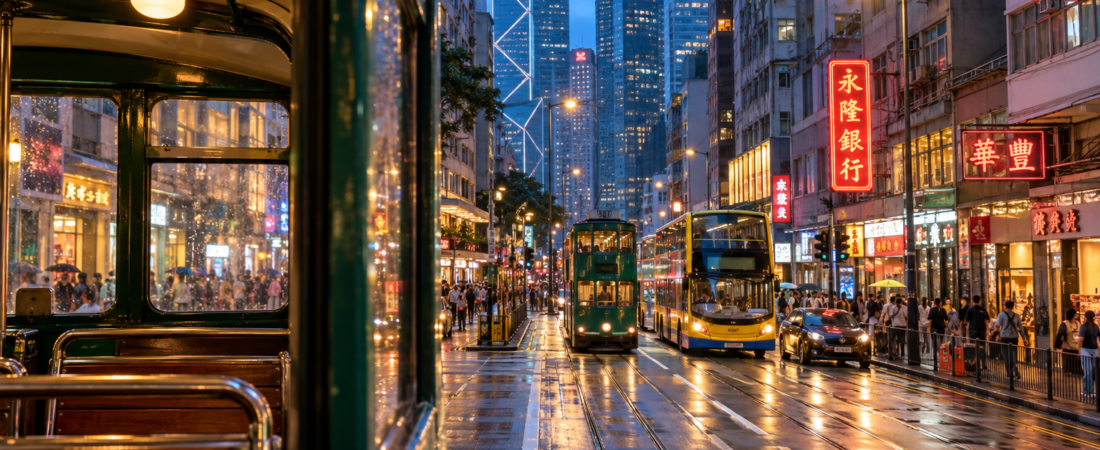
Hong Kong brings together dramatic skylines, historic temples, lively markets, mountain scenery and exceptional food in a surprisingly compact destination. This 3 days in Hong Kong itinerary covers the highlights of Kowloon, Hong Kong Island and Lantau Island while keeping daily travel practical. Before your visit, read our complete Hong Kong travel guide for more information about attractions, transport and local travel tips.
Price note: All prices in this article are approximate and were checked at the time of publication. Prices may change.
3 Days in Hong Kong Itinerary at a Glance
Day 1: Kowloon and Victoria Harbour
Explore Tsim Sha Tsui, visit the Hong Kong Museum of History, walk along the Avenue of Stars, watch A Symphony of Lights and finish at Temple Street Night Market.
Day 2: Central, Sheung Wan and Victoria Peak
Cross Victoria Harbour aboard the Star Ferry, discover Hong Kong Island’s historic neighbourhoods, ride a traditional tram and enjoy sunset views from Victoria Peak.
Day 3: Lantau Island
Ride the Ngong Ping 360 cable car, visit the Big Buddha and Po Lin Monastery, and optionally continue to Tai O fishing village.
Top Tours & Experiences in Hong Kong
Discover popular Hong Kong tours and experiences. Check current availability, ratings and prices before you book.
Affiliate disclosure: If you book through these links, we may earn a commission from Viator. This does not increase the price you pay.
Before Starting Your Hong Kong Itinerary
Hong Kong’s MTR railway is usually the quickest way to travel between neighbourhoods. An Octopus card makes journeys easier because it can be used on the MTR, buses, trams, ferries and at many shops.
Visitors arriving at Hong Kong International Airport can take the Airport Express. The adult Octopus or contactless fare is approximately HK$120 to Hong Kong Station, HK$105 to Kowloon Station and HK$73 to Tsing Yi Station. Airport buses are generally less expensive but take longer.
This itinerary works best when Day 3 falls on a day when the Ngong Ping cable car is operating. Scheduled maintenance, thunderstorms, strong winds and typhoons can interrupt the service. Always check current operating information before travelling.
Hong Kong’s weather can change quickly, so carry water, sun protection and a compact umbrella.
Day 1: Kowloon, Harbour Views and Temple Street
Day 1 concentrates on Kowloon, allowing you to experience local streets, museums and Hong Kong’s famous harbourfront without spending too much time travelling.
Morning: Tsim Sha Tsui and Kowloon Park
Begin around 9:00 a.m. in Tsim Sha Tsui, one of Hong Kong’s most convenient areas for first-time visitors.
Start with a walk through Kowloon Park. Its landscaped grounds provide a peaceful contrast to the surrounding shopping streets. Depending on the time of your visit, you may see flamingos, gardens, exercise areas and local residents practising tai chi.
Leave the park near Nathan Road and explore the surrounding streets. Stop for a Hong Kong-style breakfast or early lunch. Popular choices include pineapple buns, congee, scrambled-egg sandwiches, macaroni soup, dim sum and Hong Kong-style milk tea.
Late Morning: Hong Kong Museum of History
Continue to the Hong Kong Museum of History at 100 Chatham Road South. It is within walking distance of central Tsim Sha Tsui and East Tsim Sha Tsui MTR station.
General admission is free, although some temporary exhibitions may have a separate charge. The regular opening arrangements are:
- Monday and Wednesday to Friday: 10:00 a.m.–6:00 p.m.
- Saturday, Sunday and public holidays: 10:00 a.m.–7:00 p.m.
- Tuesday: Closed, except when Tuesday is a public holiday
- Christmas Eve and Chinese New Year’s Eve: 10:00 a.m.–5:00 p.m.
- First two days of Chinese New Year: Closed
Allow approximately 90 minutes to two hours for your visit. The museum provides useful historical context for the neighbourhoods and traditions you will encounter during the rest of the itinerary.
If Day 1 falls on a Tuesday, spend additional time around Tsim Sha Tsui or visit the West Kowloon Cultural District after checking the individual museum schedules.
Afternoon: Tsim Sha Tsui Promenade
After the museum, walk towards the Tsim Sha Tsui waterfront. Begin near the Clock Tower, an important surviving landmark from the former Kowloon–Canton Railway terminus.
Continue along the promenade to the Avenue of Stars. This waterfront attraction celebrates Hong Kong’s film industry through handprints, sculptures and displays honouring famous performers and filmmakers.
The Bruce Lee statue is one of its most photographed features. However, the main attraction is the uninterrupted view across Victoria Harbour towards Hong Kong Island.
Late afternoon is an excellent time to visit because you can see the harbour in daylight, watch the sunset and remain as the skyline begins to illuminate.
Evening: A Symphony of Lights
Stay on the Tsim Sha Tsui waterfront for A Symphony of Lights, Hong Kong’s nightly light and sound presentation.
The show normally begins at 8:00 p.m. and is free to watch. Good viewing positions can be found near the Hong Kong Cultural Centre, the Clock Tower and along the Tsim Sha Tsui Promenade.
Arrive approximately 20–30 minutes early if you want an unobstructed position near the railings. Weather, special events or technical arrangements may occasionally affect the show.
Night: Temple Street Night Market
After the show, walk or take the MTR to Jordan and Temple Street Night Market.
The area becomes particularly lively after sunset. Its stalls sell souvenirs, accessories, clothing and everyday items, while the surrounding streets contain numerous casual restaurants.
Try claypot rice, wonton noodles, roast meats, fish balls or another local dish for dinner. Ask the price before ordering seafood or dishes priced by weight, and bargain politely when shopping at suitable market stalls.
Day 2: Central, Sheung Wan and Victoria Peak
Day 2 introduces Hong Kong Island through a combination of harbour views, heritage streets, traditional transport and panoramic city scenery.
Morning: Take the Star Ferry to Central
Travel to the Tsim Sha Tsui Star Ferry Pier and board a ferry to Central.
The journey is short, but it provides memorable open views of Victoria Harbour. Current adult fares on the Central–Tsim Sha Tsui route are approximately:
- Monday to Friday: HK$5 for the upper deck or HK$4 for the lower deck
- Saturday, Sunday and public holidays: HK$6.50 for the upper deck or HK$5.60 for the lower deck
Octopus cards, Hong Kong dollar cash and selected electronic payment methods are accepted.
After arriving in Central, walk along the harbourfront before continuing into the business district. Modern towers, historic buildings and elevated pedestrian walkways stand remarkably close together.
Late Morning: Central–Mid-Levels Escalator
Continue towards the Central–Mid-Levels Escalator system, a series of covered escalators and walkways connecting Central with the neighbourhoods above it.
The system generally operates downhill during the morning commuting period and uphill for the remainder of the day. Step off at different points to explore the surrounding lanes rather than riding directly to the top.
The Soho area contains restaurants, cafés, bars and small shops. Its steep streets and older buildings reveal a more intimate side of Central.
Midday: Man Mo Temple and Sheung Wan
Walk west towards Man Mo Temple on Hollywood Road. This atmospheric temple is dedicated to Man, the god of literature, and Mo, the god of war.
Entry is generally free, although donations are welcome. Dress respectfully, keep your voice low and follow any photography restrictions displayed inside.
Continue to Upper Lascar Row, commonly known as Cat Street, where shops and stalls display antiques, ornaments, curios and reproduction objects.
Nearby Sheung Wan combines traditional medicine businesses and dried-seafood shops with contemporary cafés and galleries. Stop here for lunch at a noodle shop, roast-meat restaurant or local café.
Early Afternoon: Tai Kwun
Walk or take local transport to Tai Kwun, the restored Central Police Station compound.
The heritage complex contains historic courtyards, former police and prison buildings, exhibitions, shops, restaurants and contemporary art spaces. Access to its principal public areas is generally free, although certain exhibitions and performances may require tickets.
Allow approximately one hour to explore the complex before continuing towards Victoria Peak.
Mid-Afternoon: Ride a Traditional Tram
Take a short journey aboard one of Hong Kong’s historic double-decker trams, often called “Ding Dings.”
Board through the rear entrance and pay when leaving through the front. Octopus cards are accepted. Passengers paying with cash should prepare the exact fare because change is not normally provided.
Choose a seat on the upper deck for an elevated view of Hong Kong Island’s streets. You do not need to travel far—the experience itself is the attraction.
Afterwards, return to Central and make your way to the Peak Tram Lower Terminus on Garden Road. Allow additional walking time because the surrounding streets are steep.
Late Afternoon: Victoria Peak
The Peak Tram normally operates daily from approximately 7:30 a.m. until 11:00 p.m. Sky Terrace 428 generally opens from 8:30 a.m. until 10:00 p.m., including weekends and public holidays.
Tickets vary according to whether you purchase a single or return tram journey and whether Sky Terrace 428 admission is included. Check the latest prices and operating arrangements before visiting.
Try to reach the upper terminus 60–90 minutes before sunset. This allows you to see Hong Kong in daylight and remain as the buildings illuminate.
Sky Terrace 428 provides a panoramic observation platform, but buying a ticket for it is optional. For a free alternative, walk along Lugard Road, which offers several impressive views across Hong Kong Island, Victoria Harbour and Kowloon.
The mostly level circular walk takes approximately 60–90 minutes, depending on how often you stop. Cloud, rain and haze can obscure the view, so check visibility before purchasing observation-deck tickets.
Return to Central after dark and have dinner there, or continue to Wan Chai or Causeway Bay.
Day 3: Ngong Ping, the Big Buddha and Tai O
The final day leaves central Hong Kong for the mountains and traditional settlements of Lantau Island. Begin early because cable-car queues and the optional Tai O excursion can make this a long day.
Morning: Travel to Tung Chung
Take the MTR to Tung Chung Station. From central Hong Kong, the journey normally takes approximately 35–45 minutes, depending on your starting point and connections.
Follow the signs from the station to the Ngong Ping 360 Tung Chung Cable Car Terminal. Arriving before opening is advisable on weekends, public holidays and during school holidays.
Ride the Ngong Ping 360 Cable Car
The cable-car journey between Tung Chung and Ngong Ping takes approximately 25 minutes and crosses Tung Chung Bay and the mountains of Lantau Island.
Current approximate prices include:
- Standard cabin single trip: HK$205 per adult and HK$100 per child aged 3–11
- Standard cabin round trip: HK$295 per adult and HK$150 per child
- Crystal cabin single trip: HK$240 per adult and HK$135 per child
- Crystal cabin round trip: HK$365 per adult and HK$220 per child
- Infants aged 0–2: Free
The standard cabin is perfectly adequate for enjoying the scenery. The more expensive Crystal Cabin has a glass floor.
Cable-car services may be suspended for scheduled maintenance, strong winds, thunderstorms or severe weather. Check the current service status before leaving your hotel.
If the cable car is unavailable, buses provide an alternative route between Tung Chung and Ngong Ping, although the journey is less scenic.
Late Morning: Ngong Ping and the Big Buddha
After leaving the cable car, walk through Ngong Ping Village towards Tian Tan Buddha, commonly known as the Big Buddha.
Visiting the outdoor statue is generally free. Reaching it requires climbing a long flight of steps, so take your time during hot or humid weather. From the upper platform, you can appreciate both the statue and the surrounding mountain landscape.
Some interior areas, exhibitions or meal packages may carry separate charges.
Midday: Po Lin Monastery
Walk to nearby Po Lin Monastery, one of Hong Kong’s best-known Buddhist sites. Entry to the principal public areas is generally free.
The monastery contains decorated halls, statues and landscaped courtyards. Dress respectfully, behave quietly and observe any photography restrictions.
Vegetarian meals and snacks are available around the monastery and Ngong Ping Village. Have lunch here before choosing whether to continue to Tai O.
Optional Afternoon: Tai O Fishing Village
Travellers with sufficient time and energy can take a bus from Ngong Ping to Tai O, a traditional fishing settlement on western Lantau Island.
Tai O is known for houses built on stilts, narrow lanes, seafood products and waterfront scenery. Walk through the village, cross its pedestrian bridges and explore the small market streets.
Boat trips through the waterways are available as optional paid activities. Confirm the route, duration and total price before boarding. Wildlife sightings, including Chinese white dolphins, are never guaranteed.
Allow at least two hours for Tai O, excluding transport time. Afterwards, take a bus to Tung Chung and return to the city by MTR.
If you prefer a more relaxed day, skip Tai O and spend additional time around Ngong Ping before returning by cable car.
Alternative Day 3 for Bad Weather
If Ngong Ping 360 is closed or visibility is extremely poor, spend Day 3 in the West Kowloon Cultural District.
Choose between M+, the Hong Kong Palace Museum or the district’s public waterfront spaces. Opening days and ticket prices vary, so check the latest arrangements before visiting.
Later, explore Mong Kok’s shopping streets and food scene before finishing with dinner in Kowloon.
Foods to Try During 3 Days in Hong Kong
Hong Kong is one of the world’s most rewarding food destinations. Look for:
- Dim sum
- Wonton noodles
- Roast goose or char siu
- Claypot rice
- Congee
- Egg tarts
- Pineapple buns
- Hong Kong-style milk tea
- Egg waffles
- Fish balls and siu mai
- Vegetarian dishes near Po Lin Monastery
Popular restaurants can develop long queues. Eating slightly earlier or later than standard meal periods may save time.
Practical Tips for Your Hong Kong Itinerary
Use an Octopus card
An Octopus card reduces the need to purchase individual tickets for every MTR, tram, bus and ferry journey.
Keep each day geographically organised
Day 1 stays mainly in Kowloon, Day 2 focuses on Hong Kong Island and Day 3 is reserved for Lantau Island. This prevents unnecessary harbour crossings and repeated journeys.
Wear comfortable shoes
Central and Sheung Wan have steep streets, while visiting the Big Buddha requires climbing numerous steps.
Check closing days
The Hong Kong Museum of History normally closes on Tuesday. Other museums and attractions may have different weekly closing days.
Reserve popular attractions when necessary
Advance booking can be useful for Ngong Ping 360, the Peak Tram and ticketed museums during busy periods. Online tickets may reduce ticket-counter waiting, although boarding queues can still occur.
Carry some Hong Kong dollars
Octopus cards and electronic payments are widely accepted, but cash remains helpful at markets, small restaurants and traditional shops.
Monitor the weather
Typhoons, thunderstorms and strong winds can affect ferries, cable cars, outdoor attractions and flights. Follow local warnings and avoid exposed viewpoints during severe weather.
Is 3 Days Enough for Hong Kong?
3 days is enough for a rewarding first visit if you organise the itinerary carefully. This route covers Hong Kong’s harbour, historic districts, street markets, skyline viewpoints and Lantau Island without trying to include too many distant attractions.
An additional day or two would provide time for Disneyland, Ocean Park, hiking trails, beaches, museums or the outlying islands. However, this 3-day route offers an excellent introduction to Hong Kong’s urban energy, cultural heritage and natural scenery.
Book Your Hong Kong Experiences
Ready to start planning? Compare popular Hong Kong tours and activities, check current prices and availability, and book the experiences that suit your trip.
Affiliate disclosure: If you book through these links, we may earn a commission from Viator. This does not increase the price you pay.
Explore more places through our destinations page or browse our complete collection of itineraries.