
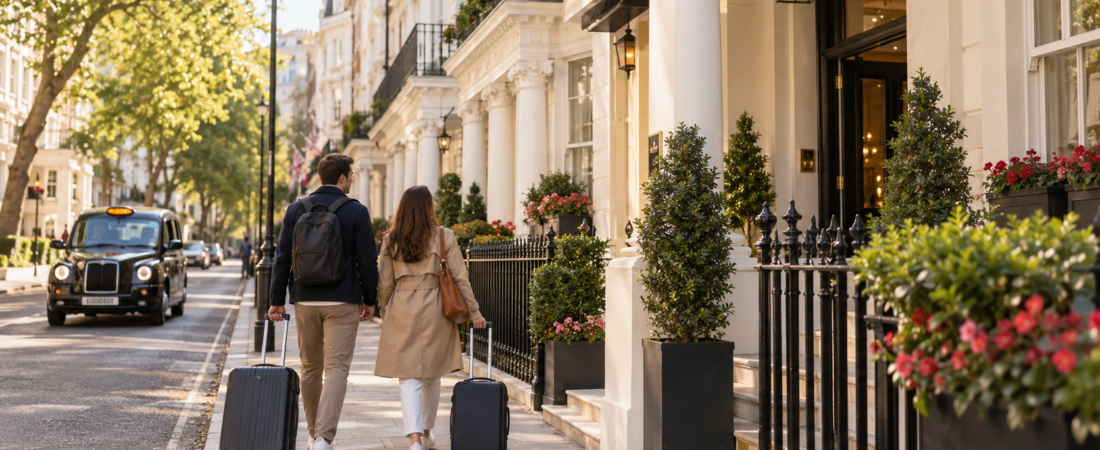
Choosing where to stay in London can feel difficult because the city is large and its attractions are spread across several neighbourhoods. The right location can reduce travel time and make your visit considerably easier.
For most first-time visitors, Westminster, Covent Garden, South Bank and South Kensington provide the best combination of attractions, transportation and restaurants. Travellers seeking lower prices or a more local atmosphere can also consider Paddington, King’s Cross, Shoreditch and Greenwich.
This guide compares the best areas to stay in London, including the advantages, disadvantages and type of traveller each neighbourhood suits.
Quick Guide to the Best Areas in London
- Westminster: Best for first-time sightseeing
- Covent Garden: Best for a central location and entertainment
- South Bank and Waterloo: Best for river views and families
- South Kensington: Best for museums and an elegant atmosphere
- Paddington: Best for convenient transport and Heathrow connections
- King’s Cross: Best for railway connections
- Shoreditch: Best for nightlife, food and street art
- London Bridge: Best for historic attractions and food markets
- Greenwich: Best for a quieter neighbourhood
- Notting Hill: Best for colourful streets and local character
1. Westminster: Best for First-Time Sightseeing
Westminster is the most convenient area for travellers who want to stay close to London’s famous landmarks.
The neighbourhood contains or borders many major attractions, including:
- Houses of Parliament
- Big Ben
- Westminster Abbey
- Buckingham Palace
- St James’s Park
- Trafalgar Square
- London Eye across the river
Staying here makes it possible to reach several attractions on foot. Westminster, Victoria and nearby Underground stations also provide useful connections to other areas.
Advantages of staying in Westminster
- Close to famous landmarks
- Excellent for a short first visit
- Convenient public transportation
- Attractive parks and historic streets
- Easy access to the South Bank
Disadvantages of staying in Westminster
- Accommodation is often expensive
- Restaurants near major landmarks can cost more
- Some streets become quiet after office hours
- Popular locations can be crowded during the day
Who should stay in Westminster?
Westminster is best for first-time visitors, couples, families and travellers with only two or three days in London.
2. Covent Garden: Best Central Location
Covent Garden is one of the most convenient places to stay in central London. It is close to theatres, restaurants, shopping streets and major cultural attractions.
From Covent Garden, you can walk to Trafalgar Square, the National Gallery, Soho, Chinatown, Leicester Square and the British Museum.
The area remains lively throughout the day and evening.
Advantages of staying in Covent Garden
- Extremely central and walkable
- Close to West End theatres
- Wide selection of restaurants
- Convenient for evening entertainment
- Easy access to several attractions
Disadvantages of staying in Covent Garden
- Hotels can be expensive
- Busy around the market and theatres
- Street noise may affect some accommodation
- Covent Garden Underground station can become crowded
Who should stay in Covent Garden?
Covent Garden suits first-time visitors, theatre lovers, couples and travellers who want to explore central London on foot.
3. South Bank and Waterloo: Best for River Views
South Bank stretches along the River Thames opposite Westminster and the City of London.
The area includes the London Eye, cultural venues, riverside restaurants and pedestrian walking routes. Waterloo station provides Underground and railway connections.
Hotels near the river can offer impressive views, while properties slightly farther from the waterfront may provide better value.
Advantages of staying on the South Bank
- Excellent views of the Thames
- Pleasant riverside walks
- Close to the London Eye and Westminster
- Convenient for families
- Good rail and Underground connections from Waterloo
Disadvantages of staying on the South Bank
- Riverside hotels can be expensive
- Some sections become busy around attractions
- Areas farther from the river may feel less atmospheric
- Crossing the river may be necessary for some evening activities
Who should stay on the South Bank?
South Bank is ideal for families, first-time visitors, photographers and travellers who enjoy waterfront walks.
4. South Kensington: Best for Museums
South Kensington is an elegant west London neighbourhood known for museums, attractive residential streets and convenient access to parks.
The Natural History Museum, Science Museum and Victoria and Albert Museum are located close together. Hyde Park, Kensington Gardens and Kensington Palace are also nearby.
The area has restaurants, cafés and Underground connections while generally feeling calmer than Covent Garden or Soho.
Advantages of staying in South Kensington
- Close to several major museums
- Attractive and relatively calm surroundings
- Convenient for families
- Near Hyde Park and Kensington Gardens
- Useful transport connections
Disadvantages of staying in South Kensington
- Accommodation is generally expensive
- Limited nightlife compared with Soho or Shoreditch
- Some restaurants cater to higher budgets
Who should stay in South Kensington?
South Kensington is suitable for families, museum visitors, couples and travellers seeking a quieter central base.
5. Paddington: Best for Transport Convenience
Paddington is a practical accommodation base rather than a major sightseeing neighbourhood.
Paddington station provides railway, Underground and airport connections. The area is also close to Hyde Park, Kensington Gardens and the canals around Little Venice.
A range of hotels and guesthouses can be found in the streets surrounding the station.
Advantages of staying in Paddington
- Convenient Heathrow connections
- Multiple Underground and railway services
- Close to Hyde Park
- Wide range of accommodation
- Often better value than Westminster
Disadvantages of staying in Paddington
- Less atmospheric than other central neighbourhoods
- Busy around the railway station
- Hotel quality can vary considerably
- Most major attractions require a short journey
Who should stay in Paddington?
Paddington works well for budget-conscious visitors, travellers using Heathrow Airport and anyone planning railway journeys outside London.
6. King’s Cross: Best for Railway Connections
King’s Cross and St Pancras form one of London’s most important transportation areas.
The stations provide Underground, domestic railway and international Eurostar connections. The neighbourhood north of the stations has also developed into an attractive dining and public-space district.
The British Library is nearby, while the British Museum and Camden are only a short journey away.
Advantages of staying near King’s Cross
- Excellent transportation connections
- Convenient for Eurostar travellers
- Easy access to several Underground lines
- Good selection of hotels and restaurants
- Useful for day trips by train
Disadvantages of staying near King’s Cross
- Busy around the stations
- Not within walking distance of every main attraction
- Accommodation prices rise during major events
- Some surrounding streets are less attractive than the regenerated centre
Who should stay near King’s Cross?
King’s Cross is best for Eurostar passengers, railway travellers and visitors planning several day trips.
7. Shoreditch: Best for Nightlife and Street Art
Shoreditch offers a very different experience from royal and historic central London.
The neighbourhood is known for street art, nightlife, independent businesses, food markets and creative culture. Nearby areas include Spitalfields, Brick Lane and Hoxton.
Public transportation connects Shoreditch with the City of London and central attractions.
Advantages of staying in Shoreditch
- Excellent nightlife and restaurants
- Interesting street art
- Lively weekend markets
- Independent shops and cafés
- Convenient for exploring east London
Disadvantages of staying in Shoreditch
- Night-time noise
- Less convenient for Westminster attractions
- Extremely busy on weekends
- The atmosphere may not suit travellers seeking a traditional London experience
Who should stay in Shoreditch?
Shoreditch is ideal for younger travellers, groups of friends, nightlife visitors and anyone interested in food, art and contemporary culture.
8. London Bridge: Best for History and Food
The London Bridge area combines historic attractions with excellent riverside access.
Borough Market, Tower Bridge, Shakespeare’s Globe and the Tate Modern are nearby. The Tower of London is located across the river.
London Bridge station provides Underground and railway connections to other parts of the city.
Advantages of staying near London Bridge
- Close to Borough Market
- Convenient for Tower Bridge and the Tower of London
- Excellent riverside walks
- Strong transport connections
- Combination of historic and modern London
Disadvantages of staying near London Bridge
- Busy during weekday commuting hours
- Hotels close to the river can be expensive
- Quieter late at night outside restaurant areas
Who should stay near London Bridge?
This area suits food travellers, history enthusiasts, couples and visitors who want easy access to the Thames.
9. Greenwich: Best for a Quieter Stay
Greenwich feels calmer and more residential than central London.
The neighbourhood offers maritime attractions, Greenwich Market, riverside scenery and Greenwich Park. The elevated park provides panoramic views of the city.
You can reach Greenwich by rail, DLR or river boat, but journeys to Westminster and the West End take longer than from a central hotel.
Advantages of staying in Greenwich
- Quieter atmosphere
- Attractive riverside setting
- Parks and historic attractions
- Local restaurants and market
- Potentially better accommodation value
Disadvantages of staying in Greenwich
- Farther from central London
- Additional travel time every day
- Fewer late-night options
- Not ideal for a very short first visit
Who should stay in Greenwich?
Greenwich is best for repeat visitors, families, longer stays and travellers who prefer a calmer base.
10. Notting Hill: Best for Local Character
Notting Hill is known for colourful houses, elegant streets and Portobello Road Market.
The area feels more residential than the West End but remains connected to central London by Underground. Restaurants, pubs, cafés and independent shops are available throughout the neighbourhood.
Advantages of staying in Notting Hill
- Attractive residential streets
- Excellent photography opportunities
- Portobello Road Market
- Near Kensington Gardens
- Good Underground connections
Disadvantages of staying in Notting Hill
- Accommodation can be expensive
- Portobello Road becomes crowded on market days
- Farther from attractions in eastern London
- Some streets have limited late-night activity
Who should stay in Notting Hill?
Notting Hill suits couples, photographers and travellers seeking a stylish neighbourhood with local character.
Best Area for Families
South Kensington and South Bank are particularly convenient for families.
South Kensington provides access to major museums and parks, while South Bank offers riverside walks and family attractions. Westminster is also convenient but may have higher accommodation prices.
Choose a hotel near a station with step-free access if travelling with a pushchair or heavy luggage.
Best Area for Budget Travellers
Paddington, King’s Cross and accommodation outside the busiest parts of central London may provide better value.
However, compare the complete cost carefully. A cheaper hotel far from the centre may require more time and money for daily transportation.
Hostels and university accommodation can also offer economical options during certain periods.
Best Area for Nightlife
Shoreditch, Soho and Covent Garden provide the strongest nightlife choices.
Shoreditch offers clubs, bars and contemporary restaurants. Soho and Covent Garden are more convenient for West End theatres and central entertainment.
Select accommodation carefully because rooms above or beside bars may experience late-night noise.
Best Area for Couples
Covent Garden, Notting Hill, South Kensington and the South Bank are all good choices for couples.
Covent Garden offers restaurants and entertainment, while Notting Hill and South Kensington provide attractive streets and a quieter atmosphere. South Bank is particularly appealing for evening river walks.
How to Choose Your London Accommodation
Before booking, check the following:
- Walking distance to the nearest station
- Underground and railway lines serving the area
- Travel time to your priority attractions
- Guest reviews mentioning noise and cleanliness
- Whether the building has a lift
- Air conditioning during summer
- Breakfast and cancellation conditions
- Luggage storage availability
- The complete price, including taxes and fees
London hotel rooms can be smaller than visitors expect. Review room measurements and recent guest photographs before booking.
How Far From Central London Should You Stay?
Most first-time visitors benefit from staying in Zones 1 or 2, where the majority of major attractions are located.
Accommodation farther away can cost less, but daily journeys may be longer. Check the last train or Underground times if you plan to attend evening events.
A hotel within a short walk of a well-connected station is often more useful than a slightly more central hotel with poor transport access.
Getting Around From Your Hotel
Contactless payment and Oyster cards provide convenient pay-as-you-go travel on London’s public transport network.
Use the same payment card or device for every journey so the system can correctly calculate daily fare caps. Each traveller needs a separate card or device.
When comparing hotels, use the official transport planner to check the journey to Westminster, Covent Garden, Tower Bridge and any other priority attractions.
Recommended Area for a Three-Day Visit
For a short first trip, choose Westminster, Covent Garden, South Bank or South Kensington.
These areas reduce transportation time and make it easier to follow our 3-day London itinerary.
Travellers with longer stays can consider Paddington, King’s Cross, Shoreditch, Greenwich or other residential neighbourhoods.
Final Thoughts
The best place to stay in London depends on your budget, preferred atmosphere and planned attractions.
Westminster offers the easiest access to famous landmarks. Covent Garden is ideal for entertainment and walking. South Bank provides river views, while South Kensington is excellent for museums and families.
Paddington and King’s Cross are practical transport bases. Shoreditch suits nightlife visitors, and Greenwich offers a quieter alternative.
For additional attraction, transportation and planning advice, read our complete London travel guide.