
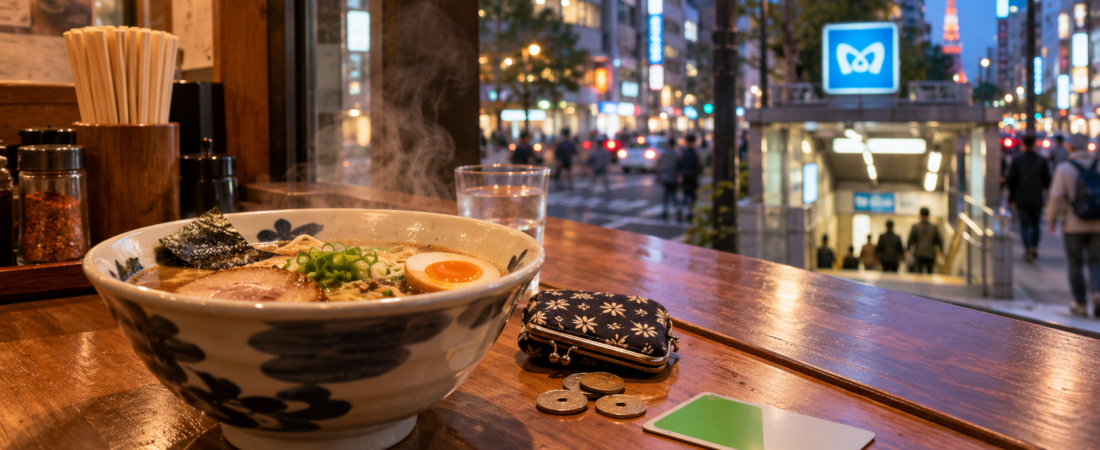
A realistic Tokyo travel budget can range from approximately ¥10,000 per person per day for a careful budget traveller to more than ¥45,000 for a comfortable trip. Tokyo has a reputation for being expensive, but efficient public transportation, inexpensive meals and numerous free attractions make it possible to control your spending.
Accommodation is normally the largest expense. Your travel dates, preferred neighborhood and booking time can make a considerable difference to the total cost. The estimates below exclude international flights because airfares vary widely according to departure city and season.
Price note: All prices in this article are approximate and were checked at the time of publication. Prices may change.
Tokyo Travel Budget at a Glance
These estimates are per person, assuming two people share a standard hotel room where applicable.
| Travel style | Estimated daily cost | Estimated three-day cost |
|---|---|---|
| Budget | ¥10,000–¥18,000 | ¥30,000–¥54,000 |
| Mid-range | ¥22,000–¥40,000 | ¥66,000–¥120,000 |
| Comfortable | ¥45,000–¥80,000+ | ¥135,000–¥240,000+ |
A budget traveller might stay in a hostel or capsule hotel, eat mainly at casual restaurants and choose free attractions. Mid-range visitors can stay in a business hotel, enjoy a greater variety of restaurants and include several paid attractions. A comfortable budget allows for an upscale hotel, taxis, premium meals and more entertainment.
Before estimating your expenses, read our Tokyo travel guide for an overview of the city’s neighborhoods, transportation and major sights.
Accommodation Costs in Tokyo
Hotel rates vary substantially by location and season. Sakura season, Golden Week, major events and peak autumn weeks can push prices higher. January, February and parts of June may provide better value.
Typical nightly estimates include:
- Hostel dormitory: ¥4,000–¥8,000 per person
- Capsule hotel: ¥5,000–¥10,000 per person
- Simple private room: ¥8,000–¥15,000
- Business or mid-range hotel: ¥15,000–¥30,000
- Upscale hotel: ¥35,000–¥70,000 or more
- Luxury hotel: ¥70,000–¥150,000 or more
Compact rooms are standard in central Tokyo. Check the room’s floor area rather than judging it solely by photographs, especially if you have large luggage.
Shinjuku and Shibuya offer convenience and nightlife but can command higher rates. Ueno, Asakusa, Ikebukuro and areas just beyond the most famous commercial centers may offer better value while retaining good railway connections.
Choosing a hotel near a useful station can reduce both transportation costs and travel time. Compare the neighborhoods in our guide to where to stay in Tokyo before booking.
Food and Drink Costs
Tokyo accommodates almost every dining budget. Convenience stores, bakeries, supermarkets, noodle counters, curry restaurants and casual chains make inexpensive meals widely available.
Allow approximately:
- Convenience-store breakfast: ¥400–¥800
- Bakery or café breakfast: ¥600–¥1,200
- Ramen, soba, udon or curry: ¥800–¥1,500
- Casual set lunch: ¥1,000–¥2,000
- Conveyor-belt sushi: ¥1,500–¥3,000
- Mid-range restaurant dinner: ¥3,000–¥6,000
- Fine dining: ¥10,000–¥30,000 or more
- Coffee: ¥300–¥700
- Soft drink or bottled water: ¥120–¥250
Lunch is often better value than dinner. Many restaurants provide set meals containing a main dish, rice, soup and small sides.
Department-store food halls are excellent for prepared dishes, sushi and desserts. Supermarkets may discount prepared food closer to closing time, although selection becomes limited later in the evening.
For an economical day, budget around ¥3,000–¥5,000 for food. A mid-range allowance of ¥6,000–¥10,000 provides more flexibility, while premium dining can increase the total rapidly.
Public Transportation Costs
Tokyo’s railway and subway system is usually faster and more economical than taking taxis. The network is operated by several companies, including Tokyo Metro, Toei Subway and JR East, so not every pass covers every journey.
Tokyo Metro regular tickets currently cost ¥180, ¥210, ¥260, ¥300 or ¥330 depending on distance. A typical visitor making several journeys should allow approximately ¥800–¥1,500 per day for local transportation.
A Suica or PASMO stored-value card simplifies travel by deducting the correct fare at the gate. It is a payment method rather than an unlimited travel pass, so it does not automatically make individual journeys cheaper.
Tokyo Subway Tickets provide unlimited travel on Tokyo Metro and Toei Subway lines:
- 24-hour ticket: ¥1,000 for adults
- 48-hour ticket: ¥1,500 for adults
- 72-hour ticket: ¥2,000 for adults
The ticket can offer good value when your itinerary includes frequent subway journeys. It does not cover JR services such as the Yamanote Line or unrelated private railways, so compare your planned routes before buying it.
Organizing each day by neighborhood reduces unnecessary journeys. Our 3 days in Tokyo itinerary groups nearby attractions to make sightseeing more efficient.
Airport Transportation Costs
Your airport transfer depends on whether you arrive at Haneda or Narita.
Haneda is much closer to central Tokyo. The Tokyo Monorail connects the airport with Hamamatsucho, where passengers can transfer to JR services. Keikyu trains are another economical option for areas such as Shinagawa and Asakusa.
Narita is farther from the city. Available options include the Keisei Skyliner, Narita Express, regular Keisei services and airport buses. The high-speed Skyliner between Narita Airport and the Ueno or Nippori area costs approximately ¥2,500–¥2,600, depending on the ticket and payment method. Slower regular Keisei services can cost closer to ¥1,000 but take longer.
Airport buses may be convenient when they stop directly at or near your hotel. Taxis from Narita are generally unsuitable for a budget trip because of the considerable distance.
Allow approximately ¥1,000–¥3,500 each way for airport transportation by public transit, depending on your airport, route and chosen service.
Attraction and Sightseeing Costs
Tokyo combines expensive headline attractions with temples, shrines, viewpoints, parks and neighborhoods that cost nothing to explore.
Examples of current admission costs include:
- Sensoji Temple grounds: Free
- Meiji Jingu grounds: Free
- Tokyo Metropolitan Government Building observatories: Free
- Shinjuku Gyoen National Garden: ¥500 for adults
- Shibuya Sky: Tickets generally start around ¥2,700 online, with higher counter prices
- Tokyo Skytree: Approximately ¥2,100–¥4,150 for adults, depending on the deck, day and ticket type
- Museums: Commonly ¥500–¥2,500
- Digital-art museums and premium experiences: Often ¥3,500–¥5,000 or more
Advance reservations are advisable for attractions with timed entry. Online tickets may also cost less than tickets bought at the venue.
A sightseeing allowance of ¥1,000–¥3,000 per day is sufficient when combining one modestly priced attraction with free experiences. Allow ¥5,000–¥10,000 on days involving observation decks, digital-art exhibitions or theme parks.
For additional low-cost ideas, explore our guide to the best free things to do in Tokyo.
Sample Budget Day in Tokyo
Here is an example of a low-cost but enjoyable sightseeing day:
- Hostel or budget accommodation: ¥6,000
- Convenience-store breakfast: ¥600
- Casual noodle lunch: ¥1,000
- Set-menu dinner: ¥1,500
- Drinks and snacks: ¥700
- Local transportation: ¥1,000
- One inexpensive attraction: ¥500
- Free temples, parks and neighborhoods: ¥0
Estimated total: ¥11,300 per person
A mid-range day could include half of a ¥24,000 shared hotel room, restaurant meals, ¥1,200 in transportation, a paid observation deck and additional shopping or entertainment. That could bring the total to approximately ¥25,000–¥35,000 per person.
Three-Day Tokyo Budget
For three full days, excluding international flights, consider the following starting points:
Budget trip: ¥30,000–¥54,000 per person
This budget assumes hostel or inexpensive accommodation, casual meals, public transportation and mostly free attractions. A private room may push the total toward the upper end.
Mid-range trip: ¥66,000–¥120,000 per person
This provides a shared business or mid-range hotel, varied meals, convenient transportation and several paid attractions.
Comfortable trip: ¥135,000–¥240,000 or more per person
This level allows upscale accommodation, premium dining, taxis and multiple ticketed experiences. Shopping and luxury restaurants can raise the total substantially.
Remember to add airport transfers, travel insurance, shopping and any onward journeys outside Tokyo.
How to Save Money in Tokyo
Choose the right neighborhood
A slightly less central hotel beside a well-connected station can cost less than accommodation in Shibuya or central Shinjuku. Do not move too far away merely to save a small amount, as additional commuting consumes time and money.
Book accommodation early
Reserve early for cherry-blossom season, Golden Week and autumn weekends. Check our guide to the best time to visit Tokyo before selecting your dates.
Use public transportation
Trains and subways are generally sufficient for visitors. Taxis are useful late at night or with heavy luggage, but frequent taxi journeys quickly increase the budget.
Compare passes with individual fares
An unlimited pass only saves money if it covers the routes you intend to use and you take enough journeys. Sometimes paying separately with an IC card is cheaper.
Eat your main restaurant meal at lunch
Lunch menus frequently provide better value. Choose an inexpensive dinner from a noodle shop, supermarket or casual restaurant.
Combine free and paid attractions
Tokyo does not require several admission tickets every day. Temples, shrines, street scenes, public observatories and distinctive neighborhoods can fill much of an itinerary without charge.
Set a shopping allowance
Anime merchandise, cosmetics, electronics, stationery and souvenirs can become a significant unplanned expense. Decide on a separate shopping limit rather than treating purchases as part of the daily food and sightseeing budget.
Cash, Cards and Tipping
Credit cards and contactless payments are widely accepted, but carrying some yen remains sensible. Smaller restaurants, temple stalls, lockers and older ticket machines may require cash.
Convenience-store ATMs are useful for international visitors, although your bank may charge withdrawal or foreign-exchange fees. Withdraw larger amounts less frequently if your bank applies a fixed fee to every transaction.
Tipping is not customary in Japan. Restaurants and taxi drivers do not generally expect an additional percentage. Check the bill at premium restaurants because a service charge may already be included.
Is Tokyo Expensive?
Tokyo can be expensive, particularly for central accommodation and premium experiences. However, everyday public transportation and casual food are reasonably accessible for a major global city.
A traveller who books early, uses trains, eats at local casual restaurants and prioritizes free attractions can experience Tokyo without a luxury budget. The key is to control accommodation, paid attractions and shopping—the three categories most likely to push spending beyond the original plan.
Explore more places through our destinations page or browse our complete collection of itineraries.