
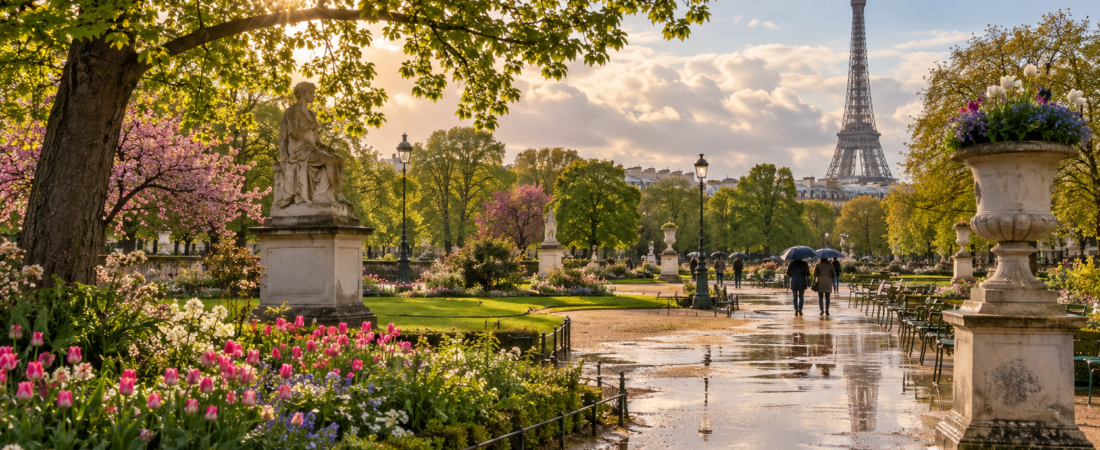
The best time to visit Paris is generally from April through June or September through October. These periods usually offer comfortable walking temperatures, attractive gardens, long enough daylight hours and fewer weather extremes than the height of summer or winter.
However, there is no single perfect month for everyone. Summer suits travelers who want long evenings and outdoor events, winter can provide lower accommodation prices and quieter museums, while spring and autumn offer the most balanced conditions. This guide compares every season and month so you can select the right time for your budget and travel style.
Price note: All prices in this article are approximate and were checked at the time of publication. Prices may change.
Best Time to Visit Paris at a Glance
| Travel priority | Recommended time |
|---|---|
| Best overall conditions | April–June and September–October |
| Mild walking weather | May, June, September and early October |
| Longest daylight | June and July |
| Gardens and spring flowers | April and May |
| Autumn colors | Late October and early November |
| Lower accommodation prices | January, February and parts of November |
| Christmas atmosphere | Late November through December |
| Fewer visitors | January, February and November |
| Outdoor cafés and river walks | May–September |
| Museum-focused trip | November–March |
| Families following school holidays | July and August |
| Photography | April, May, September and October |
Paris can be rewarding in every season. Start with our complete Paris travel guide if you are still deciding which attractions and neighborhoods matter most to you.
Paris Weather Overview
Paris has a modified oceanic climate, with relatively mild winters, pleasantly warm summers and rainfall distributed throughout the year.
Official Paris tourism climate information lists average daytime highs ranging from approximately 7.6°C in January to 25.7°C in July. These averages are helpful for planning, but they do not represent the hottest or coldest conditions you may experience.
Heat waves can push summer temperatures considerably above the average, while winter nights can fall below freezing. Spring and autumn can change quickly within the same day.
Paris does not have a clearly defined dry season. Carrying a compact umbrella or light waterproof layer is useful at any time of year.
Paris Average Temperatures by Month
| Month | Average low | Average high | Average rainfall |
|---|---|---|---|
| January | 3.2°C | 7.6°C | 47.6 mm |
| February | 3.3°C | 8.8°C | 41.8 mm |
| March | 5.6°C | 12.8°C | 45.2 mm |
| April | 7.9°C | 16.6°C | 45.8 mm |
| May | 11.1°C | 20.2°C | 69.0 mm |
| June | 14.2°C | 23.4°C | 51.3 mm |
| July | 16.2°C | 25.7°C | 59.4 mm |
| August | 16.0°C | 25.6°C | 58.0 mm |
| September | 13.0°C | 21.5°C | 44.7 mm |
| October | 9.9°C | 16.5°C | 55.2 mm |
| November | 6.2°C | 11.1°C | 54.3 mm |
| December | 3.8°C | 8.0°C | 62.0 mm |
These figures are climate averages rather than forecasts. Check Météo-France shortly before departure, especially during summer or winter weather alerts.
Spring in Paris: March to May
Spring brings longer days, flowering gardens and gradually warmer temperatures. It is one of the most attractive seasons for walking, photography and outdoor cafés, although conditions remain unpredictable.
March
March is a transitional month. Average temperatures range from approximately 5.6°C to 12.8°C, but individual days may feel significantly colder or warmer.
Early March is usually quieter than April and May. Bare trees and cool evenings make it feel less like the classic image of spring, but accommodation can offer better value than later in the season.
March works well for travelers who prioritize museums and neighborhoods while hoping for occasional mild days.
Advantages:
- Smaller crowds than late spring
- Potentially lower hotel prices
- Longer daylight than winter
- Good museum conditions
Drawbacks:
- Changeable weather
- Cold mornings and evenings
- Gardens may not yet be fully in bloom
Pack: A medium-weight coat, layers, waterproof shoes and a compact umbrella.
April
April is one of the prettiest times to visit Paris. Average temperatures range from around 7.9°C to 16.6°C, and trees and gardens begin displaying stronger spring color.
Conditions can change quickly. A sunny afternoon may be followed by a cold shower, so layers remain essential.
Visitor numbers increase around Easter and school holidays. Reserve the Eiffel Tower, Louvre and other popular attractions before arriving.
Advantages:
- Spring flowers and fresh greenery
- Comfortable conditions for walking
- Longer evenings
- Lively but not yet at peak-summer intensity
Drawbacks:
- Unpredictable rain
- Higher Easter-period demand
- Popular attractions require reservations
Best for: Couples, photographers, garden lovers and first-time visitors.
May
May combines warmer weather with extensive spring greenery. Average temperatures range from approximately 11.1°C to 20.2°C.
It is a beautiful month for the Luxembourg Garden, Tuileries Garden, Seine walks and outdoor dining. However, May has the highest average rainfall total in the official monthly climate table, so warm weather does not guarantee dry days.
France also has several May public holidays. Businesses and attractions may adjust their schedules, while holiday weekends can create additional domestic travel demand.
The Louvre, for example, closes on May 1 in addition to its normal Tuesday closure.
Advantages:
- Pleasant daytime temperatures
- Attractive parks and gardens
- Long enough days for extended sightseeing
- Excellent outdoor-café atmosphere
Drawbacks:
- Rain remains common
- Accommodation can be expensive
- Public holidays may affect opening arrangements
- Strong visitor demand
Best for: First-time trips, gardens, walking and outdoor sightseeing.
Is Spring the Best Time to Visit Paris?
Spring is an excellent overall choice, particularly from mid-April through early June. May usually offers the most reliably mild temperatures, while March provides better potential value.
Travelers sensitive to crowds should consider late March or early April, avoiding Easter dates. Those prioritizing gardens and outdoor meals may prefer late April or May.
Summer in Paris: June to August
Summer provides Paris’s longest days, busiest outdoor calendar and warmest average temperatures. It is also a high-demand period for flights, hotels and major attractions.
Heat waves are an increasingly important consideration. Average temperatures may appear moderate, but extreme periods can become substantially hotter. Many older hotels, apartments, cafés and Métro trains do not have effective air-conditioning.
June
June is one of the strongest months for a Paris visit. Average temperatures range from approximately 14.2°C to 23.4°C, and daylight extends late into the evening.
Gardens remain green, outdoor terraces are busy and the city’s cultural calendar is active. Fête de la Musique takes place around June 21, bringing performances to streets and public spaces.
June is popular, so do not expect low-season prices. Book accommodation and timed attractions early.
Advantages:
- Very long daylight
- Warm but often manageable temperatures
- Outdoor events and dining
- Excellent conditions for evening walks
Drawbacks:
- High accommodation demand
- Busy landmarks
- Occasional heavy rain or heat
- Advance reservations essential
Best for: First-time visitors, outdoor sightseeing and travelers who want full days.
July
July is one of Paris’s warmest and busiest months, with average temperatures ranging from approximately 16.2°C to 25.7°C. Heat waves can push daytime temperatures far above these averages.
Bastille Day on July 14 brings national celebrations, altered transport, road closures and exceptional attraction arrangements. The Louvre traditionally offers free admission on July 14 when the date does not fall on its regular Tuesday closure, but timed booking and current confirmation remain important.
The Tour de France traditionally concludes in Paris in July, which can affect traffic and access along parts of its route.
Advantages:
- Long summer days
- Major celebrations and outdoor events
- Lively riverbanks
- Warm evenings
Drawbacks:
- Heat-wave risk
- Crowded attractions
- High accommodation prices
- Event-related closures and transport changes
- Limited air-conditioning in some properties
Best for: Events, families on school holidays and travelers comfortable with heat and crowds.
August
August has average temperatures similar to July, ranging from approximately 16°C to 25.6°C. Hot periods remain possible.
Some Parisians leave the city for summer holidays, and smaller independent businesses may close for part of the month. Major museums, landmarks and tourist districts remain busy with international visitors.
August can feel less crowded in residential areas but very crowded around the Eiffel Tower, Louvre, Montmartre and Versailles.
Accommodation prices are not automatically low. Compare dates and neighborhoods carefully rather than assuming August will be cheaper.
Advantages:
- Long daylight hours
- Warm evenings
- Outdoor cinema, parks and summer activities
- Quieter atmosphere in some residential neighborhoods
Drawbacks:
- Heat-wave risk
- Some restaurants and shops close
- Major attractions remain crowded
- Air-conditioning may be inadequate
- Limited local atmosphere on certain streets
Best for: Families, outdoor events and travelers with fixed summer holidays.
Is Summer a Good Time to Visit Paris?
Summer is a good choice if long days and outdoor activity matter more than lower prices or quiet sightseeing. June usually offers the best balance, although it is still busy.
Choose accommodation with confirmed air-conditioning, reserve attractions well ahead and schedule indoor visits or shaded breaks during the hottest part of the afternoon.
Carry water, sunscreen and a hat. Free drinking-water fountains are available around the city, but opening status can vary.
Autumn in Paris: September to November
Autumn begins with mild temperatures and an active cultural calendar before gradually becoming cooler, wetter and quieter.
September and early October are among the best periods for first-time sightseeing. Late October and November suit museum visits and travelers seeking lower demand.
September
September is one of the best months for Paris. Average temperatures range from approximately 13°C to 21.5°C, providing comfortable conditions for walking and outdoor dining.
The city becomes active again after the August holiday period. Exhibitions, cultural programs, business events and fashion-related activity can increase demand.
September is not a low-cost secret. Hotel prices can remain high because leisure visitors overlap with business and event travel.
Advantages:
- Comfortable temperatures
- Active restaurants and cultural calendar
- Good conditions for walking
- Warm enough for outdoor cafés
- Attractive late-summer light
Drawbacks:
- Accommodation can be expensive
- Popular attractions remain busy
- Major events can affect room availability
Best for: First-time visitors, couples, food, culture and photography.
October
October begins relatively mild, with average temperatures ranging from approximately 9.9°C to 16.5°C. Conditions become cooler and daylight decreases as the month progresses.
Late October can bring attractive autumn foliage to parks, cemeteries and tree-lined streets. Rain and windy days are possible, so build flexibility into outdoor plans.
The clocks normally move back near the end of October, making sunset noticeably earlier.
Advantages:
- Autumn colors
- Cooler walking weather
- Fewer visitors than September
- Strong museum and exhibition season
- Potentially better hotel value later in the month
Drawbacks:
- Shortening daylight
- Greater chance of cool rain
- Outdoor dining becomes less reliable
Best for: Museums, photography, parks and travelers avoiding summer heat.
November
November is noticeably cooler, with averages of approximately 6.2°C to 11.1°C. Trees lose their leaves, daylight becomes limited and rain is common.
This is one of the quieter periods outside special events. Accommodation may offer better value, and museum visits can feel less rushed.
November 1 and November 11 are national public holidays. Individual businesses and attractions may alter opening hours.
Christmas decorations and seasonal displays may begin appearing during the second half of the month.
Advantages:
- Lower visitor numbers
- Potential accommodation savings
- Good museum conditions
- Beginning of the festive season late in the month
Drawbacks:
- Cool, damp weather
- Early darkness
- Less attractive gardens
- Public holidays can affect schedules
Best for: Budget-conscious travelers, museums and repeat visitors.
Is Autumn the Best Time to Visit Paris?
September and early October offer one of the year’s best combinations of weather, cultural activity and outdoor conditions. Choose late October or November if fewer visitors and possible savings are more important than warm evenings.
Winter in Paris: December to February
Winter brings cold weather, short days and a stronger focus on museums, restaurants, covered passages and cafés.
Snow is possible but not dependable. Rain, grey skies and cold wind are more common considerations. Paris remains active throughout winter, although some attractions reduce hours or perform annual maintenance.
December
December temperatures average approximately 3.8°C to 8°C. Christmas lights, department-store displays, seasonal markets and decorated streets create a festive atmosphere.
Demand increases around Christmas and New Year, so December is not uniformly inexpensive. Hotels and restaurants may charge premium rates over the holiday period.
December 25 is a public holiday, and many attractions close. The Louvre closes on December 25, while individual restaurants and shops set their own schedules.
Advantages:
- Christmas lights and displays
- Festive atmosphere
- Museums and cafés suit the weather
- Seasonal shopping
Drawbacks:
- Short daylight
- Cold and wet conditions
- Holiday-period crowds and prices
- Closures on Christmas Day
- Advance restaurant booking may be necessary
Best for: Christmas atmosphere, shopping, couples and museum visits.
January
January is usually one of the quietest months. Average temperatures range from approximately 3.2°C to 7.6°C.
After the New Year period, accommodation prices may fall and major attractions can feel calmer. Winter sales traditionally begin during January, making it attractive for shoppers.
January 1 is a public holiday, and the Louvre and several other attractions close. The Eiffel Tower summit may also undergo planned winter maintenance during part of January or February, so check current access before booking.
Advantages:
- Lower visitor numbers
- Potential hotel savings
- Winter shopping sales
- Less crowded museums
Drawbacks:
- Cold weather
- Limited daylight
- Possible maintenance closures
- Gardens are less colorful
Best for: Budget trips, shopping, museums and travelers comfortable with winter weather.
February
February remains cold, with average temperatures from approximately 3.3°C to 8.8°C. Days gradually lengthen, and conditions may feel more manageable toward the end of the month.
Valentine’s Day can increase demand for romantic hotels and restaurants. French school holidays may also affect domestic travel and family attractions.
February is a good month for art-focused trips, provided you prepare for rain and cold.
Advantages:
- Generally manageable visitor levels
- Potential off-season hotel rates
- Increasing daylight
- Good museum conditions
Drawbacks:
- Cold and damp weather
- Possible school-holiday demand
- Limited garden appeal
- Valentine’s Day may raise selected prices
Best for: Couples, art lovers and budget-conscious travelers.
Cheapest Time to Visit Paris
January, February and parts of November generally provide the best chance of lower accommodation prices, excluding holidays, major events and high-demand weekends.
March can also offer reasonable value before Easter and the main spring season.
A budget traveler should compare complete trip costs rather than hotel rates alone. Winter may reduce accommodation expenses, but shorter days can limit free outdoor sightseeing.
Approximate nightly accommodation prices can vary widely:
- Hostel bed: €40–€90
- Budget double room: €100–€180
- Mid-range double room: €180–€350
- Upscale accommodation: €350 and above
Our Paris travel budget guide provides more detailed estimates for accommodation, food, transport and attractions.
Busiest Times in Paris
Paris receives visitors throughout the year, but demand is generally strongest during:
- Easter and spring school holidays
- May holiday weekends
- June through August
- Bastille Day around July 14
- September’s business and cultural events
- Christmas and New Year
- Major fashion, sporting and trade events
The busiest dates do not always match the hottest weather. September can have extremely strong hotel demand even though the summer school-holiday period has ended.
Check the city’s event calendar before booking. A convention, concert or sporting event can increase accommodation prices even during an otherwise moderate month.
Best Time for Major Paris Attractions
Eiffel Tower
The Eiffel Tower is busy throughout the year. April through October brings the strongest demand, particularly around sunset.
Winter can provide shorter queues, but summit access is more vulnerable to wind, ice and planned maintenance. Reserve through the official ticket office and check operating conditions before traveling.
Louvre Museum
The Louvre is an excellent year-round attraction. It closes on Tuesdays and on January 1, May 1 and December 25.
Wednesday and Friday evening openings can help during busy months. Timed reservations are recommended, including for visitors eligible for free admission.
Notre-Dame Cathedral
Notre-Dame is an active cathedral, and general admission is free. Visitor access can be affected by services, religious celebrations and special events.
Christmas, Easter and other important religious dates may bring exceptional arrangements and larger congregations.
Montmartre
Montmartre is enjoyable throughout the year. Early mornings are best during spring, summer and September. Winter can bring quieter streets but also cold wind on the hill.
Seine Walks and Cruises
May through September provides the warmest conditions for river walks and open-air cruise decks. Cruises continue in colder months, but choose indoor seating if necessary.
Versailles
Spring and early summer are attractive for gardens, while high-season fountain events bring additional visitors and ticket arrangements.
The palace is normally closed on Mondays. Garden conditions are less colorful during winter, although selected low-season dates may offer lighter crowds or free-admission arrangements.
Best Time for Free Activities
May, June, September and early October are ideal for free outdoor attractions such as:
- Seine riverbanks
- Tuileries Garden
- Luxembourg Garden
- Montmartre
- Canal Saint-Martin
- Place des Vosges
- Parc des Buttes-Chaumont
- Père Lachaise Cemetery
- Trocadéro
- Covered passages
Winter remains suitable for free churches, permanent municipal museum collections and covered passages.
See our complete guide to the best free things to do in Paris for more budget-friendly ideas.
Best Time for Different Travelers
First-Time Visitors
May, June, September and early October provide comfortable conditions for combining monuments, museums and neighborhood walks.
Couples
April, May, September and December are atmospheric choices. December suits couples interested in festive lights, while spring offers gardens and longer days.
Families
July and August align with school holidays and offer long daylight, but families should prepare for heat and crowds. April school-holiday dates can provide milder conditions.
Budget Travelers
Choose January, February, March or November, excluding holiday periods and major events.
Museum Lovers
November through March works particularly well because indoor attractions remain enjoyable regardless of the weather.
Photographers
April and May provide spring color, while late October can offer autumn foliage. Winter brings softer light, bare architectural lines and fewer people at some outdoor locations.
Travelers Who Dislike Heat
Visit in April, May, September, October or early spring. Avoid assuming June will always be mild, as early heat waves are possible.
Travelers Who Dislike Crowds
Choose January, February or November. Begin sightseeing early even during quieter months because famous attractions remain popular year-round.
How Far Ahead Should You Book?
Spring and Summer
Reserve accommodation 3 to 6 months ahead. Eiffel Tower, Louvre and other timed attractions should be booked as soon as your schedule is confirmed.
September and October
Book several months ahead, especially for September. Business events and exhibitions can reduce hotel availability.
Christmas and New Year
Reserve hotels and important restaurants early. Confirm holiday opening hours before purchasing non-refundable tickets.
January, February and November
You may find greater flexibility, but waiting does not guarantee a lower price. Special events can still create busy dates.
Compare suitable neighborhoods with our guide to where to stay in Paris before reserving accommodation.
What to Pack by Season
Spring
- Light waterproof jacket
- Sweater or warm layer
- Compact umbrella
- Comfortable water-resistant shoes
- Sunglasses
Summer
- Lightweight clothing
- Sun protection
- Reusable water bottle
- Light layer for evenings
- Comfortable walking shoes
- Compact umbrella
Autumn
- Layered clothing
- Waterproof jacket
- Umbrella
- Comfortable closed shoes
- Warmer layer for October and November
Winter
- Warm waterproof coat
- Sweaters and thermal layers
- Gloves, scarf and hat
- Water-resistant footwear
- Compact umbrella
- Moisturizer and lip balm
Comfortable shoes matter in every season. A typical sightseeing day can involve many kilometers of walking, stairs and museum corridors.
Planning a Short Seasonal Visit
For a 3-day trip, build flexibility into the schedule:
- Reserve one major indoor attraction each day.
- Group outdoor sights by neighborhood.
- Keep one indoor alternative for rain or extreme heat.
- Check sunset time before booking viewpoints.
- Confirm museum closing days.
- Recheck transport disruptions shortly before departure.
- Avoid non-refundable outdoor activities during unstable weather.
Our detailed 3 days in Paris itinerary provides a practical route through the city’s principal attractions.
Frequently Asked Questions
What is the best month to visit Paris?
May, June and September are the strongest overall choices for many travelers. They combine mild or warm weather with long enough days for outdoor sightseeing, although prices and visitor numbers can be high.
When is Paris least crowded?
January, February and November are generally quieter than spring, summer and September. Major holidays and events can still create busy periods.
What is the rainiest month in Paris?
Official monthly averages list May with the highest rainfall total, followed by December. However, Paris receives rain throughout the year and does not have a distinct rainy season.
When is Paris most expensive?
Accommodation is often expensive from late spring through summer, during September events and around Christmas and New Year. Prices depend on the exact dates and citywide events.
Is August a good month to visit?
August offers long days and warm weather but brings heat-wave risk and crowds at major attractions. Some smaller local businesses close for summer holidays.
Is Paris worth visiting in winter?
Yes. Winter is excellent for museums, cafés, covered passages and potential accommodation savings. Prepare for short daylight, cold rain and occasional maintenance closures.
Does it snow in Paris?
Snow is possible but irregular and usually does not remain for long. Do not choose winter solely because you expect snowy streets.
When are the gardens most beautiful?
April and May are ideal for spring flowers, while late October can bring autumn colors. Garden appearance depends on weather and seasonal planting.
What month has the best weather?
May, June and September generally offer the most comfortable balance. No month guarantees dry or mild conditions, so check the forecast shortly before travel.
Final Verdict
The best overall periods to visit Paris are April through June and September through October. Choose May or June for gardens, long days and outdoor cafés, or September and early October for comfortable walking weather and an active cultural atmosphere.
Visit in January, February or November if lower prices and fewer visitors matter more than warm weather. Choose July or August for long summer days and major events, but prepare for crowds, higher costs and possible heat waves.
Whatever month you select, reserve important attractions, check closing days and pack for changing weather. Paris works in every season when the itinerary matches the conditions.
Explore more places through our destinations page or browse our complete collection of itineraries.