
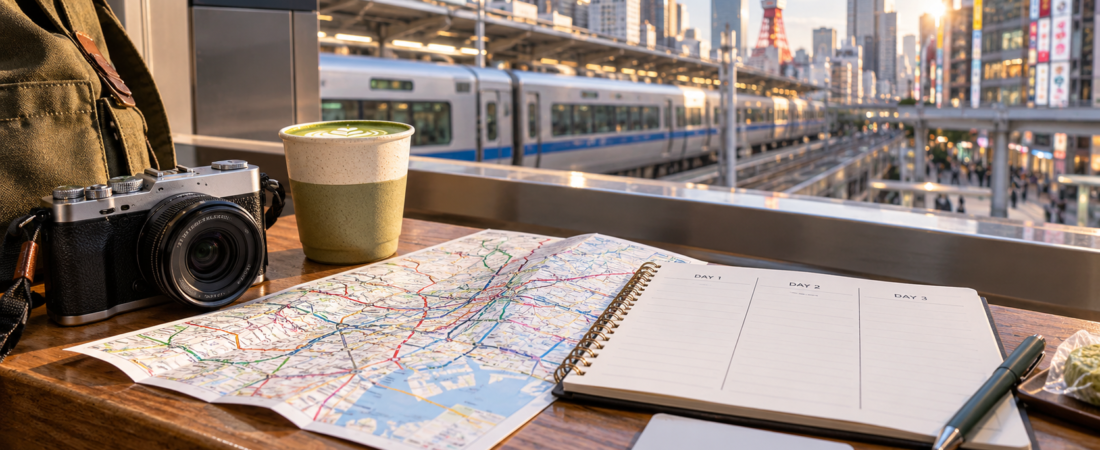
3 days gives you enough time to experience Tokyo’s historic temples, modern districts, food culture and famous city views. The key is to group neighboring attractions together and avoid crossing the enormous city unnecessarily.
This 3 days in Tokyo itinerary covers Asakusa, Ueno, Meiji Jingu, Harajuku, Shibuya, Tsukiji, Ginza and Shinjuku. It combines free landmarks with optional paid attractions and can be adjusted according to weather and personal interests.
Price note: All prices in this article are approximate and were checked at the time of publication. Prices may change.
Tokyo Itinerary at a Glance
Day 1: Traditional and Eastern Tokyo
- Sensō-ji
- Nakamise-dori
- Asakusa
- Sumida Park
- Tokyo Skytree
- Ueno and Ameyoko
Day 2: Meiji Jingu, Harajuku and Shibuya
- Meiji Jingu
- Yoyogi Park
- Takeshita Street
- Omotesando
- Shibuya Crossing
- Shibuya Sky
Day 3: Tsukiji, Ginza and Shinjuku
- Tsukiji Outer Market
- Ginza
- Tokyo Station
- Imperial Palace area
- Shinjuku
- Tokyo Metropolitan Government Building
For broader planning advice, read our complete Tokyo travel guide.
Top Tours & Experiences in Tokyo
Discover popular Tokyo tours and experiences. Check current availability, ratings and prices before you book.
Affiliate disclosure: If you book through these links, we may earn a commission from Viator. This does not increase the price you pay.
Before Starting
Tokyo’s rail system includes JR, Tokyo Metro, Toei Subway and private operators. A rechargeable Suica or PASMO card simplifies payment across most services.
Regular Tokyo Metro fares range from ¥180 to ¥330. Eligible visitors can also purchase Tokyo Subway Tickets covering Tokyo Metro and Toei Subway:
- 24 hours: ¥1,000
- 48 hours: ¥1,500
- 72 hours: ¥2,000
These passes do not cover JR or every private line. Check whether the routes in your exact itinerary justify the cost.
Day 1: Asakusa, Tokyo Skytree and Ueno
8:00 a.m. — Sensō-ji Temple
Start at Asakusa Station and walk to Kaminarimon Gate, marked by its enormous red lantern.
Continue along Nakamise-dori toward Sensō-ji. The shopping street becomes crowded later, but the temple grounds can be explored quietly in the early morning.
The main hall generally opens from 6:00 a.m. to 5:00 p.m., although seasonal and ceremonial arrangements may vary. The wider grounds remain atmospheric outside shop hours.
General temple access is free. Optional purchases include incense, fortunes and religious keepsakes.
Allow: 1–1½ hours
Admission: Free
9:30 a.m. — Explore Asakusa
Walk through the streets surrounding the temple. Look for traditional shops, smaller shrines and views toward Tokyo Skytree.
Visit the Asakusa Culture Tourist Information Center opposite Kaminarimon. Its public observation terrace offers a free view along Nakamise toward Sensō-ji.
10:30 a.m. — Sumida Park
Walk toward the Sumida River and follow the public paths through Sumida Park. The riverfront provides excellent views of Tokyo Skytree and the unusual Asahi Beer Hall buildings.
During cherry-blossom season, the park becomes extremely busy. Arrive early and avoid blocking pathways for photographs.
Admission: Free
11:30 a.m. — Lunch in Asakusa
Try tempura, soba, sushi or a casual set meal. Alternatively, sample several snacks around the neighborhood.
A casual lunch commonly costs approximately ¥1,000–¥2,000. Some popular restaurants use numbered queues, so allow additional time.
1:00 p.m. — Tokyo Skytree
Walk or take a short train journey to Tokyo Skytree. The tower rises 634 meters and has observation levels at 350 and 450 meters.
Admission depends on the date, observation level and booking method. Adult tickets commonly begin around ¥3,300, with combination tickets costing more. Reserve through the official website and confirm which floors are included.
If you prefer to save money, skip the observation deck and explore the free public areas around Tokyo Solamachi.
Allow: 1½–2 hours
Optional paid activity: Observation decks
3:30 p.m. — Ueno Park
Travel to Ueno and walk through Ueno Park. General park entry is free, while museums and the zoo charge separately.
If you want one museum, choose according to your interests and allow at least two hours. Otherwise, explore Shinobazu Pond, Bentendo Temple and the public monuments.
5:30 p.m. — Ameyoko
Finish the day at Ameyoko, a busy market street beneath and beside the railway tracks. Shops sell snacks, clothing, cosmetics and imported foods.
Have dinner at a casual restaurant in Ueno. Keep cash available because some small businesses may not accept cards.
Day 2: Meiji Jingu, Harajuku and Shibuya
8:00 a.m. — Meiji Jingu
Begin at Harajuku Station and enter Meiji Jingu through the forested approach.
The shrine opens at sunrise and closes around sunset, with exact times changing monthly. General admission is free, and approximately one hour is sufficient for the main grounds.
The Inner Garden and Meiji Jingu Museum are optional paid facilities.
Speak quietly, follow posted photography rules and avoid walking directly through the center of the torii gates.
Allow: 1–1½ hours
Admission: Free
9:30 a.m. — Yoyogi Park
Walk through nearby Yoyogi Park. General access is free, and the open lawns provide a relaxed contrast to Tokyo’s busy streets.
Weekend visitors may encounter musicians, dancers or community gatherings. Organized events can affect access to individual areas.
10:30 a.m. — Harajuku
Continue to Takeshita Street, known for youth fashion, colorful shops and sweet snacks. It becomes extremely crowded during afternoons and weekends, making morning the better time to visit.
Explore Cat Street and the side roads connecting Harajuku with Omotesando for independent boutiques and calmer surroundings.
12:30 p.m. — Lunch Around Harajuku or Omotesando
Choose ramen, Japanese curry, conveyor-belt sushi or a set lunch. Expect approximately ¥1,000–¥2,500 for a casual meal.
Restaurants in department stores and shopping centers often display sample dishes or illustrated menus.
2:00 p.m. — Omotesando
Walk along Omotesando to see contemporary architecture, fashion stores and tree-lined streets.
Shopping is optional; the district is enjoyable as a free architecture and people-watching experience.
3:30 p.m. — Shibuya
Walk or take one train stop to Shibuya. Visit the Hachikō statue and experience Shibuya Scramble Crossing.
Crossing the intersection is free. Keep moving with pedestrian traffic and use surrounding buildings for photographs rather than stopping in the roadway.
Explore Center-gai, Miyashita Park or Shibuya’s shopping complexes before your observation-deck reservation.
5:30 p.m. — Shibuya Sky
Reserve Shibuya Sky around sunset if possible. The observation experience reaches approximately 229 meters and includes indoor and outdoor areas.
Current online adult prices are approximately:
- ¥2,700 for entry before 3:00 p.m.
- ¥3,400 for entry from 3:00 p.m.
Counter tickets cost approximately ¥3,000 and ¥3,700 respectively, but may be unavailable if online tickets sell out.
The rooftop can close during strong wind or rain. Large bags and loose items must be stored according to the attraction’s rules.
Allow: 1½ hours
Advance booking: Strongly recommended
7:30 p.m. — Dinner in Shibuya
Finish with dinner in Shibuya. The district offers izakaya, ramen, sushi, yakiniku and international restaurants across many price ranges.
Check for cover or seating charges at bars and izakaya before ordering.
Day 3: Tsukiji, Ginza and Shinjuku
8:00 a.m. — Tsukiji Outer Market
Visit Tsukiji early because many shops operate primarily during the morning.
The wholesale market moved to Toyosu, but Tsukiji remains an active district of seafood vendors, restaurants and kitchenware shops.
Walking through the market is free. Food is individually priced, and a breakfast or tasting visit may cost approximately ¥1,500–¥4,000.
Eat beside the stall where instructed, avoid blocking narrow walkways and ask before photographing vendors.
10:30 a.m. — Ginza
Walk or take the subway to Ginza. Explore luxury storefronts, department stores and modern architecture.
Department-store basement food halls are useful for browsing Japanese sweets, prepared dishes and gifts. Rooftop spaces in selected buildings may offer free places to rest.
12:30 p.m. — Lunch
Ginza can be expensive, but weekday set lunches often cost less than dinner at the same restaurant.
For lower prices, use department-store restaurants, noodle shops or locations toward Yurakucho.
2:00 p.m. — Tokyo Station and Marunouchi
Walk toward Tokyo Station. See the restored red-brick Marunouchi façade and decorative domes inside the public station areas.
Explore Marunouchi’s broad avenues or the character-themed shops within Tokyo Station. Train platforms and some internal areas require a valid ticket.
3:00 p.m. — Imperial Palace Area
Walk toward the Imperial Palace outer grounds and photograph Nijubashi Bridge, stone walls and moats.
The Imperial Palace East Gardens are normally free when open, but closure days and official events affect access. If the gardens are closed, the outer grounds remain a worthwhile walk.
4:30 p.m. — Travel to Shinjuku
Take a JR or subway service to Shinjuku. Confirm the exit nearest your destination because walking through the station can take considerable time.
5:30 p.m. — Tokyo Metropolitan Government Building
Visit the observation areas of the Tokyo Metropolitan Government Building for a free city view.
Opening days can change, and security screening may be required. Check the current official operating calendar before making a special journey.
On clear days, Mount Fuji may be visible; after dark, the city becomes a vast field of lights.
Admission: Free
7:00 p.m. — Shinjuku at Night
Finish your trip with dinner and an evening walk through Shinjuku.
Omoide Yokocho has compact restaurants beneath railway tracks. Golden Gai contains tiny bars, many with cover charges. Kabukichō is brightly illuminated but requires normal nighttime awareness.
Read menus and displayed charges before entering. Avoid street promoters offering bars, clubs or adult entertainment.
Estimated 3-Day Cost
Excluding accommodation and flights, allow approximately:
- Food: ¥7,500–¥18,000
- Local transport: ¥2,500–¥5,000
- Paid attractions: ¥3,000–¥10,000
- Total: ¥13,000–¥33,000 per person
Choosing free viewpoints and parks lowers the total. Our Tokyo travel budget provides complete estimates for different travel styles.
Where to Stay
Shinjuku is highly convenient for transport and nightlife. Shibuya suits travelers wanting a modern atmosphere, while Asakusa offers traditional surroundings and possible accommodation savings.
Ueno is practical for museums and Narita connections. Tokyo Station and Ginza suit travelers prioritizing central transport, shopping and upscale hotels.
Compare all options in our guide to where to stay in Tokyo.
Practical Tips
- Group attractions by neighborhood.
- Use an IC card for convenient transport payment.
- Save routes and hotel details offline.
- Check station exit numbers.
- Carry cash and a payment card.
- Keep rubbish until you find a bin.
- Avoid phone calls on trains.
- Confirm the final train before staying out late.
- Reserve popular observation decks early.
- Carry water during hot and humid weather.
- Monitor typhoon information during late summer and autumn.
- Do not tip; it is not generally expected.
- Respect shrine and temple photography restrictions.
Spring and autumn usually provide the most comfortable conditions, but they are also popular. Check our guide to the best time to visit Tokyo before booking.
Free Alternatives
Replace paid observation decks with the Tokyo Metropolitan Government Building. Enjoy Tokyo Skytree from Sumida Park and explore Shibuya Crossing at street level.
Other free options include Meiji Jingu, Sensō-ji, Yoyogi Park, Ueno Park and the Imperial Palace outer grounds. Find additional ideas in our guide to the best free things to do in Tokyo.
Final Thoughts
This itinerary balances traditional eastern Tokyo with the modern western districts and central business areas. Starting early helps you experience temples and markets before the largest crowds, while evening visits reveal Tokyo’s famous illuminated skyline.
If the schedule feels too busy, remove one observation deck or shopping district. Tokyo rewards focused neighborhood exploration more than constant travel between distant attractions.
Book Your Tokyo Experiences
Ready to start planning? Compare popular Tokyo tours and activities, check current prices and availability, and book the experiences that suit your trip.
Affiliate disclosure: If you book through these links, we may earn a commission from Viator. This does not increase the price you pay.
Explore more places through our destinations page or browse our complete collection of itineraries.