
Finding free things to do in Dublin is surprisingly easy once you look beyond the city’s paid attractions. Ireland’s capital has beautiful parks, national museums, art galleries, historic streets, riverside walks and impressive architecture that you can experience without paying an admission fee.
That makes Dublin particularly useful for travellers trying to balance the cost of accommodation, food and paid sightseeing. Our Dublin travel budget explains those expenses in more detail, while our Dublin travel guide covers the city’s overall highlights.
The following 15 experiences are genuinely free to enjoy, although you may naturally spend money on transport, food or optional extras along the way.
1. Explore Phoenix Park
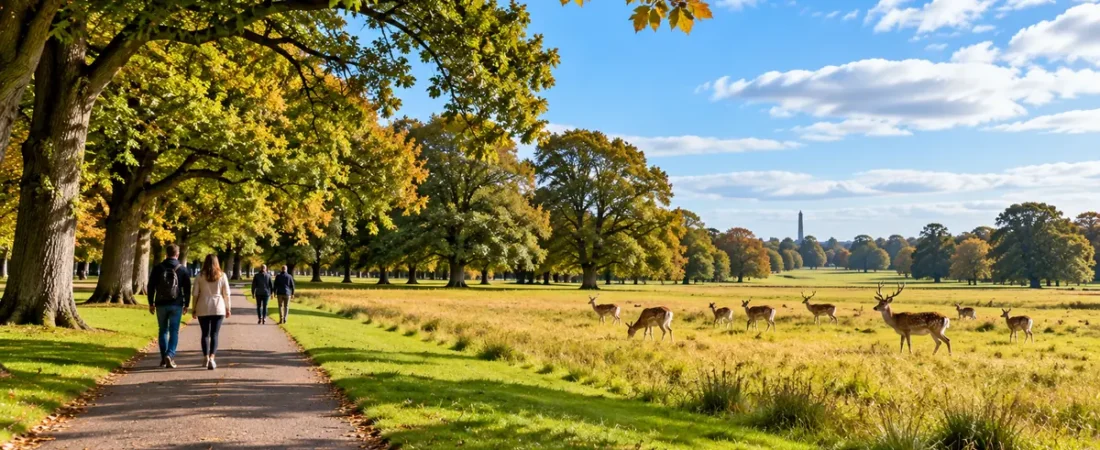
Phoenix Park is one of Dublin’s best places to spend several hours without paying for an attraction.
The enormous green space contains open grassland, tree-lined roads, walking routes, historic monuments and the People’s Flower Gardens.
Phoenix Park is also famous for its long-established herd of fallow deer. Seeing them grazing across the park can be memorable, but remember that these are wild animals. Keep your distance and never feed or approach them.
Admission to Phoenix Park itself is free, and the park is open 24 hours a day throughout the year.
The main Parkgate Street and Castleknock gates remain open around the clock, although some side gates operate more limited hours.
2. Visit the National Gallery of Ireland
The National Gallery of Ireland is one of the best free indoor attractions in Dublin.
Located beside Merrion Square, the gallery contains an extensive collection of Irish and European art.
Entry to the permanent collection is free and no advance booking is normally required for individual visitors.
Some temporary exhibitions may carry an admission charge, so check what’s showing if you’re interested in a particular exhibition.
The gallery is especially useful on a rainy Dublin day and can easily be combined with a walk through nearby Merrion Square and Georgian Dublin.
3. Discover Ancient Ireland at the National Museum of Ireland – Archaeology
The National Museum of Ireland – Archaeology on Kildare Street is another excellent free attraction.
Its collections cover thousands of years of Irish history and include prehistoric gold, Viking material and some of Ireland’s most important archaeological discoveries.
Highlights include the Ardagh Chalice, the Tara Brooch, prehistoric gold collections and Ireland’s famous preserved bog bodies.
General admission is free.
The museum is also conveniently located close to St Stephen’s Green, Trinity College and the National Gallery, making it easy to include in a walking itinerary.
4. Visit the National Museum at Collins Barracks
For another free museum experience, head to the National Museum of Ireland – Decorative Arts & History at Collins Barracks.
The historic former military barracks now houses collections exploring Irish decorative arts, design, military history and changes in Irish society.
Admission is free.
Because Collins Barracks is west of the main tourist centre, it can also encourage you to explore a different part of Dublin rather than spending your entire trip around Temple Bar and Grafton Street.
5. Walk Through St Stephen’s Green
St Stephen’s Green provides a peaceful break from the busy streets around Grafton Street.
The nine-hectare Victorian park contains more than 3.5 kilometres of pathways, landscaped gardens, sculptures, a lake and mature trees.
Admission is free.
Its central location makes St Stephen’s Green particularly easy to add to an itinerary. Walk through the park before exploring Grafton Street or continue towards Dublin’s Georgian neighbourhoods.
The appearance changes noticeably through the seasons, from spring flowers to colourful autumn foliage.
6. Discover the Iveagh Gardens
The Iveagh Gardens are less famous than St Stephen’s Green, which is part of their appeal.
This peaceful central Dublin garden combines formal landscaping with lawns, woodland, fountains, a yew maze, rockeries and other historic features.
Admission is free.
The gardens are close enough to St Stephen’s Green to visit both during the same walk, yet the atmosphere can feel considerably quieter.
Opening and closing times vary with daylight, so check the current schedule if you’re visiting late in the afternoon.
7. Walk Along the River Liffey
Walking beside the River Liffey costs nothing and gives you a useful introduction to Dublin’s geography.
The river divides the city’s north and south sides and passes numerous bridges and landmarks.
Start around the Docklands or central quays and follow the river through the city.
Along the way you’ll see a mixture of contemporary development and historic Dublin architecture.
It’s also an easy activity to shorten or extend according to the weather.
8. Cross the Ha’penny Bridge
The Ha’penny Bridge is one of Dublin’s most recognisable landmarks.
The elegant pedestrian bridge has crossed the River Liffey since the early nineteenth century.
Despite its name and history, there is no longer a charge to cross it.
Walking over the bridge takes only a few minutes, but it offers excellent views along the river and places you close to Temple Bar on the south side.
If you’re following our 3 Days in Dublin Itinerary, it’s an easy landmark to incorporate into your first day.
9. Wander Through Georgian Dublin
You don’t need an admission ticket to appreciate some of Dublin’s most attractive architecture.
Walk around Merrion Square, Fitzwilliam Square and the surrounding streets to see rows of Georgian townhouses and Dublin’s famous colourful doors.
The area feels very different from the narrow streets around Temple Bar.
Look at the fanlights, iron railings, brick façades and variations between individual houses.
Merrion Square itself also provides another pleasant green space for a break during your walk.
10. Explore Grafton Street
Grafton Street is one of Dublin’s best-known shopping streets, but you don’t have to buy anything to enjoy it.
The pedestrianised street connects the area around Trinity College with St Stephen’s Green.
Street performers frequently add to the atmosphere, and the surrounding lanes contain cafés, shops and historic architecture.
It’s particularly lively during afternoons and weekends.
Continue into the neighbouring streets rather than simply walking from one end to the other. Some of the most interesting corners of central Dublin are found just off the main route.
11. Experience Temple Bar Without Spending Money
Temple Bar is famous for pubs, nightlife and expensive drinks, but exploring the neighbourhood itself is free.
Walk through its cobbled streets, photograph the colourful pub fronts and explore the lanes leading towards the River Liffey.
The district is at its most atmospheric when pedestrians fill the streets and live music can sometimes be heard from nearby venues.
You don’t need to spend an evening drinking here to experience the neighbourhood.
Visiting during the morning also reveals a much quieter side of Temple Bar.
12. Explore Dublin’s Docklands
Dublin’s Docklands provide a contrast to the city’s Georgian and medieval areas.
Walk east along the River Liffey to see modern office buildings, contemporary architecture and wide riverside spaces.
The Samuel Beckett Bridge is one of the area’s most distinctive structures.
Continuing around Grand Canal Dock gives you another perspective on modern Dublin.
This is a particularly good free walk if you’ve already explored the traditional tourist centre and want to see how the city has changed.
13. Walk Around Merrion Square
Merrion Square is surrounded by some of Dublin’s finest Georgian architecture.
The public garden in the centre provides lawns, mature trees, sculptures and quiet pathways.
One of its best-known features is the colourful Oscar Wilde Memorial.
Walking around the perimeter also gives you excellent views of Georgian townhouses and their distinctive doors.
Combine Merrion Square with the nearby National Gallery of Ireland for an almost entirely free half-day of sightseeing.
14. Follow Dublin’s Statues and Monuments
Dublin’s streets are filled with public monuments that provide an informal introduction to Irish history and culture.
You can see the Molly Malone statue in the city centre, the James Joyce statue near O’Connell Street and the Daniel O’Connell monument at the southern end of O’Connell Street.
Continue north along O’Connell Street to see the General Post Office and the Spire of Dublin.
None requires an admission ticket to view from the street.
Instead of treating them as individual destinations, connect several during a self-guided walk through central Dublin.
15. Take a Self-Guided Walk Through Historic Dublin
One of the best completely free Dublin experiences is simply exploring the city on foot.
Start near Trinity College and walk towards Grafton Street and St Stephen’s Green.
Continue through Georgian Dublin towards Merrion Square before returning towards the River Liffey.
On another walk, follow the river past the Ha’penny Bridge and continue towards Smithfield or the Docklands.
You won’t enter every paid historic building, but Dublin’s streets reveal architecture, monuments and neighbourhood character that you would miss by travelling directly between attractions.
Comfortable walking shoes and a waterproof layer are all you really need.
How Much Can Free Sightseeing Save in Dublin?
Quite a lot.
A visitor could spend an entire day combining the National Museum of Ireland – Archaeology, St Stephen’s Green, Georgian Dublin, Merrion Square and the National Gallery without paying admission to any of them.
Another day could combine the River Liffey, Ha’penny Bridge, Temple Bar, O’Connell Street and the Docklands.
Then spend several hours exploring Phoenix Park.
Mixing these experiences with 2 or 3 paid attractions can substantially reduce the sightseeing portion of your Dublin travel budget.
Free Things to Do in Dublin When It Rains
Rain doesn’t mean you have to start paying for attractions.
The National Gallery of Ireland and National Museum locations provide excellent indoor alternatives.
Use clearer periods for parks and neighbourhood walks, then move indoors when showers arrive.
Dublin’s changeable weather makes this flexible approach more practical than assigning every activity to a rigid time.
Our guide to the best time to visit Dublin explains what to expect across the seasons.
Free Things to Do in Dublin for Families
Phoenix Park provides huge amounts of open space, while St Stephen’s Green includes a children’s playground.
Museums can also be useful family activities, particularly when the weather is poor.
Check each museum’s current programme because free family events, workshops and tours may be offered on selected dates.
Remember that a free attraction doesn’t necessarily mean every optional activity inside it is free.
How to Plan a Free Day in Dublin
Start your morning at the National Museum of Ireland – Archaeology.
Afterwards, walk to St Stephen’s Green and continue along Grafton Street.
Head towards Merrion Square and visit the National Gallery of Ireland.
Later, walk towards the River Liffey, cross the Ha’penny Bridge and explore Temple Bar.
This gives you museums, parks, Georgian architecture, shopping streets, a famous bridge and one of Dublin’s best-known neighbourhoods without paying a sightseeing admission fee.
If you’re still deciding which neighbourhood to use as your base, our guide to where to stay in Dublin can help.
Final Tips for Exploring Dublin for Free
Check opening hours before visiting museums and gardens, particularly around public holidays.
Remember that some free museums charge for selected temporary exhibitions.
Walk whenever practical. Central Dublin is compact enough to connect many attractions on foot.
Bring a waterproof layer so a passing shower doesn’t force you to abandon an outdoor plan.
Most importantly, don’t assume you need a paid attraction every few hours. Dublin’s parks, museums, architecture, neighbourhoods and riverside provide enough free experiences to fill a substantial part of a city break.
Explore more places through our destinations page or browse our complete collection of itineraries.