
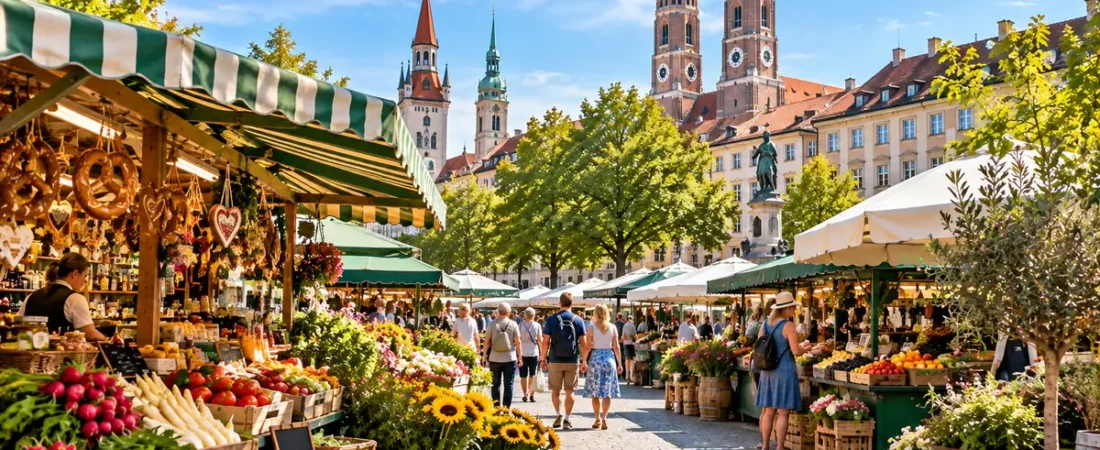
Planning a realistic Munich travel budget helps you enjoy Bavaria’s capital without being surprised by accommodation, transport, food and attraction costs. Munich is not usually considered one of Europe’s cheapest destinations, but travellers can control their spending considerably by choosing accommodation carefully, walking between central attractions and mixing paid sights with free experiences.
A budget-conscious traveller can keep costs relatively low with hostel accommodation, inexpensive meals and mostly free sightseeing. Mid-range visitors can spend more on a comfortable hotel, restaurants and several major attractions, while luxury travellers will find plenty of upscale hotels and dining options.
This guide breaks down the main costs you should consider when planning a trip to Munich.
For general sightseeing and planning information, start with our Munich Travel Guide. If you already know your travel dates, our 3 Days in Munich Itinerary can help you estimate how many paid attractions you are likely to visit.
Price note: All prices in this article are approximate and were checked at the time of publication. Prices may change.
How Much Does a Trip to Munich Cost?
Your daily spending will depend heavily on accommodation and dining choices.
As a general planning estimate, excluding flights:
Budget traveller: approximately €70–€120 per person per day.
Mid-range traveller: approximately €150–€250 per person per day.
Comfortable or luxury traveller: €300+ per person per day.
These are planning ranges rather than fixed prices. Accommodation can vary enormously according to dates, events and how far ahead you book.
Oktoberfest is particularly important because accommodation demand can increase sharply during the festival.
Our Best Time to Visit Munich guide explains how seasons and major events can affect your trip.
Munich Accommodation Costs
Accommodation is likely to be the largest part of your Munich budget.
Budget Accommodation
Hostels and basic guesthouses are usually the first places to look if keeping costs low is the priority.
A hostel dormitory bed may commonly fall around €30–€60 per night, although prices can be substantially higher during busy dates.
Private rooms in hostels or simple hotels generally cost more.
Staying slightly outside the historic centre can reduce costs while still giving you easy access to attractions through Munich’s public transport network.
Mid-Range Hotels
For a conventional city break, a reasonable planning range for a mid-range hotel is approximately €100–€200 per room per night.
Actual rates can fall outside this range depending on location and season.
Altstadt-Lehel tends to command higher rates because of its proximity to Marienplatz and other major sights.
Neighbourhoods such as Haidhausen, Schwabing and areas farther from the immediate Old Town can sometimes provide better value.
Higher-End Hotels
Upscale and luxury hotels can easily cost €250–€500+ per night, particularly for centrally located properties.
Premium rooms and five-star hotels can go considerably higher.
Rather than choosing a hotel based only on the nightly rate, consider transport costs and convenience. Paying slightly more for accommodation near an U-Bahn or S-Bahn station may make your trip easier.
Our Where to Stay in Munich guide compares the city’s main neighbourhoods.
Munich Public Transport Costs
Munich has an extensive public transport network combining U-Bahn, S-Bahn, trams and buses.
Most tourist attractions within the city are covered by Zone M.
In 2026, a standard adult single ticket for Zone M costs €4.20.
A Zone M single-day ticket costs €10.10 and provides unlimited journeys within the selected area until 6:00 the following morning.
If you plan to make several public transport journeys during one day, compare the cost of individual tickets with the day ticket.
The city centre is also highly walkable. Marienplatz, Frauenkirche, Viktualienmarkt and the Munich Residence can easily be combined on foot.
Walking whenever practical can therefore reduce transport spending significantly.
Munich Airport Transport Costs
Munich Airport is located in Zone 5, outside the central Zone M area.
For travel covering Zones M–5, the 2026 single-day fare is €17.50.
This can be particularly useful because it covers the airport journey and continued public transport within the relevant zones until 6:00 the following morning.
For groups, compare the available group ticket with individual tickets before purchasing.
Using public transport from the airport is generally one of the easiest ways to avoid spending heavily on private transfers.
Munich Attraction Costs
Many of Munich’s best-known outdoor sights can be enjoyed without admission fees, while major museums and palaces charge admission.
Planning which attractions matter most to you is one of the easiest ways to control sightseeing costs.
Munich Residence
The Munich Residence is one of the city’s major paid attractions.
For 2026:
Residence Museum: €10 regular admission.
Treasury: €10 regular admission.
Residence Museum + Treasury: €15.
Cuvilliés Theatre: €5.
Residence Museum + Treasury + Cuvilliés Theatre: €20.
The adjacent Court Garden is free.
If royal history interests you, the combined ticket can provide better value than buying separate admission to multiple sections.
Nymphenburg Palace
Nymphenburg Palace is another major attraction to consider in your sightseeing budget.
Palace-only admission is approximately €10 for adults.
Seasonal combination tickets covering additional attractions within the complex cost more.
The extensive palace grounds also provide an enjoyable walking experience, so visitors do not necessarily need to spend their entire visit indoors.
Deutsches Museum
The Deutsches Museum is one of Munich’s most substantial museums.
Regular adult admission is approximately €16, while family tickets are also available.
Because the museum is enormous, you can easily spend several hours here, making it relatively good value for travellers interested in science and technology.
Free Things to Do in Munich
Munich has enough free attractions to prevent sightseeing costs from dominating your budget.
Walking around Marienplatz costs nothing.
You can explore much of the historic Old Town on foot without paying admission.
Viktualienmarkt is free to browse, although food and drinks naturally cost extra.
The English Garden is free to enter.
Watching experienced surfers ride the Eisbach wave is another classic free Munich experience.
Walking beside the Isar River costs nothing.
The Hofgarten, beside the Munich Residence, also has free admission.
These attractions make it possible to build an enjoyable Munich day without purchasing a sightseeing ticket.
Our upcoming Best Free Things to Do in Munich guide will bring together more free attractions once the final article in this Munich cluster is published.
Food Costs in Munich
Food spending varies enormously according to where and how often you eat.
Breakfast
Travellers staying somewhere with breakfast included can reduce daily food spending immediately.
Otherwise, a simple bakery breakfast with coffee might cost around €5–€10.
Cafés and sit-down breakfasts will generally cost more.
Lunch
A quick lunch from a bakery, takeaway counter or casual establishment might cost approximately €8–€15.
Markets can also provide opportunities for relatively inexpensive meals.
Viktualienmarkt is worth exploring for food, although prices vary significantly between stalls and products.
Dinner
A conventional restaurant dinner might cost approximately €15–€30 per person before drinks, depending on what you order and the type of restaurant.
More elaborate restaurants can cost considerably more.
Traditional Bavarian dishes are often substantial, which can make a main course sufficient for many travellers.
Beer and Drinks
Beer prices vary according to establishment, serving size and event.
Do not assume that Oktoberfest prices reflect ordinary Munich beer prices. Festival pricing is a separate consideration.
Tap water is also not automatically provided free in every restaurant in the way visitors from some countries may expect, so account for drinks when estimating meal costs.
How to Eat in Munich on a Budget
Avoid eating every meal in the most tourist-heavy streets around major landmarks.
Bakeries are useful for inexpensive breakfasts, sandwiches and snacks.
Supermarkets can also help with drinks, fruit and simple meals.
At lunchtime, look for casual restaurants rather than automatically choosing full-service dining.
Viktualienmarkt can be enjoyable for browsing and assembling a casual meal, but compare stalls because it is not automatically a budget market simply because it sells food.
Most importantly, decide which food experiences matter to you.
Spending more on one traditional Bavarian dinner while keeping breakfast and lunch simple can be more satisfying than trying to eat cheaply at every meal.
Sample Budget for 3 Days in Munich
A 3-day trip provides a useful example of how costs can add up.
Budget Traveller
For 3 days, excluding flights:
Accommodation: approximately €90–€180 for 3 hostel nights.
Food: approximately €75–€120.
Transport: approximately €20–€40 depending on journeys.
Attractions: approximately €20–€45.
Estimated total: approximately €205–€385 per person.
Sharing accommodation or choosing very inexpensive meals can alter this substantially.
Mid-Range Traveller
For 3 days:
Accommodation: approximately €300–€600 per room.
Food: approximately €120–€210 per person.
Transport: approximately €25–€50 per person.
Attractions: approximately €40–€70 per person.
For a solo traveller paying for the entire hotel room, the total can therefore reach approximately €485–€930.
For two people sharing a room, the accommodation cost per person is lower.
Higher-End Traveller
A traveller choosing an upscale central hotel, restaurant meals, taxis and several paid experiences can easily spend €300 or more per person per day.
There is effectively no meaningful upper limit because Munich offers luxury hotels, fine dining and private experiences.
Munich Budget During Oktoberfest
Oktoberfest deserves separate consideration.
The main festival grounds and beer tents do not charge a general admission fee, but accommodation can become considerably more expensive because demand is extremely high.
Food, drinks and rides also add to your spending.
If attending Oktoberfest is your priority, book accommodation early and treat the festival as a separate category in your travel budget.
Travellers who are not interested in Oktoberfest may find it easier to manage costs by avoiding festival dates.
Our Best Time to Visit Munich guide includes the current festival dates and seasonal planning advice.
How to Save Money in Munich
The easiest way to reduce your Munich travel budget is to control accommodation spending.
Book earlier when your travel dates are fixed and compare neighbourhoods rather than searching only around Marienplatz.
Walk between central attractions whenever possible.
Use a day ticket only when your planned journeys make it worthwhile.
Combine free sights such as the English Garden, Marienplatz, Hofgarten, Isar River and Eisbach wave with a smaller number of paid attractions.
Choose the museum or palace that genuinely interests you instead of paying for every major attraction simply because it appears on a sightseeing list.
Use bakeries and supermarkets for some breakfasts, snacks and lunches.
Finally, check whether your accommodation includes breakfast, since this can reduce daily food spending.
Is Munich Expensive?
Munich can be expensive, particularly for accommodation.
However, sightseeing itself does not need to be particularly costly.
Several of the city’s signature experiences—including Marienplatz, the English Garden, Eisbach surfers, Viktualienmarkt and walking along the Isar—can be enjoyed without admission fees.
Public transport is efficient, and central Munich is walkable enough that visitors do not need taxis for ordinary sightseeing.
The biggest difference between a budget trip and an expensive Munich trip will usually come from accommodation, restaurant choices and the number of paid attractions.
Is a Munich City Pass Worth It?
Whether a sightseeing pass saves money depends entirely on the attractions you intend to visit.
Do not buy a pass simply because it promises discounts.
First list the attractions you realistically expect to enter, check their individual admission prices and compare the total with the current pass price.
A traveller who spends substantial time in parks, markets and neighbourhoods may find that individual attraction tickets make more sense.
A visitor planning several paid attractions may reach a different conclusion.
The important point is to calculate based on your actual itinerary rather than the theoretical maximum number of attractions included.
How Much Cash Should You Carry?
Card payments are widely available, but carrying a modest amount of cash remains useful for smaller purchases and places where your preferred card may not be accepted.
There is no need to carry your entire trip budget in cash.
Use secure ATMs when needed and check your bank’s foreign transaction and withdrawal charges before travelling.
Final Thoughts on Your Munich Travel Budget
Munich is not Europe’s cheapest city, but it is entirely possible to control your spending.
A budget traveller might plan around €70–€120 per day, while a typical mid-range trip could fall around €150–€250 per person per day depending heavily on accommodation.
The city’s greatest budget advantage is the number of worthwhile experiences that cost nothing. Marienplatz, the English Garden, the Isar, Hofgarten, Viktualienmarkt and neighbourhood exploration can fill significant portions of your itinerary without admission charges.
Balance those free experiences with a few carefully chosen paid attractions, use public transport intelligently and choose accommodation based on both price and location.
For a ready-made sightseeing plan, follow our 3 Days in Munich Itinerary and use our Where to Stay in Munich guide to compare accommodation areas.
Explore more places through our destinations page or browse our complete collection of itineraries.