
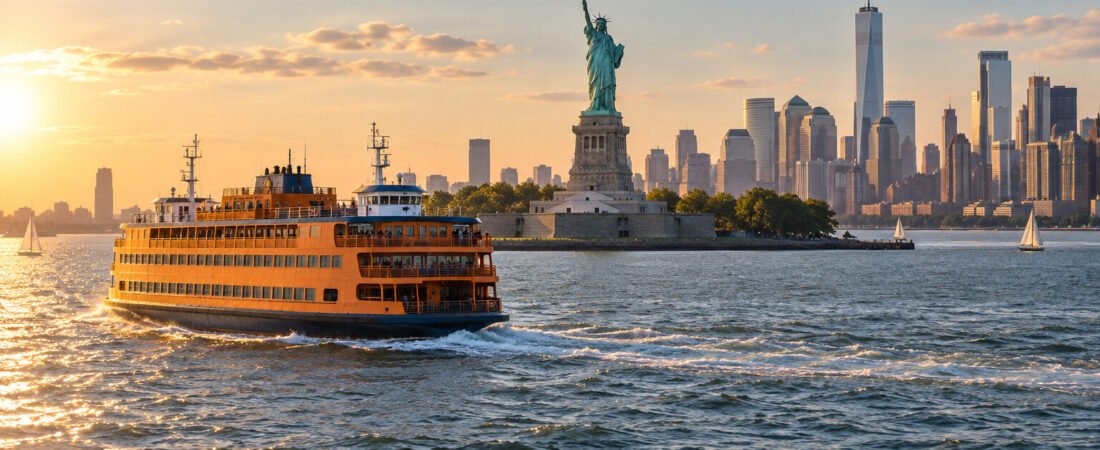
New York City may be an expensive destination, but many of its most memorable experiences are completely free.
You can walk across famous bridges, explore enormous parks, visit historic buildings, ride across New York Harbour and enjoy impressive skyline views without purchasing an admission ticket.
This guide covers the best free things to do in New York City, along with practical advice to help you avoid unnecessary costs.
1. Ride the Staten Island Ferry
The Staten Island Ferry provides one of New York’s best free sightseeing experiences. It travels between Whitehall Terminal in Lower Manhattan and St George Terminal on Staten Island.
During the journey, passengers can enjoy views of the Statue of Liberty, Ellis Island, Governors Island and the Lower Manhattan skyline.
The crossing takes approximately 25 minutes in each direction. All passengers must normally leave the ferry at the terminal before boarding another service for the return journey.
Try to travel outside weekday commuting periods for a less crowded experience. Sunset can be particularly attractive, although services may be busier.
The Staten Island Ferry is free. Be cautious of anyone attempting to sell tickets for it.
2. Explore Central Park
Central Park contains lakes, gardens, walking paths, bridges, lawns and numerous monuments. It is large enough to fill an entire day, but most first-time visitors select a manageable section.
Popular free locations include:
- Bethesda Terrace and Fountain
- Bow Bridge
- Strawberry Fields
- Sheep Meadow
- The Mall
- Jacqueline Kennedy Onassis Reservoir
- Conservatory Garden
- Belvedere Castle’s surrounding area
The park changes considerably with the seasons. Spring brings flowers, summer is ideal for picnics, autumn produces colourful foliage, and snow can transform the landscape during winter.
Free performances and community events sometimes take place in the park. Check the current schedule before visiting.
3. Walk Across Brooklyn Bridge
Walking across Brooklyn Bridge provides views of the East River, Manhattan skyline and surrounding bridges.
The pedestrian crossing connects Lower Manhattan with Downtown Brooklyn and DUMBO. Allow at least 30–45 minutes, with additional time for photographs.
Early morning is usually the best time for fewer crowds. Sunset offers attractive views but often attracts many visitors.
Remain within the pedestrian section, pay attention to other path users and avoid blocking busy areas while taking photographs.
4. Visit Brooklyn Bridge Park
After crossing Brooklyn Bridge, continue into Brooklyn Bridge Park. This waterfront space has walking paths, lawns, seating areas and excellent views of Manhattan.
Popular viewpoints can be found near Pier 1, Pebble Beach and the area surrounding Jane’s Carousel. While the carousel charges an admission fee, enjoying the surrounding park and skyline is free.
Bring snacks or a picnic to avoid paying higher prices at waterfront restaurants.
5. Explore DUMBO
DUMBO is a former industrial district located between Brooklyn Bridge and Manhattan Bridge.
Its converted warehouses, cobbled streets, cafés and waterfront spaces make it an enjoyable neighbourhood to explore on foot.
Washington Street provides a well-known view of Manhattan Bridge framed between brick buildings. Arrive early if you want a photograph without heavy crowds, and remain aware that the street is open to traffic.
Combine DUMBO with Brooklyn Bridge and Brooklyn Bridge Park for a full free morning or afternoon.
6. Walk the High Line
The High Line is an elevated public park created along a former railway line on Manhattan’s west side.
Its landscaped path passes contemporary architecture, public artwork and viewpoints over Chelsea’s streets. Seating areas provide places to rest while exploring.
The park can become crowded during afternoons and weekends. Visit shortly after opening for a quieter walk.
Combine the High Line with Hudson Yards, Chelsea and the Meatpacking District. Chelsea Market is free to enter, although food and shopping cost extra.
7. Experience Times Square
Times Square is one of New York’s most recognisable locations and does not require an admission ticket.
Visit after dark to see its enormous illuminated displays and busy street atmosphere. The pedestrian areas provide places to stop without blocking the pavements.
A brief visit is enough for many travellers. Restaurants and shops directly around Times Square can be expensive, so eat elsewhere if you are travelling on a limited budget.
Occasional performances and public events take place in the square, but schedules vary.
8. Visit Grand Central Terminal
Grand Central Terminal is both a working transport hub and an architectural landmark.
The Main Concourse features a celestial ceiling, enormous windows and its famous central clock. Other points of interest include the Whispering Gallery near the Oyster Bar and the market areas.
You can explore the public sections independently without joining a paid tour.
Grand Central is close to Bryant Park, the New York Public Library and Chrysler Building, making it easy to combine several free attractions.
9. Explore the New York Public Library
The Stephen A. Schwarzman Building on Fifth Avenue is known for its stone lions, grand staircases, reading rooms and exhibition spaces.
Visitors can explore designated public areas and view free exhibitions. The library also provides free guided tours and self-guided audio resources, although reservations and access conditions may apply.
Respect quiet areas and remember that it remains an active research library.
Afterwards, relax in neighbouring Bryant Park.
10. Relax in Bryant Park
Bryant Park is a compact green space behind the New York Public Library.
It provides tables, chairs, lawns and views of surrounding Midtown buildings. Seasonal activities can include outdoor films, performances, games and a winter market.
Entry to the park is free, although certain activities, food and rentals may cost money.
Bryant Park is a useful place to rest while walking between Times Square, Grand Central Terminal and Fifth Avenue.
11. Visit the 9/11 Memorial
The 9/11 Memorial honours those killed in the attacks of 11 September 2001 and the 1993 World Trade Center bombing.
Two reflecting pools occupy the footprints of the former Twin Towers. The names of the victims are inscribed around their edges.
Visiting the outdoor memorial is free. The adjacent 9/11 Museum requires a ticket, although it may offer limited free-admission periods under specific conditions.
Allow time to experience the memorial respectfully and avoid treating it simply as a photography location.
12. Walk Around the Financial District
Lower Manhattan contains several landmarks that can be viewed from public streets without charge.
A walking route can include:
- Wall Street
- New York Stock Exchange exterior
- Federal Hall exterior
- Trinity Church
- Charging Bull
- Fearless Girl
- Stone Street
- Battery Park
- The Oculus
The area is busiest during working hours and generally quieter during evenings and weekends.
Combine this walk with the Staten Island Ferry or Brooklyn Bridge.
13. Visit Battery Park
Battery Park sits at the southern end of Manhattan and provides waterfront paths, gardens and views across New York Harbour.
The park is also the departure area for official Statue of Liberty ferries, but you can enjoy the waterfront without purchasing a ferry ticket.
Look for monuments and public art while walking around the park. From certain points, the Statue of Liberty can be seen in the distance.
14. Walk Through Greenwich Village
Greenwich Village offers historic streets, townhouses, cafés, music history and a more intimate atmosphere than Midtown.
Begin at Washington Square Park and explore the surrounding streets. The West Village is especially attractive for a relaxed walk.
Remember that many picturesque buildings are private homes. Keep noise low, avoid blocking entrances and respect residents.
Continue towards SoHo, Chelsea or the Hudson River waterfront to create a longer free walking route.
15. Explore SoHo
SoHo is known for cast-iron architecture, galleries, shops and cobbled side streets.
Shopping may be expensive, but walking through the neighbourhood and viewing its architecture is free. Broadway is the busiest street, while the surrounding blocks often provide a better view of the historic buildings.
Combine SoHo with Greenwich Village, Chinatown or the Lower East Side.
16. Discover Chinatown
Chinatown is one of Manhattan’s most interesting neighbourhoods to explore on foot.
Walk through Mott Street, Pell Street, Doyers Street and Columbus Park to experience its markets, architecture and street life.
Exploring is free, although inexpensive bakeries, dumpling shops and restaurants may tempt you to spend a small amount.
Continue into nearby Little Italy or the Lower East Side.
17. Walk Along the Hudson River
Hudson River Park stretches along Manhattan’s west side and contains walking paths, lawns, piers and recreational spaces.
Different sections offer views of the river, New Jersey skyline and passing boats. Sunset is an excellent time to visit.
Some attractions and activities along the waterfront charge fees, but walking through the public park areas is free.
18. Explore Roosevelt Island
Roosevelt Island provides waterfront paths and unusual views of Manhattan and Queens.
The island’s free public spaces include promenades, lighthouse surroundings and Franklin D. Roosevelt Four Freedoms Park, subject to its opening schedule.
The Roosevelt Island Tramway is not free, but it uses the city’s standard transit fare system and may be included under an eligible OMNY fare cap.
You can also reach the island by subway.
19. Visit Governors Island
Governors Island offers parkland, historic surroundings, walking paths and views of Manhattan and the Statue of Liberty.
Access to the island itself is free, but ferry fares and individual activities may involve charges. Certain ferry departures may be free for eligible passengers or during specified periods.
Because operating schedules and ticket policies can change seasonally, check the official website before travelling.
20. Explore Prospect Park
Prospect Park is one of Brooklyn’s largest green spaces and provides lawns, woodland paths, a lake and recreational areas.
It is a good alternative when you want a quieter park experience away from Midtown. Combine it with nearby neighbourhoods such as Park Slope or Prospect Heights.
The Brooklyn Museum and Brooklyn Botanic Garden are also nearby, although their admission policies differ.
21. Walk the Coney Island Boardwalk
Coney Island’s boardwalk and beach are free to visit. The area offers ocean views and a distinctive amusement-district atmosphere.
Rides, games and food cost extra, but walking along the boardwalk does not require a ticket.
Summer is the busiest period, while cooler months provide a quieter and more atmospheric experience. Swimming is only advisable when lifeguards are on duty and official conditions permit it.
22. See Public Art
New York regularly displays public art in parks, plazas, transport hubs and neighbourhood streets.
The installations change throughout the year, so check current listings from official cultural organisations before your visit.
The High Line, Rockefeller Center, Madison Square Park and Lower Manhattan frequently feature temporary works.
23. Attend a Free Event
Free concerts, outdoor films, festivals and cultural programmes take place throughout the year.
Summer generally has the largest selection of outdoor events, while libraries, community organisations and public spaces offer programmes in every season.
Popular events may require advance registration even when admission is free. Always confirm the date, location and entry rules through the official organiser.
24. Visit Free or Pay-What-You-Wish Museums
Some New York museums are always free, while others provide free or pay-what-you-wish periods for particular visitors.
Admission policies can depend on residency, age, date or time. Do not assume that an old online list remains accurate.
Check each museum’s official website before visiting and reserve a timed entry if required.
Book Your New York Experiences
Ready to start planning? Compare popular New York tours and activities, check current prices and availability, and book the experiences that suit your trip.
Affiliate disclosure: If you book through these links, we may earn a commission from Viator. This does not increase the price you pay.
Suggested Free One-Day Itinerary
You can combine several free attractions into one practical route:
Morning
- Explore Battery Park.
- Ride the Staten Island Ferry.
- Walk through the Financial District.
- Visit the 9/11 Memorial.
Afternoon
- Walk across Brooklyn Bridge.
- Explore DUMBO.
- Relax in Brooklyn Bridge Park.
Evening
- Watch the sunset over Manhattan.
- Return by subway.
- Visit Times Square after dark.
Transport and food will still cost money, but the sightseeing stops themselves can be enjoyed without admission fees.
Tips for Enjoying New York for Free
- Group attractions located in the same neighbourhood.
- Carry a reusable water bottle.
- Pack snacks or a picnic.
- Visit popular places early in the morning.
- Check official event calendars.
- Reserve free tours and timed entries in advance.
- Confirm eligibility for museum discounts.
- Avoid anyone selling tickets for free public attractions.
- Use public transport rather than taxis.
- Allow room for neighbourhood walks and spontaneous discoveries.
Our New York City travel budget provides additional advice about accommodation, food and transport costs.
When to Visit New York’s Free Attractions
Spring and autumn provide comfortable conditions for parks and walking routes. Summer brings free concerts, films and festivals but can be hot and humid.
Winter is suitable for public buildings, seasonal displays and shorter neighbourhood walks. December is festive but crowded, while January and February can be quieter.
Read our guide to the best time to visit New York City for detailed seasonal advice.
Final Thoughts
Many of the best free things to do in New York City are also among its most memorable experiences.
Ride the Staten Island Ferry, explore Central Park, cross Brooklyn Bridge, walk the High Line and spend time discovering the city’s neighbourhoods.
Combining free attractions with a few carefully selected paid experiences will help you control costs without making the trip feel restricted.
For more attraction, accommodation and transport advice, read our complete New York City travel guide or follow our 3-day New York City itinerary.