
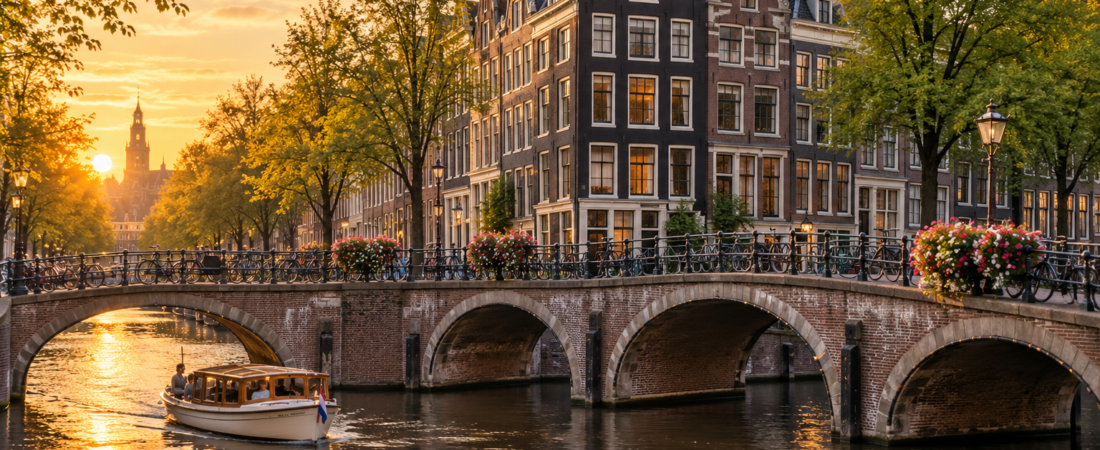
Amsterdam combines historic canals, distinctive architecture, world-class museums, attractive parks and lively neighbourhoods within a compact and highly accessible city.
Many of its major attractions can be reached on foot, while trams, metros, buses and ferries make longer journeys straightforward.
This Amsterdam travel guide covers the city’s top attractions, best areas to stay, public transport, local food and practical advice for planning your first visit.
Why Visit Amsterdam?
Amsterdam is best known for its canal ring, narrow houses and bicycles, but the city offers much more than its familiar postcard views.
Visitors can explore important art collections, learn about European history, relax in green spaces and discover neighbourhoods with independent shops, markets and restaurants.
Its relatively compact centre makes Amsterdam particularly suitable for a short city break. However, spending several days allows you to explore beyond the busiest streets and experience the city at a more comfortable pace.
Top Tours & Experiences in Amsterdam
Discover popular Amsterdam tours and experiences. Check current availability, ratings and prices before you book.
Affiliate disclosure: If you book through these links, we may earn a commission from Viator. This does not increase the price you pay.
Top Attractions in Amsterdam
Amsterdam’s Canal Ring
Amsterdam’s historic canals are among the city’s defining features. Walking beside waterways such as Herengracht, Keizersgracht and Prinsengracht reveals elegant merchant houses, houseboats and attractive bridges.
A canal cruise provides another perspective and helps first-time visitors understand the city’s layout. Cruises vary in duration, route and group size, so compare departure locations and inclusions before booking.
Early morning and evening are excellent times for canal photography because the streets are generally quieter and the light is softer.
Rijksmuseum
The Rijksmuseum presents centuries of Dutch art and history. Its collection includes works by Rembrandt, Vermeer, Frans Hals and other influential artists.
Allow at least two or three hours for a focused visit. The museum is extensive, so identify the galleries and artworks that interest you most before arriving.
A timed reservation is recommended, particularly during weekends and peak travel periods.
Van Gogh Museum
The Van Gogh Museum contains the world’s largest collection of works by Vincent van Gogh, alongside letters and displays explaining his artistic development.
Tickets are normally connected to a specific entry time and popular periods can sell out. Reserve through the official website rather than relying on last-minute availability.
The Rijksmuseum and Van Gogh Museum are located around Museumplein, making it possible to visit both on the same day. However, two major museums in one day can feel tiring, so many visitors prefer to divide them across separate days.
Anne Frank House
The Anne Frank House preserves the building where Anne Frank, her family and others hid during the Second World War.
The museum provides an important and emotionally powerful account of persecution, hiding and the Holocaust. A typical visit takes approximately one hour.
Tickets are sold online through the museum’s official website and availability is limited. Plan this visit before arranging the rest of your itinerary.
Jordaan
The Jordaan is one of Amsterdam’s most attractive neighbourhoods, known for canals, narrow streets, cafés, galleries and independent shops.
Rather than following a strict sightseeing list, allow time to wander through its quieter streets. The neighbourhood is close to the Anne Frank House and can be combined with a walk along Prinsengracht.
Remember that many photogenic canal houses are private residences. Avoid blocking entrances or creating unnecessary noise.
Dam Square
Dam Square is located in the historic centre and is surrounded by major buildings, including the Royal Palace, Nieuwe Kerk and the National Monument.
The square is often crowded and hosts public events throughout the year. It provides a useful starting point for exploring nearby streets, canals and shopping areas.
Amsterdam Centraal Station is within walking distance, making Dam Square easy to reach when you first arrive.
Begijnhof
The Begijnhof is a historic enclosed courtyard hidden behind the busy streets near Spui.
It offers a quiet contrast to the surrounding shopping district and contains historic houses and a chapel. Entry conditions and opening hours can change because this remains a residential and religious location.
Visit quietly, remain within permitted areas and respect residents.
Vondelpark
Vondelpark is Amsterdam’s best-known city park and a popular location for walking, cycling, picnics and relaxing.
It is especially lively during spring and summer, when residents and visitors gather on its lawns and terraces.
The park is close to Museumplein and can provide a useful break before or after visiting the museums.
De Pijp and Albert Cuyp Market
De Pijp is a diverse neighbourhood filled with restaurants, cafés and local businesses. It has a livelier and more residential atmosphere than the historic canal centre.
Albert Cuyp Market is one of its best-known attractions, selling food, clothing and everyday goods. Opening days and hours should be checked before visiting.
De Pijp is also a good area for trying Dutch snacks and international cuisine.
The Nine Streets
The Nine Streets, known locally as De Negen Straatjes, form a small shopping district within the canal ring.
The area contains boutiques, vintage shops, cafés and attractive canal views. It is easy to explore while walking between Jordaan, Spui and the central canals.
Shops can be expensive, but enjoying the streets and architecture does not cost anything.
Amsterdam Noord
Amsterdam Noord sits across the River IJ from Centraal Station and provides a different perspective on the city.
Free passenger ferries connect the station area with several points in Noord. The neighbourhood contains creative spaces, waterfront restaurants, modern architecture and cultural attractions.
Some attractions charge admission, but travelling across the river and exploring the waterfront can be an enjoyable low-cost experience.
Museum of the Canals
Visitors interested in Amsterdam’s development can learn about the construction and history of the canal ring at the Museum of the Canals.
It is smaller than the city’s major art museums, making it a manageable addition to a walking day around the historic centre.
Bloemenmarkt
The Bloemenmarkt is a flower market located along the Singel canal. It is a popular sightseeing stop and sells flowers, bulbs and souvenirs.
The market is highly commercial, but its central position makes it easy to include during a canal walk.
Check customs and agricultural regulations before taking plant products or bulbs into another country.
Best Areas to Stay in Amsterdam
Canal Ring
The canal ring is ideal for first-time visitors who want to walk to many of Amsterdam’s major attractions.
It offers beautiful surroundings, historic buildings and convenient access to restaurants and museums. Accommodation is generally expensive, and older buildings may have steep stairs, small rooms or limited lift access.
Jordaan
Jordaan provides canal scenery and neighbourhood atmosphere while remaining close to the centre.
It suits couples and travellers interested in cafés, independent shops and quieter streets. Hotel availability can be limited, so book early.
Museum Quarter
The Museum Quarter is convenient for the Rijksmuseum, Van Gogh Museum, Vondelpark and major cultural attractions.
It is generally calmer than the historic centre and works well for museum enthusiasts and families. Trams connect the area with Centraal Station and other neighbourhoods.
De Pijp
De Pijp is a strong choice for restaurants, cafés and a more local atmosphere.
It is slightly removed from the busiest central streets but remains well connected by tram and metro. The area can be lively during evenings, so check recent hotel reviews for comments about noise.
Amsterdam Centraal and the Historic Centre
Staying near Centraal Station is convenient for short visits, airport connections, trains and public transport.
The surrounding area is busy and highly tourist-oriented. Check the precise hotel location because the atmosphere can change considerably between nearby streets.
Oud-West
Oud-West offers restaurants, cafés and access to Vondelpark while remaining within reasonable reach of the centre.
It is suitable for visitors seeking a residential neighbourhood with reliable tram connections.
Amsterdam Noord
Noord can provide modern accommodation, waterfront views and a quieter base. Free ferries make some parts easily accessible from Centraal Station.
Before booking, confirm the hotel’s distance from a ferry terminal or public transport stop, especially if you expect to return late at night.
Getting Around Amsterdam
Walking
Walking is one of the best ways to explore central Amsterdam. Many major attractions are close together, and travelling on foot allows you to appreciate the canals and architecture.
Watch carefully when crossing cycle lanes. Bicycles may approach quickly and often have priority in designated spaces.
Trams, Metros and Buses
Amsterdam has an extensive public transport system connecting the centre with residential neighbourhoods and outer districts.
Visitors can use a contactless debit card, credit card, smartphone or compatible wearable device to check in and out.
Always use the same card or device for both actions. Each passenger needs a separate payment method, and forgetting to check out may result in an incorrect charge.
Ferries
Passenger ferries cross the River IJ from behind Amsterdam Centraal Station. Several routes are free and provide convenient access to Amsterdam Noord.
Check the destination displayed before boarding because ferries travel to different terminals.
Cycling
Cycling is an important part of everyday life in Amsterdam, but the city’s busy cycle lanes can be challenging for inexperienced visitors.
Rent a bicycle only if you are comfortable cycling in traffic and understand local rules. Use designated lanes, signal before turning and never stop suddenly in a busy path.
Walking or public transport may be safer and more relaxing for a first visit.
Taxis and Ride Services
Taxis and app-based services are available but cost considerably more than public transport.
Traffic restrictions and narrow streets can make car journeys slower than expected in the centre. Use licensed services and confirm the payment method before beginning the trip.
Travelling from Schiphol Airport
Trains connect Schiphol Airport with Amsterdam Centraal and other city stations. Buses, taxis and private transfers are also available.
The most convenient option depends on your accommodation location, luggage, arrival time and group size.
Check current engineering work and late-night schedules before travelling.
Best Time to Visit Amsterdam
Spring
April and May are among Amsterdam’s most popular months. Temperatures become milder, parks begin to flower and tulip season attracts visitors to the wider region.
This is a beautiful but busy period, so reserve accommodation and major attractions early.
Summer
June to August brings long daylight hours, outdoor dining and a lively atmosphere.
Weather is generally pleasant but can change quickly. Popular areas become crowded, and accommodation prices can be high.
Autumn
September and early October can offer comfortable temperatures and fewer visitors than midsummer.
Later autumn brings cooler weather, shorter days and colourful trees along the canals. Pack layers and rain protection.
Winter
Winter is cold, damp and occasionally windy, but the city can feel atmospheric when canal-side lights reflect on the water.
January and February may provide better accommodation value outside major events. Short daylight hours make it important to plan outdoor sightseeing carefully.
What to Eat in Amsterdam
Stroopwafels
Stroopwafels consist of two thin waffles joined with a sweet syrup filling. Freshly prepared versions are often softer and warmer than packaged ones.
Bitterballen
Bitterballen are small, breaded and fried snacks traditionally served with mustard. They are commonly available in cafés and bars.
Dutch Chips
Thick Dutch chips are usually served in a paper cone with a choice of sauces. They make a convenient snack while sightseeing.
Herring
Raw herring is a traditional Dutch food commonly served with onions and pickles. It may also be presented inside a bread roll.
Poffertjes
Poffertjes are small, soft pancakes usually served with butter and powdered sugar.
Indonesian Cuisine
Indonesia’s historical relationship with the Netherlands influenced Amsterdam’s food culture. A rijsttafel consists of numerous small Indonesian dishes served together and can be shared by a group.
Amsterdam also has extensive international dining options, including Surinamese, Middle Eastern, Asian and Mediterranean food.
How Many Days Do You Need in Amsterdam?
Two days is enough to see several central attractions, but three days is better for a first visit.
Three days allows time for the canal ring, two or three museums, Jordaan, De Pijp and Amsterdam Noord without making every day feel rushed.
Four or five days provides room for a day trip to nearby windmills, historic towns, beaches or seasonal flower-growing areas.
Amsterdam Budget Tips
- Book accommodation and major museums early.
- Walk between nearby attractions.
- Use public transport for longer journeys.
- Take the free ferries to Amsterdam Noord.
- Buy breakfast or lunch from bakeries and markets.
- Refill a reusable water bottle where permitted.
- Compare individual admission costs with the I amsterdam City Card.
- Choose only the museums that genuinely interest you.
- Avoid restaurants directly beside the busiest tourist squares.
- Travel outside peak spring and summer periods when possible.
A city card is worthwhile only when its included attractions and transport match your itinerary. Calculate the normal individual costs before purchasing one.
Practical Travel Tips
Reserve the Anne Frank House and other popular attractions before your trip. Do not assume tickets will remain available after arrival.
Amsterdam’s weather changes quickly, so carry a light waterproof jacket even when the day begins dry.
Remain outside marked cycle lanes while walking and look in both directions before crossing them.
Do not photograph people without permission, particularly in sensitive nightlife areas. Follow local signs and behave respectfully in residential neighbourhoods.
The historic centre includes narrow pavements, cobbled streets and steep bridges. Travellers with mobility requirements should research accessible entrances and suitable transport routes in advance.
Keep valuables secure in crowded stations, trams and tourist areas. Normal city precautions are usually sufficient.
Book Your Amsterdam Experiences
Ready to start planning? Compare popular Amsterdam tours and activities, check current prices and availability, and book the experiences that suit your trip.
Affiliate disclosure: If you book through these links, we may earn a commission from Viator. This does not increase the price you pay.
Final Thoughts
Amsterdam rewards visitors who balance major museums with time beside its canals and in its neighbourhoods.
Explore the historic centre, visit the Rijksmuseum, reserve the Anne Frank House in advance and leave room for Jordaan, De Pijp and Amsterdam Noord.
Walking is often the best way to experience the city, while trams, metros, buses and ferries make longer journeys easy.
For more destination inspiration and practical advice, explore our travel guides and destinations.