
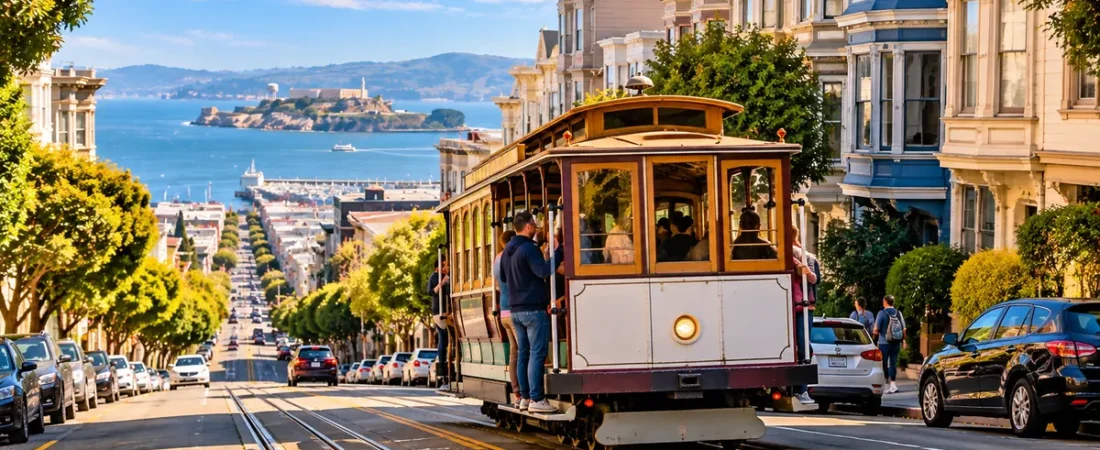
Spending 3 days in San Francisco gives you enough time to experience the city’s biggest landmarks, famous waterfront, historic neighbourhoods and distinctive public transport without rushing through everything.
This itinerary covers the Golden Gate Bridge, Fisherman’s Wharf, Alcatraz, Chinatown, North Beach, cable cars, the Painted Ladies and some of San Francisco’s best neighbourhoods. The days are organised geographically to reduce unnecessary travel.
If this is your first visit, start with our San Francisco travel guide for an overview of the city.
Price note: All prices in this article are approximate and were checked at the time of publication. Prices may change.
Day 1: Golden Gate Bridge, Waterfront and Fisherman’s Wharf
Your first day introduces San Francisco’s most famous landmark before following the northern waterfront toward Fisherman’s Wharf.
Morning: Golden Gate Bridge
Start at the Golden Gate Bridge.
Walking onto the bridge is free and gives you excellent views across San Francisco Bay, the Marin Headlands and the Pacific entrance to the bay.
Pedestrians currently use the east sidewalk. Access normally begins at 5:00 AM and closes at 9:00 PM during Pacific Daylight Time or 6:30 PM during Pacific Standard Time, although temporary construction can affect these hours.
You don’t necessarily need to walk the entire bridge.
Walking far enough to appreciate the scale and views before returning can save time for the rest of the day.
Bring an extra layer because conditions around the bridge can be considerably cooler and windier than downtown.
Late Morning: Crissy Field
Continue toward Crissy Field after visiting the bridge.
This waterfront area provides another excellent perspective of the Golden Gate Bridge and plenty of space for a relaxed walk.
From here you can continue toward the Marina District.
Early Afternoon: Palace of Fine Arts
Stop at the Palace of Fine Arts.
Its monumental rotunda, classical-style architecture and lagoon make it one of San Francisco’s most photogenic landmarks.
Walking around the exterior grounds is free.
From here, continue toward Fisherman’s Wharf using public transport or on foot if you’re comfortable with the distance.
Afternoon: Fisherman’s Wharf and Pier 39
Spend the afternoon exploring Fisherman’s Wharf.
Walk around the waterfront, see the fishing harbour and continue to Pier 39.
The famous California sea lions can often be seen around the docks without paying an admission fee.
Fisherman’s Wharf is tourist-oriented, but it’s still worth seeing on a first visit.
Evening: Waterfront and North Beach
Walk toward North Beach for dinner.
The neighbourhood’s Italian-American heritage is reflected in its restaurants and cafés, while Washington Square provides a pleasant place for an evening stroll.
If you’re still energetic, walk toward Telegraph Hill before finishing your first day.
Day 2: Alcatraz, Cable Cars, Chinatown and Union Square
Day two combines San Francisco history with some of its most famous urban experiences.
Morning: Alcatraz Island
Reserve the morning for Alcatraz.
Official ferries depart from Pier 33, and departures generally begin around 8:45 AM.
Allow approximately 2.5–3 hours for the ferry journey, island visit and return, although you can spend longer.
The ferry ticket includes access to the Cellhouse audio tour.
Alcatraz frequently sells out in advance, particularly during summer and holiday periods, so book ahead if visiting the island is important to you.
There is no separate National Park Service entrance fee, but the ferry is paid.
Early Afternoon: Embarcadero
After returning to Pier 33, spend some time walking along the Embarcadero.
This waterfront boulevard provides views across the bay and connects several major visitor areas.
If you want to continue farther south, the historic F-line streetcars provide an alternative to walking.
Afternoon: Ride a Cable Car
No first San Francisco itinerary feels complete without riding a cable car.
The historic cable cars travel along some of the city’s steepest streets and remain part of the public transportation network.
A single ride currently costs $9.
Queues can be longest at the main terminals. Boarding at an intermediate stop can sometimes be more convenient, although cars may already be full during busy periods.
Late Afternoon: Chinatown
Continue to Chinatown.
Enter around the famous Dragon Gate and explore Grant Avenue before wandering through the surrounding side streets.
You’ll find bakeries, restaurants, shops and traditional businesses throughout the neighbourhood.
Walking through Chinatown itself costs nothing, making it an easy addition to the day.
Evening: Union Square
Finish around Union Square.
The area is centrally located and well connected by public transportation.
You can have dinner nearby or return toward Chinatown or North Beach if you prefer a more neighbourhood-oriented evening.
If you’re still choosing your accommodation, our guide to where to stay in San Francisco compares these areas in detail.
Day 3: Painted Ladies, Mission District and Local San Francisco
The final day moves away from the main waterfront attractions and focuses more on neighbourhoods.
Morning: Painted Ladies and Alamo Square
Start at Alamo Square.
From the park you’ll see the famous row of Victorian houses known as the Painted Ladies, with the modern San Francisco skyline behind them.
The view is free.
Spend some time walking through the surrounding residential streets, where you’ll find many more examples of Victorian and Edwardian architecture.
Late Morning: Haight-Ashbury
Continue toward Haight-Ashbury.
The neighbourhood became internationally associated with the counterculture movement of the 1960s and still retains an eclectic character.
Walk along Haight Street, browse independent shops and look at the area’s distinctive architecture.
Afternoon: Mission District
Travel to the Mission District for lunch and afternoon exploration.
The Mission is one of San Francisco’s most culturally distinctive neighbourhoods and an excellent place to try a Mission-style burrito or other casual local food.
Explore Valencia Street and the surrounding area before looking for the neighbourhood’s famous murals.
Mission Dolores and Dolores Park
Continue toward Mission Dolores and Dolores Park.
Mission Dolores is one of San Francisco’s most historically significant sites, although entering the historic mission complex requires admission.
If you’re keeping costs down, continue to Dolores Park instead.
The park itself is free and offers open space and impressive views toward downtown.
On a clear afternoon, it’s an excellent place to take a break after 3 busy days of sightseeing.
Evening: Final San Francisco Dinner
Spend your final evening in the Mission or return to another favourite neighbourhood.
North Beach works well for Italian food, Chinatown provides numerous dining choices, and the Mission has an enormous range of casual and contemporary restaurants.
There’s no need to add another major attraction.
A relaxed neighbourhood dinner is a better ending after 3 full sightseeing days.
Getting Around During This Itinerary
You don’t need a rental car for this itinerary.
Muni buses, light rail, historic streetcars and cable cars connect the major areas.
The current adult Muni single-ride fare is approximately $2.85 when paid with Clipper or an eligible contactless bank card, while the cash fare is $3.
A standard Muni ride provides up to 120 minutes of travel.
Cable cars currently cost $9 for a single ride and do not include transfers on that single cable-car ticket.
If you expect to ride public transport frequently, compare individual fares with the available daily or visitor passes before purchasing.
Should You Book Anything in Advance?
Alcatraz is the main attraction to reserve ahead.
Tickets can sell out weeks in advance during busy periods.
Once you’ve secured your Alcatraz time, organise Day 2 around that reservation rather than trying to fit the ferry around a fixed schedule.
Most outdoor attractions in this itinerary don’t require advance booking.
What to Pack for 3 Days in San Francisco
Pack comfortable walking shoes.
San Francisco’s hills make footwear more important than the distances on a map might suggest.
Bring layers, even during summer. Temperatures can feel dramatically different between sunny inland neighbourhoods and windy waterfront areas.
A light jacket is especially useful around the Golden Gate Bridge and on the Alcatraz ferry.
Can You See San Francisco in 3 Days?
3 days is enough for an excellent first visit.
You’ll experience the Golden Gate Bridge, Alcatraz, cable cars, waterfront and several distinctive neighbourhoods while still having time to enjoy the city rather than simply moving between attractions.
A fourth day would allow you to add Golden Gate Park, museums or more neighbourhood exploration.
But for a first trip, this 3 days in San Francisco itinerary covers an excellent mix of iconic landmarks and local character.
Explore more places through our destinations page or browse our complete collection of itineraries.